Key Takeaways for Quality Teams
- Batch release is a non-negotiable regulatory requirement globally (FDA, EMA, ICH).
- The process verifies identity, strength, purity, and quality for every batch.
- The Qualified Person (QP) role is the critical certification bottleneck in the EU.
- Modern trends are shifting toward Real-Time Release Testing (RTRT) and AI-driven analytics.
The Core Objectives of Batch Release
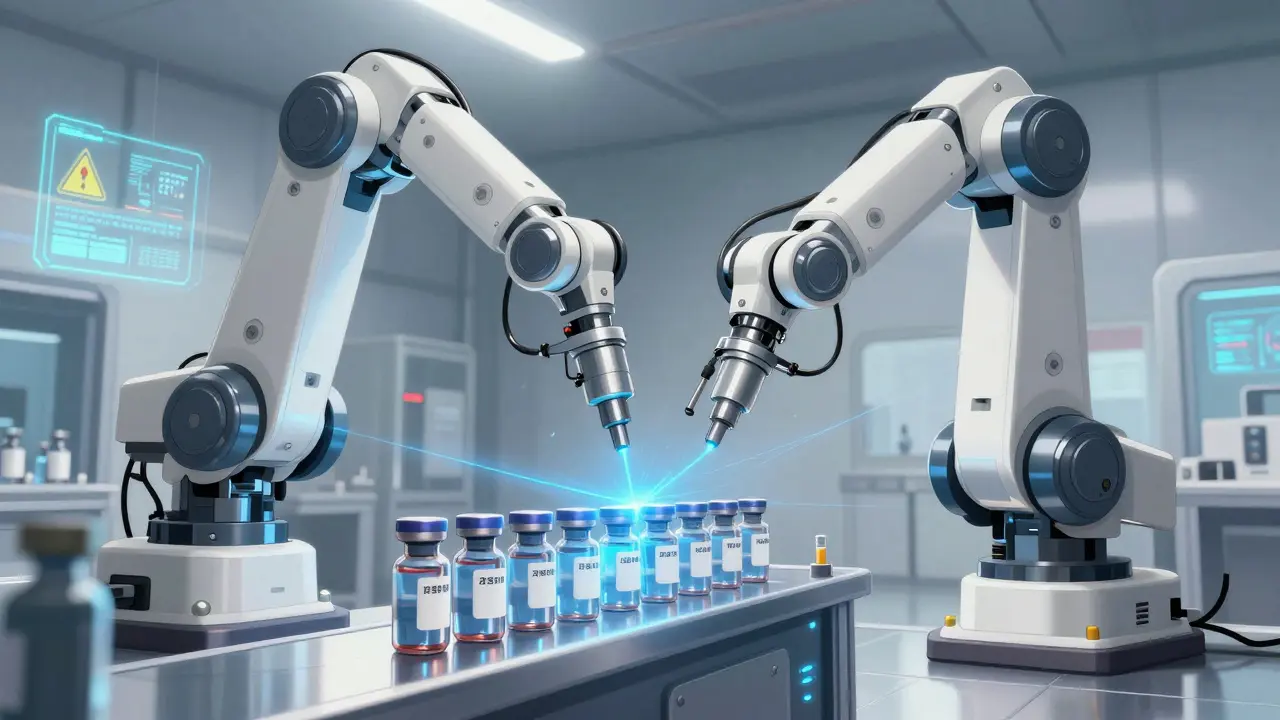
Why do we put every batch through the wringer? It's not just about following rules; it's about risk mitigation. The primary goal is to prove that the product in the bottle is exactly what the marketing authorization promised. When a quality unit performs these checks, they are looking for three specific things: identity (is this the right drug?), potency (is the dose correct?), and purity (is it free from contaminants?). If a batch fails any of these, it's quarantined. According to the Parenteral Drug Association's 2024 report, the most common failure points are dissolution testing (32%) and impurity profiles (28%). These aren't just numbers; they represent medications that might not dissolve properly in a patient's stomach or contain trace chemicals that could cause adverse reactions.Technical Breakdown: What Actually Gets Tested?
Testing isn't a one-size-fits-all approach. Depending on whether you're making a simple tablet or a complex monoclonal antibody, the checklist changes. However, most protocols follow ICH Q2(R1) guidelines for validation.Chemical and Physical Attributes
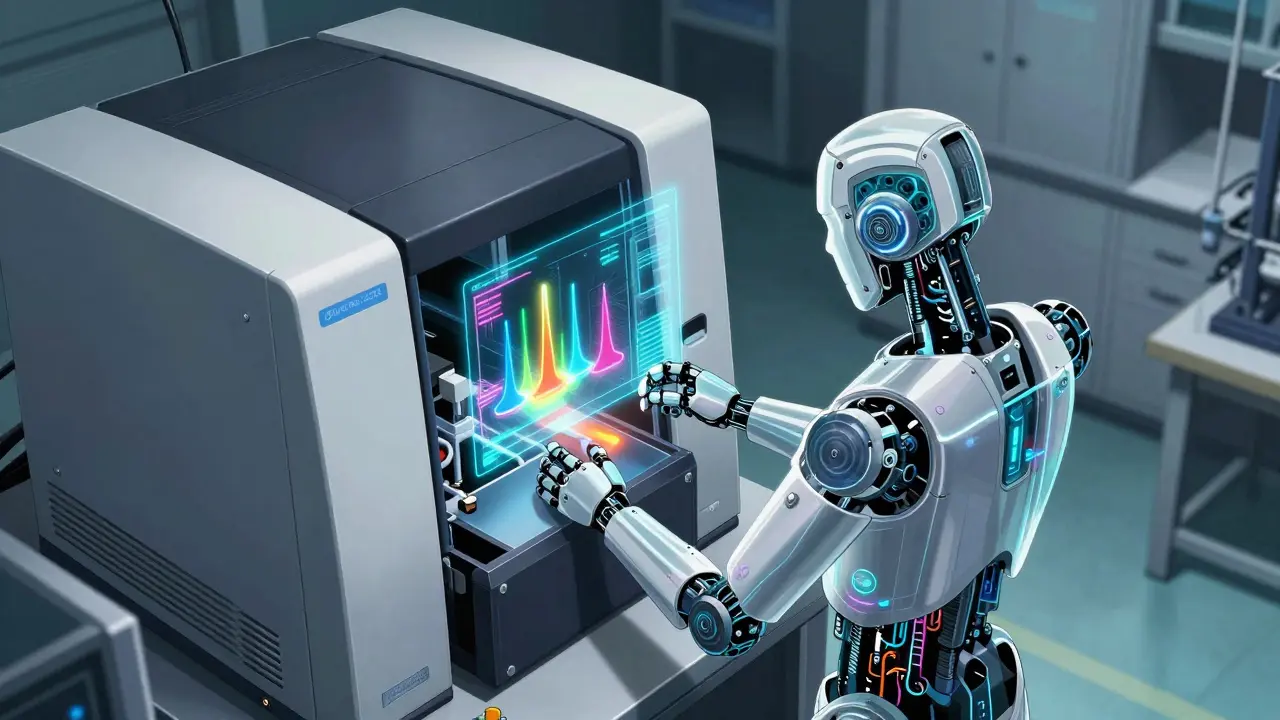
For small molecules, analysts use HPLC (High-Performance Liquid Chromatography) or FTIR to confirm the identity of the substance. The assay or potency check usually requires the drug to fall within 90-110% of the label claim. Physical checks are just as vital. For example, tablets are put through hardness testing (usually targeting 4-10 kp) and dissolution testing per USP <711> to ensure the drug releases at the right speed.
Biological and Microbial Safety
For sterile products, the stakes are higher. Endotoxin testing (USP <85>) is mandatory to prevent fever or shock in patients. Particulate matter testing (USP <788>) ensures no microscopic glass or metal shards are in the liquid. For non-sterile products, microbial limit testing per USP <61> and <62> ensures colony counts don't exceed 100 CFU/g.
| Attribute | Small Molecule Generics | Complex Generics | Biologics / Biosimilars |
|---|---|---|---|
| Typical Release Timeline | 7-10 Days | 14-21 Days | 21-35 Days |
| Primary Testing Focus | Purity & Dissolution | Bioequivalence & Stability | Potency & Glycosylation |
| Doc. Requirements (ICH) | ~28 Data Elements | ~28 Data Elements | ~42 Data Elements |
| Regulatory Risk | Medium | High | Very High |
The Certification Process: US vs. EU
While the science is the same, the paperwork and the people involved differ by region. If you're operating globally, this is where things get tricky. In the United States, the process is governed by 21 CFR 211.165. Quality control testing is performed, results are reviewed by two independent analysts, and a representative from the quality unit signs off on the release. It's a structured, corporate quality-gate system. In the European Union, the process revolves around the Qualified Person (QP). Under Directive 2003/94/EC, the QP is personally and legally responsible for certifying that each batch has been manufactured in accordance with GMP (Good Manufacturing Practice). This creates a significant bottleneck; the EMA reported a 32% shortage of qualified QPs in 2024. Many QPs report spending 40-60 hours per batch just on documentation review for complex biologics.Common Pitfalls and Implementation Hurdles
Even the best labs run into trouble. If you look at FDA Form 483 observations from 2024, the most frequent issues aren't actually the tests themselves, but the way they are managed.- Method Transfer Gaps: A huge amount of friction happens when a test developed in R&D is handed over to the manufacturing plant. Analysts on Reddit's r/Pharmaceuticals note that this often causes delays of nearly 15 business days.
- Data Integrity: Fudging dates or ignoring "out of specification" (OOS) results is a fast track to a warning letter. 31% of recent regulatory observations cited data integrity issues.
- Inadequate Investigations: When a batch fails, you can't just re-test it until it passes. You need a documented deviation investigation to find the root cause.
The Future: From Discrete Batches to Continuous Verification
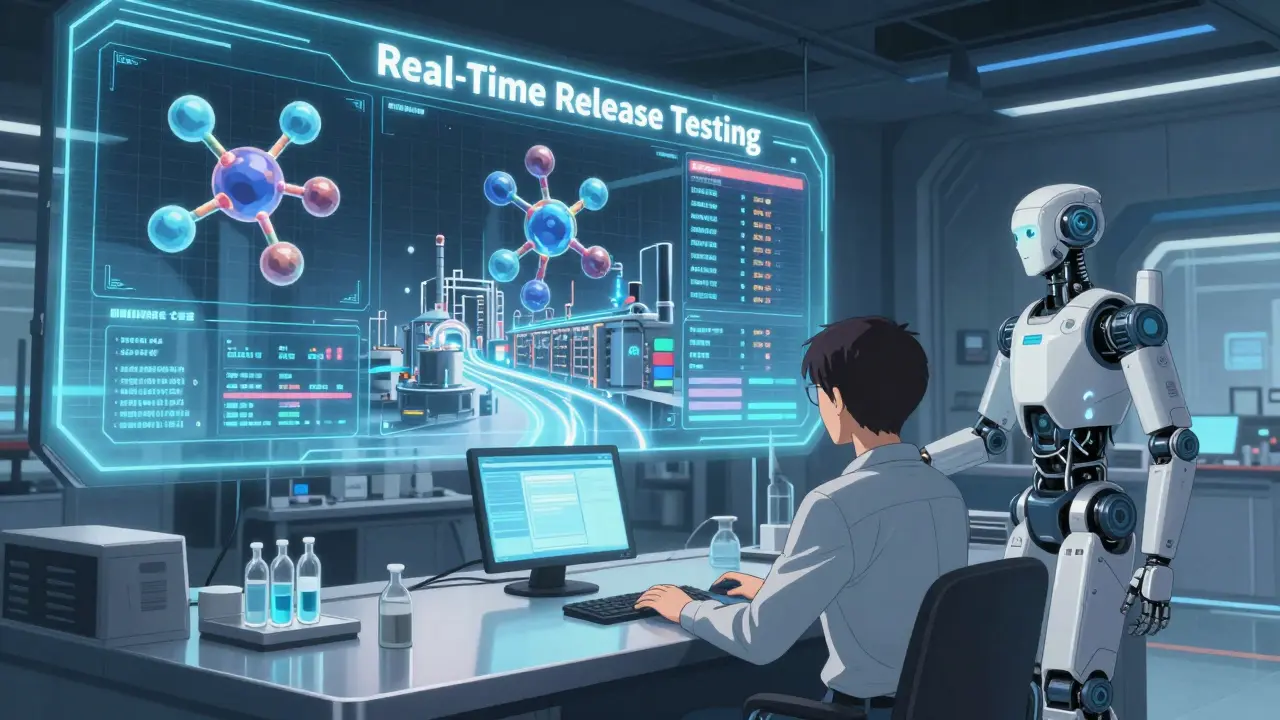
We are moving away from the "stop and test" model. For decades, we made a batch, stopped, tested it, and then shipped it. That's inefficient. The industry is now pivoting toward Real-Time Release Testing (RTRT). Using Process Analytical Technology (PAT), sensors inside the manufacturing equipment can monitor quality attributes in real-time. If the sensors prove the process remained in a "validated state," the need for some end-product tests disappears. The FDA's 2025 pilot program for Predictive Release Testing is already allowing a handful of companies to use this approach. AI is also entering the fray. Predictive analytics can now forecast whether a batch is likely to fail based on historical trends. While the EMA's 2024 pilot showed 78% accuracy for these AI models, the FDA is holding out for 99.9% confidence before full implementation. Despite these advances, most experts agree that some form of discrete batch verification will remain necessary through 2040, especially for legacy products.What happens if a batch fails release testing?
The batch is immediately quarantined and marked as "rejected." A formal Out-of-Specification (OOS) investigation is launched to determine if the failure was due to a lab error (analytical failure) or a genuine manufacturing defect (process failure). If it's a process failure, the batch is typically destroyed or, in rare cases, reworked if regulatory guidelines allow.
How long must batch release records be kept?
Per 21 CFR 211.194, companies must retain complete test data-including raw chromatograms, instrument printouts, and calculations-for at least one year after the product's expiration date.
What is the difference between a Quality Control (QC) analyst and a Qualified Person (QP)?
A QC analyst performs the actual laboratory tests and records the data. The QP is a senior role (primarily in the EU) that reviews all that data and the manufacturing records to legally certify that the batch is safe for release. The QP takes legal liability for the batch.
Can AI completely replace batch release testing?
Not yet. While AI and PAT can reduce the number of tests needed through "Predictive Release," regulators still require high-confidence physical samples to be tested. AI is currently a tool for risk reduction and speed, not a total replacement for chemical analysis.
Which tests are most likely to cause a batch failure?
According to the PDA, dissolution testing (32%), impurity profiling (28%), and microbial contamination (23%) are the top three causes of batch failures.

Trey Kauffman
Oh great, another guide telling us that the 'last line of defense' is basically just a bunch of people filling out spreadsheets for a week. I love how we pretend that a QP's signature magically makes a biologic safe when we all know the real bottleneck is just corporate bureaucracy disguised as safety protocols.
danny Gaming
fda data is always laggin behind and these guidelines r just red tape. we make the best meds in the us and these extra steps just slow down the supply chain for no reason basically
Peter Meyerssen
The ontological essence of quality control is far deeper than simple HPLC checks. It's about the semiotics of purity 🧐. Most people don't even get that the OOS results are just a manifestation of a deeper systemic failure in the paradigm of manufacturing. Total amateur hour. 🙄
Emily Wheeler
It really is quite fascinating to think about how the intersection of human oversight and automated technology creates this delicate balance of safety, and while the transition to electronic batch records might seem like a mere technical upgrade, it actually represents a profound shift in how we perceive accountability and the ethical responsibility we hold toward patients who trust these medications with their lives, which makes me feel so energized to see the industry moving toward a more transparent and integrated future where we can actually prevent those heartbreaking recalls before they even happen through collective effort and shared knowledge.
Ryan Hogg
I remember a batch failure from three years ago that just drained the soul out of the entire QC team for months. It's just exhausting. The stress of a potential recall is like a dark cloud that never really leaves the office.
Ben hogan
Imagine thinking that AI will actually solve the data integrity problem when the people entering the data are the ones fudging the numbers. It's pathetic that this is even being discussed as a 'future' solution when we can't even get basic method transfers right. Pure delusions.
Kelly DeVries
omg the drama when a batch gets quarantined is literally the only thing that makes the lab interesting lol but seriously those OOS investigations are just a nightmare and nobody knows what they are doing half the time
Suchita Jain
It is imperative that one acknowledges the severe lack of discipline in the current method transfer process. One must wonder if the analysts are simply negligent or if the training protocols are fundamentally flawed. It is a disgrace to the profession.
kalpana Nepal
India is becoming the pharmacy of the world and our systems are getting better every day. We don't need to follow every single EU rule to have quality medicine.
Simon Stockdale
Man the US is just way ahead of everyone else in this stuff and honestly these EU QP rules are just a joke because they create these massive bottlenecks that make no sense in a modern world where we should be shipping drugs fast and making sure they work because we are the best at it and anyone who says otherwise is just lying to themselves about how the global market actually works lol
Robin Walton
It sounds like the QP role can be really overwhelming with all that legal liability on their shoulders. I can only imagine the pressure they feel during a high-stakes release.
Danny Wilks
I find it quite interesting that the difference between the US and EU systems is more about the legal framework of accountability than the actual chemistry, as the science remains constant across borders while the bureaucratic interpretation of risk varies so widely between the FDA and the EMA, which suggests that the 'bottlenecks' mentioned are perhaps more a result of cultural approaches to risk management than actual technical shortcomings.
Thabo Leshoro
The GMP compliance... is so stressful!! Especially with endotoxin testing... it's a nightmare if the LAL test fails... because then you have to do a full investigation... over and over again!!
Lynn Bowen
LIMS integration really does change the game for the staff on the floor.