
Imagine you’re sitting on your couch in Melbourne, feeling a dull ache behind your sternum. Is it just indigestion from that spicy meal, or is your heart trying to tell you something serious? This is the exact dilemma millions of people face every year. While most chest pain turns out to be harmless, missing a window for treatment can be fatal. Knowing when to trust your gut and rush to the hospital versus when to wait for a GP appointment is a skill that could save your life.
Chest Pain Evaluation is a standardized medical process used by doctors to determine if chest discomfort is caused by a life-threatening condition like a heart attack or pulmonary embolism. According to recent data, about 6-8 million patients visit U.S. emergency departments annually with this complaint, yet only 10-15% end up with an acute myocardial infarction. That means the vast majority are dealing with muscle strain, acid reflux, or anxiety. But those 10-15% need immediate action. The goal isn't just to find the cause; it's to rule out the killers quickly while avoiding unnecessary tests for everyone else.
The Red Flags: When Seconds Matter
Not all chest pain is created equal. Some symptoms scream "emergency," while others whisper "wait and see." The 2021 American Heart Association (AHA) and American College of Cardiology (ACC) guidelines provide a clear roadmap. If you experience any of the following, do not drive yourself. Call an ambulance. Why? Because driving yourself increases the risk of adverse events by 25-30% compared to being transported by EMS, who can start treatment en route.
- Pain that radiates: Discomfort spreading to the left arm, jaw, neck, or back.
- Pressure or tightness: Feeling like an elephant is sitting on your chest, rather than sharp stabbing pain.
- Associated symptoms: Shortness of breath, cold sweat (diaphoresis), nausea, or extreme fatigue.
- Vital sign changes: A heart rate over 100 bpm, blood pressure under 90 mmHg systolic, or rapid breathing.
Dr. Martha J. Gulati, who co-chaired the writing committee for these major guidelines, emphasizes that recognizing non-classic symptoms is critical. Women, for instance, often present with fatigue and jaw pain rather than the classic "Hollywood" clutching-the-chest scenario. If you feel "sick" in a way that feels different from usual, trust that instinct.
What Happens Inside the Emergency Department
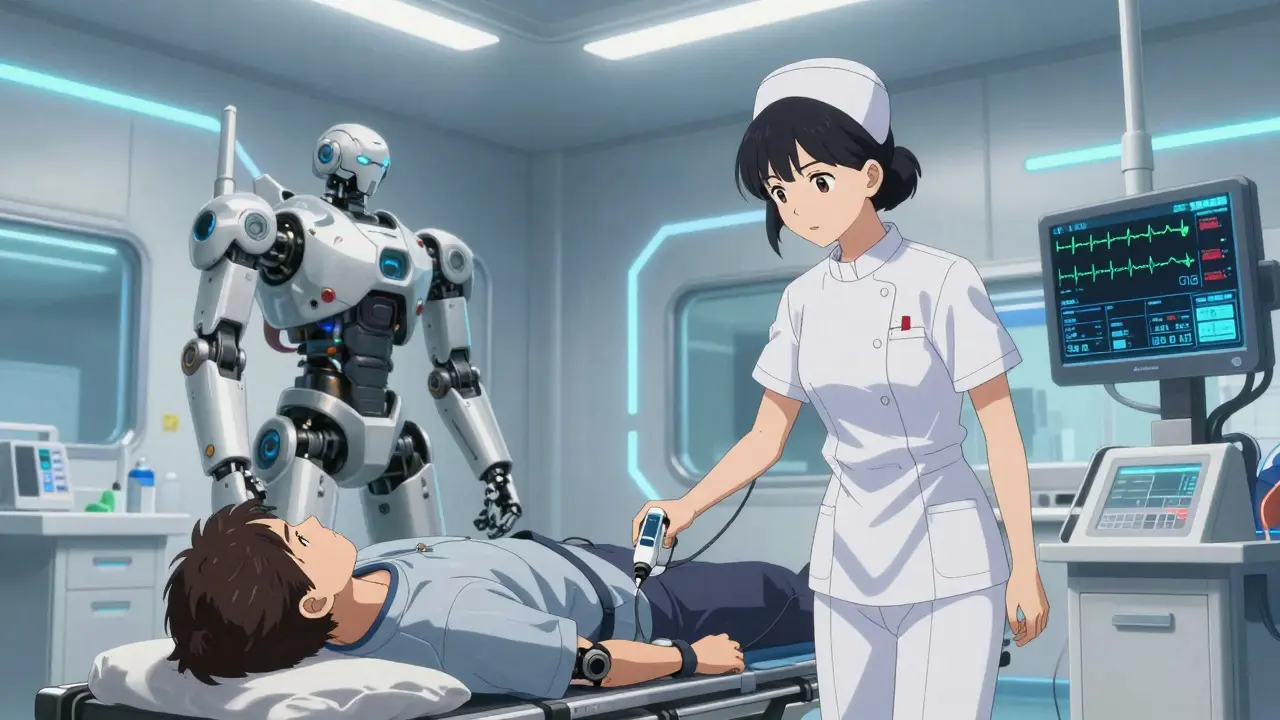
You might think the ER is chaotic, but for chest pain, there is a highly structured protocol designed to get answers fast. The moment you walk through the doors, the clock starts ticking. Here is what happens next, step by step.
- The Primary Survey (0-5 minutes): Nurses assess your airway, breathing, and circulation. They check if you look "sick" or stable. Vital signs are taken immediately.
- The ECG (Within 10 minutes): This is the gold standard initial test. A 12-lead electrocardiogram must be recorded and interpreted within 10 minutes of arrival. It looks for electrical patterns indicating a blockage (STEMI) or ischemia.
- Blood Tests (Troponin): Doctors order high-sensitivity cardiac troponin assays. These measure proteins released when heart muscle is damaged. Unlike older tests, modern high-sensitivity versions can detect injury within 1-2 hours.
- Risk Stratification: Based on the ECG and troponin results, you are categorized as low, intermediate, or high risk.
If your ECG shows a STEMI, you are rushed to the cath lab for a procedure called percutaneous coronary intervention (PCI). The goal is a "door-to-balloon time" of less than 90 minutes. Every minute counts here because heart muscle dies without oxygen.
Understanding the Tests: ECG vs. Troponin vs. CT Scan
Patients often ask why they need multiple tests. Each one serves a different purpose. Let’s break down the tools doctors use to make their decision.
| Test | Primary Purpose | Time Required | Key Limitation |
|---|---|---|---|
| 12-Lead ECG | Detect electrical abnormalities and ST-elevation | < 10 minutes | Can miss early or intermittent issues |
| High-Sensitivity Troponin | Measure heart muscle damage | 1-2 hours for rule-out | Can be elevated in other conditions (e.g., kidney disease) |
| Coronary CT Angiography (CCTA) | Visualize coronary artery blockages | ~30-45 minutes | Requires contrast dye; radiation exposure |
| Stress Testing | Assess function under exertion | 1-2 hours | Less sensitive than CCTA for detecting blockages |
For intermediate-risk patients-those whose ECG is normal but who still have concerning symptoms-doctors often turn to Coronary CT Angiography (CCTA). This test has a sensitivity of 95-99% for detecting obstructive coronary artery disease. However, if you have poor kidney function (eGFR <30 mL/min/1.73m²) or an allergy to iodinated contrast, stress testing becomes the safer alternative. The choice depends entirely on your individual health profile.
The HEART Score: How Doctors Calculate Your Risk
To keep things consistent across different hospitals, many clinicians use the HEART score. This tool assigns points based on five factors: History, ECG findings, Age, Risk factors, and Troponin levels. The total score determines your likelihood of having a major cardiac event within six months.
- Score 0-3 (Low Risk): You are likely safe to go home with follow-up instructions. The chance of a heart attack is very low.
- Score 4-6 (Intermediate Risk): You may need further testing like a CT scan or stress test before discharge.
- Score 7-10 (High Risk): Immediate invasive procedures like angiography are usually required.
This system helps prevent two extremes: sending dangerous patients home too early, or keeping safe patients in the hospital unnecessarily. It’s a balance between caution and efficiency.
Common Misconceptions and Pitfalls
One big mistake people make is waiting. "Maybe it will pass," we think. But if it’s a heart attack, time is muscle. Another pitfall is ignoring non-pain symptoms. Fatigue alone can be a sign of angina in older adults or women. Also, don’t assume young people can’t have heart attacks. While rare, genetic conditions or cocaine use can trigger cardiac events in the 20s and 30s.
Furthermore, some patients worry about the cost of an ER visit. In Australia, if you are a resident or hold a valid visa, public hospital care is subsidized. The cost of a missed diagnosis, however, is far higher. Always err on the side of caution. If you are unsure, call your local health line or go to the ED. It is better to be told it’s gas than to be told it was a near-miss.
When Can You Wait?
So, when *can* you skip the ER? If your pain is clearly musculoskeletal (it hurts when you press on the spot), lasts seconds, or is directly linked to eating (and resolves with antacids), it might be safe to book a GP appointment. Stable angina, which comes on with predictable exertion and goes away with rest, is typically managed outpatient. But if the pattern changes-if it happens at rest, lasts longer, or feels different-that’s your cue to seek urgent care.
Doctors also look for "anginal equivalents." These are symptoms that mimic angina without the typical chest pain. Unexplained shortness of breath, sudden weakness, or unexplained nausea during exertion should prompt evaluation. The key is change. If your body behaves differently than its baseline, investigate.
Should I drive myself to the emergency department for chest pain?
Generally, no. If you suspect a heart attack, call an ambulance. Paramedics can perform an ECG on the way, administer aspirin, and alert the hospital to prepare the cath lab. Driving yourself delays treatment and increases the risk of passing out or crashing.
How long does a chest pain evaluation take in the ER?
For low-risk patients using high-sensitivity troponin protocols, you might be ruled out and discharged within 1-2 hours. For those needing CT scans or admission, it can take several hours. High-risk patients requiring surgery may stay days. The timeline depends entirely on your risk category.
Is chest pain always a sign of a heart problem?
No. Only 10-15% of chest pain cases in the ER result in a heart attack diagnosis. Other common causes include gastroesophageal reflux disease (GERD), musculoskeletal strain, pulmonary embolism, and anxiety. However, until proven otherwise, treat it as potential heart trouble.
What is the difference between a heart attack and angina?
Angina is temporary chest pain caused by reduced blood flow, usually triggered by stress or exercise, and relieved by rest. A heart attack (myocardial infarction) occurs when blood flow is blocked long enough to kill heart muscle cells. Angina is a warning sign; a heart attack is the event itself.
Do women experience different chest pain symptoms than men?
Yes. Women are more likely to report non-specific symptoms such as fatigue, shortness of breath, nausea, or jaw/back pain rather than classic crushing chest pain. This can lead to delayed diagnosis, so women should be particularly vigilant about unusual feelings of exhaustion or discomfort.
