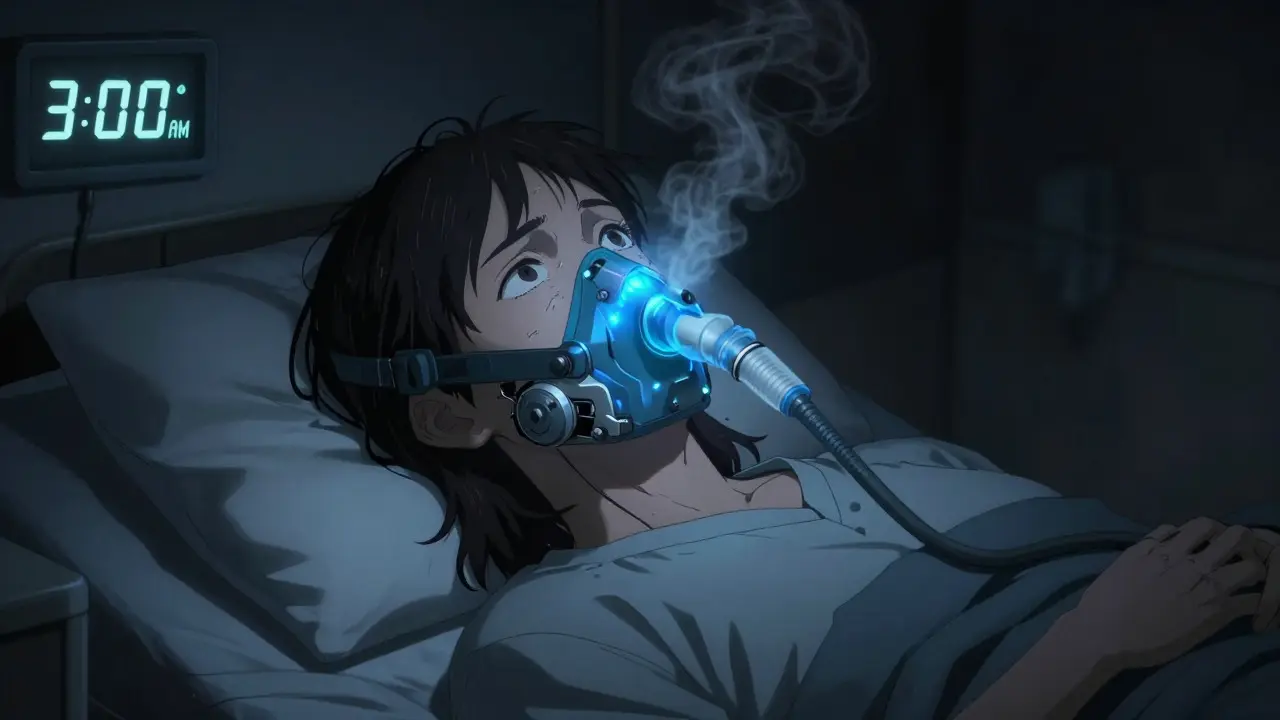
You fall asleep fine. Then, at 3 a.m., you wake up gasping or just staring at the ceiling, unable to drift back off. You’ve been diagnosed with obstructive sleep apnea (OSA), and your doctor prescribed a CPAP machine. But instead of fixing your sleep, the mask feels like torture, and the air pressure keeps you awake. You aren’t alone, and more importantly, you aren’t failing treatment. You likely have COMISA.
COMISA is a clinical condition characterized by the simultaneous presence of insomnia disorder and obstructive sleep apnea in the same patient. The term was coined by Dr. Alexander Sweetman during his research at Flinders University in Australia. It’s not just "sleep apnea with some bad nights." It is a distinct medical entity that affects approximately 39% to 58% of people diagnosed with OSA. When these two conditions collide, they create a vicious cycle: the anxiety about breathing stops prevents sleep onset, and the fragmented sleep from apnea makes it impossible to stay asleep.
Why Standard Treatments Fail for COMISA Patients
If you have only sleep apnea, Continuous Positive Airway Pressure (CPAP) therapy works beautifully for most people. It keeps your airway open, and your sleep quality improves dramatically. However, if you have COMISA, CPAP alone often backfires. Studies show that CPAP adherence rates drop to 42.7% in COMISA patients compared to 62.3% in those with OSA only. Why? Because the device introduces new stressors-mask discomfort, noise, and the feeling of being forced to breathe-that trigger the very insomnia symptoms you’re trying to cure.
Conversely, treating only the insomnia with medication or standard relaxation techniques ignores the physical blockage in your throat. You might feel calmer, but your oxygen levels still dip, and your heart rate still spikes. This is why sequential treatment-fixing the apnea first, then the insomnia-often fails. In fact, treating OSA first can worsen insomnia symptoms in 27% of COMISA patients due to the adaptation period required for the mask. The key insight from recent research is that these conditions must be managed concurrently, not separately.
The Gold Standard: Combining CBT-I and CPAP
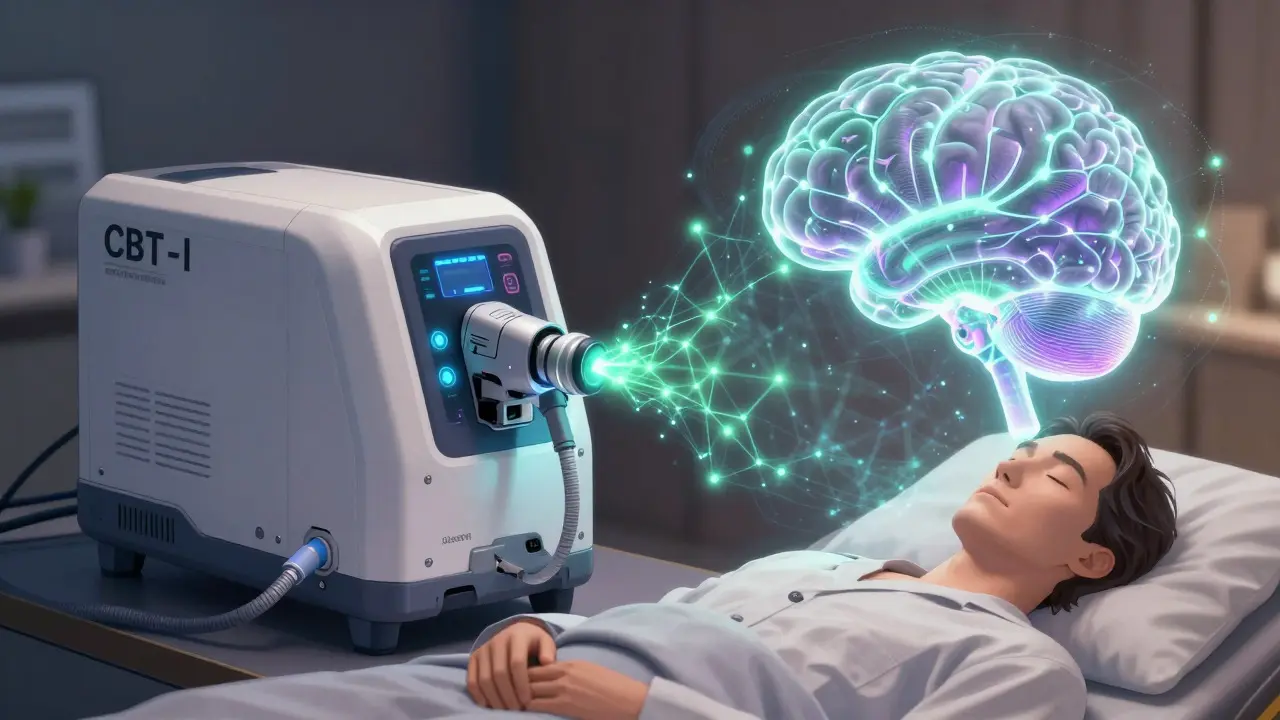
The most effective approach for COMISA is a dual strategy that addresses both the psychological and physiological aspects of sleep disruption simultaneously. This involves combining Cognitive Behavioral Therapy for Insomnia (CBT-I) with CPAP therapy. CBT-I is considered the first-line treatment for chronic insomnia, offering long-term relief without the side effects of sleeping pills. When paired with CPAP, it helps patients retrain their brain to associate the bed with sleep, even while wearing a mask.
Research led by Dr. Sweetman demonstrates that this combination produces superior outcomes. In multi-site randomized controlled trials, 63% of COMISA patients achieved remission of insomnia symptoms when receiving combined treatment, compared to only 29% with CPAP alone. Furthermore, CBT-I consolidates sleep periods, which promotes a 15% decrease in OSA severity. By reducing the number of times you wake up fully, you reduce the opportunities for anxiety to take hold, making it easier to tolerate the CPAP machine.
| Treatment Approach | Insomnia Remission Rate | CPAP Adherence Impact | Primary Limitation |
|---|---|---|---|
| CPAP Alone | 29% | Low (42.7% adherence) | Fails to address sleep anxiety; mask discomfort triggers awakenings |
| CBT-I Alone | Variable | N/A | Does not resolve respiratory events; risk of untreated hypoxia |
| Combined CBT-I + CPAP | 63% | High (+1.2 hours/night usage) | Requires coordination between specialists; higher initial cost |
| Digital CBT-I (dCBT-I) | 65% (mild cases) | Moderate | Less effective for severe OSA (AHI >15); requires self-discipline |
Diagnosing COMISA: Looking Beyond the Sleep Study
A standard polysomnography (PSG) sleep study measures your breathing patterns, oxygen levels, and sleep stages. It is excellent for diagnosing OSA by calculating the Apnea-Hypopnea Index (AHI). However, a PSG often misses the subjective experience of insomnia. A patient might spend 80% of the night in deep sleep according to the sensors, yet report feeling exhausted because they woke up 20 times briefly. To diagnose COMISA accurately, clinicians must use structured insomnia interviews alongside the sleep study.
The Insomnia Severity Index (ISI) is a critical tool here. An ISI score of 15 or higher indicates clinically significant insomnia. Additionally, distinguishing between sleep maintenance insomnia (difficulty staying asleep, present in 68% of COMISA cases) and sleep onset insomnia (difficulty falling asleep, 32%) is vital. These subtypes respond differently to treatment protocols. For instance, sleep maintenance issues are often exacerbated by the CPAP mask leaking or pressure changes, requiring specific behavioral adjustments during therapy.

Practical Steps for Managing Your Condition
Managing COMISA requires patience and a proactive approach. Here is how you can navigate the treatment landscape effectively:
- Seek a Multidisciplinary Team: Look for sleep centers that offer integrated care. The best outcomes come from programs where psychologists and physicians coordinate. If your local center doesn’t have this, ask for a referral to a psychologist trained in CBT-I who understands sleep apnea devices.
- Optimize Your CPAP Setup Early: Don’t wait until you’re used to the machine to address comfort issues. Work with your equipment provider on mask fit, humidity settings, and ramp-up features. Gradual pressure ramping combined with stimulus control therapy has been shown to increase usage from 2.1 to 6.7 hours per night over eight weeks in some patient reports.
- Consider Digital Therapeutics: If access to in-person CBT-I is limited, digital platforms like Sleepio or Somryst can be effective, especially for mild to moderate cases. However, ensure the platform allows for integration with your CPAP data, as this feedback loop is crucial for progress.
- Address Comorbid Mental Health Issues: Anxiety and depression significantly reduce CBT-I response rates. If you have high anxiety, your improvement in insomnia symptoms may be lower (45% vs. 78% in those without anxiety). Treating underlying mental health conditions concurrently can boost the effectiveness of your sleep therapy.
Emerging Technologies and Future Directions
The field of sleep medicine is evolving rapidly to meet the needs of COMISA patients. New adaptive CPAP devices, such as ResMed’s AirSense 11, automatically adjust pressure based on sleep stage, potentially reducing the discomfort that triggers awakenings. Additionally, the FDA approved suvorexant, an orexin antagonist, for use in COMISA patients in late 2023. Clinical trials showed a 57% insomnia remission rate when suvorexant was combined with CPAP, compared to 33% with CPAP alone. While medication is not a first-line replacement for CBT-I, it offers a valuable option for those who struggle with behavioral therapies.
Machine learning is also beginning to play a role. Researchers are developing prediction models that can analyze patient data to recommend personalized treatment algorithms. One model published in Sleep journal achieved 78% accuracy in predicting treatment success, helping clinicians tailor interventions from day one. As healthcare systems recognize the cost-effectiveness of integrated approaches-with potential savings of $1,843 per patient per year-access to specialized COMISA programs is expected to expand significantly in the coming years.
What exactly is COMISA?
COMISA stands for Co-Morbid Insomnia and Sleep Apnea. It is a condition where a patient suffers from both Obstructive Sleep Apnea (OSA) and chronic insomnia simultaneously. It is recognized as a distinct clinical entity because the two disorders interact negatively, making standard treatments for either condition less effective when used in isolation.
Does CPAP make insomnia worse?
For many COMISA patients, yes. The mask can cause discomfort, claustrophobia, or dry mouth, leading to nighttime awakenings. The anxiety about whether the machine will keep them asleep can also prevent sleep onset. Without adjunctive therapy like CBT-I, CPAP adherence drops significantly, and insomnia symptoms often persist or worsen.
How do I know if I have COMISA?
If you have been diagnosed with sleep apnea but still struggle to fall or stay asleep despite using your CPAP, you may have COMISA. A formal diagnosis typically involves a sleep study confirming OSA (AHI ≥5) and a clinical assessment showing significant insomnia symptoms (ISI score ≥15). Discuss your sleep continuity issues openly with your sleep specialist.
Is CBT-I effective for people with sleep apnea?
Yes, highly so. CBT-I is the gold standard for treating insomnia. When combined with CPAP therapy for COMISA patients, it has been shown to improve insomnia symptoms by up to 54% and increase CPAP usage time. It helps break the cycle of sleep anxiety and conditioned arousal associated with the bed.
Are there medications for COMISA?
While CBT-I and CPAP are the primary treatments, newer medications like orexin antagonists (e.g., suvorexant) have shown promise. Suvorexant was approved for COMISA patients in 2023 and demonstrated improved sleep maintenance when used alongside CPAP. However, behavioral therapies remain the first-line recommendation due to long-term efficacy and lack of dependency risks.
How long does it take to see results with combined therapy?
Most patients begin to see improvements in sleep quality within 4 to 8 weeks of starting combined CBT-I and CPAP therapy. Full remission of insomnia symptoms can take up to 12 weeks. Consistency with both the behavioral exercises and the CPAP usage is critical for achieving these results.
