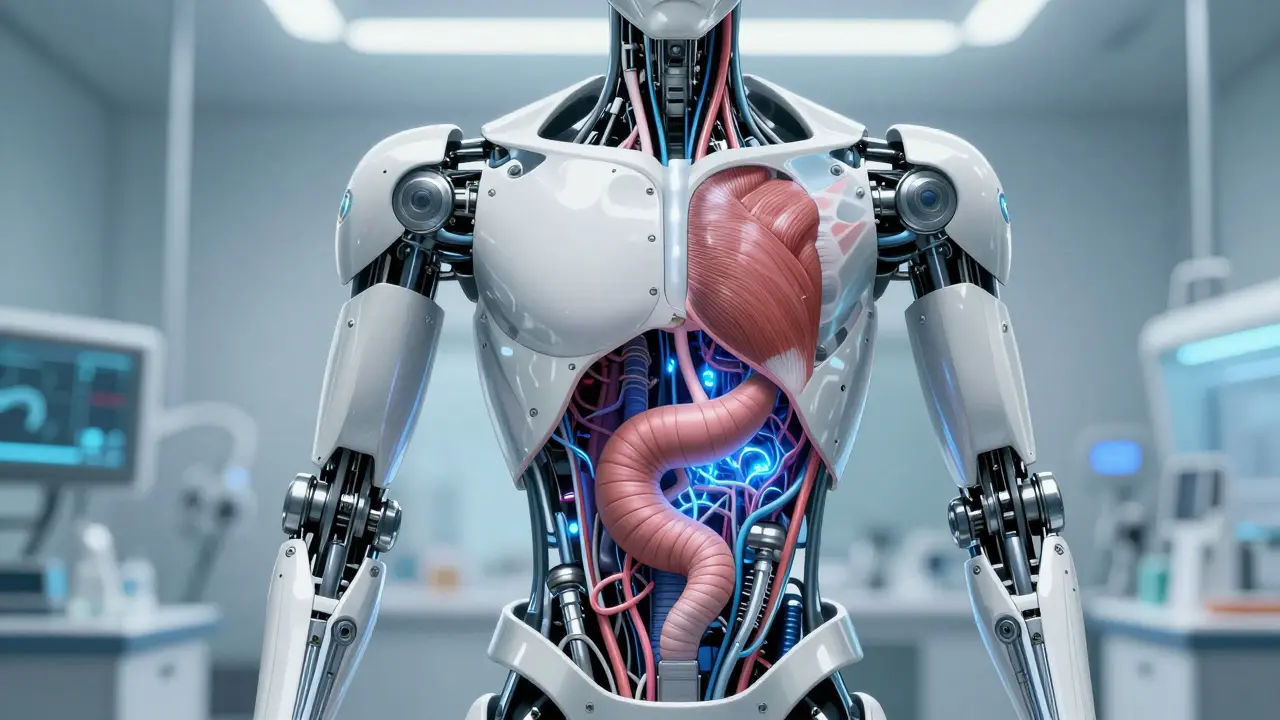
Imagine taking a bite of your favorite meal, swallowing, and then feeling it just... stop. It doesn't go down. Instead, it sits in your chest, causing pain, pressure, or even regurgitation hours later. For millions of people, this isn't a one-time choking incident; it is a daily reality caused by esophageal motility disorders, which are conditions where the muscles and nerves of the esophagus fail to coordinate properly. These invisible plumbing issues prevent food and liquid from moving smoothly from the throat to the stomach. The hallmark symptom is dysphagia, or difficulty swallowing, but these disorders often masquerade as heartburn or anxiety, leading to years of misdiagnosis.
If you have been told you have "just bad reflux" despite trying multiple medications with no relief, you might be dealing with a motility issue rather than acid exposure. Understanding how your esophagus works-and how doctors measure that function using high-resolution manometry (HRM), a specialized pressure mapping test-is the first step toward getting the right treatment. This guide breaks down what these disorders are, how they are diagnosed, and why the latest diagnostic standards matter for your health.
How Your Esophagus Is Supposed to Work
To understand what goes wrong, we first need to look at normal physiology. Your esophagus is not just a passive tube. It is a muscular conduit lined with smooth muscle controlled by complex nerve networks. When you swallow, a coordinated wave of contraction called peristalsis pushes food downward. At the same time, the lower esophageal sphincter (LES)-a ring of muscle at the bottom of the esophagus-relaxes to let food into the stomach and then tightens again to keep stomach acid from flowing back up.
In a healthy system, this process happens automatically and seamlessly. In esophageal motility disorders, this coordination breaks down. The muscles might contract too strongly, too weakly, or out of sync. The LES might stay tightly closed when it should open, or remain loose when it should seal. These mechanical failures create the symptoms that disrupt daily life.
Common Types of Esophageal Motility Disorders
Motility disorders are generally split into two categories: primary disorders, which originate within the esophagus itself, and secondary disorders, which result from systemic diseases like scleroderma or diabetes. Primary disorders are more common in clinical practice and include several specific conditions defined by the Chicago Classification, the global standard for diagnosing these issues.
- Achalasia: This is the most well-known motility disorder. The LES fails to relax, and the esophageal body loses its ability to push food down. It affects about 1 in 100,000 people annually. Patients often report progressive difficulty swallowing both solids and liquids, along with weight loss and regurgitation of undigested food.
- Jackhammer Esophagus: Formerly known as hypercontractile esophagus, this condition involves extremely powerful contractions. The distal contractile integral (DCI), a measure of contraction strength, exceeds 5,000 mmHg•s•cm. These violent squeezes cause severe chest pain that can mimic a heart attack.
- Diffuse Esophageal Spasm (DES): Here, the esophagus contracts in an uncoordinated, spastic manner. Food gets stuck because the waves aren't pushing in one direction. Chest pain is a dominant symptom, occurring in 40-50% of cases.
- Distal Esophageal Spasm (DES) and Weak Peristalsis: These involve premature contractions or weak, ineffective squeezes that fail to move boluses efficiently.
Secondary disorders, such as those seen in systemic sclerosis (scleroderma), affect up to 80% of patients with that autoimmune disease. Fibrosis replaces muscle tissue, leading to a dilated, floppy esophagus with a weak LES, which causes severe reflux and aspiration risk.
The Gold Standard: High-Resolution Manometry (HRM)
You cannot see motility disorders with a standard X-ray or endoscopy alone. While an endoscopy rules out physical blockages like tumors or strictures, it does not show how the muscles are functioning. That is where high-resolution manometry (HRM) comes in. HRM has revolutionized gastroenterology since its introduction in the early 2000s, replacing older, less precise techniques.
During an HRM test, a thin catheter with 36 circumferential pressure sensors spaced 1 cm apart is passed through the nose into the esophagus. As you swallow water, the sensors map the pressure changes along the entire length of the esophagus in real-time. The result is a color-coded topography plot that shows exactly where and how strong each contraction is.
| Method | What It Measures | Sensitivity for Achalasia | Limitations |
|---|---|---|---|
| High-Resolution Manometry (HRM) | Pressure patterns and LES relaxation | 96% | Invasive, requires specialist interpretation |
| Barium Swallow | Anatomy and gross movement | 78% | Cannot detect subtle pressure abnormalities |
| EndoFLIP (Impedance Planimetry) | Cross-sectional area and distensibility | 92% (for EGJOO) | Adjunct tool, not a standalone diagnostic |
| Upper Endoscopy | Mucosal surface and structural blocks | N/A (rules out cancer/strictures) | Cannot assess muscle function |
According to a 2020 study in *Diseases of the Esophagus*, HRM has a sensitivity rate of 96% for diagnosing achalasia, compared to just 78% for barium swallow. This precision allows doctors to subtype achalasia into Type I (no peristalsis), Type II (pan-esophageal pressurization, which responds best to treatment), and Type III (spastic contractions).

Understanding the Chicago Classification v4.0
Data from a manometry test is useless without a standardized way to interpret it. Enter the Chicago Classification v4.0, published in 2023 by a consortium of international experts led by Dr. John E. Pandolfino. This system provides the definitive criteria for diagnosing motility disorders based on HRM findings.
The v4.0 update introduced critical distinctions between "major" and "minor" motility disorders. Major disorders, like achalasia and jackhammer esophagus, clearly require therapeutic intervention. Minor disorders, such as mild weak peristalsis, may represent normal variants or age-related changes and might not need aggressive treatment. This distinction helps prevent overdiagnosis and unnecessary procedures.
The classification also refined the definition of Esophagogastric Junction Outflow Obstruction (EGJOO). EGJOO occurs when the LES fails to relax adequately, but peristalsis is still present. Unlike achalasia, where peristalsis is absent, EGJOO can sometimes resolve on its own or respond to medication, making accurate differentiation vital.
Why Diagnosis Often Takes Years
Despite advanced technology, patients face significant hurdles. A survey by the International Foundation for Gastrointestinal Disorders found that 68% of patients experienced diagnostic delays of 2-5 years. Why? Because symptoms overlap heavily with other conditions.
Chest pain from diffuse esophageal spasm often leads patients to emergency rooms, where cardiac causes are ruled out, but the root cause remains unidentified. Many patients are prescribed proton pump inhibitors (PPIs) for presumed GERD. As Dr. Kristle Lee Lynch notes in the *Merck Manual*, "Many patients with esophageal motility disorders are initially misdiagnosed with GERD, leading to inappropriate treatment with proton pump inhibitors that don't address the underlying motility problem." If PPIs don't help, and endoscopy looks normal, it is time to ask for manometry.
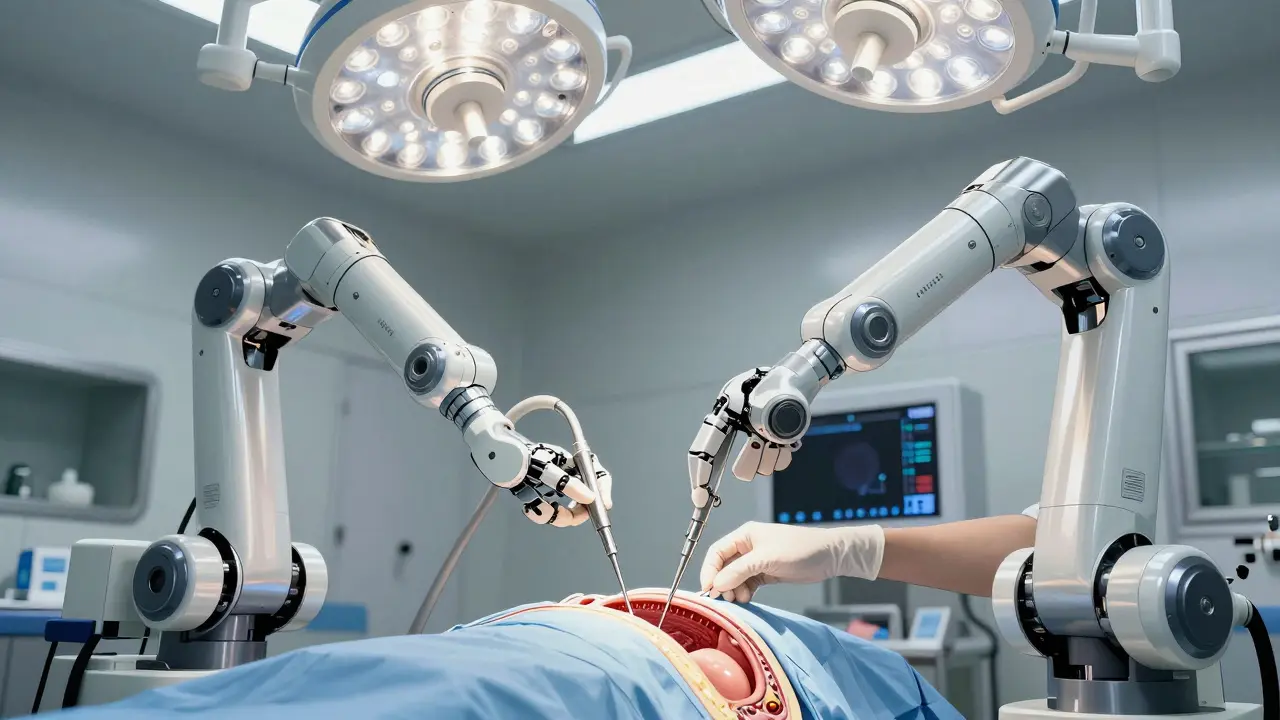
Treatment Options: From Medication to Surgery
Treatment depends entirely on the specific diagnosis provided by the Chicago Classification. There is no one-size-fits-all pill for motility disorders, though calcium channel blockers or nitrates may provide temporary relief for spasms.
For achalasia, mechanical intervention is usually required. The two gold-standard treatments are:
- Laparoscopic Heller Myotomy (LHM): A surgeon cuts the thickened LES muscle fibers via small incisions. Combined with a partial fundoplication to prevent reflux, this offers 85-90% symptom improvement at 5 years.
- Peroral Endoscopic Myotomy (POEM): An endoscopic procedure where the doctor creates a tunnel inside the esophagus to cut the muscle. POEM is equally effective but carries a higher risk of post-procedure reflux (44% at 2 years vs. 29% with LHM).
Pneumatic dilation, which uses a balloon to stretch the LES, is another option but often requires repeat sessions. For jackhammer esophagus, botulinum toxin injections or myotomy may be considered, though evidence is less robust than for achalasia.
Future Directions: AI and Wireless Monitoring
The field is evolving rapidly. New technologies like wireless manometry capsules (e.g., SmartPill) allow for ambulatory monitoring over 24-48 hours, capturing data during natural meals rather than just water swallows in a clinic. Additionally, AI-assisted interpretation tools are showing promise, with preliminary studies indicating 92% accuracy in identifying achalasia patterns, potentially reducing the reliance on highly specialized human readers.
If you struggle with swallowing, chest pain, or regurgitation that doesn't fit the typical heartburn profile, do not ignore it. Ask your gastroenterologist about high-resolution manometry. Getting the right label for your condition is the only way to get the right treatment.
What is the difference between GERD and esophageal motility disorders?
GERD (Gastroesophageal Reflux Disease) is primarily caused by a weak or loose lower esophageal sphincter allowing acid to escape, leading to burning sensations. Motility disorders involve abnormal muscle contractions that prevent food from moving down, causing dysphagia and chest pain. While they can coexist, treating GERD with acid reducers will not fix a motility problem like achalasia.
Is high-resolution manometry painful?
Most patients describe HRM as uncomfortable rather than painful. The catheter passes through the nose and throat, which can trigger a gag reflex. However, numbing sprays and decongestants are used beforehand. The procedure takes about 20-30 minutes. Studies show 78% satisfaction when patients are properly educated beforehand.
Can diet changes help with esophageal motility disorders?
Dietary modifications can manage symptoms but do not cure the underlying muscle dysfunction. Patients are often advised to eat smaller meals, chew thoroughly, avoid mixing solids and liquids, and stay upright after eating. For achalasia, soft foods and warm liquids may pass more easily, but mechanical obstruction eventually requires procedural intervention.
What is the Chicago Classification?
The Chicago Classification is the international standard system for interpreting high-resolution manometry results. Version 4.0, released in 2023, categorizes disorders into major (requiring treatment) and minor (possibly normal variants) groups, providing precise diagnostic criteria for conditions like achalasia, jackhammer esophagus, and EGJOO.
Who performs high-resolution manometry?
HRM is performed by gastroenterologists or specialized motility centers. Interpretation requires specific training, often involving fellowship programs. Due to the complexity of the Chicago Classification, it is recommended to seek care at academic medical centers or practices with dedicated motility specialists.
