
Imagine you’re the first person in line at a concert. You get the best seats, the closest view, and maybe even a chance to meet the band. Now imagine that instead of a concert, you’re launching a new drug on the market. In the world of generic pharmaceuticals, being first isn’t just about getting the best spot-it’s about locking in customers, securing higher prices, and building a brand loyalty that lasts for years. This is what we call the first-mover advantage, and it’s one of the most powerful forces shaping the generic drug industry today.
If you’ve ever wondered why some generic drugs dominate the market while others struggle to gain traction, the answer often comes down to timing. The first company to launch a generic version of a brand-name drug can capture up to 90% of the market share during its initial exclusivity period. That’s not just a small edge-it’s a massive competitive advantage that can mean the difference between thriving and barely surviving.
The Legal Foundation: How the Hatch-Waxman Act Changed Everything
To understand why the first mover has such an advantage, we need to look back to 1984. That year, the U.S. Congress passed the Drug Price Competition and Patent Term Restoration Act, also known as the Hatch-Waxman Act. This law was designed to balance two competing interests: encouraging innovation by protecting brand-name drug patents, and promoting competition by allowing generic versions to enter the market sooner.
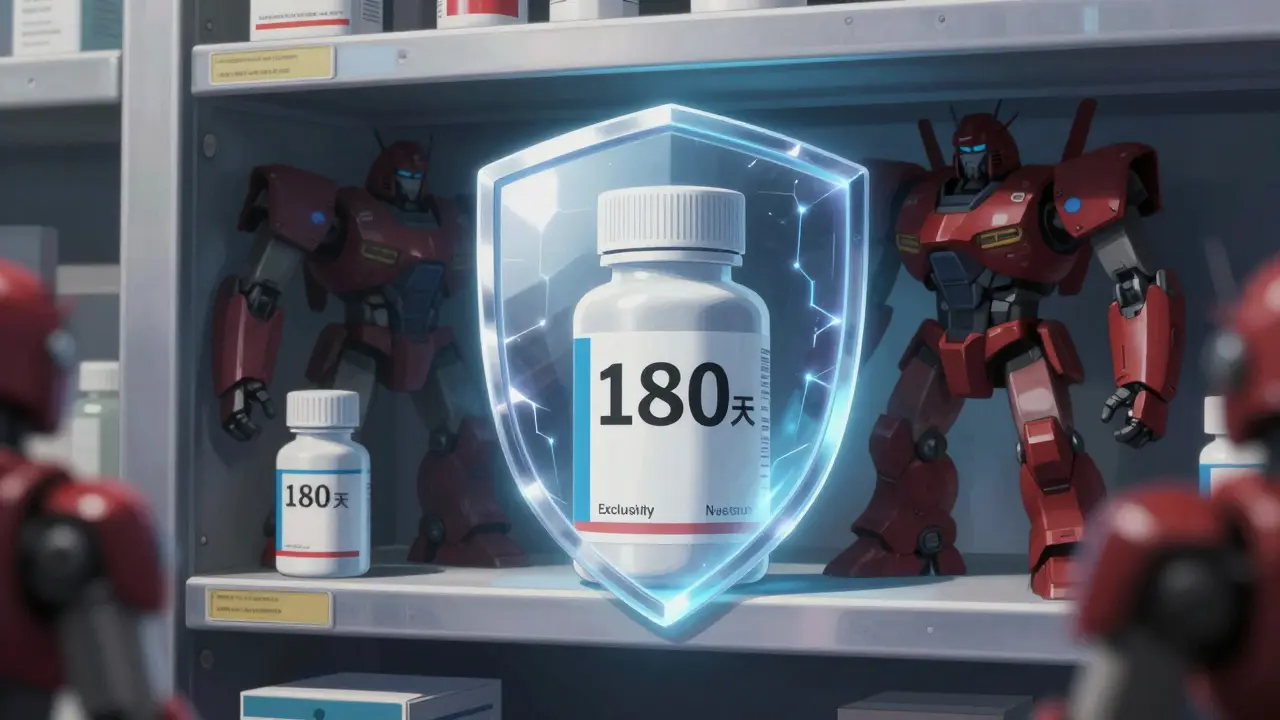
The key provision? A 180-day marketing exclusivity period for the first generic applicant who successfully challenges a brand drug’s patent. During this window, no other generic competitor can launch the same drug. It sounds short-just six months-but in the fast-moving world of pharmaceuticals, it’s enough time to establish relationships with doctors, pharmacies, and patients.
Since then, the impact has been enormous. In 1984, generics accounted for only 19% of prescriptions. Today, they make up over 90%. And according to DrugPatentWatch (2023), generic drugs saved the U.S. healthcare system more than $338 billion in 2020 alone. But behind those numbers lies a hidden truth: the first mover captures the lion’s share of those savings-and profits.
Why First Comes First: The Power of Path Dependency
You might think that once the 180-day exclusivity ends, all generic competitors would have an equal shot at winning customers. But that’s not how things work in practice. What happens instead is something economists call “path dependency”-the idea that early decisions create long-lasting effects.
Here’s how it plays out:
- Prescriber habits: Doctors tend to stick with the generic they’ve used before. If a patient responds well to a particular generic, there’s little incentive to switch.
- Pharmacy stocking preferences: Pharmacies usually stock only one generic per molecule to keep inventory costs low. Once a pharmacy stocks your product, switching becomes expensive and inconvenient.
- Patient loyalty: Patients don’t want to risk side effects or changes in efficacy. They prefer consistency, which means sticking with the first generic they tried.
These factors create high “switching costs” that persist long after the exclusivity period ends. According to McKinsey & Company (2023), the first-to-market player averages a 6 percentage point market-share advantage over later entrants. In some cases, that gap widens to over 13 points depending on the therapeutic area.
When Does the First-Mover Advantage Matter Most?
Not every drug launch benefits equally from being first. Some conditions amplify the advantage, while others dilute it. Let’s break it down:
| Factor | Impact on Advantage |
|---|---|
| Therapeutic Area | Specialty drugs show stronger advantages than primary care medications |
| Drug Form | Injectables offer 8-10 percentage points more advantage than oral preparations |
| Company Size | Large pharma companies gain >10 market-share points; smaller firms may underperform |
| Lead Time | A 3-year lead creates substantial advantage; less than 1 year makes it nearly meaningless |
| Market Crowding | In markets with >5 generics, advantage diminishes significantly |
For example, if you’re launching a specialty injectable drug in a niche market with few prescribers, being first gives you a huge boost. But if you’re entering a crowded primary care market with dozens of existing generics, the advantage shrinks considerably.
The Hidden Threat: Authorized Generics
There’s one major risk that can undermine the first-mover advantage: Authorized Generics (AGs). These are versions of the brand drug sold as generics by the original manufacturer. When launched during the 180-day exclusivity period, AGs turn what should be a duopoly into a three-player game.
According to the Federal Trade Commission, AGs reduce first-filer revenue through 4-8% lower retail prices and 7-14% lower wholesale prices. That’s a significant hit to profitability, especially when you’re trying to recoup R&D and regulatory costs.
Smart companies plan for this. Leading generic manufacturers maintain relationships with multiple API suppliers to secure favorable terms, averaging 12-15% cost reductions compared to later entrants (Alvarez and Marsal, 2022).

How to Secure Your Spot as the First Mover
Becoming the first to market requires more than just speed. It demands meticulous planning, legal expertise, and operational excellence. Here’s what successful companies do differently:
- File patent challenges early: The average time from filing to market entry ranges from 18-36 months. Starting early gives you breathing room.
- Build manufacturing capacity: Don’t wait until approval to scale production. Prepare facilities and supply chains ahead of time.
- Invest in therapeutic expertise: Companies without experience in a specific therapeutic area achieve only half the first-to-market advantage of experienced competitors (McKinsey, 2023).
- Plan for AG entry: Have contingency strategies ready, including pricing adjustments and promotional campaigns.
- Expand indications quickly: First movers who expand approved uses faster than rivals within the first five years see the strongest effect-up to 13 percentage points above fair market share.
Looking Ahead: Will the First-Mover Advantage Last?
As regulations evolve and more players enter the space, will the first-mover advantage hold its ground? Industry analysts say yes-but with caveats.
On one hand, increased FDA guidance documents could standardize complex generic development, reducing the knowledge barrier that currently benefits pioneers. On the other hand, fundamental drivers like prescriber habits, pharmacy inertia, and patient loyalty remain strong.
Projections from Evaluate Pharma (2023) suggest that first generics will continue capturing 30-40% market share even after multiple entrants have entered, compared to 10-15% for second entrants and progressively less for subsequent players.
What is the first-mover advantage in generic pharmaceuticals?
It refers to the significant market share dominance achieved by the first generic manufacturer to launch a drug, often lasting well beyond the initial 180-day exclusivity period due to prescriber habits, pharmacy stocking preferences, and patient loyalty.
How does the Hatch-Waxman Act support the first-mover advantage?
The Hatch-Waxman Act grants 180 days of marketing exclusivity to the first generic filer who successfully challenges a brand drug’s patent, giving them a head start in establishing market presence.
Can authorized generics threaten the first-mover advantage?
Yes. Authorized generics launched by the brand company during the exclusivity period can reduce first-filer revenue through lower retail and wholesale prices, turning a duopoly into a three-player market.
Which types of drugs benefit most from first-mover status?
Specialty therapeutic areas, injectables, and drugs with limited prescribers show the strongest first-mover advantages. Oral preparations in crowded primary care markets see weaker effects.
How important is lead time in maintaining first-mover advantage?
Very. A lead time of three years or more offers substantial advantage, while a gap of one year or less renders the first-mover effect virtually meaningless.
Do large pharmaceutical companies benefit more from first-mover status?
Yes. Large pharma companies gain greater than ten market-share points from being first, while smaller firms may perform worse than expected due to limited resources and expertise.
Is the first-mover advantage sustainable long-term?
In many cases, yes. Even after multiple entrants, first generics typically retain 30-40% market share, driven by entrenched prescriber habits and pharmacy logistics.
What role do pay-for-delay agreements play in first-mover dynamics?
Pay-for-delay agreements, where brand companies compensate generics to delay entry, were historically common but face increasing FTC scrutiny. Their decline may accelerate first generic launches by 6-9 months.
How does GDUFA III affect first-mover strategy?
GDUFA III aims to reduce review times but increases application complexity, potentially favoring larger manufacturers with greater regulatory resources and deeper expertise.
What steps should companies take to maximize their first-mover advantage?
Key steps include early patent challenge filings, building manufacturing capacity, investing in therapeutic expertise, planning for AG entry, and expanding indications quickly post-launch.

Frances Kendall
Look, I’ve been in the pharma supply chain for over a decade and this article hits the nail on the head regarding the 180-day exclusivity window. It’s not just about speed; it’s about locking in the PBM contracts before anyone else can even blink. The Hatch-Waxman act was supposed to balance innovation with access, but in reality, it created a gold rush where only the biggest players with the deepest pockets can afford the legal battles to be first. Once you get that first mover status, the inertia of the system works entirely in your favor. Doctors don’t want to switch prescriptions because they’re afraid of patient complaints, and pharmacies hate restocking different generic brands for the same molecule because it messes up their inventory algorithms. So yeah, the first company gets to ride that wave for years, sometimes decades, until the next big patent cliff hits. It’s brutal but efficient.
Natali Brown
Oh my gosh, this is such an important topic and I am so glad someone finally broke it down in a way that makes sense to people who aren't finance wizards! :D It really warms my heart to see how much these generics save the healthcare system, like $338 billion is absolutely massive! But I also feel bad for the smaller companies that try to enter the market later and struggle to gain traction because everyone is already loyal to the first brand they tried. It’s kind of like when you find your favorite coffee shop and you never want to go anywhere else, right? ☕️ I hope more patients realize that switching generics isn't as scary as it seems because bioequivalence standards are super strict now. We should all support competition so prices stay low for everyone! Keep spreading the knowledge! ✨
swetha r
You think this is just about business efficiency? Please. This is a carefully orchestrated trap designed to keep us dependent on a handful of mega-corporations that control our health from birth to death. The 'first-mover advantage' is just code for monopoly power disguised as competition. They know we are too scared to ask our doctors for a specific manufacturer, so they let the pharmacy decide, and the pharmacy decides based on kickbacks or convenience, not quality. The Hatch-Waxman act wasn't passed to help you; it was passed to ensure that once a patent expires, the original brand owner still gets a cut through authorized generics while the first filer takes the lion's share. It’s a three-way scam against the consumer. Wake up.
Derick Garcia
The premise of this article is fundamentally flawed and demonstrates a profound misunderstanding of market dynamics. To suggest that being first is inherently advantageous ignores the substantial risks associated with early market entry, including higher regulatory costs and the potential for manufacturing defects that damage brand reputation before it is even established. Furthermore, the notion that prescriber habits create insurmountable barriers is anecdotal at best. Physicians are trained to treat the condition, not the manufacturer. If a later entrant offers superior pricing or reliability, the market will correct itself. This narrative serves only to justify the inflated profits of incumbent firms rather than reflecting true competitive merit. One must question why we celebrate inefficiency wrapped in the language of economic theory.
Abhimanyu Pandey
Let us examine the data closely. The 180-day exclusivity period is not a gift; it is a bribe paid by the state to the highest bidder. The FDA is complicit in this charade. They prioritize the applications of those who pay the most fees. The 'path dependency' mentioned is actually a psychological manipulation tactic employed by marketing departments to instill fear in patients regarding bioequivalence. It is a lie. All generics are chemically identical. The difference is in the filler ingredients, which are often toxic. The first mover wins because they are the loudest, not the best. Do not trust them. They are watching your prescription history. They are building profiles. It is surveillance capitalism applied to biology. ;)
Dat Alexander
i mean look at it from a human perspective though. if you take a pill every day for ten years and it works fine why would you want to change? its not about loyalty its about not wanting to deal with side effects again. the system is broken sure but blaming the first mover is weird. they took the risk. they filed the papers. they built the factory. if they didnt do it who would have? maybe no one. so yeah they get the reward. simple as that. dont overthink it.
Raymond Roberts
Thats a lot of info to process but i think the part about authorized generics is the most interesting. Like why would the brand company sell their own generic? Seems counter intuitive unless they are trying to squeeze out the independent first filers. I bet the big pharma companies love that strategy because it keeps them in the game even after the patent expires. It feels like a rigged game where the house always has a backup plan. Also typos happen sorry if this is long winded but i really think we need more transparency in how these contracts are signed between PBMs and manufacturers. It affects everyone eventually.
Kelsey Thomas
Hey guys! 👋 Just wanted to chime in here because I work in pharmacy tech and seeing this play out daily is wild. The first mover advantage is real, but it’s also kinda fragile if the supply chain breaks. We’ve seen shortages where the ‘first’ generic runs out and suddenly everyone switches to the second or third option just to get meds. It shows that patient loyalty isn’t as strong as the economists say-it’s mostly just convenience. When the convenient option disappears, people adapt fast. 📉📦 Anyway, great discussion! Let’s keep learning together! 🧠💊