Hypoglycemia Unawareness Risk Assessor
Your Profile
Select your profile details and click "Assess My Risk" to see your personalized safety report.
Imagine your blood sugar is dropping dangerously low. Usually, your body sends a loud alarm: your heart races, your hands shake, and you feel anxious. These are your autonomic warning signs, telling you to eat something sweet immediately. But what if that alarm never rings? This is Hypoglycemia Unawareness, a silent and dangerous condition where the physical cues of low blood sugar disappear before your brain realizes there is a problem. For people with diabetes taking insulin, this is already a serious risk. Now, add beta-blockers-a common heart medication-to the mix, and that risk skyrockets.
If you or a loved one takes both insulin and beta-blockers, you are navigating a complex medical intersection. About 25% of hospitalized diabetic patients receive these two drugs together. The interaction doesn't just mask symptoms; it can actually prevent your body from fixing low blood sugar on its own. Understanding how this works isn't just academic-it’s a matter of safety.
Why Beta-Blockers Silence the Warning Signs
To understand the danger, we have to look at how your body normally reacts to low blood sugar (hypoglycemia). When glucose levels drop, your adrenal glands release adrenaline (epinephrine) and norepinephrine. These chemicals trigger the "fight or flight" response, causing tachycardia (fast heartbeat), tremors, and palpitations. These are the symptoms you recognize as "low blood sugar."
Beta-blockers work by blocking beta-adrenergic receptors. They are designed to slow down the heart and lower blood pressure, which is why they are prescribed for hypertension and after a heart attack. However, they don't distinguish between the stress of exercise and the stress of hypoglycemia. By blocking these receptors, non-selective beta-blockers can suppress almost all adrenergically mediated symptoms of hypoglycemia.
Research by White in 2007 highlighted that antecedent hypoglycemia promotes subsequent unawareness, but beta-blockers accelerate this process by blunting the initial warning system. If you can't feel your heart racing, you might not realize your blood sugar is critical until neuroglycopenia sets in-meaning your brain is starved of glucose. This leads to confusion, seizures, or loss of consciousness.
The One Symptom That Remains: Sweating
Here is a crucial piece of information that many patients miss: beta-blockers do not stop sweating during hypoglycemia. Why? Because the nerves that control sweat glands use acetylcholine, not norepinephrine, to send signals. While beta-blockers block the chemical responsible for shaking and rapid heartbeat, they leave the sweating mechanism intact.
This physiological nuance is your lifeline. If you are on beta-blockers and insulin, you must retrain yourself to watch for diaphoresis (excessive sweating) as your primary warning sign. A sudden cold sweat, especially when you haven't been exercising, should trigger an immediate blood glucose check. Ignoring this specific symptom because you aren't feeling shaky is a common mistake that leads to severe events.
Selective vs. Non-Selective: Not All Beta-Blockers Are Equal
Not every beta-blocker affects your blood sugar the same way. The type of beta-blocker matters significantly for your safety profile. There are two main categories: cardioselective (beta-1 selective) and non-selective (blocking both beta-1 and beta-2).
| Type | Examples | Effect on Hypoglycemia Symptoms | Metabolic Impact |
|---|---|---|---|
| Non-Selective | Propranolol, Nadolol | High masking potential; blocks most adrenergic symptoms. | Significant suppression of glycogenolysis; higher risk of prolonged hypoglycemia. |
| Cardioselective (Beta-1) | Metoprolol, Atenolol, Bisoprolol | Moderate masking; primarily affects heart rate. | Less impact on liver glucose production than non-selective types. |
| Mixed Alpha/Beta Blocker | Carvedilol | Lower masking potential compared to others. | Associated with improved insulin sensitivity; lowest risk of severe hypoglycemia in recent studies. |
A 2019 study by Dungan found that selective beta-blockers were associated with a 2.3 times increased odds of hypoglycemia in hospitalized patients not requiring basal insulin. However, carvedilol stood out. In the same research, carvedilol showed a significantly lower risk profile (odds ratio 1.21) compared to other selective agents (odds ratio 1.87). More importantly, hypoglycemia was linked to a 3.2 times increase in hospital mortality for those on selective beta-blockers, but not for those on carvedilol.
This data suggests that if you need a beta-blocker while managing diabetes with insulin, carvedilol may be the safer choice due to its unique mechanism that includes alpha-blocking activity, which can improve peripheral blood flow and insulin sensitivity.

The Metabolic Trap: Impaired Glucose Recovery
Masking symptoms is only half the problem. The other half is metabolic. When your blood sugar drops, your liver usually releases stored glucose (glycogenolysis) to bring levels back up. This process is stimulated by beta-2 receptors in the liver and muscle tissue.
Non-selective beta-blockers block these beta-2 receptors. According to Carnovale's 2021 research, this inhibition prevents the liver from releasing glucose effectively. So, you have a double whammy: you don't feel the low blood sugar, and your body struggles to correct it. This creates a "perfect storm" for severe, prolonged hypoglycemic events.
Even cardioselective beta-blockers like metoprolol can lose their selectivity at higher doses, meaning they start blocking beta-2 receptors too. This is why dose management is critical. Always discuss the lowest effective dose with your cardiologist and endocrinologist.
Safety Strategies for Patients and Clinicians
Living with this drug interaction requires a proactive approach. You cannot rely on old habits. Here is a practical checklist for managing safety:
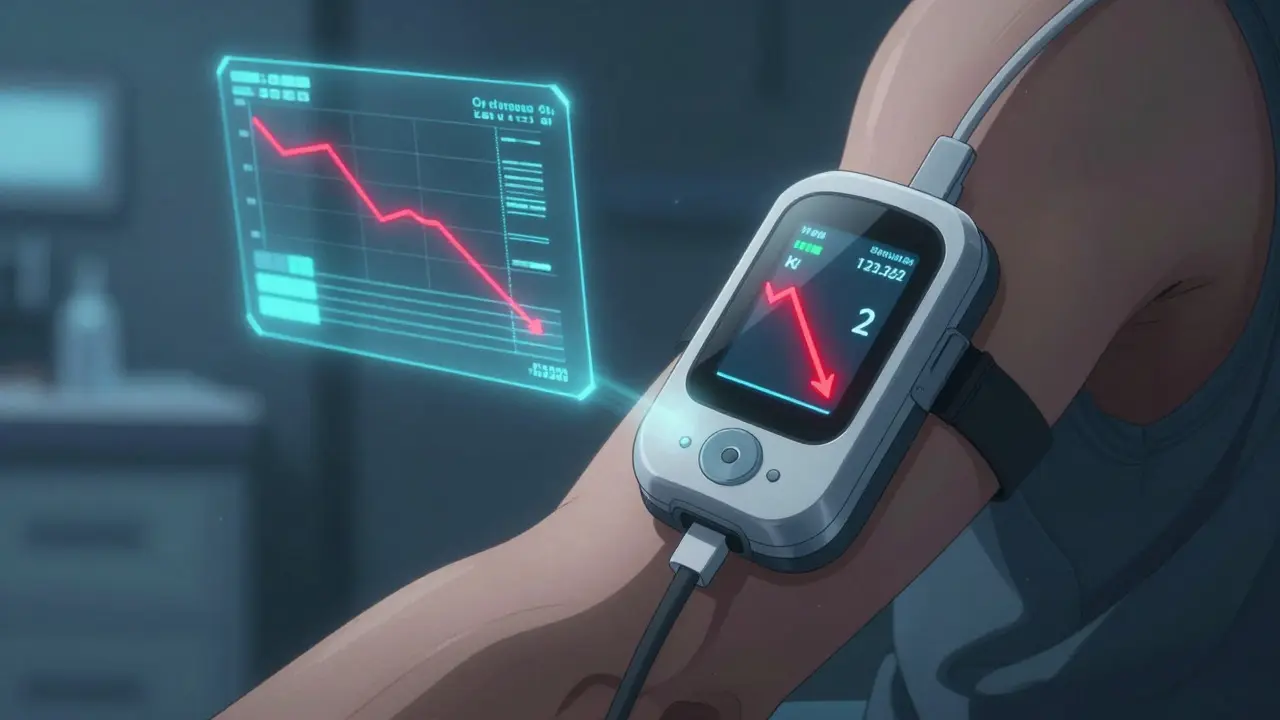
- Switch to Continuous Glucose Monitoring (CGM): CGMs provide real-time data and alarms independent of physical symptoms. Data from the T1D Exchange Registry shows a 300% increase in CGM adoption among diabetic patients on beta-blockers since 2018, resulting in a 42% reduction in severe hypoglycemia events. If you aren't using a CGM, talk to your doctor about getting one.
- Frequent Fingerstick Checks: If you don't have a CGM, check your blood glucose more often. The American Heart Association recommends checks every 2-4 hours during acute illness or hospitalization. At home, check before meals, before bed, and anytime you feel unusual fatigue or sweating.
- Educate Your Circle: Tell family members, friends, and coworkers that you take beta-blockers and insulin. Show them how to recognize altered mental status or excessive sweating as signs of hypoglycemia. Carry a medical ID card that lists both medications.
- Review Medication Choices: Ask your doctor if carvedilol is an appropriate alternative to your current beta-blocker. If you are on propranolol or another non-selective agent, ask if switching to a cardioselective option is possible.
- Adjust Insulin Carefully: Beta-blockers can sometimes affect insulin sensitivity. You may need adjustments to your insulin dosage, particularly if you change beta-blocker types or doses. Never adjust insulin without medical supervision.

The Cardiovascular Benefit vs. Risk Trade-off
It is important to remember why you are taking beta-blockers. Diabetic patients have a 2-4 fold greater risk of cardiovascular disease. Beta-blockers reduce post-heart attack mortality by 25% according to 2023 ESC Guidelines. Stopping a beta-blocker abruptly can be fatal for someone with heart disease.
The goal isn't necessarily to stop the beta-blocker, but to manage the interaction safely. The ADVANCE trial subanalysis showed no significant difference in severe hypoglycemia rates between atenolol and placebo over five years in an outpatient setting. This suggests that with proper monitoring and education, the long-term cardiovascular benefits often outweigh the risks, provided you are vigilant about glucose levels.
Emerging Solutions and Future Directions
Science is moving toward personalized medicine. The 2023 DIAMOND trial is investigating genetic markers that predict who is at highest risk for beta-blocker-related hypoglycemia. In the future, a simple genetic test might tell us exactly which beta-blocker is safest for your specific biology.
Until then, we rely on technology and awareness. Newer beta-blockers and combination therapies are being studied to minimize metabolic side effects. Meanwhile, artificial pancreas systems (closed-loop insulin delivery) are becoming more sophisticated, potentially reducing the burden of manual monitoring by automatically adjusting insulin based on CGM data.
Can I take insulin and beta-blockers together?
Yes, many people safely take both. However, it requires careful monitoring because beta-blockers can mask the warning signs of low blood sugar. Work closely with your healthcare team to choose the right type of beta-blocker and establish a strict glucose monitoring routine.
Which beta-blocker is safest for diabetics?
Carvedilol is often considered the safest option for patients with diabetes due to its lower risk of causing severe hypoglycemia and its potential to improve insulin sensitivity. Cardioselective beta-blockers like metoprolol are also used but require closer monitoring than carvedilol.
What are the symptoms of hypoglycemia if I am on beta-blockers?
The typical symptoms like shaking and rapid heartbeat may be absent. The most reliable remaining symptom is sweating (diaphoresis). Other signs include confusion, dizziness, weakness, and difficulty concentrating. Rely on blood glucose meters rather than physical feelings.
Do beta-blockers cause low blood sugar?
They can contribute to it. Beta-blockers inhibit the liver's ability to release stored glucose (glycogenolysis) during a low blood sugar event. This means your body has a harder time correcting hypoglycemia naturally, leading to longer and more severe episodes.
Should I stop taking my beta-blocker if I have diabetes?
Do not stop taking beta-blockers without consulting your doctor. They provide critical protection against heart attacks and stroke, especially for diabetics. Instead, discuss adjusting the type of beta-blocker or increasing glucose monitoring frequency to manage the risk.
