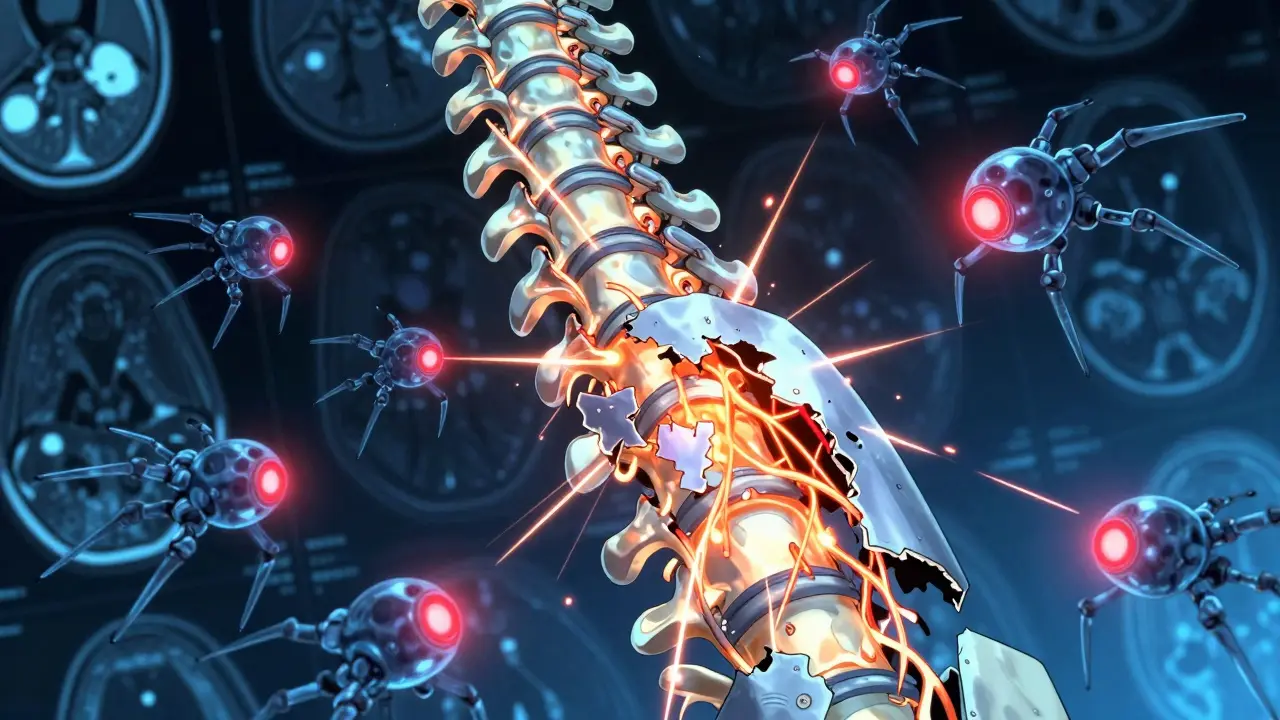
Multiple sclerosis is not just a neurological condition-it’s an autoimmune attack on the very system that lets your body move, think, and feel. Imagine your nerves as electrical wires. They need insulation to send signals quickly and clearly. That insulation is called myelin. In multiple sclerosis, your immune system turns against it, stripping away this protective coating. The result? Misfired signals, slowed responses, and symptoms that can range from mild fatigue to paralysis. It’s a disease that doesn’t just affect the body-it reshapes daily life.
What Happens Inside the Body?
Multiple sclerosis (MS) targets the central nervous system: your brain and spinal cord. The immune system, which normally fights infections, mistakenly identifies myelin as a threat. Specialized immune cells-mainly T-cells-cross the blood-brain barrier and launch an inflammatory attack. This damages the myelin sheath, the fatty layer that wraps around nerve fibers. Without it, electrical impulses slow down or get blocked entirely. Healthy nerves can transmit signals at up to 120 meters per second. In damaged areas, that speed drops by 30-50%.
These attacks leave scars-called plaques or lesions-visible on MRI scans. Over time, these lesions accumulate. In some cases, the underlying nerve fibers (axons) themselves begin to degenerate. That’s when disability becomes permanent. Unlike infections, this isn’t a one-time event. It’s a chronic, ongoing process. The body tries to repair the damage, but the repair is often incomplete. That’s why symptoms can come and go, then slowly worsen.
The Four Types of MS
MS isn’t one disease. It’s a spectrum. There are four main patterns, each with its own course:
- Clinically Isolated Syndrome (CIS): This is a single episode of neurological symptoms lasting at least 24 hours. It might be the first sign of MS. If an MRI shows lesions typical of MS, there’s a 60-80% chance a second episode will occur within 10 years.
- Relapsing-Remitting MS (RRMS): This is the most common form, affecting 85% of people at diagnosis. People experience clear flare-ups-called relapses-followed by periods of partial or full recovery. Without treatment, relapses happen about once a year. Many assume remission means the disease is gone. It’s not. Damage still builds silently.
- Secondary Progressive MS (SPMS): After 10-25 years, about half of RRMS patients shift into this phase. Relapses become less frequent, but disability slowly worsens. There’s no going back. This transition marks the point where nerve damage outpaces repair.
- Primary Progressive MS (PPMS): Affects 15% of people. From day one, symptoms steadily worsen without distinct relapses. Progression is slower than SPMS, but harder to treat. People with PPMS often struggle with walking and balance early on.
Who Gets MS-and Why?
MS doesn’t pick randomly. It favors women: they’re diagnosed 2-3 times more often than men. Most people are diagnosed between ages 20 and 40. It’s rare under 15 or after 60.
Geography matters too. The farther you live from the equator, the higher your risk. In Canada, Scotland, and Scandinavia, about 300 people per 100,000 have MS. Near the equator, that number drops to 30. Why? Sunlight. Vitamin D, made when skin is exposed to UV rays, plays a protective role. People with vitamin D levels below 30 ng/mL have a 40% higher risk of developing MS.
Genetics also matter. Over 230 gene variants are linked to increased risk. The strongest is HLA-DRB1*15:01. If you carry it, your risk triples. But genes alone don’t cause MS. Something else triggers it.
Epstein-Barr virus (EBV)-the virus that causes mononucleosis-is the biggest suspect. A 2022 Harvard study found people who had infectious mononucleosis were 32 times more likely to develop MS. But not everyone with EBV gets MS. And not everyone with MS had mono. It’s a puzzle. The virus may be the match, but genetics and environment light the fuse.

How Is MS Diagnosed?
There’s no single blood test for MS. Diagnosis relies on three things: symptoms, MRI scans, and ruling out other conditions.
The McDonald Criteria, last updated in 2017, are the global standard. To confirm MS, doctors need evidence of damage in at least two different areas of the central nervous system (dissemination in space) and damage that happened at different times (dissemination in time). MRIs are key. A 3 Tesla scanner detects 30% more lesions than a 1.5 Tesla machine. Gadolinium contrast shows active inflammation-bright spots on the scan that mean the immune system is currently attacking.
Doctors also use spinal fluid tests and evoked potential tests. These measure how fast nerve signals travel. Slowed signals confirm damage, even if the patient doesn’t feel symptoms yet.
On average, it takes 3-5 specialist visits and 6-12 months to get a diagnosis. Out-of-pocket costs in the U.S. range from $2,500 to $5,000 for the full workup.
What Are the Real Symptoms?
MS symptoms vary wildly. Two people with the same diagnosis can have completely different experiences.
- Chronic fatigue: 78% of people on MyMSTeam call it the most disabling symptom. It’s not just being tired. It’s a crushing exhaustion that doesn’t improve with rest.
- Brain fog: Trouble finding words, forgetting names, losing focus. Reddit’s r/MS community has over 250,000 members, many sharing stories of words just “not forming” during a flare-up.
- Numbness and tingling: Often starts in hands, feet, or face. It can come and go.
- Muscle weakness and spasticity: Legs feel heavy. Stiffness makes walking harder. Falls become more common.
- Bladder and bowel issues: Urgency, leakage, constipation. These are rarely discussed but affect 80% of people with MS.
- Vision problems: Blurry vision, double vision, or optic neuritis-a painful inflammation of the optic nerve.
Many symptoms are invisible. You can’t see fatigue. You can’t see brain fog. That’s why people with MS are often misunderstood. “You look fine,” is one of the most hurtful things you can hear.
Treatment: Slowing the Damage
There’s no cure. But there are treatments that slow progression. Disease-modifying therapies (DMTs) are the backbone of MS care.
There are six classes of DMTs, each working differently:
- Injections: Interferons and glatiramer acetate. These have been around for decades. They reduce relapses by 30-50%. But side effects-flu-like symptoms, injection site reactions-lead to 42% of users stopping within a year.
- Oral pills: Fingolimod, dimethyl fumarate, teriflunomide. More convenient. Fewer injections. But carry risks like liver damage or increased infection.
- Infusions: Ocrelizumab, natalizumab, ublituximab-xiiy (Briumvi). These target specific immune cells. Briumvi, approved by the FDA in March 2023, cuts relapses by 50% compared to older drugs.
Annual costs range from $65,000 for generic glatiramer acetate to $87,000 for newer infusions. But 90% of U.S. patients get financial help through manufacturer copay programs.
Rehabilitation is just as important. Physical therapy focused on balance reduces falls by 47%. Occupational therapy helps with daily tasks. Speech therapy helps with brain fog and swallowing issues.
The Future: What’s Next?
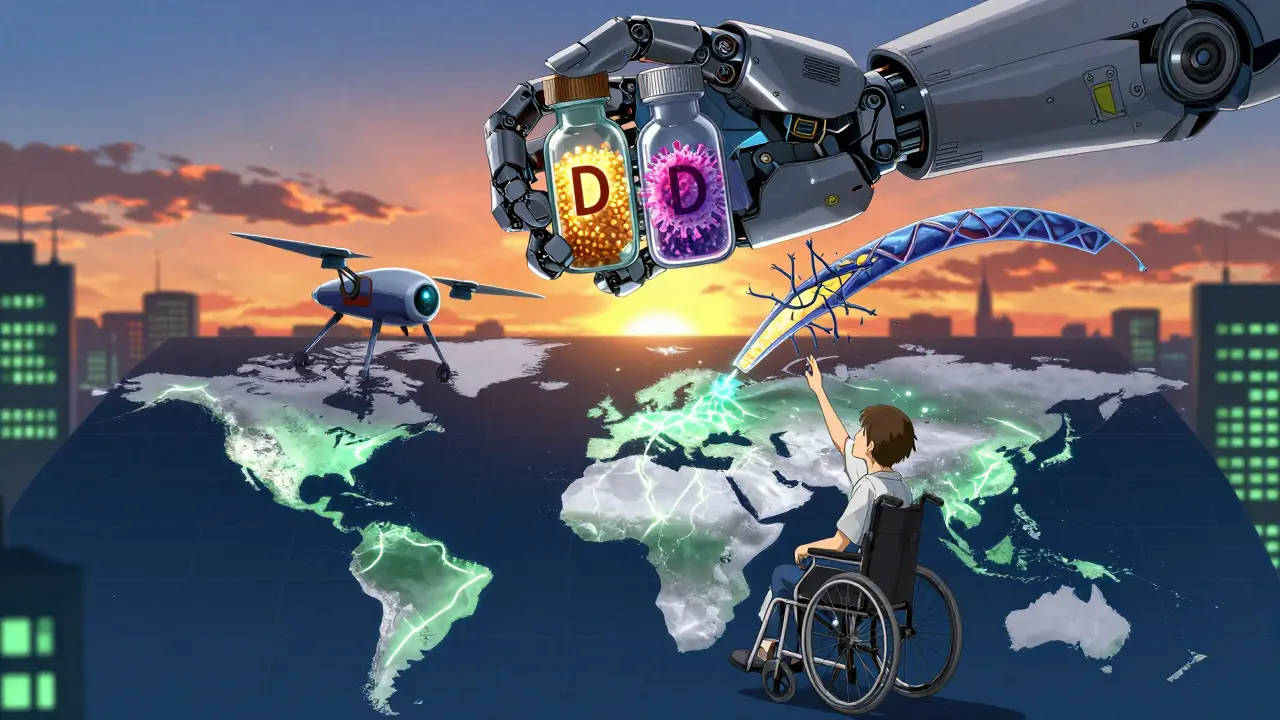
Research is moving fast. Scientists aren’t just trying to stop attacks-they’re trying to repair damage.
- Remyelination therapies: Drugs like opicinumab are being tested to rebuild myelin. Phase II trials showed a 15% improvement in nerve signal speed.
- Stem cell transplants: Over 127 clinical trials are underway. Early results show some patients stop progressing for years after the procedure.
- Gut microbiome: The bacteria in your intestines may influence MS. Fecal transplants in early trials reduced inflammation markers by 30%.
- ANV419: A new estrogen-based drug showed a 40% reduction in new brain lesions at 24 weeks in 2024 trials.
But access remains unequal. In low- and middle-income countries, 50% of people with MS have no access to any disease-modifying therapy. In high-income nations, 85% do. That’s a global crisis.
Living With MS Today
Life expectancy is now near normal. People diagnosed after 2010 are 70% more likely to stay ambulatory at 20 years than those diagnosed before 1990. That’s thanks to early diagnosis and aggressive treatment.
Workplace accommodations make a huge difference. Flexible hours? 65% of employed people with MS need them. Remote work? 58%. Simple changes keep people employed and independent.
MS isn’t a death sentence. It’s a challenge. But with the right tools, support, and treatments, many live full, active lives. The key is acting early-before the damage piles up.
Is multiple sclerosis hereditary?
MS is not directly inherited like eye color. But genetics play a role. If a parent has MS, your risk is about 2-5%, compared to 0.1% in the general population. Over 230 gene variants increase susceptibility, with HLA-DRB1*15:01 being the strongest. Still, most people with these genes never develop MS. Environmental triggers like low vitamin D or Epstein-Barr virus are needed to set off the disease.
Can you die from multiple sclerosis?
MS itself rarely causes death. Most people with MS live a normal lifespan. But complications can be serious. Advanced MS can lead to difficulty swallowing, increasing risk of pneumonia. Immobility raises the chance of blood clots or pressure sores. Infections and respiratory issues are the most common causes of death in late-stage MS. Early treatment and good care reduce these risks dramatically.
Does stress make MS worse?
Stress doesn’t cause MS, but it can trigger relapses. Studies show that major life stressors-like divorce, job loss, or the death of a loved one-correlate with increased flare-ups in the following weeks. Managing stress through therapy, meditation, or exercise isn’t optional-it’s part of treatment. Many neurologists now include stress management in care plans.
Can you get MS if you’re over 50?
Yes, though it’s rare. About 5-10% of MS cases are diagnosed after age 50. This is often called late-onset MS. It’s usually primary progressive, with fewer relapses and more steady decline. Diagnosis is trickier because symptoms like balance issues or fatigue are often blamed on aging. But MRI and spinal fluid tests can still confirm MS. Early treatment matters even at older ages.
Are there any natural cures for MS?
No. There are no proven natural cures. Some people try vitamin D supplements, omega-3s, or special diets. While these may help general health, they don’t stop disease progression. The ‘liberation procedure’-a controversial vein surgery-was tested in 10 randomized trials and found to have zero benefit. Relying on unproven methods can delay real treatment and lead to irreversible damage. Always talk to a neurologist before trying alternative therapies.

Marissa Staples
It's wild how the body turns on itself like this. Myelin isn't just insulation-it's the difference between a symphony and static. I keep thinking about how fragile our biological systems are. One misstep in immune recognition and everything starts to unravel. No villain, no enemy-just a system that forgot how to tell friend from foe.
Rachele Tycksen
so like… ms is basically your immune system having a bad day and wrecking your wifi? lol
Grace Kusta Nasralla
I wonder if the loneliness of invisible illness is worse than the symptoms. You sit there, perfectly present, and everyone sees a body that looks fine. But inside? A storm no one else can see. The silence between symptoms… that’s the real weight.
Korn Deno
the real tragedy isn't the disease it's how long it takes to diagnose. 3-5 visits? 12 months? that's criminal. we diagnose appendicitis faster. we need better tools and faster pathways. the science is here. the system isn't
Aaron Sims
Wait-so you're telling me the government, big pharma, and the WHO are all hiding the TRUTH? EBV? VITAMIN D? That's just the cover story. The real cause is 5G towers + GMOs + fluoride in the water. They don't want you to know MS is 100% preventable if you just stop using microwaves and start wearing copper hats. I've been cured. You haven't.
Stephen Alabi
While the information presented is superficially accurate, it lacks sufficient nuance regarding the epigenetic modulation of HLA-DRB1*15:01 expression, and the statistical correlation between Epstein-Barr virus seropositivity and MS onset does not, in fact, constitute causation. Furthermore, the assertion that "vaccines do not cause MS" is presented as an axiom, yet no primary literature is cited to substantiate this claim. I must insist on peer-reviewed meta-analyses before accepting these assertions as definitive.
Agbogla Bischof
As someone from Nigeria, I want to say: this is why global access to DMTs matters. In Lagos, most people with MS get no MRI, no neurologist, no treatment. Just pain and silence. The fact that Briumvi exists while kids here can't get interferon? That’s not science-it’s injustice. We need global equity, not just breakthroughs.
Anil Arekar
Thank you for this comprehensive overview. In India, we face challenges with both awareness and affordability. Many families believe MS is a curse or punishment. Education is as vital as medication. I’ve seen patients who improved dramatically with physical therapy and dietary changes-though, of course, not as replacements for DMTs. Compassion and science must walk hand in hand.
Raphael Schwartz
just let people die then. why waste money on some lazy person who cant even walk. we got real problems like border security and inflation
winnipeg whitegloves
My buddy with MS rides his recumbent trike through Winnipeg winters like it’s nothing. He says the cold sucks, but the wind on his face? That’s freedom. I used to think MS was a death sentence. Now I see it’s just… a different kind of life. Wild, messy, beautiful.
Pat Fur
That bit about brain fog? I get it. Words vanish mid-sentence. Like a glitch in the matrix. And the fatigue? Not tired. More like… your soul’s been drained through a straw. No amount of coffee fixes it. But you learn to live around it. Not through strength. Through quiet adaptation.
Caroline Bonner
Oh my gosh, this post is so incredibly detailed and thoughtful-I’m literally tearing up. The part about workplace accommodations? That’s the quiet revolution we need. Imagine if every employer just… listened. Flex hours, remote options, understanding. It’s not charity. It’s justice. And the fact that people with MS are now living near-normal lifespans? That’s hope. That’s progress. That’s humanity. Thank you for writing this. Truly.
Kevin Siewe
For anyone new to this-don’t rush into treatments without a second opinion. And don’t let fear drive your choices. MS isn’t a race against time. It’s a long walk with occasional detours. Find your neurologist. Build your team. Prioritize sleep, movement, and peace. You’re not broken. You’re adapting.