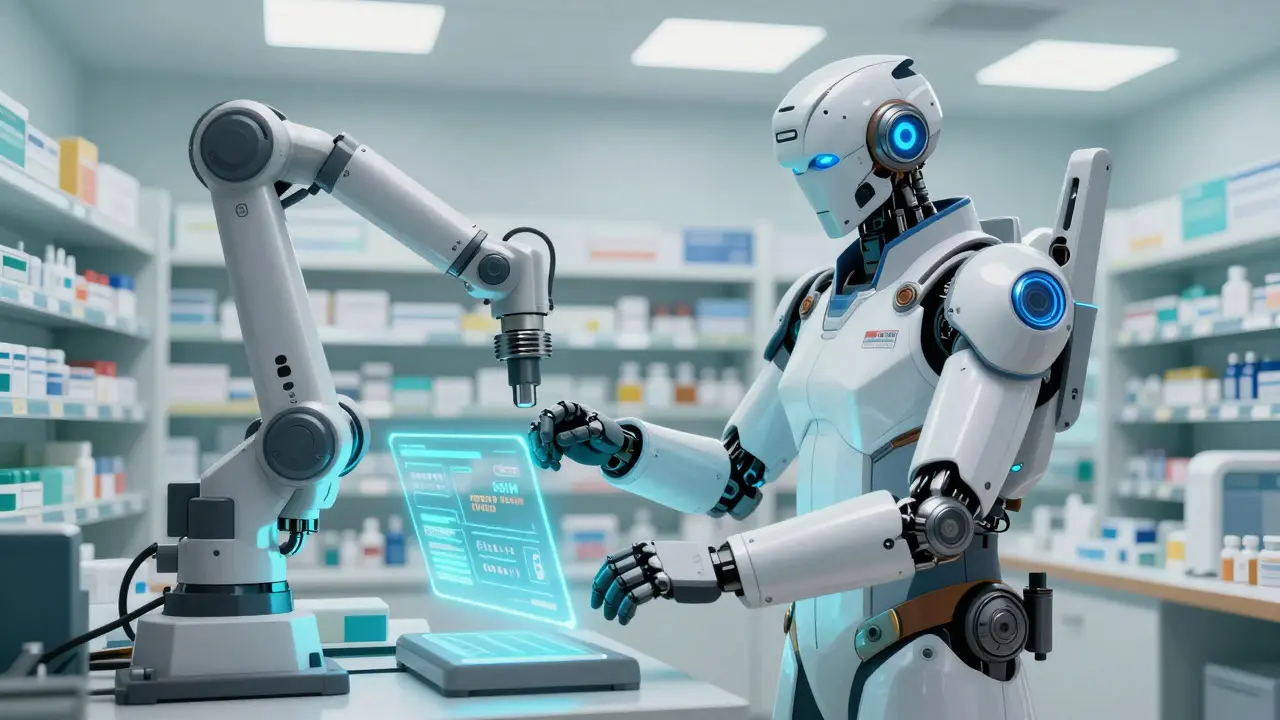
Medication errors used to be viewed as unfortunate accidents. Today, they are recognized as systemic failures that kill thousands of patients annually. In 2025 and early 2026, the global healthcare landscape shifted dramatically. Major regulatory bodies didn't just tweak their rules; they overhauled them. If you work in pharmacy, hospital administration, or clinical care, ignoring these updates isn't an option. The stakes have never been higher.
The Institute for Safe Medication Practices (ISMP), the World Health Organization (WHO), and the Centers for Medicare & Medicaid Services (CMS) all released critical updates within months of each other. These aren't isolated events. They represent a coordinated push to cut preventable medication harm by half within five years. But what does this mean for your daily workflow? Let's break down the specific changes affecting how we handle drugs, from community counters to oncology suites.
The ISMP’s New Rules for Community Pharmacy
In March 2025, the Institute for Safe Medication Practices (ISMP) is a non-profit organization dedicated to reducing medication errors through research, education, and advocacy dropped its fourth biennial update: the "Targeted Medication Safety Best Practices for Community Pharmacy." This wasn't a gentle suggestion. Michael Gaunt, PharmD, senior manager at ISMP, stated clearly that these practices address fatal errors happening despite repeated warnings.
The guidelines focus on six high-risk areas. You need to know these inside out:
- Weight-based dosing verification: No more guessing. For pediatric and renal-dosed meds, patient weight must be verified against the dose calculation before dispensing.
- Return-to-stock technology: Implement systems that prevent putting returned medications back into inventory without proper verification. This stops mix-ups between similar-looking bottles.
- Independent double checks: High-alert medications (like insulin or heparin) require two independent professionals to verify the order, not just one person checking twice.
- Standardized IV concentrations: Reduce variability in how common IV drugs are prepared to minimize calculation errors.
- Barcode scanning: Scan every medication at administration. If you don't have scanners yet, this is now a priority investment.
- Critical test result communication: Standardize protocols for communicating lab results that change medication needs immediately.
Why does this matter? Data from 1,200 participating pharmacies showed a 37% drop in reported errors after full implementation. That’s not a marginal gain; it’s a life-saving difference. However, Dr. Donald Berwick warned in May 2025 that these initiatives can fail if they ignore workforce shortages. You can’t implement complex safety checks if your staff is burned out and understaffed.
Global Shifts: WHO’s Controlled Medicines Framework
While ISMP focused on operational errors, the World Health Organization (WHO) is a specialized agency of the United Nations responsible for international public health tackled access and policy. On September 19, 2025, WHO published its first comprehensive guideline on balanced national controlled medicines policies since 2011. This replaces outdated guidance with a framework designed to ensure patients get essential pain relief while minimizing misuse.
This update is crucial for countries struggling with opioid shortages or overly restrictive laws. The new framework outlines eight critical components:
- Evidence-driven access decisions
- Digital tracking tools for supply chains
- Legal reforms protecting patient rights to possess prescribed controlled medicines
- Comprehensive training for healthcare professionals
- Public education campaigns
- Robust monitoring systems balancing transparency with privacy
- Integration with national health insurance schemes
- Standardized protocols for managing substance use disorders
Dr. Tedros Adhanom Ghebreyesus, WHO Director-General, called this a "critical tool" to stop patients from dying due to lack of essential medicines. Yet, critics like Dr. Lucian Leape argue the target of reducing harm by 50% lacks specific pathways for low-resource settings. For practitioners in Australia and other developed nations, this means aligning local protocols with global standards for digital tracking and legal protections.
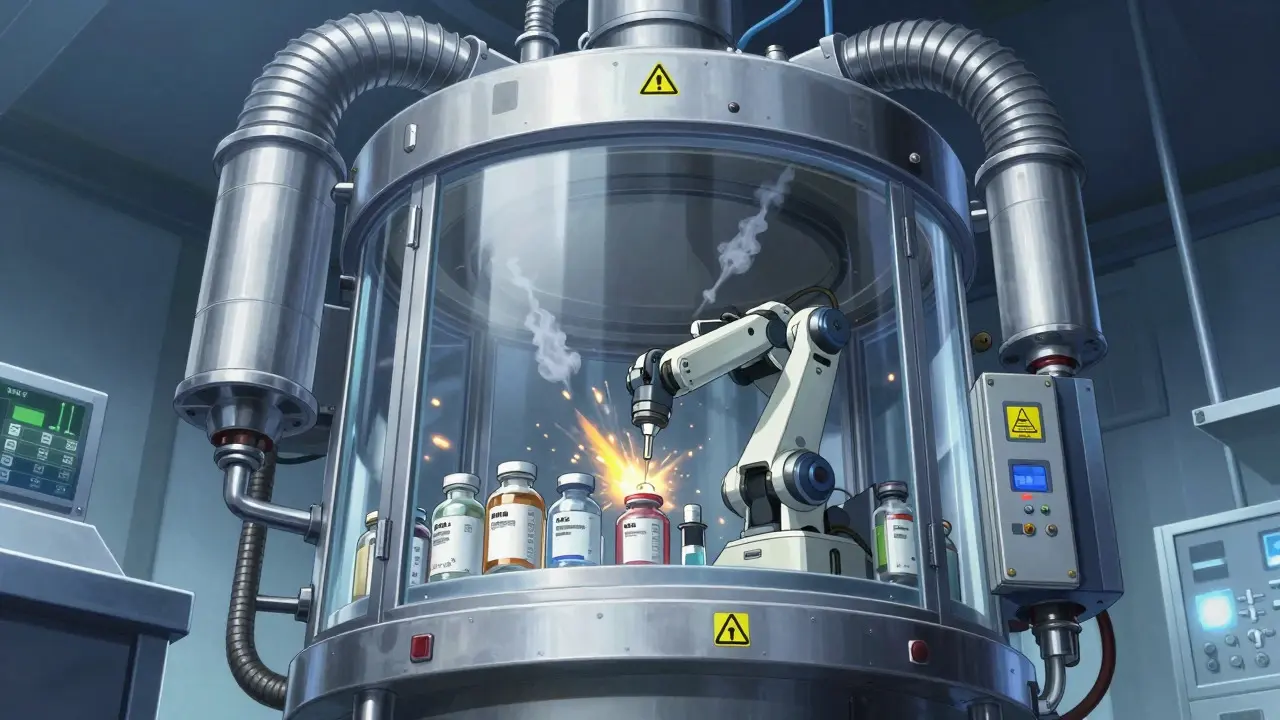
Occupational Safety: The Updated NIOSH Hazardous Drug List
If you work in oncology or compounding, your safety gear might already be outdated. The National Institute for Occupational Safety and Health (NIOSH is the U.S. federal agency responsible for conducting research and making recommendations for the prevention of work-related injury and illness) updated its List of Hazardous Drugs in Healthcare Settings (Pub No 2025-103) in December 2024, with significant additions on July 17, 2025.
Three new antineoplastic agents were added:
- Datopotamab deruxtecan (Datroway®)
- Treosulfan (Grafapex™)
- Telisotuzumab vedotin (Emrelis™)
These are antibody-drug conjugates, novel therapies that pose unique risks to pharmacy staff handling them. Dr. Robert K. Suda noted that these additions reflect emerging evidence of occupational exposure risks. What does this mean for you? You likely need upgraded Containment Primary Engineering Controls (C-PECs). Costs range from $15,000 to $50,000 per pharmacy. It’s expensive, but necessary. One pharmacist on Reddit shared that updating protocols mid-fiscal year was chaotic but prevented two potential exposure incidents. Don’t wait for an incident to justify the cost.
CMS Star Ratings and Financial Accountability
Safety isn’t just about ethics; it’s about money. The Centers for Medicare & Medicaid Services (CMS is the U.S. government agency that administers the Medicare program and works with state governments to administer Medicaid) implemented 16 Patient Safety measures for measurement year 2025. These directly impact Medicare Part D plan Star Ratings, which influence enrollment and revenue.
Key changes include transitioning remaining Part D measures to continuous enrollment methodology and excluding beneficiaries with cancer-related pain from certain opioid utilization measures. This shows a nuanced approach: punishing poor adherence while recognizing legitimate medical needs.
| Organization | Primary Focus | Implementation Timeline | Enforcement Mechanism |
|---|---|---|---|
| ISMP | Operational pharmacy workflows | Immediate to long-term (phased) | Voluntary adoption / Industry standard |
| WHO | National policy & access | Multi-year systemic changes | Global guideline / Country adoption |
| NIOSH | Occupational safety | Immediate upon list update | OSHA compliance references |
| CMS | Patient outcomes & adherence | Annual measurement cycles | Financial penalties / Star Ratings |
Achieving high scores on measures like Statin Adherence (ADH-Statins) requires automated refill reminders and medication synchronization programs. Plan administrators report needing multiple engagement strategies to hit the 80%+ adherence threshold. For independent pharmacies, the tech integration costs average $8,200, a barrier cited by 62% of owners in a June 2025 survey.

Real-World Implementation Challenges
The gap between policy and practice is where most errors happen. Sarah Chen, PharmD, from Texas, reported a 63% reduction in pediatric dosing errors after implementing ISMP’s weight-verification protocol. But she also noted significant staff retraining time. This is the universal complaint: safety takes time.
Common hurdles include:
- Technology integration issues: Reported by 68% of pharmacies. Old software doesn't talk to new safety modules.
- Staff resistance: 52% of facilities face pushback when changing established workflows.
- Limited meeting time: Only 53% of teams have time for regular safety reviews.
Successful implementations share one trait: multidisciplinary safety committees meeting biweekly. They don't just read guidelines; they troubleshoot specific bottlenecks. For example, if barcode scanning slows down dispensing, the committee redesigns the workflow rather than abandoning the scan.
Future Outlook: AI and Beyond
We are moving toward predictive safety. By 2027, Gartner predicts 65% of medication safety interventions will use artificial intelligence. Companies like MedAware are already showing 41% reductions in serious errors using AI-driven clinical decision support. The FDA is increasing scrutiny, issuing 23 drug safety communications in the first eight months of 2025 alone. Expect more alerts on high-risk drugs like Tranexamic Acid, which saw a major error alert in September 2025.
The convergence of ISMP, WHO, CMS, and NIOSH efforts suggests a sustained global push. With 47 countries now reporting baseline error data, the era of hidden medication harm is ending. Your role? Adapt quickly. Train thoroughly. And remember: safety isn't a checklist; it's a culture.
What are the top 6 ISMP best practices for community pharmacy in 2025?
The ISMP highlights: 1) Verifying patient weight for dosing, 2) Using technology for return-to-stock processes, 3) Independent double checks for high-alert meds, 4) Standardizing IV concentrations, 5) Barcode scanning for all administrations, and 6) Standardizing critical test result communication.
Which new drugs were added to the NIOSH hazardous list in 2025?
On July 17, 2025, NIOSH added datopotamab deruxtecan (Datroway®), treosulfan (Grafapex™), and telisotuzumab vedotin (Emrelis™) to the list of hazardous drugs in healthcare settings, primarily due to their classification as antineoplastic agents.
How do CMS Star Ratings affect medication safety?
CMS uses 16 Patient Safety measures to calculate Star Ratings for Medicare Part D plans. Poor performance on metrics like statin adherence or opioid utilization can lower ratings, leading to reduced enrollment and financial penalties for plans and pharmacies.
What is the WHO’s goal for medication harm reduction?
The WHO’s "Medication Without Harm" campaign aims to reduce serious, preventable medication harm globally by 50% within a 5-year timeframe, supported by their new 2025 guidelines on balanced national controlled medicines policies.
Is implementing these safety guidelines costly for small pharmacies?
Yes, costs vary. Technology integration for CMS measures averages $8,200 per pharmacy, while NIOSH-compliant engineering controls can cost $15,000-$50,000. However, ISMP provides free implementation toolkits, and many benefits, like error reduction, offset long-term costs.
