
Most people with prediabetes don’t know they have it. That’s not because they’re not paying attention-it’s because there are no obvious symptoms. No sharp pain. No sudden fatigue. Just a quiet rise in blood sugar that slips under the radar until it’s too late. But here’s the truth: prediabetes isn’t a diagnosis you live with forever. It’s a warning sign-and one of the last chances you’ll get to stop type 2 diabetes before it starts.
Right now, 96 million American adults have prediabetes. That’s nearly 4 out of 10 adults. And more than 80% of them have no idea. The CDC says most won’t even get tested unless they’re already showing signs of full-blown diabetes. But by then, the damage is already done. The good news? You can reverse it. Not just slow it down. Not just manage it. Actually reverse it. And you don’t need medication to do it.
What Exactly Is Prediabetes?
Prediabetes means your blood sugar is higher than normal but not high enough to be called type 2 diabetes. It’s not a gray area-it’s a clear medical threshold. The American Diabetes Association defines it by three blood tests:
- Fasting blood glucose: 100-125 mg/dL
- A1C level: 5.7%-6.3%
- 2-hour glucose after a sugar drink: 140-199 mg/dL
These aren’t guesses. They’re based on decades of research. If your numbers land here, your body is struggling to use insulin properly. Cells aren’t absorbing glucose like they should. Sugar builds up in your blood. And over time, that leads to damage-nerves, blood vessels, kidneys, even your eyes.
But here’s what most people miss: prediabetes isn’t a disease. It’s a signal. A red flag that says, “Something’s off. Fix this now.”
The Hidden Signs (Yes, They Exist)
Doctors will tell you prediabetes has no symptoms. And technically, they’re right. Most people feel fine. But if you look closer, there are subtle, measurable changes that show up before a test confirms it.
- Constant thirst-drinking more than 3 liters of water a day without working out or being in the heat.
- Frequent urination-more than 8 times a day, especially at night.
- Blurred vision-your glasses feel off, not because your prescription changed, but because high sugar swells the lens in your eye.
- Unexplained fatigue-you’re not tired from lack of sleep. You’re tired because your cells aren’t getting the fuel they need, even though you’re eating.
- Dark, velvety skin patches-on your neck, armpits, or groin. This is called acanthosis nigricans. It’s not a rash. It’s your body’s way of screaming about insulin resistance.
- Slow-healing cuts-a scrape that takes over two weeks to close.
- Tingling or numbness in hands or feet-early nerve damage from sugar sitting in your blood too long.
- Increased hunger-you eat, but you still feel empty. Your body can’t unlock the energy in your food.
- Unexplained weight loss-you’re not trying to lose weight, but you’re dropping pounds anyway. That’s your body breaking down muscle and fat because it can’t use glucose.
Women may notice more frequent yeast infections, irregular periods, or vaginal dryness. Men might struggle with low energy, erectile dysfunction, or unexplained weight gain around the waist.
These aren’t random quirks. They’re biological responses to sugar overload. And if you’re seeing two or more of these, you’re likely already in the prediabetes range.
Why Most People Never Get Tested
Doctors don’t automatically test for prediabetes. They wait for you to show symptoms-or for you to be overweight and over 45. But even that’s not enough. The U.S. Preventive Services Task Force recommends screening for anyone with a BMI of 25 or higher (23 for Asian Americans) plus one other risk factor: family history, high blood pressure, lack of exercise, or a history of gestational diabetes.
So if you’re 35, active, not overweight, and feel fine? You might still be at risk. Especially if your parents had diabetes. Or if you gained weight during the pandemic. Or if you’ve been eating more processed carbs over the last few years.
The truth? Blood sugar doesn’t care how you look. It only cares how your body handles sugar. And that’s why so many people are caught off guard. They think, “I’m healthy,” but their A1C is 6.1%.
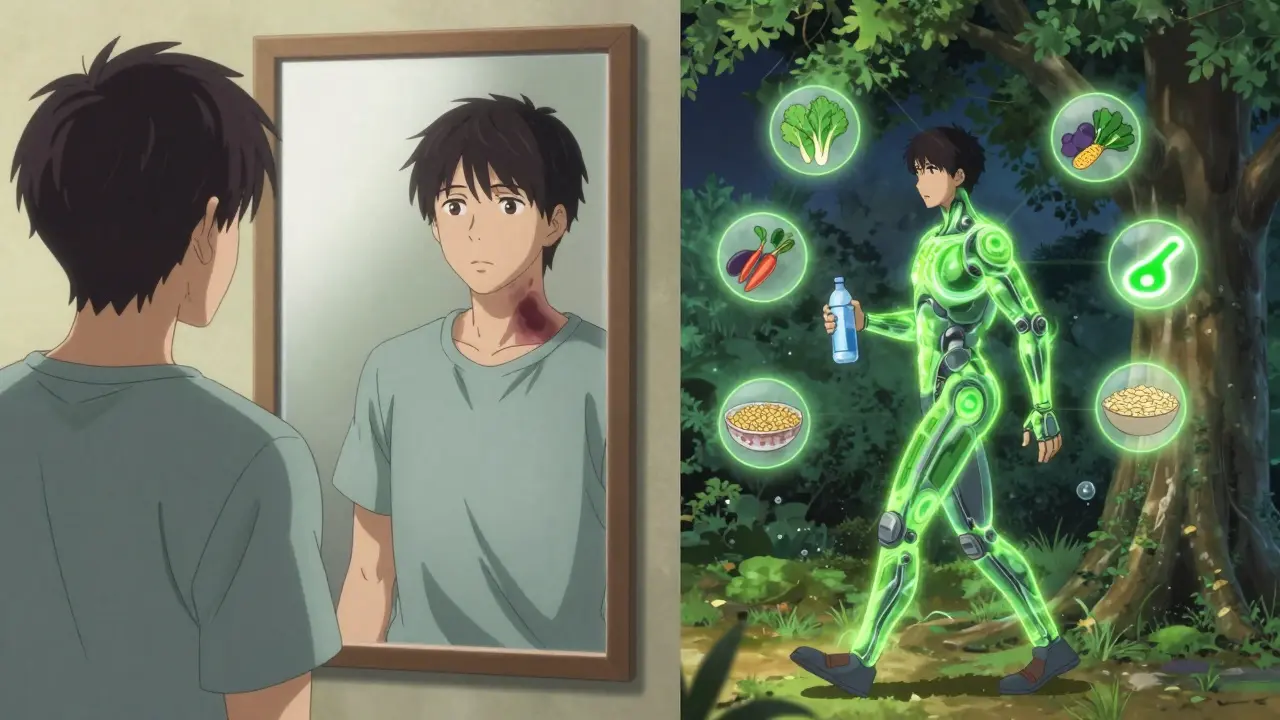
How to Reverse It-Without Medication
You don’t need a pill. You don’t need surgery. You don’t even need a fancy diet. The science is clear: lifestyle changes cut your risk of developing type 2 diabetes by 58%. That’s not a guess. That’s from the landmark Diabetes Prevention Program study, followed for over 15 years.
Here’s what actually works:
- Loose 5-7% of your body weight-If you weigh 200 pounds, losing 10-14 pounds is enough. Not 50. Not 100. Just 10.
- Move 150 minutes a week-That’s 30 minutes, 5 days a week. Walk. Swim. Dance. Lift weights. Doesn’t matter. Just move.
- Change what you eat-Cut out sugary drinks. Cut out white bread, white rice, and pastries. Replace them with vegetables, beans, whole grains, lean protein, and healthy fats.
The CDC’s National Diabetes Prevention Program runs 16 weekly sessions to teach this. But you don’t need a program. You just need to start.
One study showed that people who ate a Mediterranean-style diet-lots of olive oil, fish, nuts, vegetables, and minimal sugar-had a 27.7% chance of reversing prediabetes in just 12 months. That’s higher than most drug trials.
And here’s the kicker: you don’t have to be perfect. One woman in the program lost 12 pounds by simply swapping soda for sparkling water and walking after dinner. Her A1C dropped from 6.2% to 5.4% in 6 months. No medication. No calorie counting. Just two small changes.
What Doesn’t Work
There are a lot of fakes out there. Keto diets? Intermittent fasting? Juice cleanses? Some people try them. Some even see short-term results. But here’s the problem: they’re not sustainable. And prediabetes reversal isn’t a sprint-it’s a lifestyle shift.
People who drop out of programs usually do so because:
- They think they have to eat “diet food”
- They feel deprived
- They don’t see results fast enough
- They don’t have support
Real change doesn’t come from willpower. It comes from habits. Small, repeatable actions. Like:
- Putting vegetables on half your plate at every meal
- Walking for 10 minutes after lunch
- Drinking water before you reach for a snack
- Getting 7 hours of sleep-not because it’s healthy, but because poor sleep raises cortisol and spikes blood sugar
And if you’re struggling? Digital tools help. Programs like Omada Health and Virta Health use apps, trackers, and coaches to keep people on track. One study found 85% completion rates with digital support-compared to 60% dropouts in traditional programs.
Who’s at Highest Risk?
Prediabetes doesn’t pick favorites. But it does have patterns:
- People over 45
- Those with a family history of diabetes
- People who gained weight during or after pregnancy
- Those with high blood pressure or low HDL (“good”) cholesterol
- Black, Hispanic, Asian, and Native American adults-rates are 30-45% higher than in white adults
- People who’ve had gestational diabetes
And here’s something shocking: even if you’re “thin,” you can still have prediabetes. It’s called TOFI-thin outside, fat inside. Your liver and muscles are storing fat from sugar, even if you don’t have a belly. That’s why blood tests matter more than the scale.

What Happens If You Do Nothing?
If you ignore prediabetes, you have a 15-30% chance of developing type 2 diabetes in 5 years. That’s not a small risk. That’s a high probability. And once you’re diabetic, the damage doesn’t stop. You’re at higher risk for heart disease, stroke, kidney failure, nerve damage, vision loss, and amputations.
The CDC estimates that prediabetes contributes to $44 billion in U.S. healthcare costs every year. That’s not just money. It’s quality of life. It’s time lost. It’s fear.
But here’s the flip side: if you act now, you can reverse it. Studies show that 50-60% of people who make lifestyle changes go back to normal blood sugar levels. Not “better.” Not “controlled.” Normal.
Next Steps: What to Do Today
You don’t need to wait for a doctor’s appointment. Start now:
- Get your A1C tested. It’s a simple blood test. Ask your doctor. Or use a pharmacy screening (many CVS or Walgreens offer it for under $20).
- If your A1C is 5.7% or higher, don’t panic. Celebrate. You caught it early.
- Start walking 30 minutes a day. No gym needed. Just put on shoes and go.
- Replace one sugary drink with water every day.
- Swap white rice or pasta for brown rice, quinoa, or lentils.
- Track your progress. Weigh yourself once a week. Measure your waist. Note how you feel.
You don’t need to overhaul your life. Just change one thing. Then another. Then another. That’s how you reverse prediabetes.
Can prediabetes be reversed permanently?
Yes. Studies show that 50-60% of people who lose 5-7% of their body weight and get 150 minutes of exercise per week return to normal blood sugar levels. But it’s not permanent unless you keep up the habits. Think of it like brushing your teeth-you don’t stop after one time.
Do I need medication to reverse prediabetes?
No. Medication like metformin can help reduce risk by 31%, but lifestyle changes are more effective-cutting risk by 58%. Most people reverse prediabetes without any drugs. The goal is to fix the root cause: how your body handles sugar.
How long does it take to reverse prediabetes?
Some people see improvements in 3 months. A1C levels can drop noticeably in 6-12 weeks with consistent changes. Full reversal-returning to normal glucose levels-usually takes 6-12 months. But even small progress reduces your risk right away.
Can I reverse prediabetes if I’m over 60?
Yes-in fact, older adults respond even better. The Diabetes Prevention Program found that people over 60 cut their diabetes risk by 46% with lifestyle changes. Age isn’t a barrier. It’s a reason to act faster.
Is prediabetes the same as insulin resistance?
Prediabetes is the result of insulin resistance. When your cells stop responding to insulin, sugar builds up in your blood. That’s prediabetes. Insulin resistance can exist without high blood sugar, but prediabetes always means insulin resistance is present. Fix the insulin resistance, and you reverse prediabetes.
What’s the best diet for reversing prediabetes?
There’s no single “best” diet, but the most effective approach is simple: reduce added sugars and refined carbs, increase fiber, and eat whole foods. A Mediterranean-style diet-rich in vegetables, olive oil, fish, nuts, and legumes-has the strongest evidence. It’s not about cutting carbs entirely. It’s about choosing the right ones.
Final Thought: This Is Your Window
Prediabetes is not a life sentence. It’s a wake-up call. And right now, you have more power than you think. You don’t need to run a marathon. You don’t need to eat kale every day. You just need to move more, eat less sugar, and pay attention to your body.
The science is clear. The tools are available. The time is now. Because once prediabetes becomes diabetes, the window closes. But while it’s still prediabetes? You’re still in control.

cara s
i mean, i knew something was off when i started waking up at 3am to pee. thought it was stress. turns out, my body was screaming for help. 12 months of swapping soda for seltzer and walking after dinner? my a1c dropped from 6.1 to 5.3. no meds. no keto. just consistency. weird how the simplest stuff works the best.
also, that dark patch on my neck? gone. no joke. it was like my skin finally got the memo.
jerome Reverdy
this is one of those posts that should be mandatory reading in high school. we teach kids about smoking and vaping but not about how sugar quietly destroys your metabolism over a decade? absurd.
the insulin resistance piece is spot on. it’s not about willpower. it’s about biology. your cells are basically locked out of their own energy supply. that’s why you’re tired after eating. your body’s got the fuel but can’t unlock it. the fix isn’t starvation - it’s retraining your system. movement + whole foods + sleep. that’s the holy trinity. no fads needed.
Laura Gabel
why are we acting like this is new info? everyone knows sugar is bad. stop making it sound like a revelation. also who cares about a1c numbers? just eat less carbs and move. done.
Kyle Young
there’s a philosophical layer here that’s rarely discussed. prediabetes isn’t just a metabolic condition - it’s a mirror of our cultural relationship with food. we’ve turned eating into a transaction: consume → reward → repeat. we don’t eat to nourish. we eat to soothe. to distract. to celebrate. to numb.
the reversal isn’t about diet. it’s about relearning how to inhabit your body. it’s about presence. the walk after dinner? that’s not exercise. it’s meditation in motion. the water before snacks? that’s mindfulness disguised as hydration. we treat prediabetes like a technical glitch. but it’s a spiritual signal. we’ve lost touch. and the body, in its infinite wisdom, is begging us to come back.
Jeremy Van Veelen
oh please. let me guess - you’re one of those people who thinks ‘eating clean’ means buying $12 kale smoothies from a Brooklyn pop-up? the science is simple: insulin resistance is caused by chronic hyperinsulinemia. which is caused by processed carbs. period. you don’t need a 16-week program. you need to stop eating white bread, rice, and ‘whole grain’ cereals that are just sugar with a fancy label. and if you’re still drinking ‘low-fat’ yogurt? you’re part of the problem.
the real revolution? ditch the food industry’s propaganda. eat meat. eat eggs. eat butter. eat vegetables. that’s it. no apps. no coaches. just common sense.
MALYN RICABLANCA
I CAN’T BELIEVE THIS POST ISN’T MORE VIRAL. I MEAN, REALLY? 96 MILLION PEOPLE IN THE U.S. HAVE PREDIABETES AND NO ONE’S TALKING ABOUT IT?!? IT’S LIKE A SILENT PANDEMIC AND THE GOVERNMENT IS SITTING ON THEIR HANDS WHILE BIG PHARMA PROFITS OFF THE FUTURE DIABETICS! WHY ISN’T THIS ON THE EVENING NEWS?!? WHY ISN’T THE FDA DOING A PUBLIC SERVICE ANNOUNCEMENT?!? I’M SENDING THIS TO MY CONGRESSMAN AND MY DOCTOR AND MY GROCERY STORE! WE NEED A MOVEMENT! #PREDIABETESISNOTACHOICE #STOPSUGAR #SAVEAMERICANHEALTH
Srividhya Srinivasan
i know what this really is. this is all part of the sugar industry’s cover-up. they’ve been bribing scientists since the 70s to blame fat instead of carbs. the same people who made you think trans fats were safe. same playbook. now they’re selling ‘lifestyle changes’ like it’s a miracle cure - but they’re still selling you the same processed foods in disguise. you think oatmeal is healthy? it’s just glucose in a cardboard box. the real solution? stop trusting anyone who says ‘eat whole grains.’ it’s all a scam. go primal. eat meat. fat. eggs. salt. and never look back. they don’t want you to know this.
Suchi G.
i read this and cried. not because i’m scared, but because i finally understood why i felt so empty even after eating. i thought i was just ‘depressed.’ turns out, my cells were starving. i started walking after dinner - just 15 minutes. then i swapped my iced tea for sparkling water. six months later, i lost 14 pounds. my skin stopped itching. my energy came back. and my husband said i looked ‘like myself again.’
it’s not about willpower. it’s about listening. your body never lies. it just screams louder when you stop paying attention. thank you for saying this out loud.
Andrew Mamone
this is so important 🙏 i got tested last year after reading something similar - A1C was 5.9. i started walking 20 min after dinner and stopped drinking juice. 4 months later - 5.3. no drama. no deprivation. just two tiny changes. i didn’t even realize how much sugar i was consuming until i tracked it. now i’m doing it for my mom too. she’s 68 and just reversed hers. age isn’t a barrier. it’s a motivator. 💪
Emily Hager
i’m sorry, but this entire narrative feels like corporate wellness propaganda. ‘just walk more and drink water’? as if the root cause isn’t systemic - food deserts, wage stagnation, chronic stress from working two jobs, lack of healthcare access. you’re blaming individuals for a structural crisis. and don’t get me started on the ‘meditation in motion’ nonsense. not everyone has the luxury of a 30-minute walk after dinner. some of us are on our feet all day and come home exhausted. this post is well-intentioned, but dangerously simplistic.
Alexander Pitt
the data here is solid. the Diabetes Prevention Program is one of the most replicated studies in preventive medicine. 58% reduction in diabetes onset? that’s better than most pharmaceutical interventions. what’s missing from most discussions is the timeline. people expect results in 30 days. it takes 6–12 months. the magic isn’t in the diet - it’s in the consistency. you don’t need to be perfect. you need to be persistent. track your waist. not your weight. waist circumference correlates more strongly with insulin resistance than BMI. and sleep - 7+ hours - is non-negotiable. cortisol spikes = blood sugar spikes. that’s biology. not opinion.
Melissa Stansbury
i just want to say - i’m 42, single mom of two, work two jobs, and i reversed my prediabetes by eating frozen veggies and walking the dog. no fancy meals. no supplements. no apps. just showing up. if i can do it, anyone can. you don’t need a perfect life. you just need to start.
jerome Reverdy
exactly. and the myth that you need to ‘eat clean’ is what turns people away. real change isn’t about perfection. it’s about progress. swap one thing. then another. that’s how habits form. not with willpower - with repetition. i’ve seen people go from 6.8% to 5.6% just by cutting out soda and adding a 10-minute walk after lunch. it’s not glamorous. but it’s real.
Sanjana Rajan
i’m tired of people acting like prediabetes is just about diet. what about the sleep deprivation? the chronic stress? the environmental toxins? the endocrine disruptors in plastics? you think your A1C is rising because you had a bagel? it’s because you’ve been drinking from a plastic water bottle for 15 years while working night shifts and eating takeout. this is a systemic collapse. not a personal failure.
Manish Singh
in india, we’ve seen a massive rise in prediabetes among young urban professionals - not because they’re eating ‘western food,’ but because they’ve replaced traditional meals with packaged snacks and sugary chai. the solution isn’t exotic. it’s ancestral: lentils, millet, ghee, turmeric, movement. i’ve helped 12 friends reverse their numbers just by bringing back their grandmothers’ recipes. no supplements. no detoxes. just real food. and yes - it works. even at 50.