Quick Summary
Disposing of old medication isn't just about safety; it's about security. Your prescription bottles hold sensitive data that can lead to identity theft if thrown away carelessly. The best practice involves removing personal info from labels, using take-back programs where possible, and following specific at-home disposal steps for trash. Ignoring these steps leaves your health history vulnerable to strangers and scammers.
The Hidden Risk in Your Trash Can
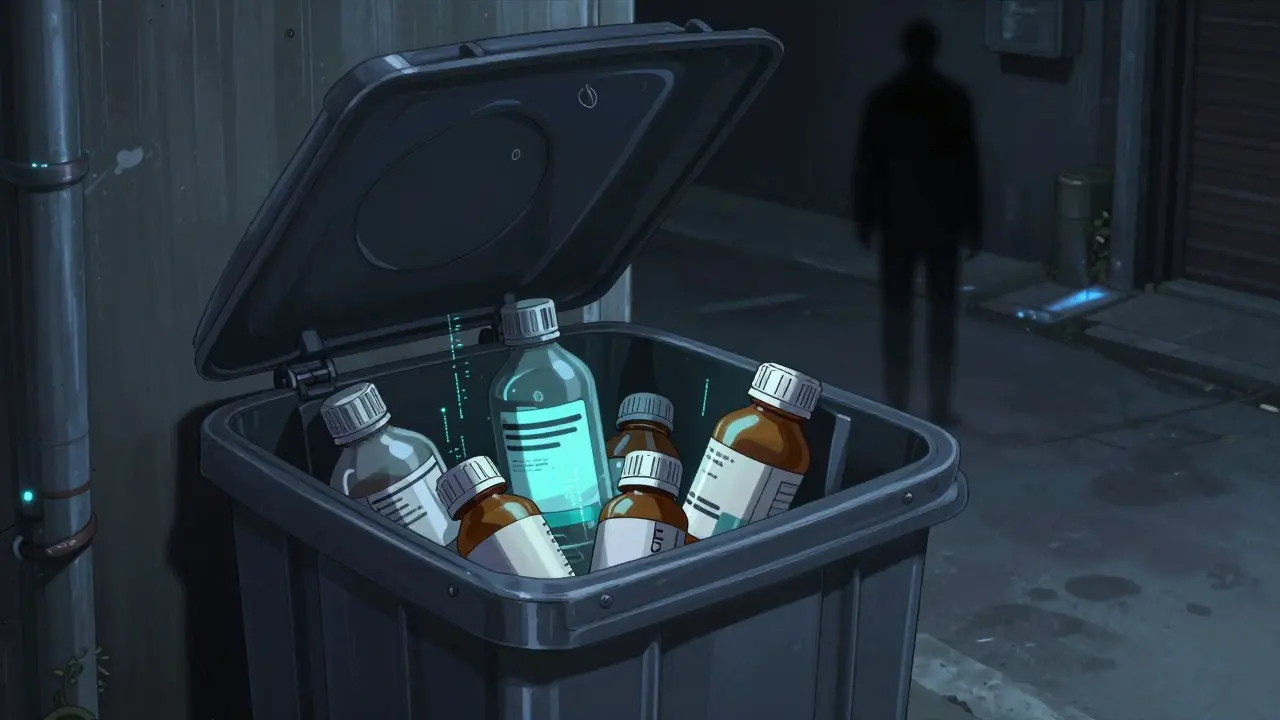
Imagine throwing away a piece of paper with your name, address, and medical history printed on it. That is exactly what happens when you toss a prescription bottle into the bin without thinking. Many people focus on the drugs inside, worrying about pets or children, but they overlook the Prescription Labels stickers on medication containers that display patient names, addresses, dates of birth, and specific diagnoses. These labels are a goldmine for identity thieves.
It is a common misconception that once the pills are gone, the bottle is just plastic. In reality, a study published in the Journal of the American Pharmacists Association found that 42% of prescription bottles discarded in residential trash still contained readable personal information. This statistic is alarming because it means nearly half of the people disposing of medication are inadvertently broadcasting their private data to anyone who rummages through the trash.
Why does this matter? Because the information on a label is often enough to answer security questions used by banks and insurance companies. A thief doesn't need your credit card number if they have your name, date of birth, and a specific medical condition listed. They can use this to file fraudulent insurance claims or apply for credit in your name. Protecting your privacy during disposal is just as critical as protecting your home from burglary.
Why Regulations Focus on Privacy
Health authorities around the world have recognized this risk. In the United States, the Health Insurance Portability and Accountability Act (HIPAA) mandates that healthcare providers and patients must implement safeguards to limit the disclosure of Protected Health Information (PHI). While specific laws vary by country, the principle remains universal: your medical data is sensitive and must be protected from unauthorized access.
According to the U.S. Department of Health and Human Services, covered entities must review their circumstances to determine reasonable steps to safeguard PHI through disposal. This guidance extends to patients as well. If a healthcare facility can be fined for improper disposal, imagine the personal cost if your information is stolen from your own trash. The risk isn't theoretical; a user on Drugs.com reported identity theft after an improperly disposed opioid prescription container was found in the trash, leading to fraudulent charges on their insurance.
The scale of the problem is growing. The Drug Enforcement Administration (DEA) reported that 9.5 million pounds of prescription drugs were collected during National Prescription Drug Take Back Days between 2010 and 2022. This massive volume highlights how much medication is circulating in households. With more drugs in circulation, there are more bottles ending up in the trash, increasing the surface area for potential data breaches.
The Best Defense: Take-Back Programs
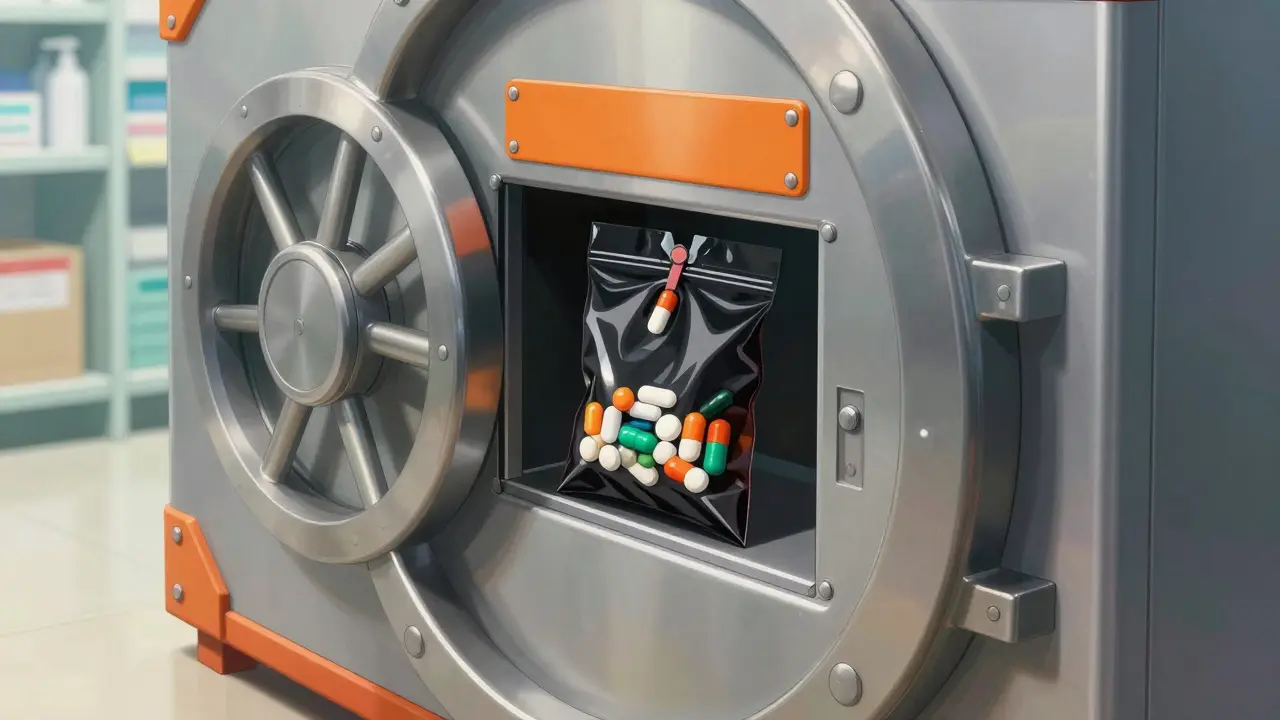
The most secure way to dispose of medication is to use a Take-Back Program authorized collection sites where medications are destroyed without personal information being accessible to unauthorized parties. These programs are often run by law enforcement agencies, pharmacies, or community health centers. When you drop off your medication here, the staff handles the destruction process professionally.
These programs offer the highest level of privacy protection because you don't have to deal with the label at home. The medication is collected in a secure container, often without requiring you to show ID or leave your name on the bottle. In April 2024, the DEA held a National Prescription Drug Take Back Day with 6,000 collection sites across all 50 states, demonstrating the infrastructure available to help you.
Many pharmacies also offer year-round disposal options. For example, retailers like Walgreens have offered mail-back envelopes since 2017. These envelopes allow you to send medications directly to authorized disposal facilities. This method ensures that your pills and your personal information are handled by professionals who know how to destroy them securely. The cost for these services varies, but the peace of mind is worth the small fee.
At-Home Disposal: The Privacy Protocol
What if you don't have access to a take-back program? You must follow a strict protocol to ensure your privacy isn't compromised. The Food and Drug Administration (FDA) and Environmental Protection Agency (EPA) recommend a specific 5-step process for at-home disposal. This process takes about 5 to 7 minutes per container but is essential for safety.
- Remove the medication: Take your prescription drugs out of their original containers. Do not leave them in the bottle.
- Mix with undesirable substances: Combine the drugs with something unappealing, such as cat litter, used coffee grounds, or dirt. This prevents anyone from scooping the pills out of the trash to use or sell them.
- Seal the mixture: Put the mixture into a disposable container with a lid, like a sealed plastic bag or a yogurt cup. This prevents spills and odors.
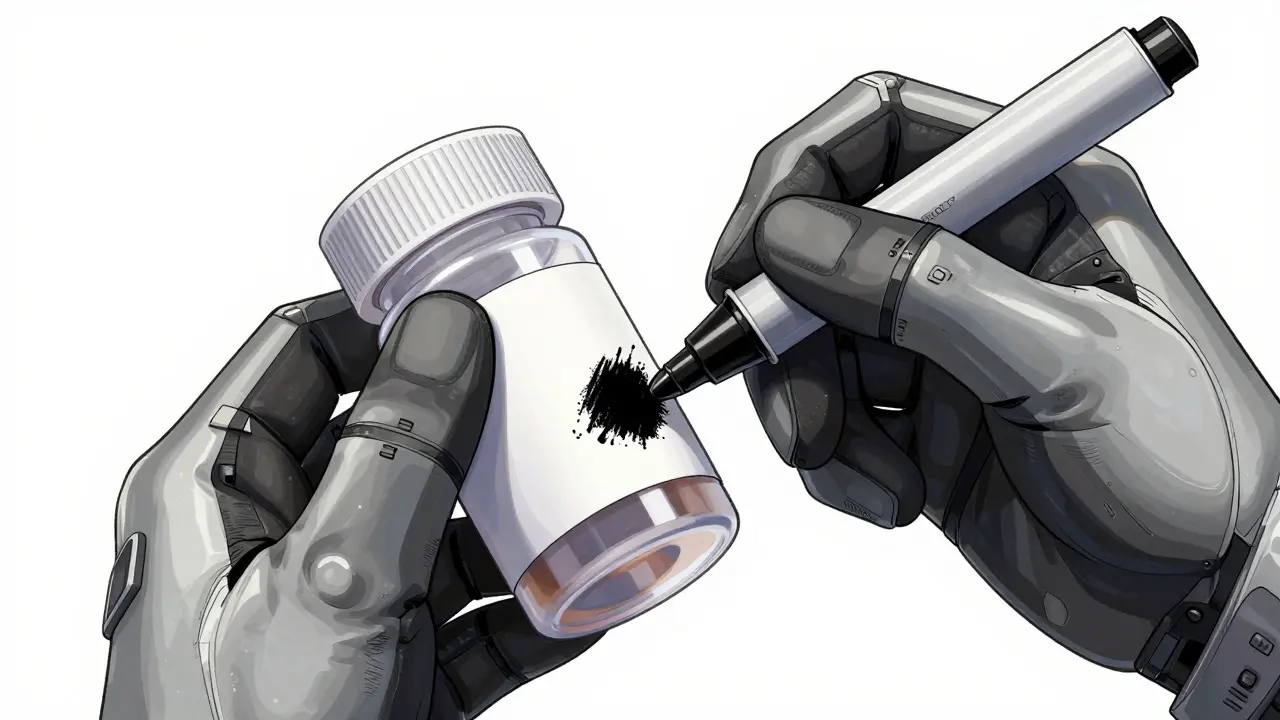
- Destroy the label: This is the most critical step for privacy. You must scratch out, peel off, or cover all personal information on the empty prescription label. Use a permanent marker to black out your name, address, and doctor's details. Some experts recommend peeling the label off entirely and tearing it into small pieces.
- Dispose in trash: Place the sealed container with the drug mixture and the empty bottle (with the destroyed label) into your household trash.
It is vital to be thorough with the label. A 2021 study found that many people fail to remove personal information properly. Simply writing over the text with a pencil or pen is not enough. Use a permanent marker or duct tape to make the information unreadable. If you are unsure, tear the label off the bottle completely.
Understanding the Flush List
There is an exception to the trash disposal rule. Some medications are so dangerous if swallowed by others that they should be flushed down the toilet immediately. The FDA maintains a Flush List a list of 15 specific medications that pose a high risk of accidental ingestion and should be flushed rather than stored or placed in trash. This list was updated in May 2024 to include three new medications.
Flushing these specific drugs is recommended because the risk of accidental poisoning outweighs the environmental impact. However, even when flushing, you should still consider the privacy aspect. If you are flushing the pills, you still have the empty bottle with your name on it. You should follow the same label destruction steps before throwing the bottle in the trash.
How do you know if your medication is on the list? You can check the medication guide that comes with your prescription or use a smartphone app like the DisposeRx tool. These tools identify whether your specific medication requires flushing. It is better to check than to guess, as improper disposal can have serious consequences for your community's safety.
Tools and Aids for Better Disposal
Technology has made it easier to protect your privacy during disposal. Pharmaceutical Deactivation Pouches products containing activated carbon that neutralize medications while allowing privacy protection through complete destruction of the original medication form are available for purchase. Brands like DisposeRx offer pouches that chemically alter the medication, turning it into a safe sludge. This method is convenient because it handles both the drug safety and the privacy concern in one step.
These pouches typically cost between $1.50 and $3.00 per unit. While it adds a small cost to your medication routine, it ensures that the drugs are rendered unusable and the container can be disposed of with less worry. Some users find that the pouches make the process faster than mixing with cat litter. However, you still need to destroy the label on the original bottle before discarding it.
Another helpful tool is a permanent marker designed for label destruction. Standard markers might not cover the ink on prescription labels effectively. Industrial markers, such as Sharpie Industrial markers, are specifically designed to obscure text permanently. Investing in a pack of these markers ensures you always have the right tool when it's time to dispose of old meds.
| Method | Privacy Protection Level | Environmental Impact | Convenience |
|---|---|---|---|
| Take-Back Program | High (Staff handles destruction) | Low (Safe destruction) | Medium (Requires travel) |
| Mail-Back Envelope | High (Secure shipping) | Low (Safe destruction) | High (Do it at home) |
| Deactivation Pouches | Moderate (User destroys label) | Low (Neutralizes drugs) | High (Instant use) |
| Trash Disposal | Low (If label not destroyed) | Medium (Landfill) | High (Immediate) |
| Flushing | Low (Label still exists) | High (Water contamination) | High (Instant) |
Common Mistakes to Avoid
Even well-meaning people make mistakes when disposing of medication. One common error is assuming that the pharmacy will handle the privacy for you. When you return medication, they often do not check the label for your personal info before destroying the bottle. You must do this step yourself before handing it over.
Another mistake is using water to wash the label off. This is not recommended because it can damage the plastic bottle, causing it to break or leak. Instead, scratch the information off or peel the label. If you peel it, make sure to tear the paper into tiny pieces before throwing it away. A whole label can be reassembled by someone with enough time and patience.
Finally, do not leave empty bottles in your recycling bin without destroying the label. Recycling centers process materials quickly, and workers may not check for personal information. If a bottle with your name on it ends up in a landfill or is sold for recycling, your data is at risk. Always treat the bottle as confidential waste until the label is completely unreadable.
Protecting Your Family's Safety
Privacy isn't the only concern; safety is too. When you mix medication with cat litter or coffee grounds, you are making it unappealing to children and pets. This is a crucial safety step that complements the privacy step. If a child finds the bottle in the trash, they shouldn't be able to identify the pills as medicine.
For families with elderly members, the process can be confusing. A survey by the Kaiser Family Foundation found that 37% of adults aged 65+ reported confusion about proper privacy protection steps. If you are caring for an older relative, help them with the disposal process. Show them how to use a marker or help them find a take-back location. It is a small act of kindness that protects their identity and health.
Looking Ahead: Future of Disposal
The industry is moving towards more automated solutions. Industry analysts predict that integrated privacy-protection features will become standard in medication disposal products by 2026. We might see smart disposal kiosks in pharmacies that automatically destroy personal information on labels when you drop off medication.
Until then, the responsibility falls on us as individuals. By taking a few extra minutes to scratch out our names and use secure disposal methods, we contribute to a safer community. It is a simple habit that protects your identity, your family, and the environment. Don't let your trash become a target for thieves.
Do I need to destroy the label if I use a take-back program?
While take-back programs are secure, it is still best practice to remove or obscure your personal information before dropping off medication. This ensures your privacy is protected even if the container is mishandled during transport.
Can I recycle prescription bottles?
Only if you have completely destroyed all personal information on the label. Many recycling centers accept clean plastic bottles, but they do not process confidential data. Always scratch out your name and address first.
What if I don't have cat litter for disposal?
You can use used coffee grounds, dirt, or sand. The goal is to make the medication unappealing and hard to extract. Any absorbent, undesirable substance will work effectively.
Is flushing medication safe for the environment?
Generally, no. Flushing should only be done for medications on the FDA Flush List due to high overdose risk. For most drugs, flushing contributes to water contamination. Use trash or take-back programs instead.
How long does it take to properly dispose of one bottle?
The FDA recommends a 5-step process that takes approximately 5 to 7 minutes per container. This includes removing the drugs, mixing them, sealing them, and destroying the label.

Jesse Hall
I never thought about the labels before. We really need to protect our data :) It makes me feel better knowing what to do. Let's all stay safe out there! It is good to see people talking about this. I will be more careful with my trash.
Donna Fogelsong
the metadata on those labels is a direct vector for identity compromise most people ignore the surveillance infrastructure embedded in pharmaceutical waste streams this is not just about trash it is about data sovereignty in the physical realm
J. Murphy
whatever nobody cares about labels anymore just throw it away
Caroline Bonner
I have been throwing my bottles in the recycling without thinking twice about the stickers! It is truly shocking to learn that thieves can use that info for fraud! We need to be so much more careful with our personal data in the future! I am going to go get a permanent marker immediately to start fixing this! It is really scary how much information is sitting on those little white stickers! My mother does not know this either and I need to tell her today! The take-back programs are such a wonderful idea for the community! We should all support our local pharmacies in this effort! It is amazing how many steps people skip when they are in a hurry! Safety really does come first when we are talking about our families! I will be mixing my meds with coffee grounds from now on without fail! This article changed my perspective on household waste management completely! Thank you so much for writing this detailed guide for us all! I hope this gets shared widely! We should all start doing this today!
Jacob Hessler
we should not need to do all this work the govment should handle it not us americans dont need this extra hassle just burn the bottles or something
Namrata Goyal
actually most educated people already know this but the masses need hand holding. its basic hygiene for your digital footprint. dont be ignorant about your own security.
Alex Arcilla
yeah sure you are the smartest one in the room lol. thanks for the lecture though.
Sean Bechtelheimer
they want you to flush the meds to poison the water supply :O. i just keep my bottles in a safe place. trust no one with your data.
Brandon Shatley
i think you are crazy about that water thing.
Linda Foster
It is imperative that individuals adhere to these protocols for the sake of public security. The negligence regarding personal identifiers on pharmaceutical containers is a significant oversight. One must prioritize the destruction of such labels before disposal.
Darlene Gomez
I completely agree with you on that point. It really shows how much we care about our community when we follow these steps. You are doing a great job highlighting the importance of safety here. Let us all work together to keep our information secure. It is a small effort that makes a big difference for everyone.
rebecca klady
Thanks for posting this I will be more careful next time. It is good to know about the take-back programs too.