
For decades, treating type 2 diabetes meant one thing: lowering blood sugar. If your A1c dropped, you were doing it right. But today, the conversation has shifted. Doctors are no longer just looking at glucose levels; they are looking at your organs. Specifically, your heart and your kidneys. This change is largely driven by a class of drugs called SGLT2 inhibitors, which are medications originally designed to lower blood sugar but now recognized for their powerful ability to protect the heart and kidneys. These drugs, often ending in "-gliflozin," have moved from being an option for blood sugar control to a cornerstone therapy for patients with cardiovascular or renal risks.
If you have been prescribed a medication like Jardiance, Farxiga, or Invokana, you might wonder why your doctor chose this specific drug over older options like metformin or insulin. The answer lies in what these drugs do beyond the bloodstream. They offer a unique shield against heart failure and chronic kidney disease, two conditions that frequently accompany long-term diabetes. Understanding how they work, who benefits most, and what side effects to watch for can help you take charge of your health journey.
How SGLT2 Inhibitors Work in the Body
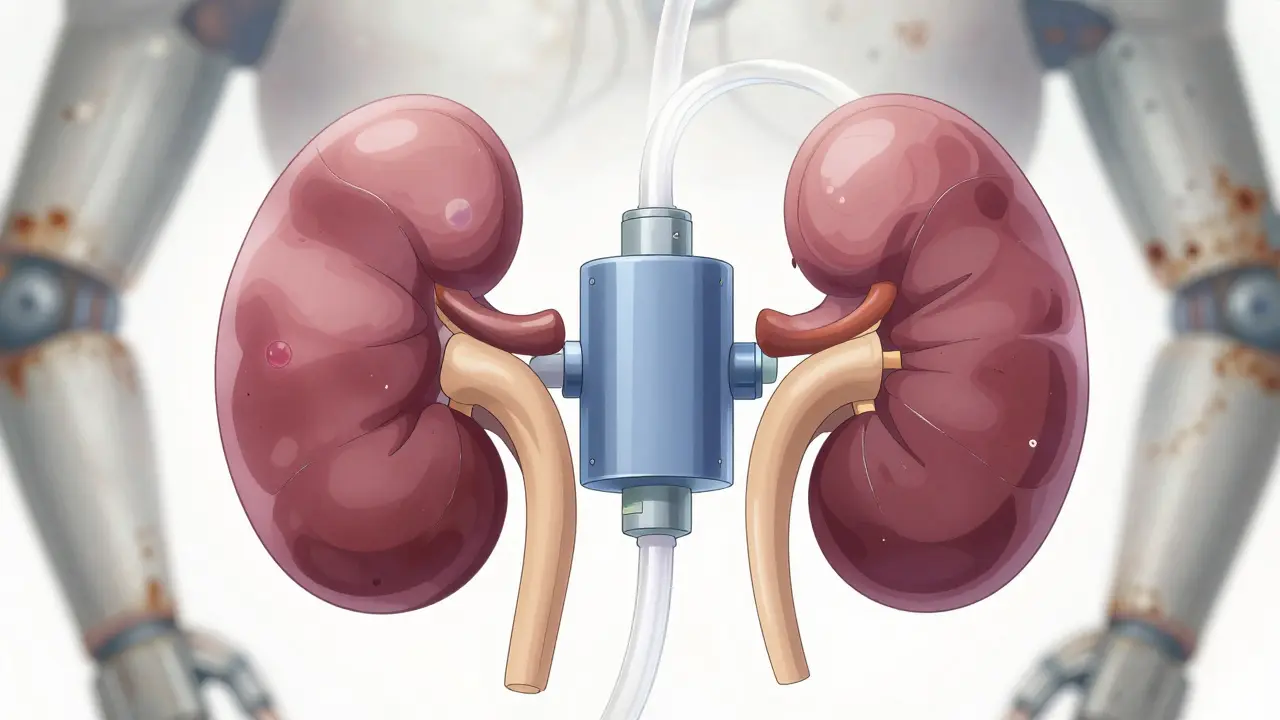
To understand why these drugs are so effective, we need to look inside the kidney. Normally, your kidneys filter your blood, removing waste while keeping essential nutrients like glucose. In a healthy person, almost all filtered glucose is reabsorbed back into the bloodstream via a protein called sodium-glucose cotransporter 2 (SGLT2). This happens in the proximal tubule of the kidney.
In people with type 2 diabetes, the body produces too much glucose, and the kidneys try to keep even more of it. SGLT2 inhibitors block this reabsorption process. By inhibiting the SGLT2 protein, these drugs force the kidneys to excrete excess glucose through urine. This process, known as glucosuria, directly lowers blood sugar levels without relying on insulin production. This is crucial because many people with type 2 diabetes have beta-cell dysfunction, meaning their pancreas struggles to produce enough insulin.
But the magic doesn't stop at glucose removal. When glucose leaves the body through urine, it takes calories with it. This leads to modest weight loss, typically around 2-3 kg (4-6 lbs) on average. Additionally, the process draws out sodium and water, acting as a mild diuretic. This reduces blood volume, which in turn lowers blood pressure by about 3-5 mmHg systolic. These hemodynamic changes-reduced workload on the heart and improved fluid balance-are key to the organ protection these drugs provide.
Heart Benefits: More Than Just Blood Sugar Control
The turning point for SGLT2 inhibitors came in 2015 with the publication of the EMPA-REG OUTCOME trial. This landmark study showed that empagliflozin (Jardiance) reduced cardiovascular death by 38% in high-risk patients with type 2 diabetes. It wasn't just about preventing heart attacks; it was about survival. Subsequent trials, including CANVAS for canagliflozin (Invokana) and DECLARE-TIMI 58 for dapagliflozin (Farxiga), confirmed these findings across different patient populations.
Perhaps the most significant discovery has been their impact on heart failure. Heart failure occurs when the heart cannot pump blood effectively, leading to fluid buildup and shortness of breath. Traditionally, diabetes medications did not address this risk. However, trials like DAPA-HF and EMPEROR-Reduced demonstrated that SGLT2 inhibitors reduce the risk of hospitalization for heart failure by 25-30%. This benefit is so robust that major guidelines, including those from the American Heart Association and the European Society of Cardiology, now recommend SGLT2 inhibitors for patients with heart failure, regardless of whether they have diabetes.
This means if you have type 2 diabetes and signs of heart strain, an SGLT2 inhibitor isn't just a diabetes pill; it's a heart-protective therapy. It helps the heart muscle function more efficiently and reduces the stress caused by fluid overload.
Kidney Protection: Slowing the Progression of Disease
Type 2 diabetes is the leading cause of chronic kidney disease (CKD) and end-stage renal disease. High blood sugar damages the tiny filtering units in the kidneys, called glomeruli, over time. This damage leads to protein leaking into the urine (albuminuria) and a decline in kidney function, measured by estimated glomerular filtration rate (eGFR).
SGLT2 inhibitors have shown remarkable ability to slow this decline. The CREDENCE trial found that canagliflozin reduced the risk of end-stage kidney disease, doubling of serum creatinine, or renal death by 30%. Similarly, the DAPA-CKD trial showed that dapagliflozin reduced the risk of worsening kidney function or death from kidney or cardiovascular causes by 39%, even in patients without diabetes.
How do they achieve this? It comes down to hemodynamics. By blocking sodium reabsorption in the proximal tubule, SGLT2 inhibitors trigger a mechanism called tubuloglomerular feedback. This causes the afferent arteriole (the vessel bringing blood into the glomerulus) to constrict slightly, reducing pressure within the glomerulus. High pressure inside the glomerulus is a primary driver of kidney damage in diabetes. By lowering this intraglomerular pressure, SGLT2 inhibitors essentially "decongest" the kidney, preserving its function for years longer than standard care alone.
| Drug Name (Brand) | FDA Approval Year | Key Clinical Trial | Primary Cardio/Renal Benefit |
|---|---|---|---|
| Empagliflozin (Jardiance) | 2014 | EMPA-REG OUTCOME | Reduced CV death, HF hospitalizations |
| Dapagliflozin (Farxiga) | 2014 | DECLARE-TIMI 58, DAPA-CKD | Broad CV safety, strong CKD protection |
| Canagliflozin (Invokana) | 2013 | CANVAS, CREDENCE | MACE reduction, ESKD prevention |
| Ertugliflozin (Steglatro) | 2017 | VERTIS CV | Non-inferiority for MACE |

Who Should Consider SGLT2 Inhibitors?
Not every person with type 2 diabetes needs an SGLT2 inhibitor immediately. Metformin remains the first-line therapy for most due to its low cost and proven efficacy. However, the landscape has changed. According to the American Diabetes Association's Standards of Care, SGLT2 inhibitors are recommended as first-line agents for patients with type 2 diabetes who also have:
- Established cardiovascular disease (such as prior heart attack or stroke)
- Chronic kidney disease (especially with albuminuria)
- Heart failure (both reduced and preserved ejection fraction)
- A high risk of developing any of the above conditions
If you fall into one of these categories, your doctor may prescribe an SGLT2 inhibitor alongside or instead of other glucose-lowering drugs. Even if your blood sugar is relatively well-controlled, the organ-protective benefits may justify starting therapy. For example, a patient with normal A1c but elevated urinary albumin would still benefit significantly from the renal protective effects of these drugs.
Potential Side Effects and Risks
While SGLT2 inhibitors are generally well-tolerated, they do come with specific side effects that require awareness. Because these drugs increase glucose in the urine, they create a favorable environment for yeast and bacteria. This leads to a higher risk of genital mycotic infections, particularly in women. Symptoms include itching, redness, and discharge. Good hygiene and staying hydrated can help mitigate this risk.
Another concern is diabetic ketoacidosis (DKA), specifically a rare form called euglycemic DKA. Unlike typical DKA, where blood sugar is extremely high, euglycemic DKA can occur with normal or only slightly elevated blood sugar levels (100-250 mg/dL). This makes it harder to diagnose. Symptoms include nausea, vomiting, abdominal pain, and fatigue. Patients should be cautious during periods of acute illness, surgery, or severe calorie restriction, as these situations can trigger ketone production. Carrying ketone test strips can be helpful if you are at risk.
Volume depletion is another potential issue, especially in elderly patients or those taking diuretics. Since SGLT2 inhibitors promote fluid loss, they can cause dehydration, dizziness, or low blood pressure. Starting with a lower dose and monitoring hydration status is important. Finally, there has been discussion about a slight increase in lower-limb amputation risk with canagliflozin, though this finding has been debated and is less prominent with other agents in the class. Your doctor will weigh these risks against the substantial benefits based on your individual health profile.
Practical Tips for Starting Therapy
Starting an SGLT2 inhibitor involves more than just taking a pill. Here are some practical steps to ensure success:
- Hydrate adequately: Drink plenty of water throughout the day to counteract the diuretic effect and reduce infection risk.
- Monitor for infections: Be aware of any unusual genital symptoms and report them to your doctor promptly. Treatment is usually straightforward with antifungal medications.
- Know the signs of DKA: If you feel unwell, nauseous, or unusually tired, check your ketones if possible, even if your blood sugar looks normal.
- Expect initial eGFR dip: When you start the medication, your eGFR may drop slightly (by 3-5 mL/min/1.73m²). This is expected and reflects improved hemodynamics, not kidney damage. It typically stabilizes after 2-3 months.
- Coordinate care: If you see multiple specialists (endocrinologist, cardiologist, nephrologist), ensure they are all aware you are on an SGLT2 inhibitor, as it impacts management strategies for all three conditions.
Cost and Access Considerations
One barrier to using SGLT2 inhibitors is cost. Brand-name versions can range from $520 to $600 per month without insurance. However, many insurance plans cover these drugs for patients with documented cardiovascular or renal indications. Patient assistance programs offered by manufacturers like Johnson & Johnson (Jardiance) and AstraZeneca (Farxiga) can also help reduce out-of-pocket costs. As patents expire between 2025 and 2028, generic versions are expected to enter the market, potentially lowering prices by 60-70% and making these life-saving therapies more accessible to everyone.
Can I take SGLT2 inhibitors if I don't have diabetes?
Yes. Recent FDA approvals allow certain SGLT2 inhibitors, like dapagliflozin (Farxiga) and empagliflozin (Jardiance), to be used for heart failure and chronic kidney disease in patients without diabetes. The organ-protective benefits are independent of glucose-lowering effects.
Do SGLT2 inhibitors cause weight loss?
Yes, modest weight loss is common. Most patients lose between 2-3 kg (4-6 lbs) on average. This occurs because the body excretes calories through glucose in the urine and experiences mild fluid loss.
What should I do if I get a yeast infection while on an SGLT2 inhibitor?
Contact your healthcare provider. Genital mycotic infections are common and treatable with antifungal creams or oral medications. Do not stop taking your medication unless advised by your doctor, as the benefits usually outweigh this manageable side effect.
Will my kidney function numbers get worse when I start this medication?
Initially, yes, your eGFR may drop slightly. This is a normal hemodynamic response indicating reduced pressure in the kidney filters. It is not true kidney damage. Over time, the drug slows the long-term decline of kidney function compared to not taking it.
Are SGLT2 inhibitors safe for people with advanced kidney disease?
They are generally recommended until eGFR falls below 20-25 mL/min/1.73m², depending on the specific drug and indication. Even in moderate-to-severe CKD, they provide significant protective benefits. Your nephrologist will determine the appropriate timing for initiation or discontinuation.
