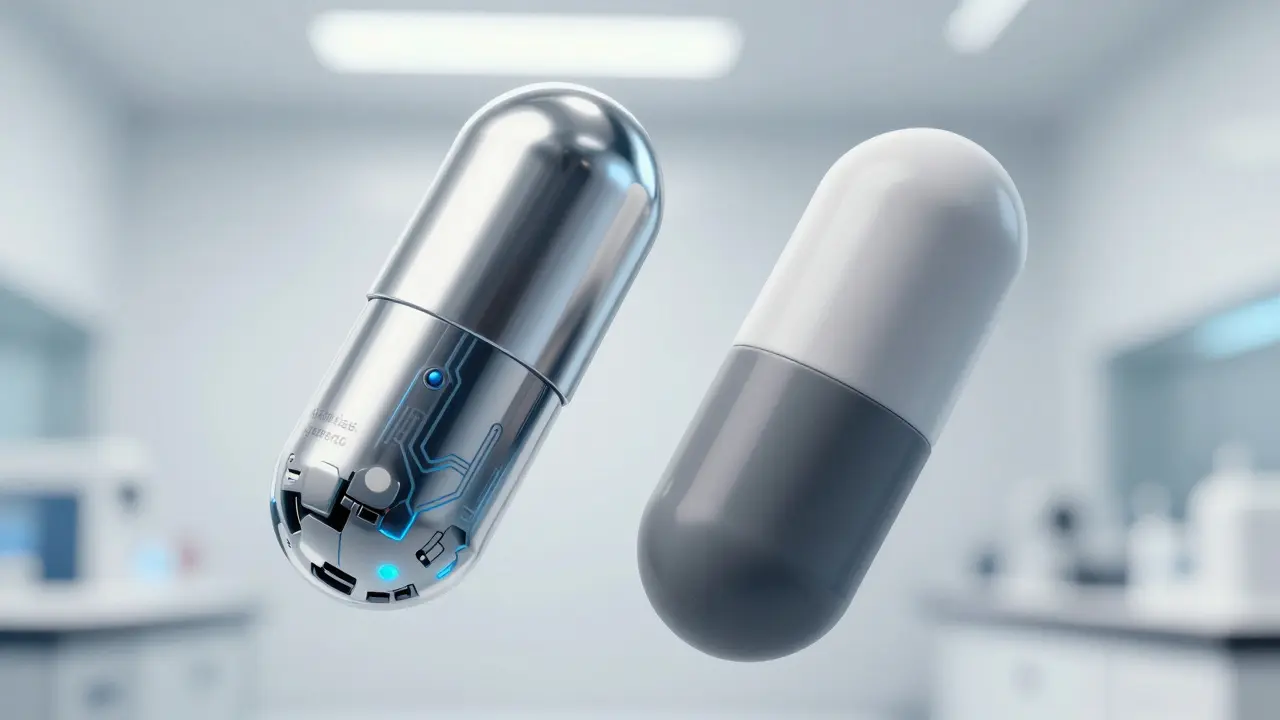
Why Your Prescription Might Look Different But Cost Less
You’ve been taking the same brand-name medication for years. You know the color, the shape, and the specific logo on the pill. Then one day, your pharmacist hands you a bottle that looks slightly different-maybe the imprint is different or the packaging is plainer-and the price tag is lower. You might wonder: Is this a traditional generic from a competitor, or something else entirely?
This scenario often involves an authorized generic, which is an approved brand-name drug marketed without the brand name on its label by the original manufacturer or a licensee. Unlike standard generics produced by third-party companies, authorized generics are made by the very same company that owns the brand-name drug. They are chemically identical to the brand-name product in every way, including active and inactive ingredients, but they skip the fancy branding and carry a lower price tag.
Understanding what these drugs are, how they differ from regular generics, and why pharmaceutical companies use them can help you make smarter decisions about your healthcare costs. Let’s break down exactly what authorized generics are, how they work, and what it means for your wallet and your health.
The Definition: What Exactly Is an Authorized Generic?
To put it simply, an authorized generic is the brand-name drug stripped of its marketing. According to the U.S. Food & Drug Administration (FDA), an authorized generic is "an approved brand name drug that is marketed without the brand name on its label." Other than the missing brand name, it is the exact same drug product as the branded version.
Here is the key distinction that often confuses patients and even some healthcare providers:
- Traditional Generic: Made by a different company than the brand-name manufacturer. It must prove through the Abbreviated New Drug Application (ANDA) process that it is bioequivalent to the brand-name drug. It may have different inactive ingredients (like dyes or fillers).
- Authorized Generic: Made by the brand-name manufacturer (or a company licensed by them). It does not need to go through the ANDA process because it is already covered under the brand-name drug’s New Drug Application (NDA). It has the exact same active and inactive ingredients as the brand-name drug.
Think of it like this: If the brand-name drug is a luxury car sold with a premium badge, the authorized generic is the exact same car sold at a discount dealership without the badge. The engine, the parts, and the performance are identical. The only thing that changes is the label and the price.
How Authorized Generics Differ From Traditional Generics
The difference between authorized generics and traditional generics goes beyond just who makes them. It affects how they are approved, how they are listed, and sometimes, how they look.
| Feature | Authorized Generic | Traditional Generic |
|---|---|---|
| Manufacturer | Brand-name owner or licensee | Third-party competitor |
| Approval Process | Notification to FDA (under existing NDA) | Full ANDA submission proving bioequivalence |
| Ingredients | Identical active and inactive ingredients | Same active ingredient; inactive ingredients may vary |
| FDA Orange Book Listing | Not listed | Listed with therapeutic equivalence code |
| Pricing | Lower than brand, often higher than traditional generics | Significantly lower due to market competition |
One major practical difference is visibility. Traditional generics are listed in the FDA’s Approved Drug Products With Therapeutic Equivalence Evaluations, commonly known as the Orange Book. This catalog helps pharmacists and doctors identify interchangeable drugs. Authorized generics, however, are not listed in the Orange Book because they are considered part of the brand-name drug’s regulatory profile. This can sometimes make them harder to track for consumers who want to know exactly what they are getting.

Why Do Pharmaceutical Companies Create Authorized Generics?
If you’re a patient, you might assume that authorized generics exist solely to save you money. While they do offer savings, the primary driver is strategic business positioning. A comprehensive study published in Health Affairs in December 2022 analyzed 854 authorized generic launches between 2010 and 2019. The findings revealed a clear pattern: these launches are calculated moves to protect revenue during patent expirations.
Here’s how the strategy works:
- Maintaining Market Share: When a brand-name drug’s patent expires, competitors rush to launch traditional generics. By launching their own authorized generic first, the brand manufacturer captures a portion of the cost-conscious market before competitors can establish themselves.
- Leveraging Exclusivity Periods: In many cases, the first generic applicant gets 180 days of marketing exclusivity. During this window, only one traditional generic can compete with the brand. An authorized generic allows the brand owner to compete directly during this period, often pricing their authorized generic slightly below the brand name but above the exclusive generic.
- Avoiding Bioequivalence Costs: Launching a traditional generic requires expensive clinical trials to prove bioequivalence. Since authorized generics are already approved under the brand’s NDA, the manufacturer saves millions in development and regulatory fees.
Dr. Aaron Kesselheim, Professor of Medicine at Harvard Medical School and author of the Health Affairs study, noted that "marketing appears strategic: In markets with traditional generics, three-fourths of authorized generics launched after the respective generic competition started." This suggests that authorized generics are often used as defensive tools rather than purely altruistic efforts to increase access.
Are Authorized Generics Safe and Effective?
Yes. Because authorized generics are manufactured using the exact same formulation as the brand-name drug, they meet the same rigorous quality standards. The FDA considers them identical to the brand-name product in terms of safety, efficacy, and strength.
For patients who are sensitive to inactive ingredients (such as dyes, binders, or fillers), authorized generics can be a better option than traditional generics. Some people experience side effects or reduced effectiveness when switching to a traditional generic because of differences in these inactive components. Since an authorized generic contains the same inactive ingredients as the brand-name drug, it eliminates this variable.
However, there is a catch. Because authorized generics are not listed in the Orange Book, pharmacists may not always substitute them automatically unless specifically prescribed. Additionally, since they are not subject to the same competitive pressure as traditional generics, their prices may not drop as low over time. Once multiple traditional generic manufacturers enter the market, the price of the authorized generic may remain higher than the traditional alternatives.
Real-World Examples of Authorized Generics
To help visualize this concept, here are some well-known examples of authorized generics that have appeared in the U.S. market:
- Colchicine: Prasco Laboratories marketed an authorized generic of Colcrys, a brand-name drug used to treat gout.
- Methylphenidate ER: Watson/Actavis released an authorized generic of Concerta, a medication for ADHD.
- Celecoxib: Greenstone Pharmaceuticals offered an authorized generic of Celebrex, a pain reliever for arthritis.
- Levothyroxine: Jerome Stevens Pharmaceuticals marketed an authorized generic of Unithroid, a thyroid hormone replacement.
In each case, the authorized generic contained the same active ingredient and dosage form as the brand-name drug but was sold under a different label, often at a reduced price.
What Should Patients and Prescribers Know?
If you are a patient, the main takeaway is that an authorized generic is a safe, cost-effective alternative to the brand-name drug. It offers the benefit of lower pricing without the risk of changing formulations. However, you should be aware that it may not be the cheapest option available once traditional generics hit the market.
For prescribers and pharmacists, the challenge lies in identification and communication. Since authorized generics are not listed in the Orange Book, they require manual verification against the FDA’s official "List of Authorized Generic Drugs," which is updated periodically. Healthcare professionals should counsel patients on why their medication might look different despite being therapeutically identical to avoid confusion or non-adherence.
Additionally, insurance plans and pharmacy benefit managers (PBMs) may cover authorized generics differently than traditional generics. Some plans may prefer traditional generics due to lower costs, while others may allow authorized generics if the patient has had issues with traditional versions. Always check with your insurer to understand coverage details.
The Future of Authorized Generics
As the pharmaceutical industry continues to face pressure from rising drug costs and patent expirations, authorized generics are likely to remain a significant part of the market landscape. The Health Affairs study suggests that these launches will continue to serve as strategic tools for brand manufacturers to extend their market presence.
Regulators, including the FDA, maintain oversight through notification requirements rather than separate approvals. This streamlined process ensures that authorized generics reach the market quickly, providing patients with immediate access to lower-cost options. However, ongoing research into the impact of authorized generics on competition and pricing will likely inform future policy decisions. If policymakers determine that authorized generics undermine the competitive dynamics intended by the Hatch-Waxman Act, regulations could change.
For now, authorized generics offer a unique middle ground in the pharmaceutical ecosystem. They provide patients with a trusted, identical formulation at a reduced price, while allowing manufacturers to navigate the complex transition from brand-name monopoly to generic competition.
Is an authorized generic the same as the brand-name drug?
Yes. An authorized generic is chemically identical to the brand-name drug in every aspect, including active and inactive ingredients, dosage form, strength, and route of administration. The only difference is the label, which does not display the brand name.
How can I tell if my medication is an authorized generic?
Authorized generics are not listed in the FDA’s Orange Book, so they don’t appear in standard generic substitution databases. You can check the FDA’s official "List of Authorized Generic Drugs" or ask your pharmacist. Often, the packaging will look simpler or lack the distinctive branding of the original product.
Are authorized generics cheaper than traditional generics?
Not necessarily. Authorized generics are typically priced lower than the brand-name drug but may be more expensive than traditional generics, especially once multiple generic manufacturers enter the market. Prices can vary based on insurance coverage and pharmacy policies.
Do authorized generics require FDA approval?
They do not require a separate approval process like traditional generics. Instead, the manufacturer notifies the FDA that they are marketing the drug under the existing New Drug Application (NDA) of the brand-name product. The FDA considers them identical to the already-approved brand-name drug.
Why would a pharmaceutical company sell an authorized generic?
Companies use authorized generics strategically to maintain market share and revenue during patent expirations. By offering a lower-priced version of their own drug, they can capture cost-sensitive customers before traditional generic competitors gain traction, particularly during the 180-day exclusivity period granted to the first generic applicant.
Can my doctor prescribe an authorized generic specifically?
Yes. If a doctor believes a patient may react poorly to the inactive ingredients in a traditional generic, they can specify the brand-name drug or request an authorized generic if available. However, because authorized generics are not listed in the Orange Book, pharmacists may need to verify availability manually.
