
Every year, millions of people reach for antihistamines and decongestants to fight sneezing, runny noses, and stuffy sinuses. These medications are easy to buy-no prescription needed. But just because they’re on the shelf doesn’t mean they’re harmless. In fact, many people don’t realize how risky these common drugs can be, especially when used the wrong way or by people with certain health conditions.
What Antihistamines Do (And What They Don’t)
Antihistamines block histamine, the chemical your body releases during an allergic reaction. That’s why they help with itching, sneezing, and watery eyes. But not all antihistamines are the same. There are two main types: first-generation and second-generation.
First-generation ones like diphenhydramine (Benadryl) and doxylamine (Unisom) work fast. But they cross into your brain, which is why they make you drowsy-up to 60% of users feel it. That’s not just annoying. It’s dangerous. For people over 65, this drowsiness increases the risk of falls by 300%, according to AARP. It also causes dry mouth, blurry vision, constipation, and trouble peeing-especially risky for men with enlarged prostates.
Second-generation antihistamines like loratadine (Claritin), cetirizine (Zyrtec), and fexofenadine (Allegra) are much better for daytime use. Only 10-15% of users report drowsiness. They don’t mess with your brain as much, so they’re safer for driving, working, or caring for kids. But they’re not risk-free. People with liver or kidney problems can build up the drug in their system. And if you have glaucoma, especially angle-closure type, antihistamines can spike eye pressure and cause sudden vision loss.
Decongestants: The Quick Fix That Can Backfire
Decongestants like pseudoephedrine (Sudafed) and phenylephrine shrink swollen blood vessels in your nose. That’s why your stuffy nose clears up fast. But they don’t just target your nose-they tighten blood vessels everywhere. That’s where the danger starts.
Up to 45% of users report trouble sleeping. Nervousness, anxiety, and heart palpitations are common. More serious? A spike in blood pressure. For someone with high blood pressure, a decongestant can push systolic pressure up by 5-10 mmHg. That might not sound like much, but for someone already at risk, it can trigger a stroke or heart attack. The Mayo Clinic warns that decongestants can do more harm than good for people with hypertension, heart disease, or thyroid problems.
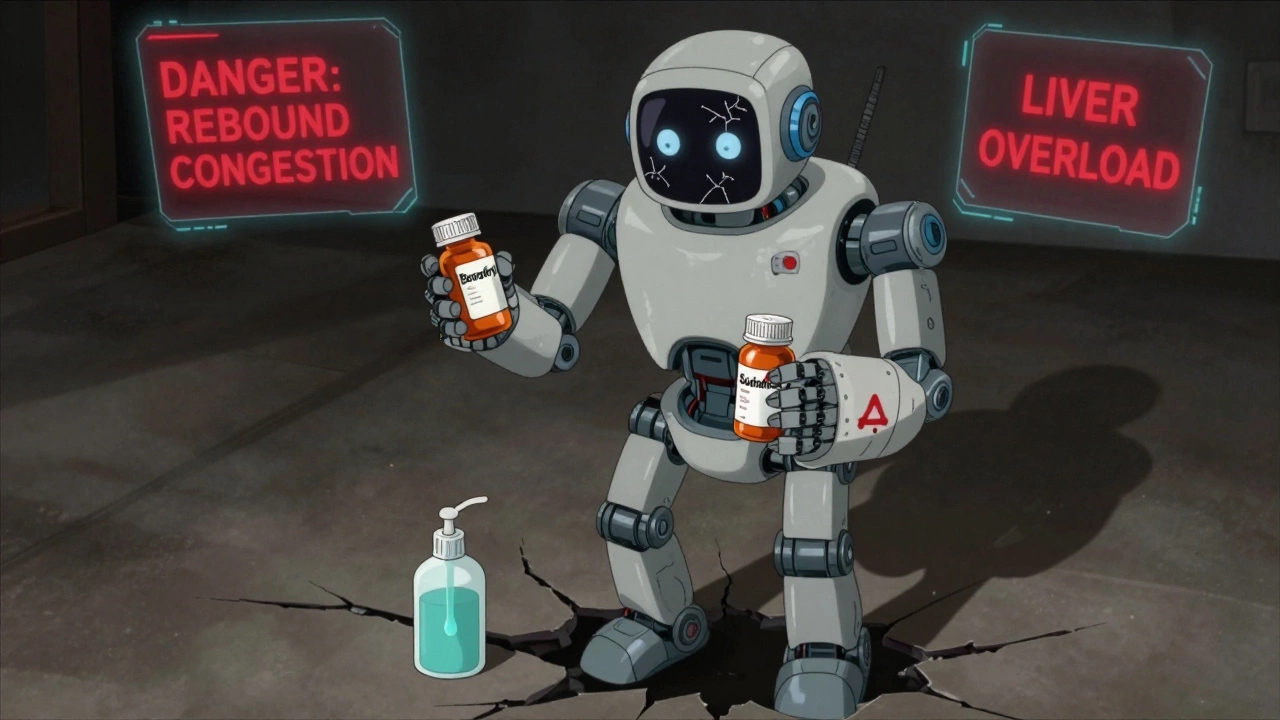
Nasal sprays like oxymetazoline (Afrin) seem safer because they’re local. But if you use them longer than three days, you get rebound congestion. That’s when your nose gets even more blocked after the medicine wears off. Half of users who go past the 3-day mark end up stuck in a cycle of spray-and-relapse. It’s not addiction-it’s physiology. Your blood vessels stop responding normally.
The Hidden Danger: Combination Products
Most cold and allergy meds aren’t single-ingredient. They’re mix-and-match formulas: antihistamine + decongestant + pain reliever + cough suppressant. That’s the problem. You think you’re getting one thing, but you’re actually taking four.
Acetaminophen (Tylenol) is the biggest hidden risk. It’s in over 600 OTC products. The safe daily limit is 4,000 mg. But if you take a cold tablet with 500 mg, then a pain reliever with 500 mg, then a nighttime allergy med with another 500 mg-you’ve already hit 1,500 mg without realizing it. Do that for a few days, and you’re at risk of liver failure. The FDA has documented dozens of cases of acute liver injury from accidental acetaminophen overdose.
And then there’s the antihistamine component. If you’re already taking something for sleep or anxiety, adding diphenhydramine can make you dangerously drowsy. Combine that with alcohol? That’s a recipe for a fall, a car crash, or worse.
Who Should Avoid These Medications Altogether?
These aren’t just ‘use with caution’ warnings. For some people, these drugs are outright dangerous.
- People with high blood pressure: Decongestants can cause hypertensive crises. Even a small spike can be deadly.
- People with heart disease or irregular heartbeat: Decongestants can trigger arrhythmias.
- Men with enlarged prostates: Antihistamines can make it impossible to urinate.
- People with glaucoma: Antihistamines can cause acute angle-closure glaucoma-a medical emergency.
- People with thyroid problems: Decongestants can overstimulate the thyroid.
- People on antidepressants: Especially MAOIs or SSRIs. Mixing these with decongestants can cause life-threatening blood pressure spikes.
- Pregnant women: Decongestants are not recommended in the first trimester. Antihistamines should be limited to second-generation types only, and only under a doctor’s care.
- Children under 2: The FDA has banned all cough and cold products with antihistamines or decongestants for this age group. There have been over 100 reported deaths linked to these drugs in young kids.
Drug Interactions You Probably Didn’t Know About
It’s not just about what’s in the bottle. It’s about what’s in your body.
Decongestants + SSRIs (like Zoloft or Prozac) = dangerous blood pressure rise. There are documented cases where systolic pressure jumped above 180 mmHg after just one dose.
Antihistamines + alcohol = doubled sedation. That’s why older adults who take Benadryl for sleep and have a glass of wine at dinner are 50% more likely to fall.
Decongestants + energy drinks = a double stimulant effect. Caffeine + pseudoephedrine = racing heart, chest tightness, panic attacks. Emergency rooms in the U.S. have seen a 25% spike in calls from young adults who mixed OTC allergy meds with energy drinks.
Even herbal supplements can be risky. St. John’s Wort, ginseng, and ephedra-containing products can interact with decongestants and raise blood pressure further.

What to Do Instead
If you’re relying on OTC meds for more than a week, you’re not treating the allergy-you’re masking it. And masking symptoms can let infections like sinusitis get worse. Antihistamines can even thicken mucus, making it harder for your body to clear out infections.
For chronic congestion, nasal corticosteroids like fluticasone (Flonase) or mometasone (Nasonex) are far safer. They don’t raise blood pressure. They don’t cause drowsiness. They work over time to reduce inflammation, not just shrink blood vessels.
Saline nasal rinses (neti pots or sprays) are another safe, effective option. They flush out allergens and mucus without any drugs. Studies show they’re as effective as decongestants for symptom relief-without the risks.
For itching and sneezing, second-generation antihistamines are still the best choice. But if you’re over 65, ask your doctor before taking even these. The Beers Criteria lists first-gen antihistamines as ‘potentially inappropriate’ for older adults because they increase confusion risk by 50%.
When to See a Doctor
Don’t wait for an emergency. If any of these apply, talk to your doctor:
- Your symptoms last more than 10-14 days
- You’re using nasal sprays longer than 3 days
- You’re taking more than one OTC product at once
- You have high blood pressure, heart disease, diabetes, or an enlarged prostate
- You’re over 65
- You’re pregnant or breastfeeding
- You’re taking any prescription meds, including antidepressants or heart drugs
Pharmacists can help too. A 2022 study found that 78% of OTC allergy medication problems could be avoided with a simple conversation at the pharmacy counter. Don’t be shy. Ask: ‘Is this safe for me, given my other conditions?’
The bottom line? These medications aren’t harmless. They’re powerful drugs with serious side effects. Just because they’re sold next to candy doesn’t mean they’re safe for everyone. Your body isn’t a lab. It’s a living system. And every drug you take changes it.
Can I take antihistamines every day for allergies?
Second-generation antihistamines like loratadine or cetirizine are generally safe for daily use in healthy adults. But if you’re over 65, have liver or kidney issues, or take other medications, talk to your doctor first. Long-term use of first-gen antihistamines like diphenhydramine is not recommended due to increased risk of confusion, falls, and urinary problems.
Why are decongestants bad for people with high blood pressure?
Decongestants like pseudoephedrine and phenylephrine cause blood vessels to narrow, which raises blood pressure. For someone with uncontrolled hypertension, this can lead to a hypertensive crisis-a sudden, dangerous spike that can cause stroke, heart attack, or kidney damage. Even a small increase of 5-10 mmHg can be risky for people already on blood pressure meds.
Is it safe to use Afrin (oxymetazoline) for more than 3 days?
No. Using nasal decongestant sprays like Afrin longer than 3 days causes rebound congestion-your nose becomes dependent on the spray to stay open. Half of users who go past 3 days end up with worse congestion than before. This isn’t addiction; it’s a physical reaction. The only fix is to stop using it, even though symptoms get worse at first. See a doctor for safer alternatives.
Can I take Benadryl to help me sleep?
While diphenhydramine (Benadryl) makes you drowsy, it’s not a safe sleep aid. It disrupts deep sleep cycles, leaves you groggy the next day, and increases fall risk-especially in older adults. It also causes dry mouth, constipation, and blurred vision. For long-term sleep issues, talk to your doctor about better options like melatonin or cognitive behavioral therapy.
What’s the safest allergy medication for seniors?
For seniors, second-generation antihistamines like loratadine or fexofenadine are safest for allergy symptoms. Avoid first-gen drugs like diphenhydramine entirely-they’re listed in the Beers Criteria as potentially inappropriate for people over 65. For congestion, saline rinses or nasal corticosteroids are better than decongestants. Always check with a pharmacist or doctor before starting any new OTC medication.
Can OTC allergy meds cause liver damage?
Yes-mainly through accidental overdose of acetaminophen, which is in many combination cold and allergy products. The safe daily limit is 4,000 mg. But if you’re taking multiple products, you can easily exceed that without realizing it. Acetaminophen overdose is the leading cause of acute liver failure in the U.S. Always check the ingredient list and never combine products with the same active ingredient.
Are there natural alternatives to OTC allergy meds?
Yes. Saline nasal rinses, HEPA air filters, and avoiding allergens are the first-line defenses. For mild symptoms, quercetin (a natural flavonoid) and butterbur extracts have shown promise in studies, though they’re not as fast-acting as antihistamines. Intranasal corticosteroids are the most effective non-antihistamine option for chronic allergies and are safer than decongestants long-term.
Final Advice: Don’t Guess. Ask.
OTC doesn’t mean ‘no risk.’ It means ‘no doctor’s signature needed.’ That’s the trap. People assume if it’s sold over the counter, it’s safe. But the FDA has issued multiple warnings about these exact drugs. They’ve seen the ER visits. They’ve reviewed the deaths. And they’ve updated labels to say it plainly: these medications can be dangerous.
Before you reach for that bottle, ask yourself: What’s my real goal? Is it to feel better for a few hours-or to fix the problem without risking my health? Talk to your pharmacist. Check your other meds. Know your conditions. And if symptoms last longer than two weeks, see a doctor. Allergies are treatable. But not by guessing with pills on a shelf.

Taya Rtichsheva
lol so basically every allergy med is just a time bomb with a sneeze emoji
why do they even sell this stuff next to gum?
Christian Landry
I had no idea Afrin could do that 😳
Used it for a week last winter and thought I was just sick again... turns out my nose was just mad at me
switched to saline rinse and my sinuses actually feel better now 🙌
Mona Schmidt
This is one of the most important public health messages I’ve read in years. Many people treat OTC medications like candy-especially first-gen antihistamines. The Beers Criteria exists for a reason: diphenhydramine is not a sleep aid, it’s a cognitive risk factor for older adults. And the acetaminophen overlap? That’s a silent killer. Pharmacies should be required to have warning labels on combination products that are as prominent as cigarette warnings. We’re not being paranoid-we’re being informed.
Maria Elisha
i just take benadryl to chill out and it works great 😴
why yall so stressed bout it
Sarah Gray
It’s frankly irresponsible that these drugs are sold without mandatory pharmacist consultation. The FDA’s warnings are buried in fine print while marketing campaigns scream ‘fast relief!’ This isn’t healthcare-it’s pharmaceutical capitalism with a side of negligence. If you’re taking more than one OTC product, you’re playing Russian roulette with your liver and blood pressure. Shame on the industry.
Darcie Streeter-Oxland
The notion that 'OTC' equates to 'safe' is a dangerous fallacy perpetuated by corporate advertising and consumer complacency. The pharmacokinetic profiles of first-generation antihistamines in elderly populations are well-documented in peer-reviewed geriatric literature. Furthermore, the cumulative hepatotoxicity risk from polypharmacy involving acetaminophen is not merely theoretical-it is epidemiologically validated. I would urge all readers to consult the British National Formulary guidelines prior to self-administration.
Guylaine Lapointe
People still use Benadryl to sleep? That’s not laziness, that’s self-sabotage. You’re not 'relaxing'-you’re poisoning your REM cycle and increasing your risk of dementia. And if you’re combining it with alcohol, you’re basically volunteering for a nursing home. Stop normalizing dangerous behavior because it’s convenient. Your future self will hate you.
Angela R. Cartes
I’m 68 and I’ve been taking Zyrtec daily for 12 years. No drowsiness, no falls, no issues. My pharmacist says it’s fine. Why do people act like every OTC drug is a death sentence? 😒
Some of us aren’t looking for drama-we’re just trying to live.
Also, I use saline rinses too. 👌