Why Asia Rules the Generic Drug World
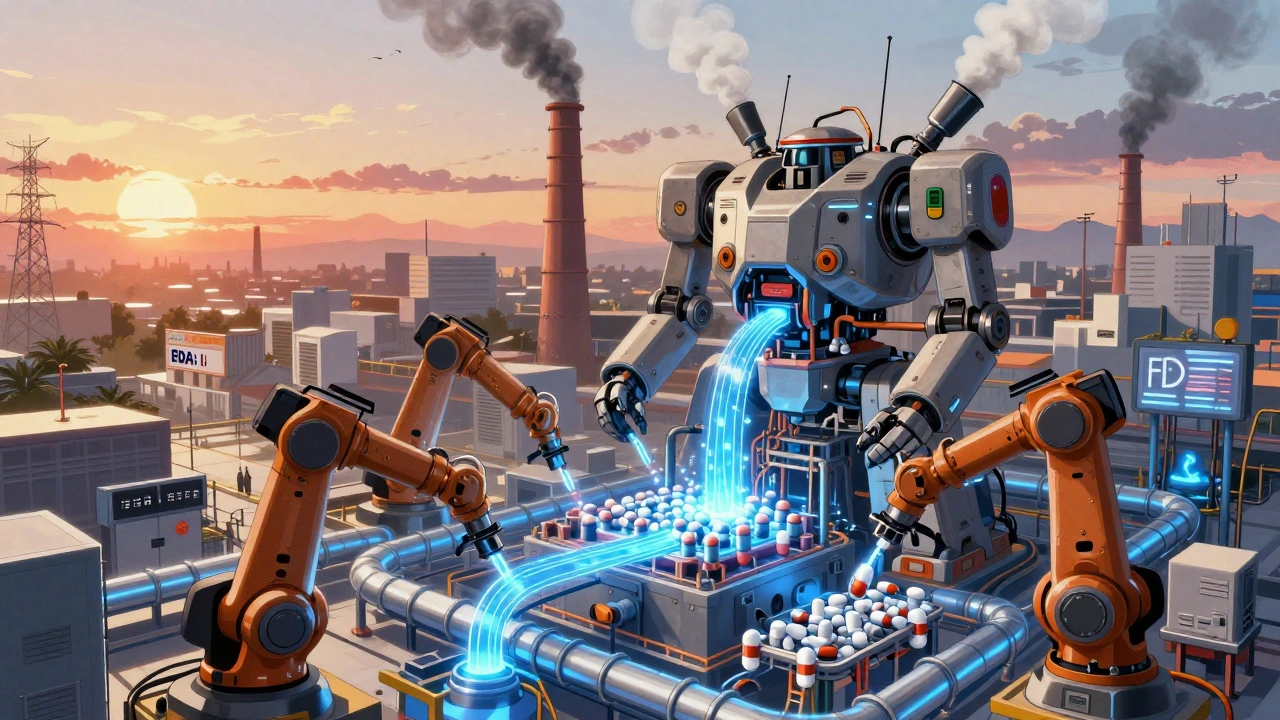
More than half the world’s generic medicines come from just two countries: India and China. But they don’t compete the same way. India ships out billions of cheap pills - tablets, capsules, injectables - while China makes the raw ingredients that turn into those pills. Together, they keep global healthcare running. When you pick up a generic antibiotic, blood pressure med, or vaccine at your local pharmacy, there’s a good chance it was made in one of these countries. And now, smaller economies like Vietnam and Cambodia are stepping in with their own niches, changing the game.
India: The Volume Champion
India is the world’s largest supplier of generic drugs by volume. In 2024, it exported $24.2 billion worth of pharmaceuticals, with 87% being generics. It supplies 60% of the world’s vaccines and 40% of all generic drugs sold in the U.S. That’s not luck. It’s policy. Back in the 1970s, India changed its patent laws to allow companies to copy drug formulas as long as they used a different manufacturing process. That opened the floodgates for affordable medicines. Today, over 3,000 Indian factories are approved by the U.S. FDA - more than any other country.
But here’s the catch: most of those factories make low-cost, high-volume products. About 75% of India’s $61.36 billion pharmaceutical market is made up of simple generics. Only 10% is specialty drugs or biosimilars. That’s why India ranks 3rd globally in volume but 14th in market value. It sells a lot, but not at high prices.
Manufacturing is concentrated in Gujarat (35% of output) and Maharashtra (25%). These states have the infrastructure, skilled labor, and regulatory support to keep production running. But India still imports 68% of its Active Pharmaceutical Ingredients (APIs) - the key chemical components - from China. That’s a vulnerability. To fix it, India launched Pharma 2047, a $13.4 billion plan to build 12 new API parks and cut imports to 30% by 2030.
China: The Value Leader
China’s pharmaceutical market is bigger - $80.4 billion in 2024 - and growing faster in value, not volume. It controls 70% of the global API market. That means nearly every generic drug made anywhere in the world likely contains a Chinese-made ingredient. China doesn’t just make chemicals; it’s moving up the chain. In 2024, 10% of its pharmaceutical output was biologics - complex drugs made from living cells - and that number is rising fast. China’s 14th Five-Year Plan poured $150 billion into biologics R&D, aiming for 25% of exports to be high-value products by 2030.
Manufacturing hubs are in Jiangsu (28%), Zhejiang (22%), and Shanghai (15%). Unlike India, China’s system is more centralized. It has fewer regulatory bodies to deal with, which speeds up approvals. FDA inspection timelines dropped from 24 months in 2018 to just 9 months in 2024. That’s a big win for foreign buyers who need predictable supply.
But quality is a concern. In 2024, the FDA issued 142 warning letters to Chinese manufacturers - more than double the 87 issued to Indian firms. Many of these relate to data integrity, contamination, or poor documentation. Still, Chinese suppliers offer prices 20% lower than Indian ones. That’s why big buyers - like U.S. pharmacy chains - now use dual sourcing: 40-60% from India, 25-35% from China. It’s not about picking one. It’s about reducing risk.

The API Bottleneck: Who Controls the Ingredients?
Think of APIs as the engine of a car. The car (the finished drug) might be assembled in India, but the engine (the API) often comes from China. China supplies 68% of India’s API needs. That’s a huge dependency. India’s Pharma Vision 2020 promised self-sufficiency, but today, domestic API production only meets 18% of demand.
This imbalance creates volatility. If China restricts exports - for political, environmental, or economic reasons - global drug prices spike. S&P Global Ratings warns that overproduction in both countries could trigger 15-20% price drops in APIs between 2026 and 2027. But if demand outpaces supply, prices could jump 12-15%. That’s why companies are now investing in alternative sources.
Emerging Players: Vietnam, Cambodia, and the Niche Strategy
India and China aren’t the only ones playing. Smaller Asian economies are carving out space by focusing on what they do best.
Vietnam’s pharmaceutical exports hit $2.8 billion in 2024, growing 24.7% year-over-year. Its specialty? Antibiotic intermediates - the building blocks for life-saving drugs. It doesn’t try to compete with India on volume or China on scale. It targets a specific, high-demand segment.
Cambodia is doing something different. It’s not making drugs. It’s assembling medical devices - syringes, IV bags, diagnostic tools. Its medical device sector grew 32% in 2024, thanks to ASEAN trade deals and low labor costs. It’s a smart move: less regulation, faster setup, and growing global demand for low-cost medical equipment.
These countries are proving you don’t need to be huge to be important. You just need to be precise.
Who Wins: India or China?
India wins on speed, communication, and customer service. U.S. pharmacy chains report 60% fewer operational issues with Indian suppliers because they offer 24/7 support and respond to custom requests in 14 days. Chinese suppliers take 30-45 days. On Trustpilot, Indian pharma companies average 4.1/5 for customer service; Chinese ones get 3.7.
China wins on price and scale. Its API prices are 20% lower. It’s also better at handling large, complex orders. A German healthcare company switched to dual sourcing after 142 FDA warnings made them nervous. Their supply chain costs went up 18%, but they gained stability.
India’s biggest strength? Its people. 65% of the population is under 35. That’s a massive workforce ready for tech-driven pharma jobs. It’s also why India is investing $2.8 billion in digital health infrastructure - telemedicine, AI-driven diagnostics, and app-based pharmacy services. China’s strength? Money. It’s spending $22.8 billion on biologics innovation under Healthy China 2030. That’s not just about making pills. It’s about making the next generation of medicines.
What’s Next for Global Buyers?
If you’re sourcing generics today, here’s what you need to know:
- Don’t rely on one country. Dual sourcing isn’t optional anymore - it’s survival.
- Check FDA warning letters. A supplier’s history matters more than their price tag.
- Factor in logistics. India’s transportation costs are 12-15% higher than China’s, but labor is 30% cheaper.
- Watch for regulatory changes. The U.S. FDA’s Project BioSecure requires full API traceability by 2026. That will raise compliance costs by 18-22% across Asia.
Companies that succeed will be those who treat supply chains like a puzzle - not a checklist. India gives you flexibility. China gives you scale. Vietnam gives you focus. Cambodia gives you speed in devices. The best strategy blends them all.
Why This Matters for Everyday People
When drug prices rise, it’s not because of greedy corporations. It’s because of geopolitical shifts, API shortages, or quality failures in Asia. When a Chinese factory gets shut down by the FDA, or an Indian port gets backed up, the ripple effect hits your medicine cabinet. The global generic drug system is fragile - but it’s also incredibly efficient. Right now, it works because Asia keeps the lights on. The question isn’t whether it will change. It’s whether we’re ready for the next disruption.
Why is India called the "pharmacy of the world"?
India earned that title because it produces and exports more generic medicines by volume than any other country. After changing its patent laws in the 1970s, Indian companies began making low-cost versions of branded drugs, making treatments affordable globally. Today, it supplies 60% of the world’s vaccines and 40% of U.S. generic drugs.
Does China make more drugs than India?
By volume, India leads in finished generic drugs. But China makes more of the raw ingredients - Active Pharmaceutical Ingredients (APIs) - and controls 70% of the global API market. China’s total pharmaceutical market is also larger ($80.4 billion vs. India’s $61.36 billion in 2024), thanks to higher-value products like biologics and traditional Chinese medicine.
Are Indian generic drugs safe?
Yes, most are. Over 3,000 Indian manufacturing facilities are FDA-approved - more than any other country. However, quality can vary by supplier. Some face delays due to inconsistent state-level regulation. Buyers should check FDA inspection histories and prefer suppliers with strong track records, not just the lowest price.
Why are Chinese APIs cheaper than Indian ones?
China benefits from massive scale, state-backed chemical production, and lower environmental compliance costs. It produces 70% of the world’s APIs, giving it pricing power. Indian API production is still limited - only 18% of needs are met domestically - so India often imports from China and then turns them into finished drugs.
What’s the biggest risk in sourcing generics from Asia?
Overdependence on one country. If China restricts API exports or India faces a regulatory crackdown, global supply chains stall. The biggest risk isn’t quality - it’s disruption. That’s why leading buyers now use dual sourcing: balancing India’s flexibility with China’s scale and price.
Will Vietnam or Cambodia replace India or China?
No - but they’re becoming essential partners. Vietnam excels in antibiotic intermediates; Cambodia focuses on low-cost medical devices. They don’t compete on scale. They compete on specialization. For buyers, they add resilience. For Asia, they show that you don’t need to be huge to matter.
What Should You Do Next?
If you’re a buyer, start mapping your supply chain. Find out where your APIs come from. Check the FDA’s warning letter database. Talk to suppliers about their compliance history. If you’re a student or investor, watch the biologics race - that’s where the next $100 billion will be made. And if you’re just a patient, remember: your affordable medicine exists because of a complex, fragile, and surprisingly human system - built not in Silicon Valley, but in factories across India, China, and beyond.

Jean Claude de La Ronde
so india makes the pills, china makes the magic dust that makes the pills work, and we just sit here like... *sips coffee* hoping the FDA doesn't find out we've been taking chinese cough syrup with a side of existential dread. 🤷♂️
Courtney Blake
Let me get this straight - we're outsourcing the *entire foundation* of our healthcare to two countries with zero accountability? China’s got 142 FDA warnings and India imports 68% of its own ingredients? This isn’t pharma. It’s a hostage situation with aspirin.
Kristi Pope
It’s actually kind of beautiful when you think about it - people across the globe relying on each other’s skills, even if the system’s messy. India’s heart, China’s muscle, Vietnam’s precision... we’re all connected in this quiet, unsung web of medicine. 💚
Doris Lee
I love how this shows that global health isn’t about who’s biggest - it’s about who does what best. India’s got the people, China’s got the scale, Vietnam’s got the focus. We should celebrate that, not fear it. 🌏❤️
Frank Nouwens
The structural dependencies outlined herein are both economically rational and geopolitically precarious. One must acknowledge the efficiency of vertical integration in China’s API production, while simultaneously recognizing the operational resilience afforded by India’s decentralized manufacturing ecosystem.
Kaitlynn nail
So… we’re all just one trade war away from no more ibuprofen? Cool. Cool cool cool.
Aileen Ferris
Actually, the real story is that the US is just too lazy to make its own drugs. Blame China? Nah. Blame the fact that we stopped making anything except TikTok dances and overpriced sneakers.
Michelle Edwards
This is such an important conversation. I’ve been thinking a lot about how we can support these emerging economies - maybe through fair trade partnerships or tech training. Small players like Vietnam and Cambodia deserve more than just being ‘backup options.’ They’re part of the solution. 🙌
john damon
I just bought a bottle of generic amoxicillin last week. The label said "Made in India" but the bottle cap had a Chinese logo. 🤯 We’re living in a post-national pharmaceutical dystopia and nobody’s even talking about it. 🥲💊