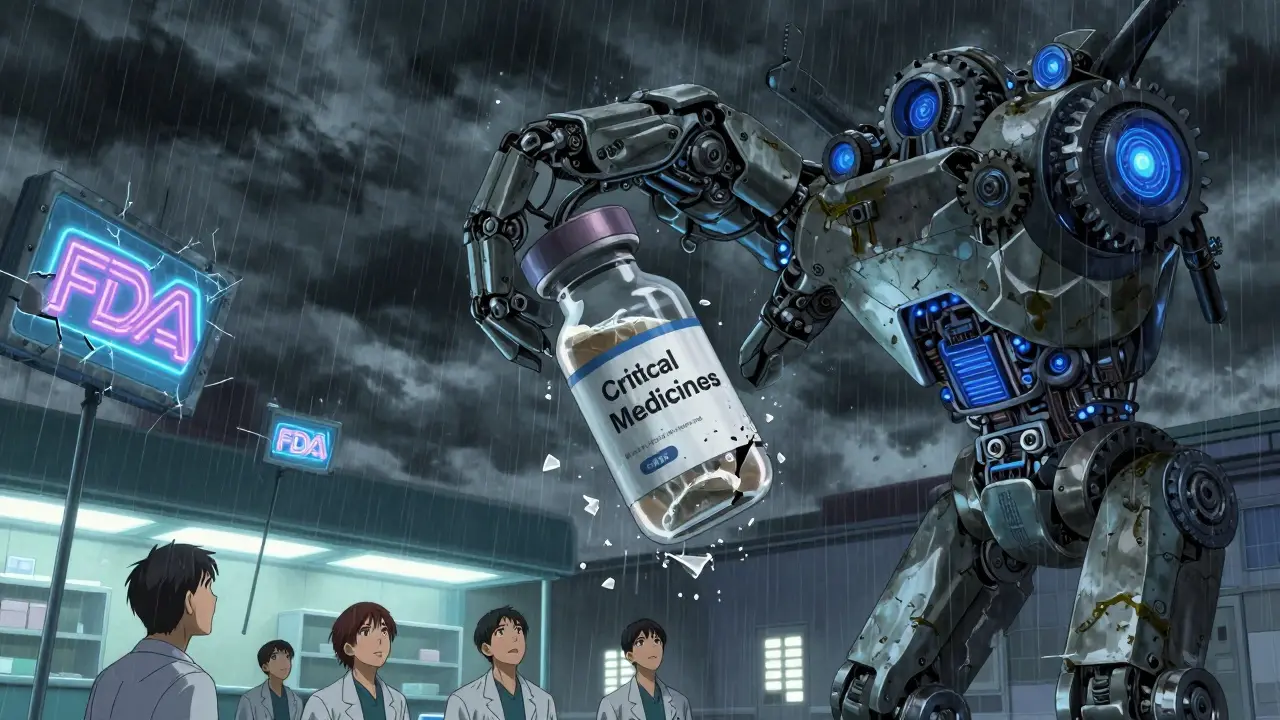
The U.S. is facing one of its worst drug shortage crises in decades. As of September 2025, the FDA listed 287 drugs in short supply - nearly half of them critical for treating heart attacks, seizures, infections, and cancer. Hospitals are rationing life-saving medications. Doctors are switching patients to less effective alternatives. And behind the scenes, Congress is trying to act - but the system is frozen.
Two Bills, One Problem
In August 2025, Senator Amy Klobuchar introduced the Drug Shortage Prevention Act of 2025 (S.2665). Its goal is simple: force drug manufacturers to tell the FDA when demand for a critical medicine starts to spike. Right now, companies aren’t required to report rising demand until it’s too late - when shelves are empty and patients are at risk. This bill would change that. It would require early warning notifications, giving regulators time to step in, find alternate suppliers, or adjust distribution. The bill doesn’t say exactly what counts as a "critical drug" or what penalties manufacturers might face for skipping the reporting rule. Those details are still being drafted. But the intent is clear: stop waiting for crises to happen and start preventing them. Meanwhile, in the House, Representative [unnamed sponsor] introduced the Health Care Provider Shortage Minimization Act of 2025 (H.R.1160). Unlike S.2665, there’s almost no public information about what’s in this bill. No summary. No committee assignment. No text posted online. All we know is the title. It’s meant to tackle the other side of the crisis: not just missing drugs, but missing doctors, nurses, and pharmacists. Right now, over 122 million Americans live in areas with too few primary care providers. By 2034, the American Association of Medical Colleges predicts a shortfall of 124,000 physicians. H.R.1160 is supposed to fix that - but without details, it’s hard to say how.Why Nothing’s Moving
Both bills are stuck. Not because they’re unpopular. Not because they’re poorly written. But because the U.S. government has been shut down since October 1, 2025 - the longest shutdown in American history. Over 800,000 federal workers are furloughed. The FDA, the agency that tracks drug shortages, has no staff to update its Drug Shortage Portal. The system is glitching. Data is outdated. Hospitals can’t rely on it anymore. Congress isn’t debating bills. It’s fighting over funding. The Senate Republicans proposed a continuing resolution to keep the government open until January 30, 2026 - but it doesn’t mention drugs. It doesn’t mention doctors. It doesn’t mention the 98% of hospitals that reported at least one critical drug shortage in the third quarter of 2025, according to the American Hospital Association. Even the budget is working against these efforts. The Congressional Budget Office estimates that implementing S.2665 would cost $45 million a year - a small amount compared to the $1.74 trillion deficit, but still too big for lawmakers focused on cutting foreign aid and public media funding instead.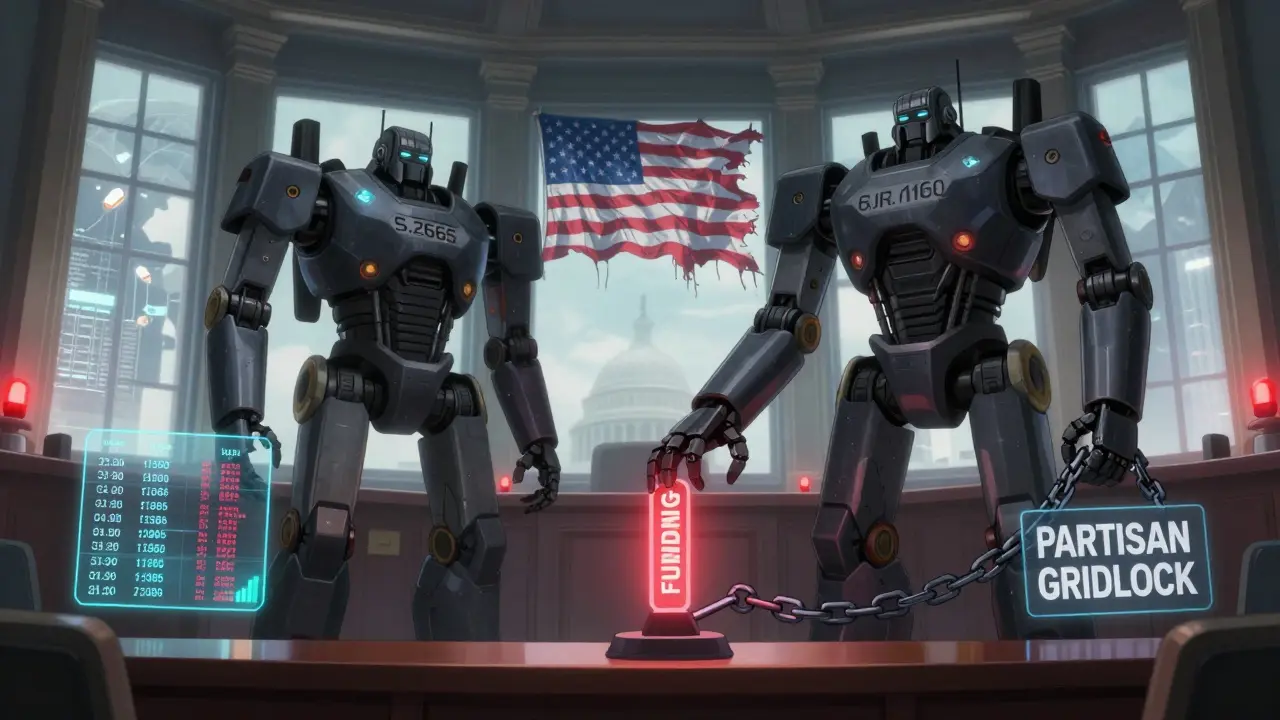
What’s Really Causing the Shortages?
The problem isn’t just about politics. It’s about how the system is built. About 63% of drug shortages come from manufacturing delays, according to the Association for Accessible Medicines. Most of these drugs are generics - cheap, old, and low-margin. Companies don’t make them because there’s little profit. When one factory has a quality issue, or a raw material gets delayed, there’s no backup. No redundancy. No safety net. The FDA knows this. But it can’t fix it alone. It needs Congress to give it tools - like S.2665 - to force transparency and encourage diversification of supply chains. The provider shortage is even more complex. Medical schools aren’t producing enough graduates. Rural clinics can’t compete with urban hospitals on salary. Student debt pushes doctors toward specialties, not primary care. H.R.1160 could fix this - if it includes loan forgiveness, residency expansion, or telehealth incentives. But without a bill text, we’re guessing.Who’s Feeling the Pain?
It’s not just hospitals. It’s you. A September 2025 survey by the American Medical Association found that 87% of physicians have had to change a patient’s treatment because a drug wasn’t available. One doctor in Ohio told a patient with epilepsy to switch from a brand-name seizure drug to a generic - but the generic was out of stock too. The patient had a seizure. Another in Texas had to delay chemotherapy for a breast cancer patient because the chemotherapy drug was on backorder for six weeks. Patients are left scrambling. Some turn to online pharmacies - but many of those aren’t regulated. Others pay hundreds out of pocket for small quantities from overseas. And many just go without.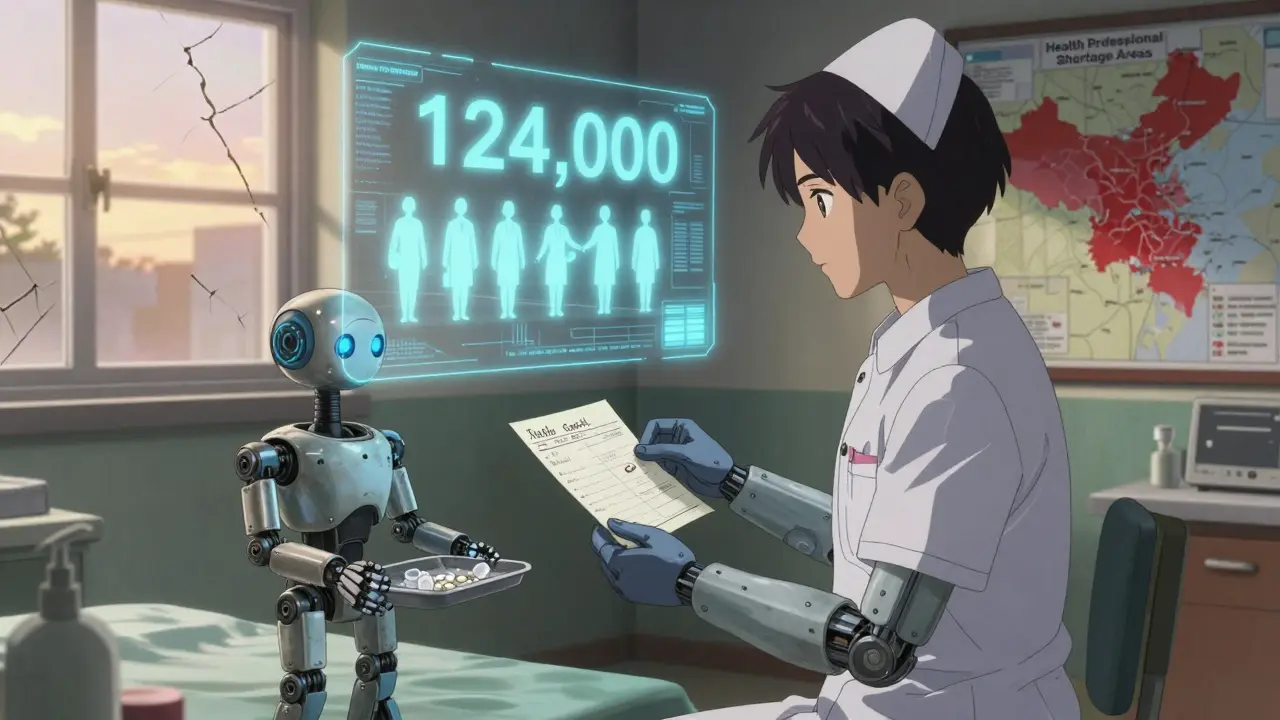
What Happens Next?
If the shutdown ends before January 30, 2026, both bills might get a hearing. But even then, they’ll face long odds. The Senate has 20 other bills ahead of S.2665. The House hasn’t even assigned H.R.1160 to a committee. Without action, the shortages will keep growing. The FDA expects over 300 drugs to be in short supply by mid-2026. The provider gap will widen. More lives will be put at risk. The real question isn’t whether these bills are good ideas. They are. The question is: why are they being ignored while the government sits idle?What You Can Do
You can’t pass a law. But you can make your voice heard. Call your representative. Ask them: "What are you doing about drug shortages?" Ask them: "Where is H.R.1160?" Ask them: "Why is Congress letting this crisis continue?" Follow the bills on Congress.gov. Share the facts on social media. Tell your story if you’ve been affected. Public pressure is the only thing that might break through the silence.What is the Drug Shortage Prevention Act of 2025?
The Drug Shortage Prevention Act of 2025 (S.2665) is a Senate bill that would require pharmaceutical manufacturers to notify the FDA when demand for critical drugs increases. The goal is to give regulators time to respond before shortages occur. It doesn’t yet define which drugs are "critical" or what penalties apply - those details are still being developed.
What does H.R.1160 do?
H.R.1160, the Health Care Provider Shortage Minimization Act of 2025, is a House bill aimed at reducing shortages of doctors, nurses, and other healthcare workers. But as of now, no bill text, summary, or committee details have been made public. Its exact provisions are unknown.
Why are drug shortages getting worse?
Most shortages (63%) come from manufacturing delays, especially for generic drugs. These drugs have low profit margins, so companies don’t invest in backup production. When one factory shuts down for quality issues, there’s no alternative supplier. The FDA can’t force companies to make more - unless Congress gives them the power to do so.
How many Americans are affected by provider shortages?
Over 122 million Americans live in areas officially designated as Health Professional Shortage Areas. These are places with too few primary care doctors, dentists, or mental health providers. By 2034, the U.S. could be short 124,000 physicians.
Is the government shutdown blocking these bills?
Yes. Since October 1, 2025, the government has been shut down, halting nearly all non-essential operations. The FDA can’t update its shortage database. Congress isn’t holding hearings. Staff are furloughed. Without funding or personnel, even well-designed bills like S.2665 and H.R.1160 can’t move forward.

Elaine Douglass
I had to switch my mom's blood pressure med last month because the pharmacy kept running out
She got dizzy and fell trying to climb the steps to her porch
It's not just a statistic, it's people like her
Takeysha Turnquest
We're all just rats in a cage built by greed and bureaucracy
The system doesn't care if you live or die
It only cares if the profit margin stays above 12%
Emily P
Why is H.R.1160 completely invisible online? Is this normal for bills? I checked Congress.gov three times and found nothing. Just the title. No sponsors listed. No committee. Nothing. Feels like it was never meant to be real
Vicki Belcher
Someone needs to fix this and fast 😭
My brother's chemo got delayed for 5 weeks
He's fighting but the system is broken
Let's not wait until someone dies to act 💔
Jedidiah Massey
The structural inefficiencies in the U.S. pharmaceutical supply chain are symptomatic of a broader macroeconomic misalignment
Low-margin generics are inherently non-viable under neoliberal market paradigms
Without state intervention via price controls or public manufacturing, the FDA is merely a regulatory fig leaf
Lynsey Tyson
I get why people are angry but maybe we should focus on what we can actually do right now
Not everyone has the energy to fight Congress
But we can help neighbors find meds, share info, call local clinics
Small things add up
Sarah McQuillan
Drug shortages? That's what you're mad about?
China makes 80% of our meds
We let them control our medicine
Now we cry when the pipeline breaks
Build factories here or shut up
Laura Hamill
THEY DID THIS ON PURPOSE
Big Pharma + The Deep State + The FDA are all in cahoots
They want you dependent on their drugs
They want you scared so you'll take whatever they give you
And now the shutdown? A distraction
They don't want you to see the truth
THEY'RE LETTING PEOPLE DIE TO CONTROL YOU 😡
Alana Koerts
S.2665 is useless without enforcement
They'll just pay the fine and keep lying
And H.R.1160? A joke
No text means no policy
It's theater
Just another bill to look good on a press release
Meanwhile, people are dying
Dikshita Mehta
In India, we have a generic drug industry that supplies 20% of the world's medicine
But we also have strict quality controls and stockpile requirements
Maybe the U.S. needs to treat essential meds like public infrastructure
Not just another commodity
pascal pantel
The whole thing is a farce
Manufacturers game the system by deliberately underproducing
Then they raise prices when demand spikes
And Congress? They take campaign cash from Big Pharma
They don't want to fix it
They want it to stay broken
Gloria Parraz
You're not alone in this
Every person who's had to wait for a medicine, who's had to choose between rent and refills - you're seen
Keep calling your reps
Keep sharing your story
Change doesn't happen from the top
It happens because people like you refused to stay silent
Sahil jassy
My cousin is a nurse in rural Texas
She told me they're using saline bags as placeholders for real meds
People don't even know what they're getting anymore
It's scary
But we can fix this if we stop blaming each other
And start demanding real action
Chris Clark
Yall know the FDA used to have like 50 people just tracking drug shortages?
Now they got like 3
And they're all working on COVID stuff
So yeah the database is trash
It's not a glitch
It's neglect
And we let it happen