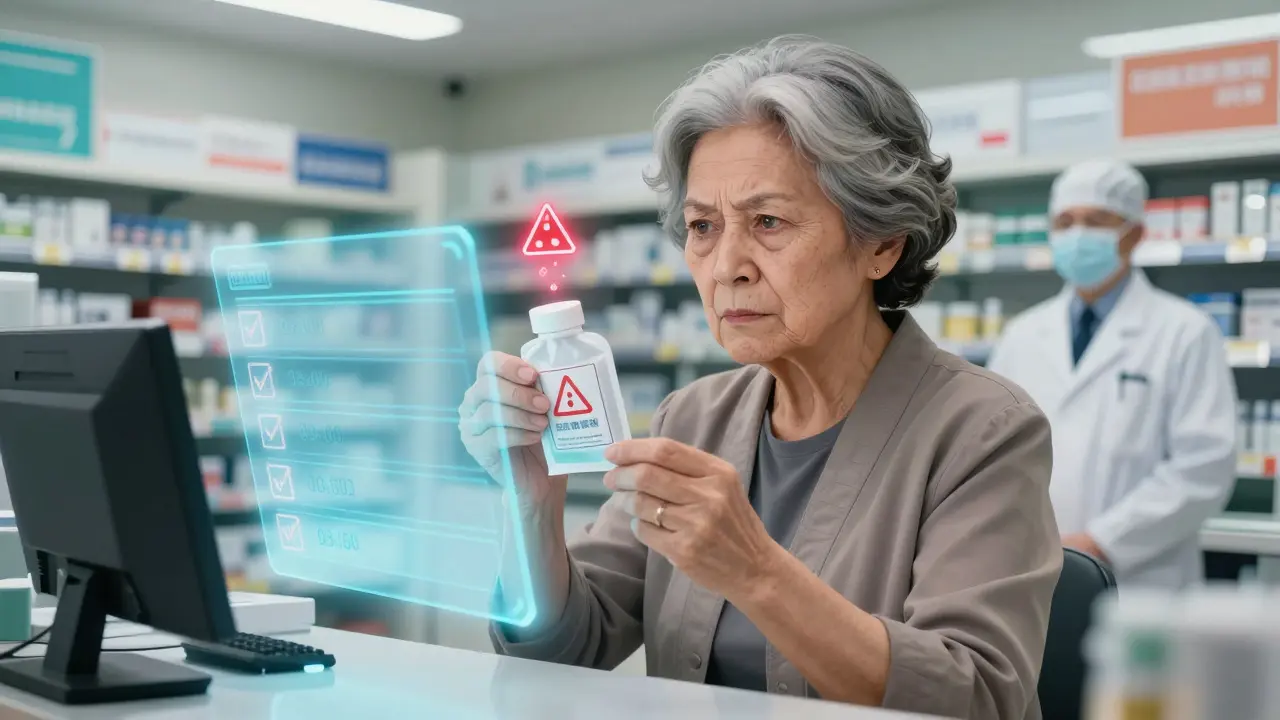
Every year, over 1.5 million people in the U.S. suffer harm from medication errors - and most of them happen right at the pharmacy counter. You pick up your prescription, grab the bag, and walk out. But what if the pill in that bottle isn’t the one your doctor ordered? What if the dose is ten times higher than it should be? Or worse - what if it’s someone else’s medicine? These aren’t rare mistakes. They’re preventable. And the last line of defense isn’t the pharmacist. It’s you.
Why Your Medication Bag Needs a Quick Audit
Pharmacists are trained professionals. They double-check prescriptions. They use barcode scanners. They follow strict protocols. But even with all that, errors still slip through. A 2024 study in JAMA Internal Medicine found that 87% of dispensing errors are caught only when patients actively verify their meds before leaving. That’s not a coincidence. It’s a system failure that puts the burden on the patient - and you’re the final checkpoint. The stakes are high. Wrong dosage? Could cause a seizure or a heart attack. Wrong drug? Might interact dangerously with your other meds. Wrong name? You could end up taking someone else’s blood thinner. These aren’t hypotheticals. They happen daily. And the fix? A 30-second audit of your medication bag before you walk out the door.The 7-Point Medication Bag Audit
This isn’t guesswork. It’s a proven, science-backed checklist used by patient safety experts and endorsed by the American Pharmacists Association and the Institute for Safe Medication Practices. Do these seven checks every single time - no exceptions.- Check the patient name - Is it exactly your legal name? No nicknames. No initials. No “John J.” if your ID says “John James.” In 2024, 12.7% of pharmacy errors involved the wrong patient - often because names like “Michael Smith” or “Maria Garcia” are common. If the name is even slightly off, stop. Ask.
- Match the medication name - Look at the label. Now look at your prescription or the list your doctor gave you. Is it the brand name (like Lipitor) or the generic (atorvastatin)? Both are valid, but they must match what you were told to take. Look-alike, sound-alike drugs like hydralazine and hydroxyzine cause over 1,800 errors a year. Don’t assume. Read it out loud.
- Verify the dosage strength - This is where most life-threatening mistakes happen. Is it 5 mg or 50 mg? 10 mL or 100 mL? Units matter. ISMP data shows strength errors cause 32% of serious medication incidents. If the label says “5 mg” but your doctor said “10 mg,” you’ve got a problem. Don’t trust the pharmacist to catch it - check it yourself.
- Count the pills or check the volume - Did you get 30 pills or 60? Is it 100 mL of liquid or 200 mL? CMS data from 2024 shows 8.3% of errors involve the wrong quantity. If you’re supposed to get 14 pills for a two-week course and you got 28, that’s a red flag. Too many? You could overdose. Too few? You might run out early and skip doses.
- Check the expiration date - For chronic meds like blood pressure or diabetes pills, the expiration date should be at least six months out. Medications lose potency over time. The U.S. Pharmacopeia (USP) says degraded drugs can be ineffective - or even toxic. If the bottle says “EXP 03/25” and today is January 2026, you’re getting a 10-month-old drug. That’s fine. If it says “EXP 12/25,” you’re getting something that expires in 11 months. Still okay. If it’s expired already? Return it.
- Compare the appearance - Pills aren’t all the same. Color, shape, and markings matter. If your old bottle had a white, round tablet with “5” on one side, and this new one is a blue, oval tablet with “A12,” something’s wrong. Use the FDA’s Drugs@FDA database on your phone or ask the pharmacist for a reference sheet. Many pharmacies now have printed images of common pills behind the counter. Don’t just trust the label - trust your eyes.
- Confirm the instructions - “Take one by mouth daily” sounds simple. But what does “daily” mean? Morning? Night? With food? If your doctor said “take with breakfast,” but the label says “take at bedtime,” that’s an error. The APhA reports 14.2% of mistakes are wrong directions. Ask: “Is this how you told me to take it?” If the answer is “I’m not sure,” that’s your cue to call your doctor.
What to Do If Something’s Wrong
You found a mismatch? Don’t leave. Don’t take it home and hope it’s okay. Don’t shrug it off because “it’s probably just a typo.” Stop. Ask the pharmacist: “I noticed this doesn’t match what my doctor prescribed. Can we double-check this?” Most pharmacists will thank you. In fact, pharmacies that encourage this kind of verification see 47% fewer malpractice claims. If they brush you off, ask to speak to the pharmacy manager. If they still refuse to fix it, walk out. Call your doctor’s office. Go to another pharmacy. Your life isn’t worth the convenience.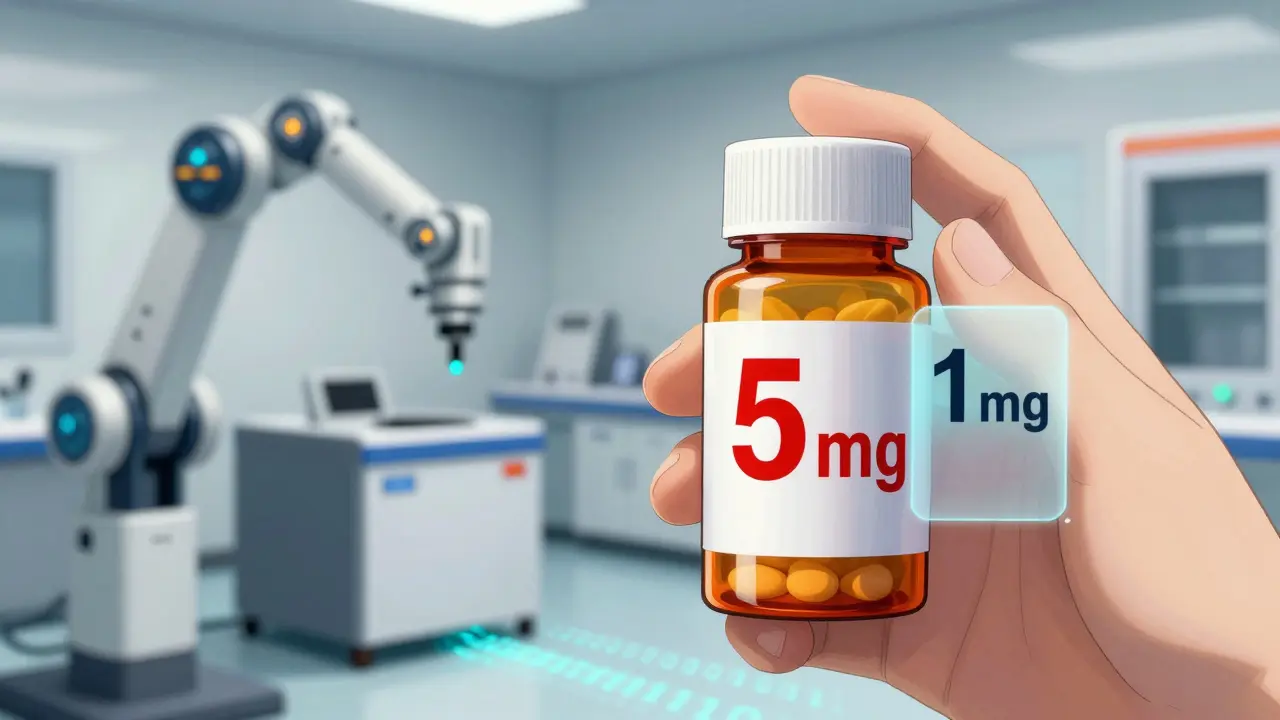
Tools That Help - And Ones That Don’t
There are apps like MedSafe and FDA MedCheck that scan barcodes and verify National Drug Codes. They’re accurate - 98.7% of the time. But they’re useless if you’re over 65 and can’t read the screen. Pew Research found 42% of seniors don’t use them because of vision or tech issues. The old-school “Brown Bag Review” - bringing all your meds to the pharmacy for a full review - works great. But it’s not practical for a single new prescription. You need something quick, right now, before you leave. The seven-point audit? It’s the sweet spot. It takes 22 seconds after two practice runs, according to APhA training data. It doesn’t need a phone. It doesn’t need a doctor’s note. Just your eyes, your memory, and the courage to speak up.Real Stories - What Happens When People Audit
In January 2025, a Pennsylvania woman picked up her warfarin prescription. The label said “5 mg.” Her doctor had prescribed “1 mg.” She’d been on 1 mg for years. She noticed the difference because she checked the strength. She went back. The pharmacy had misprinted the label. If she hadn’t checked, she could have bled internally within days. On Reddit, a mom saved her child from a 10-fold overdose. The label said “give 5” - but didn’t say “5 mL.” The bottle was labeled “50 mg/5 mL.” She asked, “What’s the unit?” The pharmacist admitted they’d forgotten to write it. The child would have been hospitalized. But not everyone is so lucky. A 2024 study found that if you check your meds in under 15 seconds, you’ll miss 78% of errors. Rushing kills. Take your time. Even if the line is long. Even if someone’s behind you. This isn’t about being polite. It’s about being alive.
What Pharmacies Are Doing to Help
Some are stepping up. Since March 2024, 67% of Walgreens locations hand out free magnifying cards for small print. Costco Pharmacy scores 4.7 out of 5 for label clarity. Wal-Mart? 2.8 out of 5. California now requires pharmacists to verbally prompt patients to verify their meds - a law that took effect January 1, 2025. New labels are coming too. Starting in 2025, the FDA will require QR codes on all prescriptions that link to audio instructions and visual guides. Pharmacies are testing voice prompts for Alexa users. The goal? Make verification easier - not harder. But none of this replaces your role. These are supports. You’re still the final safety net.What If You Can’t See or Understand the Label?
If you have poor vision, trouble reading, or cognitive challenges, you’re not alone. 63% of serious medication errors happen to adults over 65. But help exists. Ask the pharmacist for a large-print label. Many pharmacies will print one on request. Bring a family member or caregiver with you. Use the free CDC wallet card - available at 92% of U.S. pharmacies - which has the seven-point checklist in big, clear text. Some community health centers are testing pictogram cards with simple images: a clock for timing, a pill for dosage, a face for name. If you can’t read the label at all, don’t guess. Call your doctor’s office. Ask them to call the pharmacy. Don’t take it home until you’re sure.Make It a Habit
This isn’t a one-time thing. It’s a habit. Every time you pick up a new prescription - even if it’s the same drug you’ve taken for years. Pills change manufacturers. Labels change. Strengths change. Your body changes. What was safe last year might not be safe today. Keep the CDC wallet card in your wallet. Set a phone reminder: “Check meds before leaving pharmacy.” Tell your family: “If you see me grab a bag, ask me if I checked it.” You don’t need to be a doctor. You don’t need to be an expert. You just need to be awake. To look. To ask. To care enough to stop.What if the pharmacist says I’m wrong?
If a pharmacist dismisses your concern, ask to speak to the manager. Pharmacists are trained to respect patient verification - it’s part of their safety protocol. If they still refuse, document what you saw (take a photo of the label if possible) and call your doctor’s office. Never take medication you’re unsure about. Your safety comes before politeness.
Do I need to check every pill in the bottle?
No. You don’t need to count every pill unless the quantity seems off. Just check the total number on the label against your prescription. If it’s 30 pills and you were supposed to get 60, that’s a red flag. If the label says 30 and you expect 30, trust the count - unless you notice pills that look completely different from your usual ones.
Can I use my phone to check my meds?
Yes - but only if it’s reliable. Apps like FDA MedCheck (free, launched Nov 2024) scan barcodes and verify against your prescription. But if you’re uncomfortable with tech, don’t rely on it. The seven-point manual audit works without a phone. Use the app as a backup, not your only tool.
What if I don’t remember what my doctor prescribed?
Call your doctor’s office before you leave the pharmacy. Most have nurse lines that can confirm dosage, frequency, and purpose. If you’re in a hurry, ask the pharmacist: “Can you tell me what this medicine is for?” If they can’t answer, that’s a warning sign. You should know why you’re taking it - and so should they.
Is this really necessary if I’ve taken this medicine before?
Yes. Medications change. A pill that was white last year might be blue this year because of a new manufacturer. Strengths change. Instructions change. Even if you’ve taken it for 10 years, every refill is a new opportunity for error. Never assume. Always verify.

Marian Gilan
i swear pharmacies are run by bots now. last time i got my blood pressure med it was blue instead of white and i just took it cause i was tired. now i think i’m slowly turning into a lizard person. 🦎
Conor Murphy
this is so important. my grandma almost took someone else’s insulin because the name was close. she’s 78 and doesn’t use phones. we now do the 7-point check together every time. she says it makes her feel safe. ❤️
Conor Flannelly
the real tragedy isn’t the error-it’s that we’ve normalized handing over our health to systems that are designed to be efficient, not safe. we’ve outsourced responsibility until the only person left holding the bag is the one who can’t even read the label. it’s not negligence. it’s systemic abandonment. 🤔
Patrick Merrell
if you don’t check your meds you’re basically signing a waiver to die. stop being lazy. your life isn’t a suggestion. it’s a contract you signed when you were born. and you’re breaking it by not reading the tiny print. #noexcuses
Allie Lehto
i once took a pill that looked like a skittle and i was like ‘this seems wrong’ but i took it anyway. turns out it was for anxiety and i got so hyper i thought i was in a video game. never again. also i misspelled ‘pharmacy’ like 3 times in this comment so i’m basically the poster child for this post 😅
Ashley Karanja
the pharmacoeconomic disincentives for rigorous verification are profound. when reimbursement models prioritize throughput over patient safety, you create a structural vulnerability where the patient becomes the last-line sentinel. this is why the 7-point audit isn’t just best practice-it’s a necessary countermeasure against institutionalized risk transference. the burden should not fall on the layperson, but until policy changes, this is the only viable defense vector.
Peter Sharplin
i work in a pharmacy. we catch maybe 30% of errors before they leave the counter. the rest? They’re caught by patients who actually look. don’t be embarrassed to ask. we’ve all been there. I once gave someone their neighbor’s blood thinner. I cried for an hour. Please check. We’re trying.
shivam utkresth
in india we have this thing called ‘dadi ki dawa’-grandma’s medicine. you bring all your bottles to the local chemist and he squints and says ‘ye sahi hai’ and you go. no labels, no barcodes, just trust. but this 7-step thing? it’s genius. even if you’re from a place where labels are handwritten on napkins, you can still do this. eyes + brain = survival.
John Wippler
you don’t need to be perfect. you just need to be present. one time i didn’t check and took 10mg instead of 1mg. i spent 3 days in bed thinking i was dying. turns out i just had a panic attack. but the lesson stuck. now i pause. breathe. read. it’s not a chore. it’s a ritual. your body deserves that.
Aurelie L.
i once yelled at a pharmacist for 12 minutes because the bottle said ‘take with food’ and i thought it meant ‘eat a whole pizza’. turns out i just needed to eat a cracker. now i’m banned from 3 pharmacies. worth it.
Joanna Domżalska
this is just fearmongering. if you’re that scared of your meds, why are you even on them? maybe you should stop taking everything and live in a cave. also, who wrote this? it’s 10x longer than the constitution.
Faisal Mohamed
QR codes on prescriptions? That’s the future. But let’s be real-most people over 60 can’t scan a QR code without calling their grandkid. The 7-step audit is analog wisdom in a digital world. We need more of this. Not less. 📱➡️🧠
Josh josh
check your meds or die lol