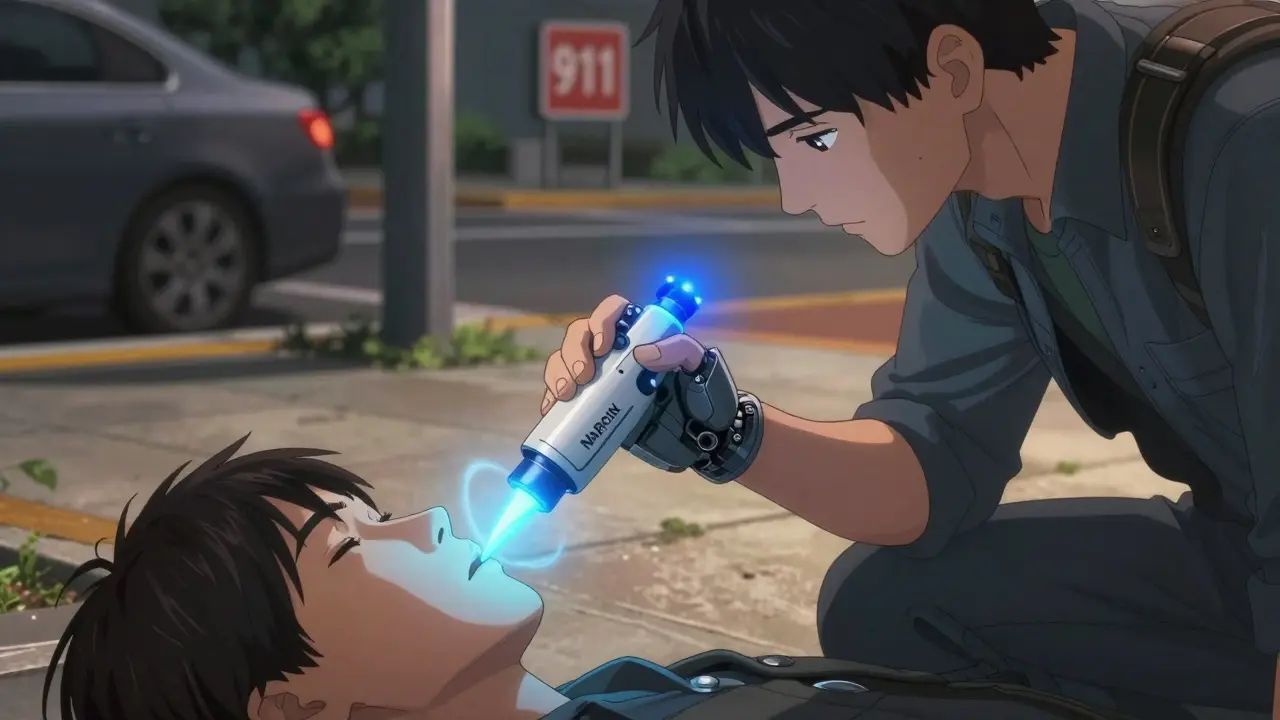
When someone overdoses on opioids, every second counts. Their breathing slows down-or stops. Their skin turns blue. They don’t respond to shouting or shaking. This isn’t a drill. It’s a medical emergency. And naloxone nasal spray can bring them back-fast. No medical training needed. No needles. Just a simple device you can carry in your pocket. If you’ve ever wondered how to use naloxone nasal spray in a real emergency, here’s exactly how to do it-step by step, based on guidelines from the CDC, SAMHSA, and the FDA.
What Is Naloxone Nasal Spray?
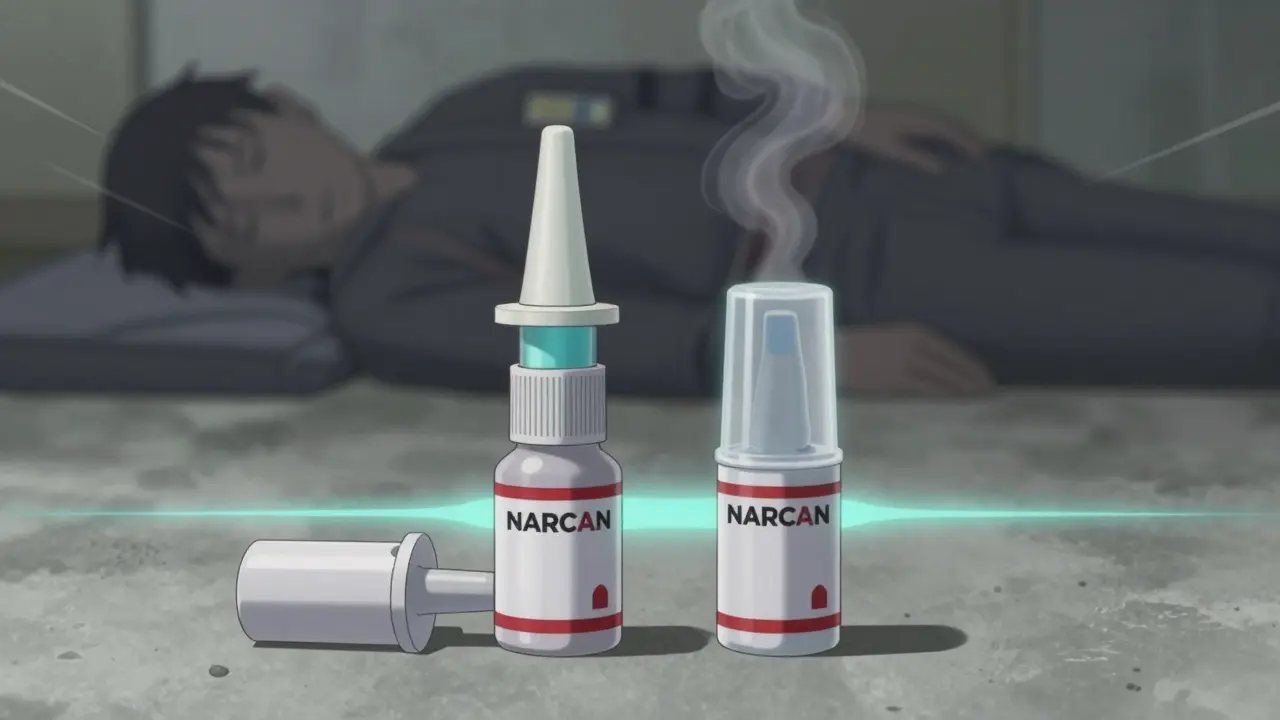
Naloxone nasal spray, sold under the brand name NARCAN, is a medication that blocks the effects of opioids like heroin, fentanyl, oxycodone, and morphine. It works by rushing into the brain’s opioid receptors and pushing out the drugs causing the overdose. This doesn’t cure addiction. It doesn’t make someone feel good. It just wakes them up long enough to get help. The spray delivers 4 mg of naloxone in a single puff-enough to reverse most overdoses, though stronger opioids like fentanyl often need more than one dose.
Since March 2023, naloxone nasal spray has been available over-the-counter in the U.S. You can buy it at pharmacies like CVS, Walgreens, and Walmart without a prescription. It’s designed to be simple, safe, and ready to use-even if you’ve never seen it before. The device is small, about the size of a thick marker, and comes in a clear plastic case. Each unit is single-use. No assembly. No needles. Just press and spray.
Recognizing an Opioid Overdose
You don’t need to know what drug they took. You just need to know the signs:
- Slow, shallow, or stopped breathing (fewer than 12 breaths per minute)
- Unresponsive to voice or physical stimulation (try a sternum rub: press your knuckles hard into the center of their chest for 5-10 seconds)
- Pinpoint pupils (very small black dots in the center of the eyes)
- Blue, gray, or pale skin, especially around the lips and fingernails
- Gurgling or snoring sounds (like they’re choking)
If you see any of these, assume it’s an opioid overdose-even if you’re not sure. Naloxone is safe. It won’t hurt someone who didn’t take opioids. But if they did, it could save their life.
Step-by-Step: How to Use Naloxone Nasal Spray
Here’s what to do, in order. Don’t skip steps. Don’t wait. Time matters.
- Call 911 immediately. Even if you plan to give naloxone right away, emergency responders need to know what’s happening. They’ll bring advanced care, oxygen, and possibly more naloxone. Say: “Someone has overdosed on opioids. I have naloxone.”
- Position the person on their back. Gently lay them flat. Tilt their head back slightly to open the airway. This helps the spray reach deep into the nasal passage and makes breathing easier later.
- Remove the nasal spray from its package. Don’t press the plunger yet. The device is sealed. Pull the cap off the nozzle. You’ll see a small plastic nozzle and a red plunger. Keep the device upright.
- Insert the nozzle into one nostril. Gently slide the nozzle into one of their nostrils until your fingers touch the bottom of their nose. Don’t jam it. Just insert it about half an inch. Make sure it’s snug.
- Press the plunger firmly. Push down hard and all the way until it stops. You should hear a click. This delivers the full 4 mg dose. Don’t let go too soon. Studies show 18% of first-time users don’t press it fully-wasting the dose.
- Remove the device. Once the plunger is fully depressed, pull it out. Don’t reuse it. Put it aside.
- Wait 2-3 minutes. Watch for signs of breathing. Are they moving? Are their lips turning pink? Are they taking 12-20 breaths per minute? If they start breathing on their own, you’re in luck. But don’t assume they’re out of danger.
- If no response, give a second dose. Use a new nasal spray device. Insert it into the other nostril. Press the plunger again. Many overdoses-especially from fentanyl-require two or more doses. The CDC says 32% of fentanyl overdoses need repeat doses. Don’t wait. Give it now.
- Place them in the recovery position. If they start breathing but are still unconscious, roll them gently onto their side. Bend their top knee and place their top arm under their head. This keeps their airway open and prevents choking if they vomit.
- Stay with them for at least 4 hours. Naloxone wears off after 30-90 minutes. Opioids like fentanyl or carfentanil can last longer. The person can slip back into overdose once the naloxone wears off. Keep monitoring their breathing. If they stop again, give another dose if you have it.
What Naloxone Can’t Do
Naloxone only works on opioids. It won’t reverse overdoses from alcohol, benzodiazepines, cocaine, or methamphetamine. But if someone is unresponsive and you’re not sure what they took, give naloxone anyway. It won’t hurt them.
It also doesn’t replace CPR. If someone isn’t breathing at all, start rescue breathing right away while you prepare the naloxone. The American College of Emergency Physicians says 22% of overdose deaths happen because people wait too long to give breaths. Pinch the nose, seal your mouth over theirs, and give one breath every 5 seconds. Keep going until they breathe on their own or help arrives.
Common Mistakes and How to Avoid Them
Even with clear instructions, people make mistakes in emergencies. Here are the top three:
- Waiting too long to act. People think they should wait to see if the person wakes up on their own. Don’t. Overdose kills fast. Act now.
- Not giving enough doses. Fentanyl is 50-100 times stronger than heroin. One spray often isn’t enough. Always be ready with a second dose.
- Not monitoring after reversal. Naloxone wears off. The person can die hours later if you leave them alone. Stay with them until EMS arrives and keep watching their breathing.
Practice helps. Many pharmacies now offer free training with demo sprays-no commitment, no cost. Try it. Get comfortable with the device. The more you practice, the less panic you’ll feel when it matters.
Where to Get Naloxone Nasal Spray
You can buy it at any pharmacy without a prescription. Look for NARCAN Nasal Spray. It comes in packs of two. One for use now, one for backup. Prices vary, but most cost between $40 and $80 without insurance. Some community health centers, harm reduction programs, and nonprofits give it away for free. If you know someone at risk-whether they use opioids or not-keep a kit handy. One kit saved a man in Ohio last year when his son overdosed at home. He’d bought it six months earlier after watching a video. He didn’t think he’d ever need it.
Why This Matters
In 2022, over 81,000 people in the U.S. died from opioid overdoses. Most were young. Most were alone. Many would’ve lived if someone nearby had naloxone. The CDC says universal access to naloxone could prevent 23,000-30,000 deaths each year. That’s not a statistic. That’s your neighbor. Your sibling. Your friend.
Naloxone nasal spray isn’t magic. But it’s the closest thing we have to a safety net in a crisis. It’s simple. It’s safe. And it works.
Can I use naloxone nasal spray on myself?
No. If you’re overdosing, you won’t be able to administer it yourself. Naloxone is meant to be used by someone else-like a friend, family member, or bystander. That’s why it’s critical to carry it and teach others how to use it. If you’re at risk of overdose, make sure someone close to you has a kit and knows how to use it.
Does naloxone work on fentanyl?
Yes, but it often requires more than one dose. Fentanyl is extremely potent, and it can bind more tightly to opioid receptors than other drugs. The CDC reports that 32% of fentanyl overdoses need two or more naloxone doses. Always be prepared to give a second spray if the person doesn’t respond within 2-3 minutes.
Is naloxone safe to use if I’m not sure it’s an opioid overdose?
Yes. Naloxone has no effect on people who haven’t taken opioids. It won’t cause harm or side effects in someone who took alcohol, cocaine, or other drugs. If someone is unresponsive and not breathing normally, give naloxone. The risk of doing nothing is far greater.
How long does naloxone last, and why does that matter?
Naloxone works for 30 to 90 minutes. But opioids like fentanyl, carfentanil, or heroin can last much longer-sometimes 4 hours or more. That means the person can slip back into overdose after naloxone wears off. You must monitor them for at least 4 hours after the last dose. If they stop breathing again, give another spray if you have one.
Do I need to call 911 even if the person wakes up?
Yes. Even if they seem fine, they need medical care. Naloxone is temporary. Their body is still processing opioids. They may develop complications like fluid in the lungs, heart rhythm problems, or a second overdose. Emergency responders can provide oxygen, monitoring, and treatment that you can’t. Never skip calling 911.
Can I carry naloxone nasal spray in my car or bag?
Yes. Naloxone nasal spray is stable at room temperature (between 59°F and 104°F). You can keep it in your glove box, purse, or backpack. Avoid leaving it in extreme heat (like a car in summer) or freezing cold. If the spray looks cloudy or discolored, don’t use it. Replace it.

Dinesh Dawn
Just saw this and had to say thanks. My cousin OD’d last year and we didn’t have naloxone. I wish I’d known how simple it was. Now I keep two sprays in my glovebox. No joke - it’s like carrying a fire extinguisher. You hope you never need it, but if you do, you’re glad it’s there.
Vanessa Drummond
OMG I’m so done with people who say ‘they brought it on themselves’ - like, maybe they did, but do you wanna watch someone turn blue while you debate morality? Nah. Naloxone isn’t an endorsement. It’s a damn life raft. Get some. Carry it. Stop being a coward.
kirti juneja
Y’all know what’s wild? The fact that we still have to beg for access to lifesaving tools like this. I’m from Delhi, and my cousin works at a harm reduction center here - they hand out naloxone like candy at Halloween. No stigma. No paperwork. Just ‘here, this might save someone you love.’ Why can’t the whole world do this? We’re not asking for miracles. We’re asking for common sense. 💛
Haley Gumm
Okay but let’s be real - most people who don’t have naloxone are just too scared to admit they know someone who uses. Like, you know your coworker binges on oxy. You know your neighbor’s son is on fentanyl. You just don’t wanna think about it. So you scroll past this. Then when someone dies, you say ‘I had no idea.’ Bullshit. You had every clue.
Gabrielle Conroy
THIS. IS. SO. IMPORTANT!!! 🙌 I just got my first kit yesterday at CVS - $48, two sprays, and the pharmacist gave me a free sticker that says ‘I carry naloxone’ 😍 I showed my roommate and we practiced on the orange demo spray (yes, they have those!!). I’m telling everyone. Like, EVERYONE. My aunt’s boyfriend is a recovering addict - he cried when I told him I had it. We’re all gonna be okay. 💕
Spenser Bickett
So you’re telling me we’re gonna hand out narcan like candy to people who choose to poison themselves? Cool. Next we’ll give out defibrillators to people who eat 12 slices of pizza every night. Progress.
Christopher Wiedenhaupt
Thank you for the detailed guide. I’ve been trained in CPR and first aid, but this is the first time I’ve seen a clear, step-by-step breakdown of naloxone use that aligns with CDC protocols. I’ve ordered two kits for my household. One for my home, one for my car. It’s a small investment for a massive impact.
John Smith
People die from overdoses because they’re weak. Not because we lack tools. Give them naloxone? Sure. But don’t act like it’s a solution. It’s just a delay tactic. The real fix is getting them off the stuff. Or better yet - stop enabling them.
Natanya Green
Okay so I just watched my best friend’s little brother OD at a party last month - he was 19. We had no idea what to do. We screamed. We shook him. We called 911. We didn’t even know what naloxone was. He lived. But he’s in rehab now. And I’m crying typing this. I’m getting two kits today. I’m telling my whole family. I’m teaching my coworkers. I’m not letting this happen again. Not on my watch. 😭
Steven Pam
Just wanna say - this is the kind of info that changes lives. Not in some abstract way. Like, real, human, tear-jerking, ‘I’m gonna go buy this right now’ kind of change. I used to think overdose was something that happened to ‘other people.’ Now I know it’s happening in parking lots, dorm rooms, and your aunt’s basement. You don’t need to be a hero. Just be prepared. Keep a kit. Teach someone. It’s not hard. And it matters. So much.
Erin Pinheiro
why do we even have to teach this like its a class? if someone is unresponsive and not breathing they need help not a lecture. just spray it and do chest compressions. its not rocket science. also i got mine from a friend who works at a clinic. no one should have to pay for this. its a basic human right