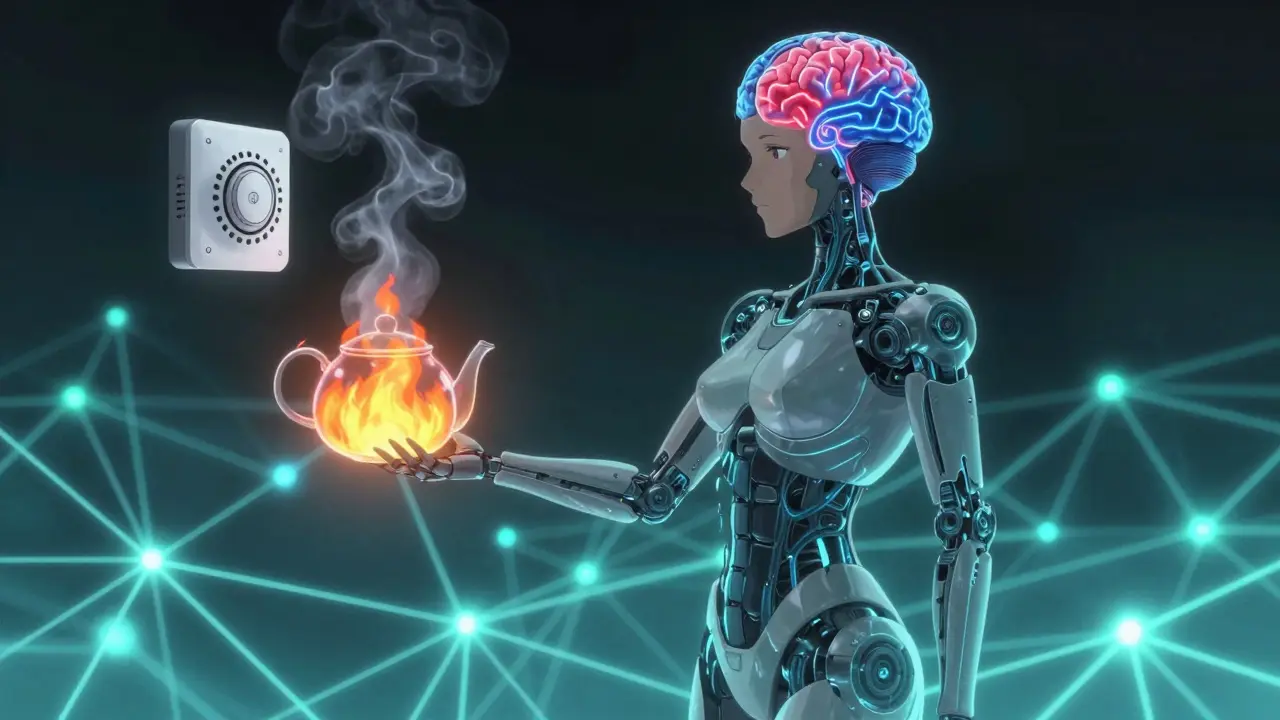
What if your pain isn’t telling you what you think it is?
For years, we’ve been taught that pain equals damage. If your back hurts, there’s a herniated disc. If your knee aches, your cartilage is worn out. But what if that’s not true? What if your pain is more like a smoke alarm-sensitive, loud, and sometimes triggered by nothing burning at all?
This is the core idea behind Pain Neuroscience Education (PNE). It’s not a treatment like massage or exercise. It’s not a pill. It’s a way of understanding pain that changes how your brain responds to it. And for people stuck in chronic pain, it’s one of the most powerful tools we have.
Why traditional pain advice often fails
Most people with ongoing pain get told to rest, avoid movement, or get imaging tests to find the "cause." But here’s the problem: imaging often shows changes-like degeneration or bulging discs-that are common in people with zero pain. A 2021 study found that over 60% of pain-free adults had disc degeneration on MRI. So if your scan shows the same thing, why are you in pain?
Traditional education treats pain like a broken pipe. Fix the pipe, stop the leak. But chronic pain isn’t a leak. It’s more like a faulty alarm system. The sensors are turned up too high. The brain is overprotective. And no amount of physical repair fixes that.
That’s why rest, injections, or even surgery don’t always work. You’re treating the symptom, not the system. PNE flips the script. Instead of asking "What’s broken?" it asks, "Why is my brain so scared?"
How PNE works: The brain’s alarm system
PNE teaches you that pain is not a direct message from your tissues. It’s an output. Your brain creates pain based on what it thinks is dangerous-not what’s actually damaged.
Think of it like a home security system. If your alarm goes off because a cat walked past the sensor, you don’t call the police. You adjust the sensitivity. That’s what PNE helps you do.
Here are the key ideas:
- Peripheral sensitization: Your nerves become more reactive after injury. They send stronger signals-even when the tissue is healed.
- Central sensitization: Your spinal cord and brain get stuck in high alert. They amplify signals, like turning up the volume on static.
- Neuroplasticity: Your brain can change. If it learned to be overly protective, it can learn to be calmer again.
- The biopsychosocial model: Pain isn’t just physical. Stress, sleep, emotions, and beliefs all shape how much pain you feel.
These aren’t abstract concepts. They’re measurable. Brain scans show that after PNE, areas linked to threat detection (like the amygdala and insula) become less active. Your nervous system literally calms down.
What happens in a PNE session?
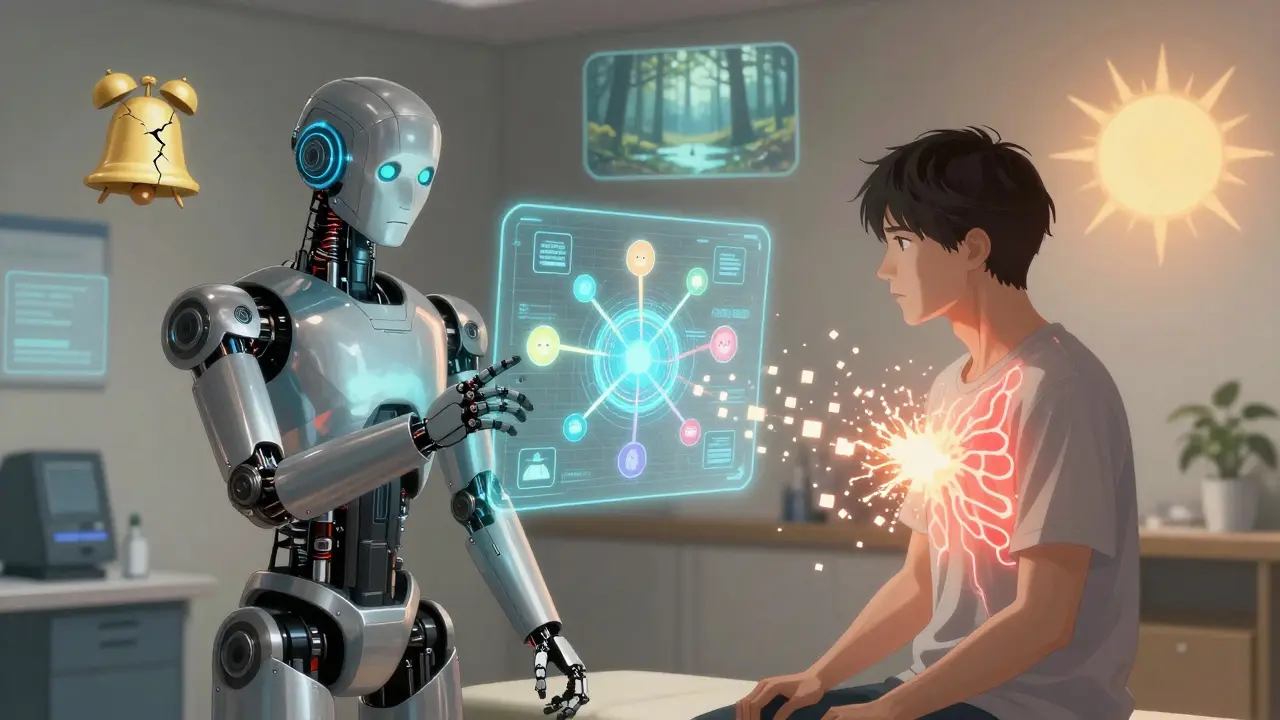
A typical PNE session lasts 30 to 45 minutes. It’s not a lecture. It’s a conversation. A skilled clinician uses simple metaphors, drawings, and stories to explain pain biology.
One popular metaphor is the "sensitive smoke alarm." Imagine your nervous system is an alarm that used to go off only when there was a real fire. After an injury, it started going off for burnt toast. Now, it goes off for a puff of steam. PNE helps you understand: "It’s not a fire. It’s just a loud alarm."
Another common tool is the "pain neuromatrix." This idea says your brain doesn’t just respond to one input-it pulls from your memories, emotions, beliefs, and environment. Two people with identical scans can have wildly different pain levels because their brains are interpreting things differently.
Most PNE programs are delivered by physical therapists, but psychologists and doctors trained in pain science also use it. The most effective approach? One-on-one. A 2023 review found individual sessions produced the biggest shifts in understanding and pain reduction.
What does the science say?
Over 20 systematic reviews and meta-analyses confirm PNE works. Here’s what the data shows:
- Pain intensity drops by an average of 1.7 to 1.8 points on a 0-10 scale-enough to make a real difference in daily life.
- Disability improves by 12-20%. People move more, avoid less, and return to activities they gave up.
- Pain catastrophizing (the "this is terrible, it will never end" mindset) drops by over 6 points on the Pain Catastrophizing Scale.
- When combined with exercise or manual therapy, results improve by another 30-40%.
Compare that to traditional pain education, which often just says "stay active" or "don’t lift heavy." PNE gives people a deeper reason to move. It’s not just "do this because your therapist said so." It’s "I understand why my body is reacting this way, and I can change it."
One 2022 study found PNE added to standard physiotherapy led to a 10.8-point drop on a 100-point pain scale-nearly double the improvement from standard care alone.
Who benefits the most?
PNE works best for chronic pain-pain lasting longer than three months. That’s because the nervous system has had time to rewire itself into overdrive.
Conditions where PNE shows strong results:
- Chronic low back pain
- Fibromyalgia
- Chronic neck pain
- Tension headaches
- Complex regional pain syndrome (CRPS)
It’s less helpful for acute pain-like a broken bone or recent surgery-where tissue damage is clearly driving the pain. Only about 11% of studies found PNE useful in these cases.
It also doesn’t work well for people with severe cognitive impairment or low health literacy. If someone can’t grasp the idea of a "sensitive alarm," the metaphors fall flat. In those cases, simpler language like "your body is being too careful" helps more than "central sensitization."
Real stories: What patients say
On Reddit’s r/ChronicPain, a user named "PainWarrior87" wrote:
"After six months of fearing movement would damage my back, the metaphor of a sensitive smoke alarm helped me understand my pain wasn’t signaling danger. I’ve since returned to hiking and reduced opioid use by 75%."
Another case: a 42-year-old nurse with fibromyalgia went from taking six pain pills a day to one every three days after a six-session PNE program paired with graded activity. She didn’t become pain-free. But she became functional. And that’s the goal.
Not everyone succeeds. About 17% of patient reviews mention PNE felt "too scientific" or didn’t help their acute pain. Some expect immediate relief. But PNE doesn’t erase pain-it changes your relationship with it. That takes time.
How to get started
If you’re dealing with chronic pain and haven’t tried PNE, here’s how to begin:
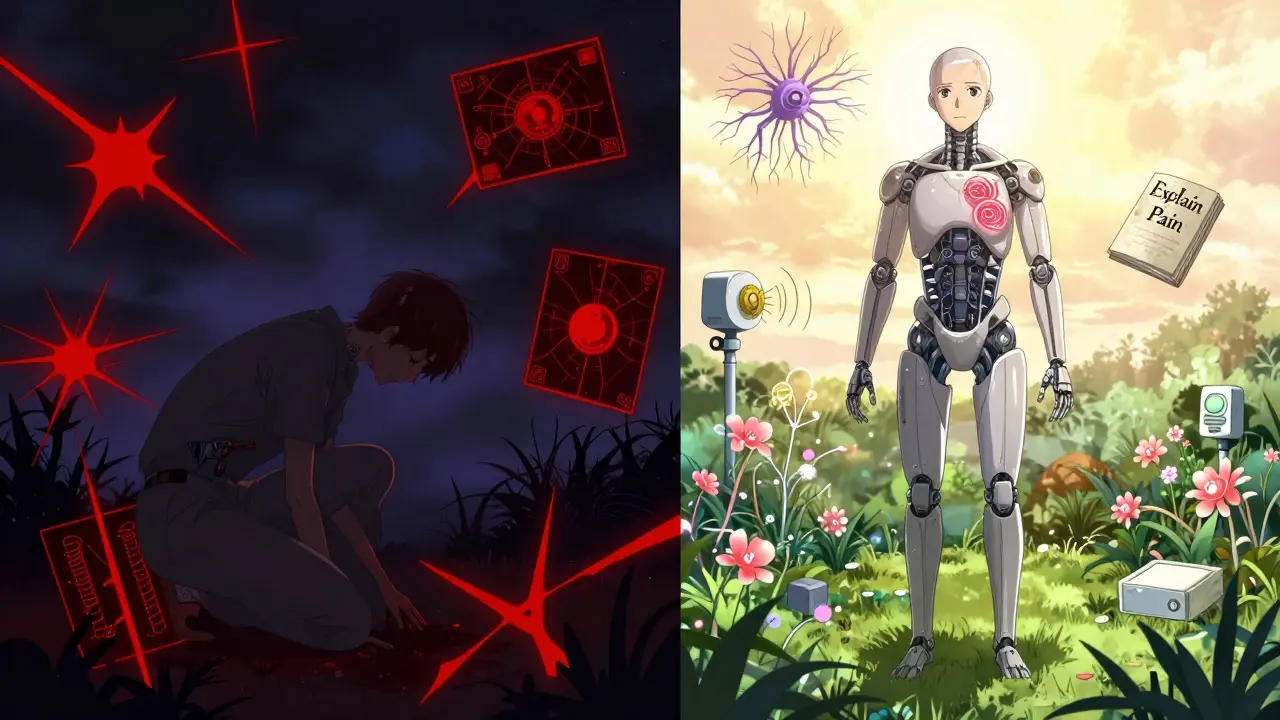
- Ask your physical therapist or doctor if they offer Pain Neuroscience Education. Look for terms like "Explain Pain," "Therapeutic Neuroscience Education," or "biopsychosocial pain management."
- If they don’t, ask for a referral to a provider trained in pain science. The International Spine and Pain Institute offers a 24-hour certification course, and many clinics now list PNE-trained staff online.
- Read The Explain Pain Handbook by David Butler and Lorimer Moseley. It’s the most widely used resource, with 87% of clinicians citing it as essential.
- Use digital tools. The "Pain Revolution" app has over 186,000 downloads and offers bite-sized lessons on pain science.
- Be patient. Understanding pain isn’t a quick fix. It’s a mindset shift that unfolds over weeks, not hours.
Why PNE is changing pain care
PNE is no longer experimental. It’s in mainstream practice. As of 2023:
- 72% of U.S. physical therapy programs teach PNE (up from 12% in 2010).
- 68% of U.S. pain-specialized clinics use it regularly.
- Medicare now reimburses PNE under therapy codes (CPT 97160-97164) since 2021.
- Forty-one Fortune 100 companies use PNE in workplace injury programs, cutting workers’ comp claim times by 22%.
It’s also evolving. Researchers are testing virtual reality versions of PNE. Early results show 30% better knowledge retention than traditional methods. Trials are underway to adapt PNE for post-surgical pain-something once thought impossible.
And here’s the big picture: as opioid use declines and value-based care grows, the focus is shifting from reducing pain numbers to improving function. PNE fits perfectly. It doesn’t promise zero pain. It promises a better life despite pain.
What critics say
Not everyone is sold. Dr. Mark Hancock from the University of Sydney pointed out in a 2022 Cochrane Review that while PNE’s results are statistically significant, they sometimes fall below the threshold for what patients consider "clinically meaningful." In other words: yes, pain goes down-but is it enough to matter in real life?
That’s a fair concern. But the real power of PNE isn’t just in pain scores. It’s in confidence. In movement. In reduced fear. In people who stop asking "Is this going to hurt?" and start asking "What can I do today?"
One patient told me: "I used to measure my day by how much pain I had. Now I measure it by what I did despite the pain. That’s the difference."
Final thought: Pain is not your enemy
Pain is not the problem. The fear of pain is.
When you understand that your pain is your body’s overzealous protector-not its traitor-you stop fighting it. You stop hiding. You start living again.
PNE doesn’t promise a pain-free life. But it gives you the tools to live a full one-even when pain is still there.
Is Pain Neuroscience Education the same as cognitive behavioral therapy (CBT)?
No. CBT focuses on changing thoughts and behaviors around pain, often using techniques like mindfulness or thought restructuring. PNE focuses on teaching the biology of pain-how the nervous system works, why pain persists, and how the brain creates it. They’re complementary. Many clinics now combine both. Studies show PNE has slightly higher patient satisfaction (68% vs. 62%), but CBT works better for depression linked to chronic pain.
Can I do PNE on my own without a therapist?
You can learn the basics through books like The Explain Pain Handbook or apps like Pain Revolution. But the most powerful results come from guided sessions. A trained clinician can tailor the metaphors to your story, correct misunderstandings, and link the science to your movement patterns. Self-study helps, but it’s not the same as having someone help you reframe your pain experience in real time.
Does PNE work for everyone with chronic pain?
Not everyone. It’s least effective for people with severe cognitive impairment, very low health literacy, or those who expect immediate pain elimination. It also has limited impact on acute pain. But for most people with persistent pain-especially those stuck in fear-avoidance cycles-it’s one of the most effective tools available. Success depends on willingness to learn, not just on the severity of pain.
How long does it take to see results from PNE?
Changes in understanding often happen after one or two sessions. But real behavioral change-like returning to walking, lifting, or social activities-takes weeks to months. Most people report feeling more confident within 4-6 weeks. Pain reduction often follows, but the bigger win is increased activity and reduced fear. The goal isn’t to make pain disappear; it’s to make it less controlling.
Do I need to stop my other treatments if I try PNE?
No. PNE works best when combined with movement, manual therapy, or exercise. In fact, research shows outcomes improve by 30-40% when PNE is paired with physical activity. You don’t need to choose between them. Think of PNE as the foundation. It helps you understand why movement is safe, so you can do it without fear.
Is PNE covered by insurance?
In the U.S., Medicare and many private insurers cover PNE when delivered by licensed physical therapists under CPT codes 97160-97164. Coverage varies by state and plan, but it’s increasingly standard in pain clinics. Always check with your provider, but if you’re seeing a physical therapist for chronic pain, ask if they include neuroscience education as part of your plan.

Trevor Whipple
lol so pain is just a smoke alarm? bro i had a herniated disc that literally crushed my sciatic nerve. no amount of metaphors fixes that. you guys are just scared to admit surgery sometimes works. stop overcomplicating shit.
also 'central sensitization'? sounds like a new age cult. i got real damage, not a glitchy wifi router.
Adam Vella
The ontological implications of pain as a neurobiological construct rather than a somatic indicator necessitate a radical reorientation of medical epistemology. One must interrogate the Cartesian dualism embedded in the very notion of 'damage'-a relic of mechanistic medicine that fails to account for the phenomenological reality of lived suffering.
Thus, while the smoke alarm metaphor is aesthetically pleasing, it remains reductive. Pain is not merely an alarm-it is the mind’s hermeneutic response to perceived threat, a narrative woven from memory, affect, and expectation.
Nelly Oruko
I’ve been living with fibromyalgia for 12 years. The moment I understood that my brain was overprotecting me-not betraying me-I stopped fighting my body. It didn’t make the pain vanish, but it made me stop being terrified of it. That shift? Life-changing.
Also, ‘neuroplasticity’ isn’t buzzword-it’s biology. My brain rewired. And so can yours.
vishnu priyanka
In India, we say pain is the body’s way of whispering, 'bhaiya, slow down.' But doctors here just give pills or tell you to 'do yoga.' Nobody explains why your nerves are screaming like a Bollywood villain. This PNE stuff? Finally someone speaks truth without jargon.
My uncle with chronic back pain? He started walking again after listening to a Hindi version of 'Explain Pain.' No surgery. Just understanding.
Alan Lin
This is not a theory. It’s science. And if you’re still clinging to the idea that pain = damage, you’re not just misinformed-you’re endangering yourself. I’ve seen patients who avoided movement for years because they were told 'don’t lift' or 'your spine is destroyed.' They got weaker. More disabled. More depressed.
PNE isn’t optional. It’s essential. If your provider doesn’t offer it, find one who does. Your nervous system deserves better than ignorance.
Pankaj Singh
PNE is just placebo with a fancy name. Look at the data: 1.7/10 pain reduction? That’s barely statistically significant. Meanwhile, opioids and NSAIDs give you real relief. You people are so desperate to avoid pharmaceuticals you’ll buy into pseudoscience.
And don’t get me started on 'smoke alarm' metaphors. If your alarm goes off, you don’t 'retrain' it-you fix the wiring. Your brain isn’t a smart home device.
Robin Williams
I was stuck for 5 years. Couldn’t walk to the mailbox without crying. Then I read 'Explain Pain' on a bus. And boom-lightbulb. My pain wasn’t my enemy. It was my overworked bodyguard. I started moving again. Not because I was told to. Because I finally understood why it was safe.
Now I hike. I lift. I laugh. Pain’s still there sometimes. But it doesn’t run my life anymore. You can too. Just read the damn book.
Scottie Baker
I’ve been through 3 surgeries, 7 injections, 2 years of PT, and I still can’t sit for more than 10 minutes. So you’re telling me I just need to 'change my mindset'? That’s not healing. That’s gaslighting.
I’m not scared of my pain-I’m angry. And no metaphor is gonna fix the fact that my spine is a wreck. You’re just telling me to be happy about being broken.
Anny Kaettano
The biopsychosocial model is the cornerstone of modern pain management, and PNE is its most accessible entry point. When patients internalize the concept of central sensitization, they begin to disengage from catastrophizing and re-engage with functional movement.
Crucially, PNE doesn’t negate the legitimacy of physical pathology-it contextualizes it. The neuroplastic changes observed via fMRI are not anecdotal; they’re reproducible, peer-reviewed, and clinically actionable. This is not 'mind over matter.' It’s neuroscience.
Angel Molano
If you're still in pain after learning this, you didn't try hard enough. It's not rocket science. Stop making excuses. Just move. Your brain will catch up.