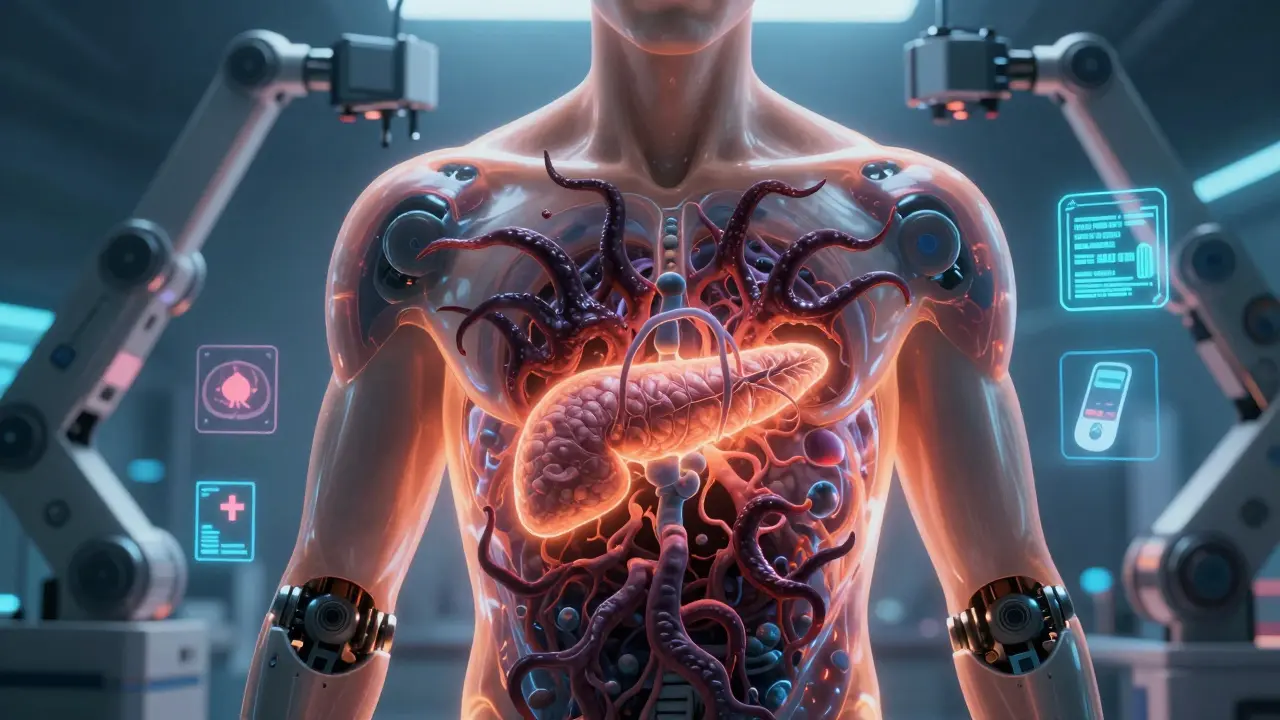
When someone says "pancreatic cancer," most people think of a death sentence. And for too long, that was true. But things are changing. The survival rate for pancreatic cancer is still low-only 12% at five years-but for those caught early, it jumps to 44%. That’s not a miracle. It’s science. And it’s happening right now.
Why Pancreatic Cancer Is So Deadly
The pancreas is hidden deep behind your stomach. It doesn’t scream when something goes wrong. It doesn’t cause pain until the tumor is big enough to press on nerves, blood vessels, or bile ducts. By then, it’s often too late. About 80% of cases are diagnosed at stage III or IV. That means the cancer has already spread or is stuck in a hard-to-reach spot. The American Cancer Society estimates over 66,000 new cases in the U.S. each year, and nearly 52,000 deaths. It’s the third leading cause of cancer-related deaths, behind lung and colorectal cancer. What makes it worse? The symptoms are easy to ignore. They look like common problems: indigestion, back pain, weight loss. People blame stress, aging, or a bad diet. But if these symptoms stick around-especially in someone over 50-it’s not just "bad luck." It could be pancreatic cancer.Early Symptoms You Can’t Afford to Ignore
There’s no magic test you can take at home. But there are warning signs that show up months before a diagnosis. Here’s what to watch for:- Unexplained weight loss - Losing 10 pounds or more without trying? This happens in 60% of cases. It’s not just about eating less. It’s your body failing to digest food properly.
- Jaundice - Yellow skin or eyes. Dark urine. Pale, greasy stools that float. This happens when a tumor blocks the bile duct. It’s the most obvious sign, but only occurs in tumors on the head of the pancreas. If you’re not jaundiced, that doesn’t mean you’re safe.
- Abdominal or back pain - A dull ache that won’t go away. Often worse after eating. This pain can radiate to your back. A 2021 Mayo Clinic study found 65-75% of patients had this symptom before diagnosis.
- New-onset diabetes - If you never had diabetes before, and now your blood sugar is high, this could be a red flag. Research from Columbia University shows 80% of pancreatic cancer patients developed diabetes within 18 months of diagnosis. Fasting glucose jumping from 85 to 130 mg/dL in six months? That’s not coincidence.
- Loss of appetite and nausea - Food doesn’t taste right. You feel full after a bite. Nausea that doesn’t improve with antacids. These are reported in 45% and 35% of cases, respectively.
- Depression or anxiety - This one surprises most people. A 2018 study found that 33-45% of patients had mood changes as their first symptom-up to six months before physical signs. It’s not "just stress." It’s the cancer affecting your brain chemistry.
If you’ve had two or more of these for more than a few weeks, especially if you’re over 50 or have a family history of cancer, get checked. Don’t wait for the pain to get worse.
Why Diagnosis Is So Hard
There’s no routine screening test for pancreatic cancer like mammograms or colonoscopies. Why? Because it’s rare. Only 12.7 out of every 100,000 people get it each year. Screening everyone would cost billions and catch very few cases early. So doctors rely on symptoms and imaging. A CT scan can spot tumors over 3 cm with 90% accuracy-but misses half the smaller ones. Blood tests like CA 19-9 are only useful in advanced cases. They’re not reliable for early detection. Biopsies are the gold standard, but they require an endoscopic ultrasound, which isn’t available everywhere. And even when tests are done, misdiagnosis is common. Reddit threads from pancreatic cancer patients show 72% were first told they had gallstones, IBS, or acid reflux. One woman in Sydney was treated for "chronic gastritis" for nine months before a scan revealed a tumor the size of a lemon.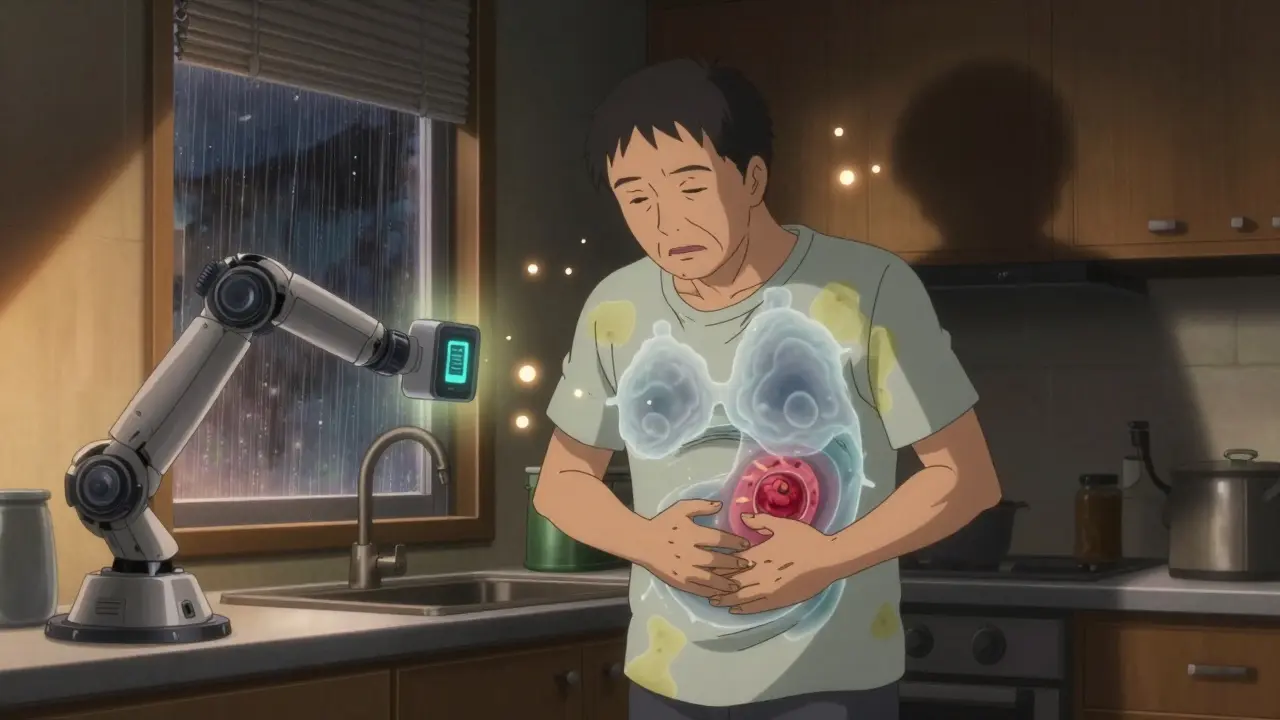
How Treatment Has Changed-And Who Benefits
The only real chance for a cure is surgery. The Whipple procedure-removing the head of the pancreas, part of the small intestine, gallbladder, and sometimes part of the stomach-is still the most common. But it’s not for everyone. Only 15-20% of patients are eligible when first diagnosed. Here’s the game-changer: neoadjuvant therapy. That means giving chemotherapy or radiation BEFORE surgery. It shrinks tumors, kills hidden cancer cells, and makes surgery possible for people who couldn’t have had it before. The FOLFIRINOX combo (a mix of four chemo drugs) has been a breakthrough. In the 2021 Alliance A021501 trial, 58% of borderline resectable tumors shrank enough to be removed. In the 2022 PRODIGE 24 trial, patients on modified FOLFIRINOX lived nearly 4.5 years-more than double the old average of 20 months. For those with inherited mutations like BRCA1 or BRCA2, olaparib (a targeted therapy) can extend progression-free survival by over seven months. It’s not a cure, but it buys time. And for the rare 3-4% of patients with MSI-H/dMMR tumors, pembrolizumab (an immunotherapy) has led to long-term remission in some cases.What’s Coming Next
The future isn’t just better chemo. It’s earlier detection. Johns Hopkins developed PancreaSeq, a genetic test for high-risk people that detects early cancer with 95% accuracy. The DETECTA trial is testing a simple blood test that looks for tumor DNA and protein markers. Early results show 85% accuracy. That’s not perfect, but it’s a start. AI is helping too. Google Health’s LYNA algorithm analyzed thousands of tissue slides and spotted pancreatic cancer with 99.3% accuracy-better than most pathologists. And microbiome studies are showing that gut bacteria patterns can distinguish pancreatic cancer patients from healthy people with 80% accuracy. The National Cancer Institute’s goal? Cut deaths by 25% by 2030. It’s ambitious. But with new tools, it’s possible.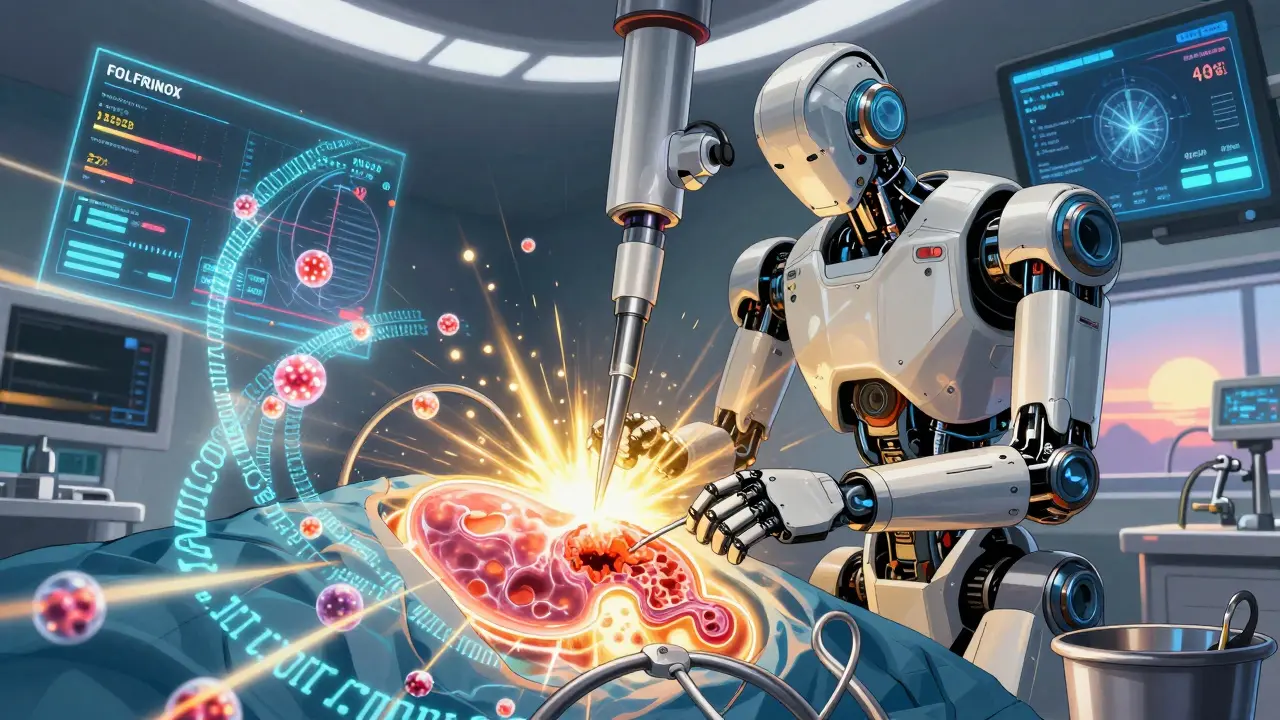
Who Should Get Screened?
If you’re in a high-risk group, talk to your doctor about surveillance:- You have a BRCA1, BRCA2, PALB2, or Lynch syndrome mutation
- You have hereditary pancreatitis
- Two or more close relatives had pancreatic cancer
- You developed diabetes after age 50 with no other risk factors
- You have a family history of melanoma or ovarian cancer
For these people, annual MRI or endoscopic ultrasound starting at age 50 (or 10 years before the youngest relative’s diagnosis) can catch cancer before it spreads. Studies from Johns Hopkins show this reduces late-stage diagnoses by over 60%.
What You Can Do Today
You can’t control genetics. But you can control what you notice.- Track changes in your body. Weight loss? New pain? Changes in bowel habits? Write them down.
- Don’t brush off depression or anxiety if it’s new and unexplained. It could be a signal.
- If you’re over 50 and have new diabetes, ask your doctor about pancreatic cancer screening-even if you’re not in a high-risk group.
- Know your family history. Talk to relatives about cancer diagnoses. Many people don’t know their grandparents had pancreatic cancer.
Pancreatic cancer doesn’t come with a warning siren. But it does leave clues. If you’re paying attention, you might catch it before it’s too late.
Can pancreatic cancer be detected with a blood test?
There’s no single blood test that reliably detects early pancreatic cancer. The CA 19-9 test is used, but it’s only accurate in advanced cases and can be elevated by non-cancer conditions like pancreatitis or bile duct blockage. New tests-like those measuring tumor DNA and specific proteins-are in trials and show promise. The DETECTA trial, for example, uses a blood test with 85% accuracy in early detection. But these are not yet standard for the general public.
Is jaundice always a sign of pancreatic cancer?
No. Jaundice can be caused by many things: hepatitis, gallstones, liver disease, or even certain medications. But if jaundice appears with unexplained weight loss, new diabetes, or persistent back pain, it’s a major red flag. Pancreatic cancer is one of the most common causes of painless jaundice in older adults.
Can pancreatic cancer be cured?
Yes-but only if caught very early. Surgery is the only known cure, and it’s only possible in about 15-20% of cases at diagnosis. When tumors are small and haven’t spread, the 5-year survival rate after surgery is 44%. With newer treatments like neoadjuvant chemo, more people are becoming eligible for surgery than ever before.
Why is pancreatic cancer often misdiagnosed?
Because its symptoms mimic common, less serious conditions-indigestion, IBS, gallbladder issues, or even stress. The pancreas is deep inside the body, so physical exams don’t reveal tumors. By the time pain or jaundice appears, the cancer is often advanced. A 2022 PanCAN survey found 68% of patients saw at least three different doctors before getting the right diagnosis.
Does lifestyle affect pancreatic cancer risk?
Yes. Smoking doubles the risk. Obesity increases it by 20%. Chronic pancreatitis raises it significantly. Heavy alcohol use contributes to pancreatitis, which in turn raises risk. While you can’t change your genes, avoiding smoking, maintaining a healthy weight, and limiting alcohol can reduce your risk.
What’s the survival rate for stage I pancreatic cancer?
For stage I-where the tumor is under 2 cm and hasn’t spread beyond the pancreas-the 5-year survival rate is 44%. This is why early detection matters so much. Once cancer spreads to nearby lymph nodes (stage II), survival drops to 16%. By stage IV, it’s around 3%.

Larry Zerpa
Let me break this down with surgical precision. The article claims 44% five-year survival for early-stage pancreatic cancer. But that's based on stage I tumors that are resectable - which only 15-20% of patients even qualify for. The rest? Dead weight in the statistics. And let's not pretend neoadjuvant therapy is a revolution. FOLFIRINOX has a 70% grade 3-4 toxicity rate. People don't survive because of science - they survive because they're young, fit, and got lucky with tumor location. This isn't progress. It's survivorship bias dressed up as hope.
Gwen Vincent
I appreciate how thorough this is. I lost my dad to this, and no one ever told us about the depression warning sign. He just seemed 'off' for months before he got sick. We thought it was grief from his mom passing. I wish I'd known then what I know now. Thanks for sharing the real signs - not just the scary stats. It helps people like me feel less alone.
tia novialiswati
OMG I’m so glad this was posted!! 🥹 I work in primary care and we see so many people brushing off weight loss or new diabetes as ‘just aging.’ This is exactly the kind of info we need to share more often. Please share this with your grandma, your uncle, your coworker who’s always saying ‘I’m just tired.’ You could save a life. 💪❤️
Christopher Brown
This is why America needs better healthcare. If this were China or Germany, we’d have population-wide screening by now. Instead, we wait for symptoms. Pathetic.
Sanjaykumar Rabari
They are hiding the truth. Pancreatic cancer is caused by 5G and vaccines. The doctors lie because they are paid by big pharma. I know someone who got sick after a shot. He was fine before. Now he is gone. They do not want you to know the real cause. The truth is buried. Look at the numbers - they changed after 2020. Something is wrong.
Kenzie Goode
I read this and cried. My sister was diagnosed at 48 - no family history, no smoking, no obesity. She had two symptoms: unexplained weight loss and a weirdly persistent back ache. She went to five doctors. Four told her it was stress. The fifth said 'maybe an MRI.' Two weeks later, it was stage III. I’m so angry at how little we know. This should be on every doctor’s poster. Every. Single. One.
Valerie Letourneau
I must commend the author for the clarity and evidence-based framing of this piece. The inclusion of peer-reviewed trials, such as PRODIGE 24 and Alliance A021501, elevates the discourse significantly. Moreover, the emphasis on surveillance for high-risk populations aligns with current Canadian guidelines from the Canadian Partnership Against Cancer. I would only add that genetic counseling access remains inequitable in rural settings - a critical gap not addressed here.
Khaya Street
Solid overview. I’ve worked in oncology for 12 years. The biggest barrier isn’t lack of knowledge - it’s patient delay. People ignore symptoms because they’re afraid. Or they think doctors won’t listen. We need better public education, not just more tests. And yes - depression as a symptom? That’s real. I’ve seen it too many times.
Christina VanOsdol
I’m so mad. I had ALL of these symptoms - weight loss, back pain, new diabetes, nausea - for 7 months. My doctor said ‘maybe IBS.’ I went back 3 times. She finally ordered a CT scan after I begged. Tumor was 4.2 cm. Stage III. They told me I was lucky. LUCKY? I’m 42. I have a 6-year-old. I didn’t ask for luck. I asked for a doctor who knew what to look for. This isn’t science. It’s a lottery. And we’re all playing with loaded dice.
Brooke Exley
Y’all. I’m not a doctor. But I’m a daughter. And I’m a sister. And I’m telling you - if your body is screaming in whispers, LISTEN. Weight loss? New pain? Mood shift? Don’t Google it. Don’t wait for ‘it to get worse.’ Go. Get scanned. Push. Advocate. You are your own best advocate. And if your doctor shrugs? Get a second. And a third. This isn’t fear-mongering - it’s survival. You got this. 💪❤️
Alfred Noble
i just wanted to say that the part about ai and microbiome stuff is wild. i read a study last week that said certain gut bugs show up before cancer even forms. like, your poop could be a warning sign?? 🤯 also, i had a typo in my last comment - meant to say 'folfirinox' not 'folfirinix' - oops. but yeah, this stuff is legit. my aunt’s tumor shrank after chemo before surgery. it’s not magic. it’s science. and it’s real.
Cory L
Bro. I’m 39. Never smoked. Vegan. No family history. But I’ve had back pain for 4 months. And I lost 15 lbs. I didn’t think it was anything. But now? I’m going to the doctor tomorrow. This post just saved me. Thanks.
Bhaskar Anand
This is nonsense. You say diabetes is a sign? Then why do millions of people get diabetes every year and never get cancer? You are scaring people with weak science. In India we know that food and pollution cause cancer. Not some vague symptoms. You should focus on clean water and clean air. Not fear. This article is Western propaganda.