
Simvastatin Interaction Checker
Check Your Medications
Enter medications you're currently taking to identify dangerous combinations with simvastatin
Results
Simvastatin is one of the most common cholesterol-lowering drugs in the U.S., but taking it at high doses-especially with certain other medications-can lead to life-threatening muscle damage. The FDA issued a major safety warning in 2011 after clear evidence showed the 80 mg dose was far more dangerous than lower doses. Since then, prescriptions for simvastatin 80 mg have dropped by over 80%. But many people still take it, often unaware of the risks lurking in their medicine cabinet.
Why the 80 mg Dose Is So Risky
The 80 mg dose of simvastatin was once used to aggressively lower LDL cholesterol. But data from the SEARCH trial and the FDA’s own adverse event database revealed a shocking truth: patients on 80 mg had a 7.6 times higher risk of rhabdomyolysis than those on 20-40 mg. Rhabdomyolysis isn’t just muscle pain. It’s when muscle tissue breaks down so badly that it floods your bloodstream with toxins, potentially causing kidney failure or death.At 20-40 mg, the risk of rhabdomyolysis was about 0.08%. At 80 mg, it jumped to 0.61%. That’s not a small increase-it’s a 7.6-fold rise in life-threatening side effects. The FDA stopped recommending the 80 mg dose for new patients in 2011. Today, it’s rarely prescribed unless absolutely necessary-and even then, only under strict monitoring.
What Makes Simvastatin So Sensitive to Other Drugs?
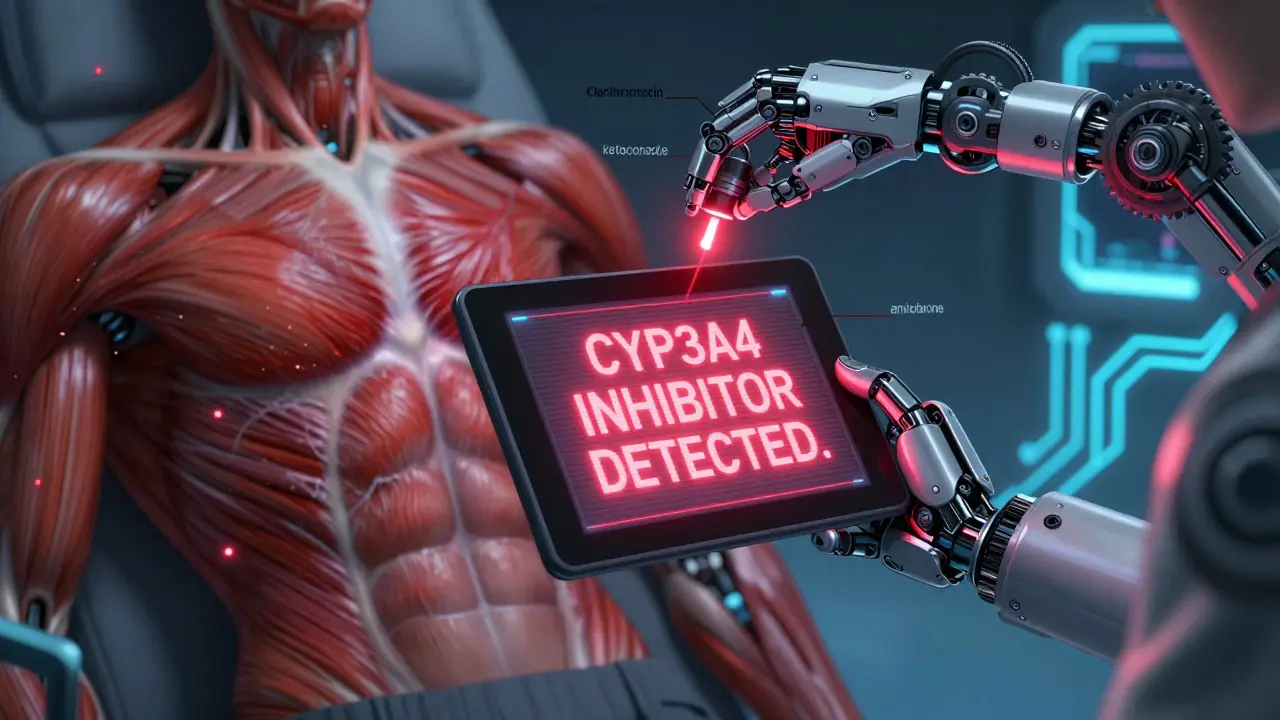
Simvastatin is broken down in your liver by an enzyme called CYP3A4. If something blocks that enzyme, simvastatin builds up in your blood. Too much of it in your system = muscle damage. That’s why some common medications turn simvastatin into a ticking time bomb.Strong CYP3A4 inhibitors are the worst offenders:
- Antibiotics: Clarithromycin and erythromycin
- Fungal treatments: Ketoconazole, itraconazole, voriconazole
- Heart drugs: Cyclosporine, diltiazem, verapamil, amiodarone, amlodipine
- HIV meds: Ritonavir, atazanavir, darunavir, cobicistat
- Depression meds: Nefazodone
- Immunosuppressants: Danazol
These drugs don’t just slightly raise simvastatin levels-they can increase them by 10 to 20 times. That’s why the FDA says: if you’re taking any of these, your simvastatin dose must be capped at 10 mg-or better yet, stopped entirely.
Grapefruit Juice: The Hidden Danger
You might think grapefruit is healthy. And it is-unless you’re on simvastatin. Grapefruit juice contains chemicals that block CYP3A4 in your gut, just like those strong drugs. One glass (8 oz) can boost simvastatin levels by up to 260%. That’s the same effect as taking a double dose.A 2023 study found that 43% of patients on high-dose simvastatin still drank grapefruit juice-even after being warned. Some didn’t realize it was dangerous. Others thought “a little bit” wouldn’t hurt. It does. Even small amounts can trigger muscle breakdown. No amount of grapefruit is safe with simvastatin. Orange juice? Fine. Grapefruit? Absolutely not.
Other Dangerous Combinations
It’s not just CYP3A4 inhibitors. Other drugs also raise your risk:- Colchicine: Used for gout, this drug can cause rhabdomyolysis when paired with simvastatin-even at low doses.
- Fenofibrate or niacin: These cholesterol drugs are sometimes added to statins. But together with simvastatin, they increase muscle damage risk. The FDA warns against combining them unless absolutely necessary.
- Gemfibrozil: This fibrate is less risky than some others, but still dangerous. It interferes with how your body clears simvastatin. Avoid it if you can.
One study of over 10,000 patients found that those on simvastatin plus clarithromycin had 3 times more hospitalizations for muscle damage than those on other statins. The risk wasn’t just higher-it was immediate. Some patients developed severe pain and weakness within 72 hours of starting the antibiotic.
What Doctors Should Do
Good prescribers don’t just write a script-they check for interactions. The American College of Cardiology now advises against starting anyone on simvastatin 80 mg. For new patients, they recommend pravastatin, rosuvastatin, or pitavastatin instead. These statins don’t rely heavily on CYP3A4, so they’re safer with other meds.If you’re already on simvastatin 80 mg and need another drug, your doctor should:
- Switch you to a safer statin immediately
- If switching isn’t possible, reduce simvastatin to 10 mg or less
- Test liver enzymes (ALT/AST) every 3-6 months
- Ask about grapefruit juice and other OTC supplements
Pharmacists are often the last line of defense. Studies show that when pharmacies run automated interaction checks, dangerous combinations drop by 67% in older adults. If your pharmacist flags a conflict, don’t ignore it.

Genetics Play a Role Too
Not everyone reacts the same way. Some people have a gene variant called SLCO1B1 that makes them much more likely to develop muscle damage from simvastatin. If you have this variant, your risk of rhabdomyolysis can be 4.5 times higher-even at low doses.The American Heart Association now recommends genetic testing before starting high-dose simvastatin, especially if you’ve had muscle pain on statins before. It’s not routine yet-but if you’re on simvastatin and keep getting unexplained muscle soreness, ask your doctor about testing.
What You Can Do Right Now
If you take simvastatin, here’s what you need to do:- Check your dose. If it’s 80 mg, talk to your doctor. It’s almost never the right choice anymore.
- Review all your meds. Include antibiotics, antifungals, heart pills, and even OTC supplements. Don’t forget herbal products like St. John’s wort.
- Stop grapefruit juice. No exceptions. Even one glass a week is risky.
- Know the warning signs. Unexplained muscle pain, weakness, or dark urine? Call your doctor immediately. Don’t wait.
- Ask about alternatives. Rosuvastatin (Crestor) or pravastatin (Pravachol) work just as well with far fewer interactions.
Simvastatin still has a place in treatment-for low-risk patients at 10-20 mg doses. But the era of high-dose simvastatin is over. The risks far outweigh the benefits. And with safer, more predictable options available, there’s no reason to gamble with your muscles-or your life.
Can I take simvastatin with a statin like Crestor?
No. Never take two statins together. Simvastatin and rosuvastatin (Crestor) both lower cholesterol, but combining them doesn’t make them work better-it just increases your risk of muscle damage. If your doctor thinks you need stronger treatment, they’ll switch you from one to the other, not add them together.
Is it safe to take simvastatin with blood pressure meds?
Some are, some aren’t. Amlodipine and diltiazem can raise simvastatin levels, so your dose must be capped at 5 mg or 10 mg respectively. Verapamil also requires a max of 10 mg. But lisinopril, metoprolol, or hydrochlorothiazide are generally safe. Always check with your pharmacist before starting any new blood pressure pill.
What if I accidentally ate grapefruit while on simvastatin?
One serving of grapefruit juice is unlikely to cause immediate harm-but it does increase your risk. Stop consuming grapefruit right away. Watch for muscle pain, weakness, or dark urine over the next few days. If you’re on a high dose (40 mg or more), call your doctor. They may want to check your creatine kinase (CK) levels to make sure your muscles aren’t breaking down.
Why can’t I just lower my simvastatin dose instead of switching statins?
Lowering the dose helps, but it doesn’t eliminate the risk if you’re still taking a strong CYP3A4 inhibitor. For example, even 10 mg of simvastatin with clarithromycin can still cause rhabdomyolysis. The safest move is to switch to a statin that doesn’t rely on CYP3A4-like pravastatin or rosuvastatin. They work just as well without the dangerous interactions.
Are there any supplements that interact with simvastatin?
Yes. Red yeast rice contains a natural form of lovastatin, which works like simvastatin. Taking both can cause dangerous buildup. Coenzyme Q10 is often recommended to help with muscle pain, but it doesn’t prevent rhabdomyolysis. Garlic supplements, niacin, and high-dose vitamin E can also increase bleeding or muscle risk. Always tell your doctor about every supplement you take.
What Comes Next
Simvastatin 80 mg is now a relic of outdated medicine. Newer statins, better screening tools, and smarter prescribing have made it unnecessary for almost everyone. If you’re still on it, don’t panic-but don’t wait either. Talk to your doctor about switching. Ask about genetic testing if you’ve had muscle issues before. And never, ever drink grapefruit juice while taking it.Cholesterol management isn’t about taking the cheapest or strongest pill. It’s about finding the safest one that works for you. With so many better options available, there’s no reason to risk your muscles-or your life-for a drug that’s no longer the best choice.

Lisa Cozad
My pharmacist flagged my simvastatin 40 mg + amiodarone combo last month. I thought I was fine because I’d been on it for years. Turns out, I was one glass of grapefruit juice away from the ER. They switched me to pravastatin and I haven’t had a single muscle ache since. If you’re on simvastatin, don’t wait for symptoms-check your meds now.
Saumya Roy Chaudhuri
Oh please. This is just Big Pharma fearmongering dressed up as medical advice. I’ve been taking 80 mg simvastatin with grapefruit juice for a decade and I’m fitter than half the doctors writing these warnings. Your ‘rhabdomyolysis’ scare tactics are laughable. People used to die from eating butter-now we’re terrified of a statin that actually works. Wake up.
anthony martinez
So let me get this straight. The FDA says 80mg is dangerous, but you’re still taking it because ‘I’ve always done it’? And now you’re mad at the article for telling you not to turn your muscles into soup? The only thing more tragic than rhabdomyolysis is the human ego that refuses to change.
Mario Bros
Big thank you to the OP for laying this out so clearly. I’m a nurse and I see this ALL THE TIME. People think ‘it’s just a pill’ and don’t realize they’re playing Russian roulette with their kidneys. If you’re on simvastatin and taking anything else-antibiotics, heart meds, even that ‘natural’ supplement-stop. Go talk to your pharmacist. Seriously. They’re the unsung heroes of your health.
Faith Edwards
It is both profoundly disconcerting and morally reprehensible that so many individuals continue to indulge in the reckless consumption of grapefruit juice while concurrently ingesting simvastatin-a practice that, by any objective medical standard, constitutes a form of self-administered chemical endangerment. The sheer negligence exhibited by patients who dismiss evidence-based guidelines as mere ‘recommendations’ is not merely irresponsible; it is an affront to the very ethos of medical ethics. One might reasonably posit that such individuals, having elected to prioritize gustatory pleasure over physiological integrity, should be required to sign a legally binding waiver prior to filling their prescriptions. The burden of vigilance should not fall solely upon pharmacists and physicians.
Jay Amparo
Hey, I get it-this stuff is scary. I was on simvastatin 40 mg with diltiazem for years, didn’t know grapefruit was a no-go. Then I got muscle cramps so bad I couldn’t climb stairs. My doctor switched me to rosuvastatin and I feel like a new person. If you’re reading this and you’re scared? You’re not alone. But here’s the good news: there are safer ways. Talk to your doc. Ask about genetics. Ask about alternatives. You don’t have to live in fear-you just have to be informed. You got this.
Ian Cheung
My grandma took simvastatin 10mg with lisinopril and drank grapefruit juice every morning for 15 years. She’s 89 and still hikes. Meanwhile my cousin switched to Crestor and now he’s got tendonitis from ‘statin side effects’. Maybe the real problem isn’t the drug-it’s how we treat everything like a bomb waiting to go off. Not everything needs a warning label. Sometimes people just need to listen to their bodies.
Jake Nunez
As someone who grew up in India where statins are often bought over the counter without a prescription, I’ve seen people mix simvastatin with ayurvedic herbs like ashwagandha and turmeric, thinking ‘natural = safe’. Spoiler: it’s not. Turmeric inhibits CYP3A4 too. No one tells you that. We need better public health outreach-not just in the US, but globally. This isn’t just a drug issue. It’s a literacy issue.
Mario Bros
^^^ This. My cousin in Mumbai took simvastatin with red yeast rice because his ‘uncle said it’s better’. Ended up in the hospital with CK levels through the roof. No one told him red yeast rice IS lovastatin. We need more education, not just more warnings. And maybe a global database of dangerous combos. #StatinsAreNotCandy