More than 40 million Americans take statins to lower cholesterol and protect their hearts. But for a lot of people, the muscle pain, stiffness, or weakness that comes with them isn’t worth the risk. The problem? Statin intolerance is often misdiagnosed. Many think their aches are caused by the drug, when something else is really to blame. And when they stop statins without proper guidance, they’re putting their heart at greater risk.
What Statin Intolerance Really Means
Statin intolerance isn’t just having a bad reaction to one pill. According to the National Lipid Association’s 2022 guidelines, it’s defined as being unable to tolerate at least two different statins - one at the lowest dose, and another at any dose - because of symptoms that go away when you stop taking them. This isn’t about feeling a little sore after a new workout. It’s about consistent, reproducible muscle discomfort that starts shortly after beginning or increasing a statin and disappears when you stop. The most common symptoms? Heaviness in the legs, stiffness in the thighs or shoulders, cramping, and weakness. You might struggle to stand up from a chair without using your hands, or find it hard to lift your arms above your head. These symptoms usually show up within 30 days of starting or increasing a statin. If you had muscle pain before you started the drug, that’s not statin intolerance - it’s just existing muscle issues. Here’s the twist: most people who think they’re statin intolerant aren’t. A major study called SAMSON found that 90% of the side effects patients reported - including muscle pain - happened just as often when they took a placebo pill. That means the mind plays a big role. Fear of side effects, stories from friends, or even seeing ads about statin risks can trigger real physical sensations. This is called the nocebo effect - the opposite of placebo. It’s not "all in your head" - the pain is real - but it’s not caused by the statin.Why Most Muscle Pain Isn’t From Statins
Let’s look at the numbers. In a group of patients labeled as statin intolerant, 72% to 85% actually have other causes for their muscle pain. Common culprits include:- Osteoarthritis - present in 41% of cases
- Fibromyalgia - affects 18%
- Vitamin D deficiency - found in 29% with levels below 20 ng/mL
- Hypothyroidism - seen in 12%
- Exercise strain or viral myositis
Not All Statins Are the Same
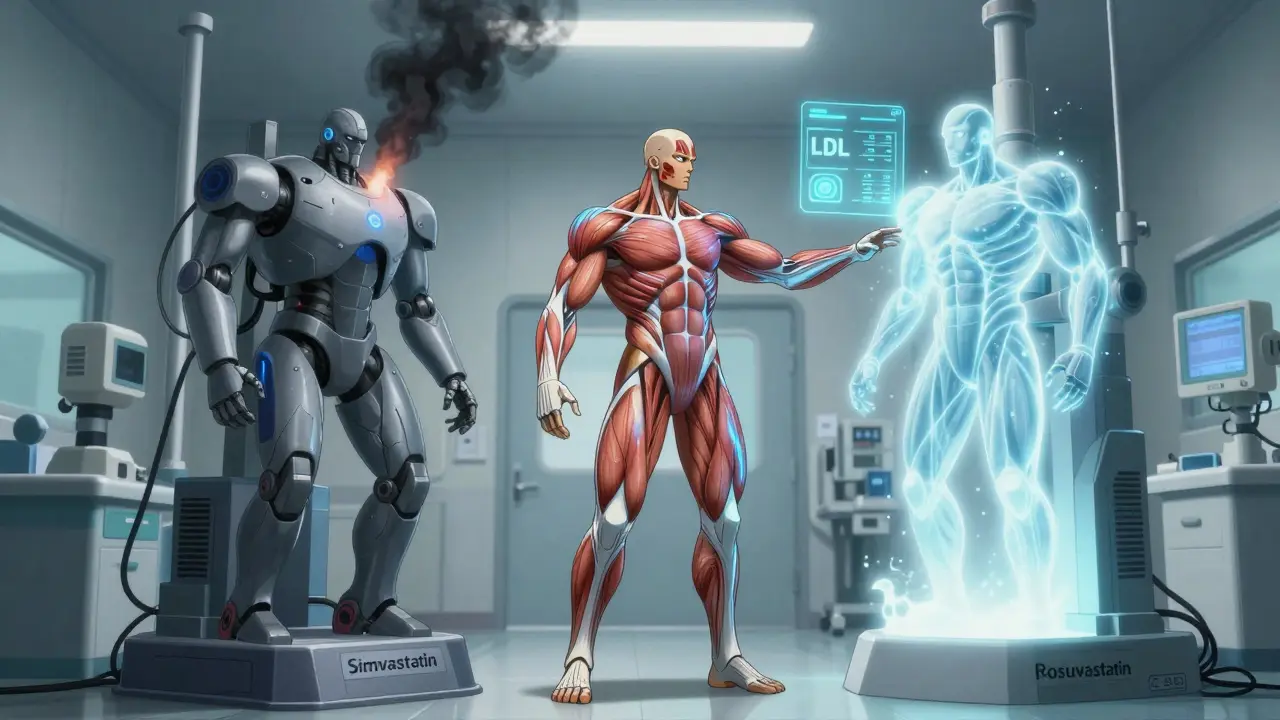
If you’ve had trouble with one statin, don’t give up. Statins vary in how they’re processed by the body. Lipophilic statins - like simvastatin and atorvastatin - cross into muscle tissue more easily. That’s why they’re more likely to cause muscle symptoms. Hydrophilic statins - like pravastatin and rosuvastatin - stay mostly in the liver, where they’re meant to work. Studies show hydrophilic statins have 28% lower rates of muscle-related side effects. Switching from simvastatin to rosuvastatin, for example, can make all the difference. Even low-dose atorvastatin (10mg daily) is tolerated by 89% of patients who couldn’t handle higher doses. You don’t need to take a high dose to get results - sometimes less is more. Another trick? Intermittent dosing. Taking rosuvastatin 600mg once a week (which equals 85mg daily) reduces LDL cholesterol by nearly half in 68% of patients who couldn’t tolerate daily doses. It’s not FDA-approved for this use, but it’s widely used in clinical practice and backed by data.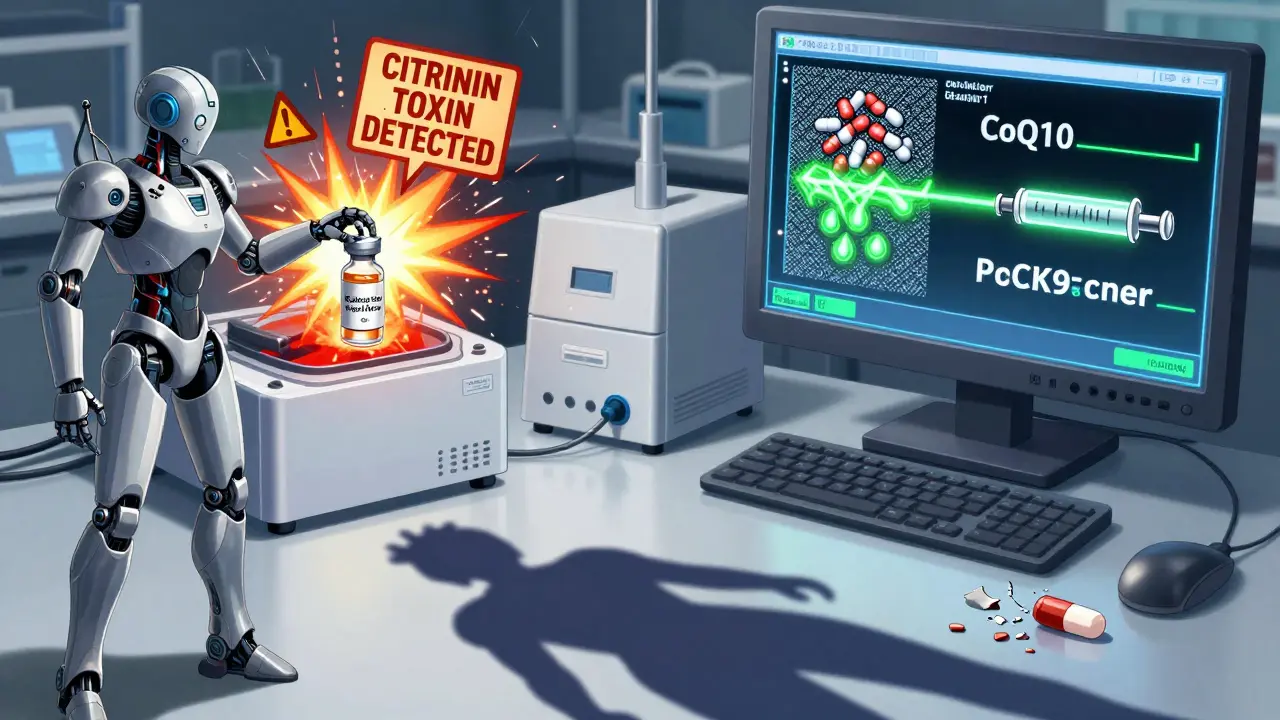
What to Try When Statins Just Won’t Work
If you’ve truly tried two statins and still can’t tolerate them, there are other options - and they work. Ezetimibe (10mg daily) is often the first step. It blocks cholesterol absorption in the gut. It lowers LDL by about 18%, works well with or without statins, and has a 94% tolerability rate. Side effects? Mostly mild - occasional stomach upset. It’s cheap, generic, and safe. Bempedoic acid (180mg daily) is a newer option. It works in the liver, like statins, but doesn’t enter muscle tissue. It lowers LDL by 17% and has an 88% tolerability rate. It’s also been shown to reduce heart attacks and strokes in high-risk patients. It’s more expensive than ezetimibe, but far cheaper than injectables. PCSK9 inhibitors like evolocumab are injectable drugs given every two weeks. They slash LDL by up to 59%. They’re highly effective and very well tolerated - only 9% of patients report side effects, mostly injection site reactions. The catch? Cost. At $5,800 a year, insurance often requires prior authorization. Denial rates are high - 37% - but appeals often succeed if you document failed statin trials. Bile acid sequestrants like colesevelam are pills that bind cholesterol in the gut. They lower LDL by 15-18%, but about 22% of users get bloating, constipation, or nausea. They’re not first-line anymore, but can be useful for people who can’t take pills with other medications. Inclisiran is a game-changer on the horizon. It’s an RNA-based therapy given just twice a year by injection. It lowers LDL by 50% and has 93% adherence because of how infrequent the dosing is. It’s not yet widely available, but Phase 3 trials show it’s safe and effective. Expect broader access by 2026.What Doesn’t Work - and Why
You’ve probably heard about coenzyme Q10 (CoQ10) for statin muscle pain. It sounds logical - statins lower CoQ10, and CoQ10 helps muscles. But double-blind studies show only 34% of people report benefit. That’s no better than placebo. It’s not harmful, but don’t count on it. Same with red yeast rice. It contains a natural form of lovastatin. If you’re intolerant to statins, you’ll likely be intolerant to this too. And it’s unregulated - some batches have dangerous levels of citrinin, a kidney toxin. Avoid it. And don’t skip your statin because you’re scared. Stopping without a plan increases your risk of heart attack or stroke by 25%. The real danger isn’t the statin - it’s untreated high cholesterol.
Getting It Right: A Step-by-Step Plan
If you’re struggling with muscle symptoms on a statin, here’s what to do:- Don’t stop the statin on your own. Talk to your doctor first.
- Get tested for vitamin D, thyroid function, and creatine kinase (CK). Normal CK rules out serious muscle damage.
- Rule out arthritis, fibromyalgia, or other causes of muscle pain.
- If no clear cause, switch to a hydrophilic statin (pravastatin or rosuvastatin) at the lowest dose.
- If still intolerant, try intermittent dosing (e.g., rosuvastatin 600mg once weekly).
- If that fails, move to ezetimibe or bempedoic acid.
- If you’re high-risk (diabetes, prior heart attack), consider PCSK9 inhibitors or inclisiran.
- Rechallenge with a different statin after 4-6 weeks off - you might be surprised.
The Bigger Picture
Statin intolerance is a growing problem - not because statins are getting more dangerous, but because we’re getting better at recognizing what’s actually going on. Misdiagnosis used to be common. Now, with better guidelines, rates have dropped by 46% in clinics using the NLA protocol. Genetic testing is coming too. A variant in the SLCO1B1 gene increases statin muscle side effect risk by 4.5 times. By 2025, doctors may test for this before prescribing - helping avoid problems before they start. The future isn’t about avoiding statins. It’s about personalizing treatment. Whether it’s a low-dose hydrophilic statin, a weekly pill, or a twice-yearly injection - there’s a path for nearly everyone. You don’t have to choose between muscle pain and heart risk. With the right approach, you can have both.Can statin intolerance go away over time?
Yes. Many people who couldn’t tolerate statins in the past can later try a different type or lower dose with success. Muscle symptoms often improve after stopping the drug for several weeks. Re-challenge with a different statin - especially a hydrophilic one - works for 65% of people who failed one statin. Don’t assume you’ll never tolerate them.
Is muscle pain from statins always serious?
No. Most cases are mild and don’t involve muscle damage. Only 1 in 100,000 statin users develop rhabdomyolysis - a life-threatening condition. Normal or slightly elevated CK levels (under 4x the upper limit) mean you likely have statin-associated muscle symptoms (SAMS), not true muscle injury. The real risk is stopping your medication and raising your heart attack risk.
Should I take CoQ10 with statins to prevent muscle pain?
There’s no strong evidence it helps. Double-blind studies show CoQ10 works no better than a placebo for statin-related muscle pain. It’s safe to try, but don’t expect it to solve the problem. Focus instead on switching statins, checking vitamin D, or using non-statin alternatives.
Are natural remedies like red yeast rice safe alternatives?
No. Red yeast rice contains monacolin K, which is chemically identical to lovastatin - a statin. If you’re intolerant to statins, you’ll likely react to this too. Plus, it’s unregulated. Some products contain toxic levels of citrinin, a kidney-damaging mold byproduct. Stick to FDA-approved medications.
How long does it take to find the right treatment?
Most patients reach their LDL goal within 3 to 6 months of trying different options. It often takes 2 or 3 tries - switching statins, adding ezetimibe, or moving to bempedoic acid or PCSK9 inhibitors. Patience and persistence matter. Don’t give up after one failed attempt.
Can I stop statins if I’m not at high risk for heart disease?
Even if your risk seems low, stopping statins without an alternative plan increases your chance of heart attack or stroke by up to 25%. High cholesterol builds up silently over years. If you can’t take statins, work with your doctor to find another effective option - like ezetimibe or bempedoic acid - to keep your arteries protected.

Pavan Vora
Man, I thought I was statin-intolerant too… leg pain, stiff thighs… thought it was the pills. Then I got my vit D checked-21 ng/mL. Supplemented for 3 months, and boom, no more aches. Turns out I was just deficient, not broken. Statins weren’t the enemy. 😅
Joann Absi
AMERICA IS BEING POISONED BY BIG PHARMA! 🚨 They want you to believe statins are safe so they can sell more! CoQ10 is the REAL answer-why do you think they don’t advertise it?! The FDA is corrupt, and your doctor’s just a pawn! 🇺🇸💔 #StopTheStatins
Jeane Hendrix
So the SAMSON study is key here-90% of reported side effects occurred even with placebo. That’s huge. It doesn’t mean the pain isn’t real, but it means the mechanism is likely neurogenic or psychosomatic. We need to reframe this as a nocebo-driven phenomenon, not a pharmacological one. Also, CK levels under 4x ULN = SAMS, not rhabdo. Important distinction.
And yes, hydrophilic statins like rosuvastatin have lower muscle penetration. That’s why they’re better tolerated. Switching isn’t failure-it’s strategy.
Rachel Wermager
Actually, you’re all missing the point. The real issue is mitochondrial dysfunction secondary to HMG-CoA reductase inhibition. Statins reduce CoQ10, which impairs electron transport chain efficiency in skeletal muscle-hence the fatigue and cramping. But the nocebo effect amplifies it. The solution isn’t just switching statins-it’s mitochondrial support. NAD+ boosters, L-carnitine, and magnesium glycinate. That’s the real protocol.
And no, ezetimibe doesn’t touch LDL receptors. It’s a NPC1L1 inhibitor. Big difference.
Leonard Shit
So… I stopped my statin because my knees felt like rocks. Then I realized I’d started doing squats. Whoops.
Turns out I’m not statin-intolerant-I’m just a lazy guy who doesn’t want to admit he’s out of shape. Also, I tried rosuvastatin 5mg once a week. No issues. My LDL’s down. My knees? Still sore. But now I know why.
Also, red yeast rice? Bro, that’s just illegal lovastatin. Don’t be that guy.
Brian Anaz
Statins save lives. If you can’t handle them, you’re weak. Stop making excuses. Get your cholesterol down or die young. That’s the choice. CoQ10? Red yeast rice? These are hippie scams. Take the pill. Or don’t. But don’t act like you’re a victim.
Venkataramanan Viswanathan
As someone from India, I’ve seen many patients stop statins due to muscle pain. But in our population, vitamin D deficiency is rampant. We rarely test it. Also, hypothyroidism is underdiagnosed. Many of these patients could tolerate statins if we addressed root causes first. We need better screening protocols here, not just blanket avoidance.
Vinayak Naik
Man, I used to be one of those guys who swore statins ruined my life. Then I switched from simva to rosuvastatin 10mg every other day. No more leg cramps. My LDL dropped from 190 to 110. And I didn’t even need to take it daily. My doc called it the "weekend statin"-I call it my new best friend.
Also, ezetimibe? Cheap as dirt. Works like a charm. I took it with my rosuvastatin and felt zero side effects. No CoQ10 nonsense. No red yeast rice crap. Just science. And yeah, I’m still alive.
Don’t let fear make you stupid. Try the right stuff before you quit.