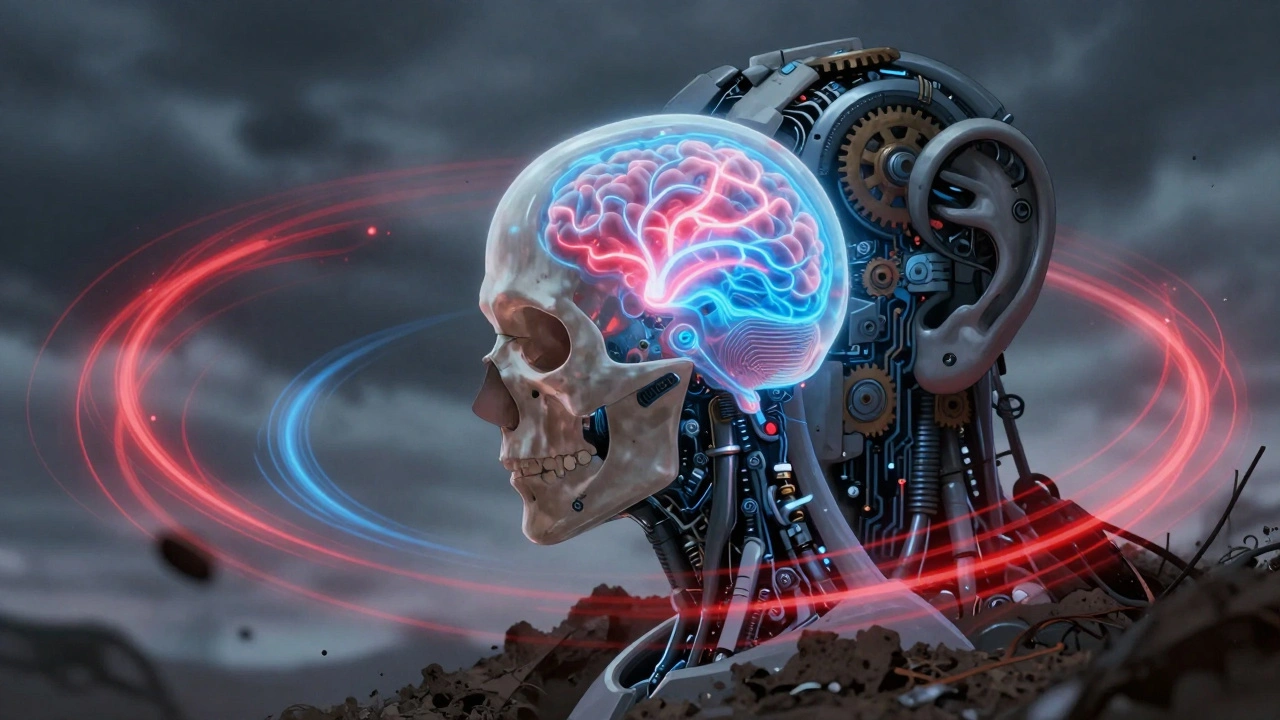
More than 1 in 5 people worldwide hear a ringing, buzzing, or hissing sound that no one else can hear. It’s not in the room. It’s not from a speaker. It’s inside their head. This is tinnitus-a phantom sound that doesn’t come from outside, but from the brain itself. For some, it’s a quiet annoyance. For others, it’s a constant roar that ruins sleep, focus, and even relationships. The good news? You’re not alone, and there are real, science-backed ways to manage it-even if there’s no instant cure.
What Exactly Is Tinnitus?
Tinnitus isn’t a disease. It’s a symptom. Think of it like a fever: it doesn’t cause illness, but it tells you something’s wrong inside. The sound you hear-ringing, buzzing, hissing, roaring, or clicking-is generated by your brain’s auditory cortex, not your ears. When the inner ear’s tiny hair cells get damaged, they send scrambled signals to the brain. Instead of silence, the brain fills the gap with noise. This is why people with hearing loss often develop tinnitus: the brain is trying to compensate for missing sounds. There are two types. Subjective tinnitus (99% of cases) is only heard by you. Objective tinnitus (1% of cases) is rare and can sometimes be heard by a doctor using a stethoscope. This type often comes from blood vessel issues, like a turbulent flow near the ear. If your tinnitus pulses with your heartbeat, it’s likely pulsatile tinnitus-a sign you should get checked for vascular problems.What Causes Tinnitus?
The most common cause? Hearing loss. About 80% of people with tinnitus have some degree of hearing damage. This isn’t just about old age. Loud noise-concerts, power tools, headphones turned up too high-can permanently damage the hair cells in your inner ear. Even one night at a loud music festival can trigger temporary tinnitus. If it sticks around past a few days, it might become permanent. Other common triggers:- Earwax blockage: A simple buildup can press on the eardrum and cause ringing. Professional removal fixes it in 85% of cases within 48 hours.
- Ear infections: Middle ear infections (otitis media) are linked to tinnitus in 10-15% of cases.
- Medications: Over 200 drugs can cause tinnitus as a side effect. Common ones include high doses of aspirin (more than 4 grams a day), certain antibiotics like gentamicin, loop diuretics like furosemide, and some antidepressants. Stopping the drug often helps-70% of cases improve within a few weeks.
- Stress and anxiety: While they don’t cause tinnitus directly, they make it feel louder and more unbearable. The brain’s stress centers and hearing centers are wired together. When you’re anxious, your brain amplifies the noise.
Pulsatile tinnitus, the kind that beats with your heart, is often caused by:
- Atherosclerosis (hardening of arteries)
- Glomus tumors (rare, benign growths near the ear)
- Dural arteriovenous fistulas (abnormal blood vessel connections)
- Idiopathic intracranial hypertension (increased pressure around the brain)
If you have pulsatile tinnitus, an MRI with contrast is the first step. It catches 95% of vascular issues.
How Is Tinnitus Diagnosed?
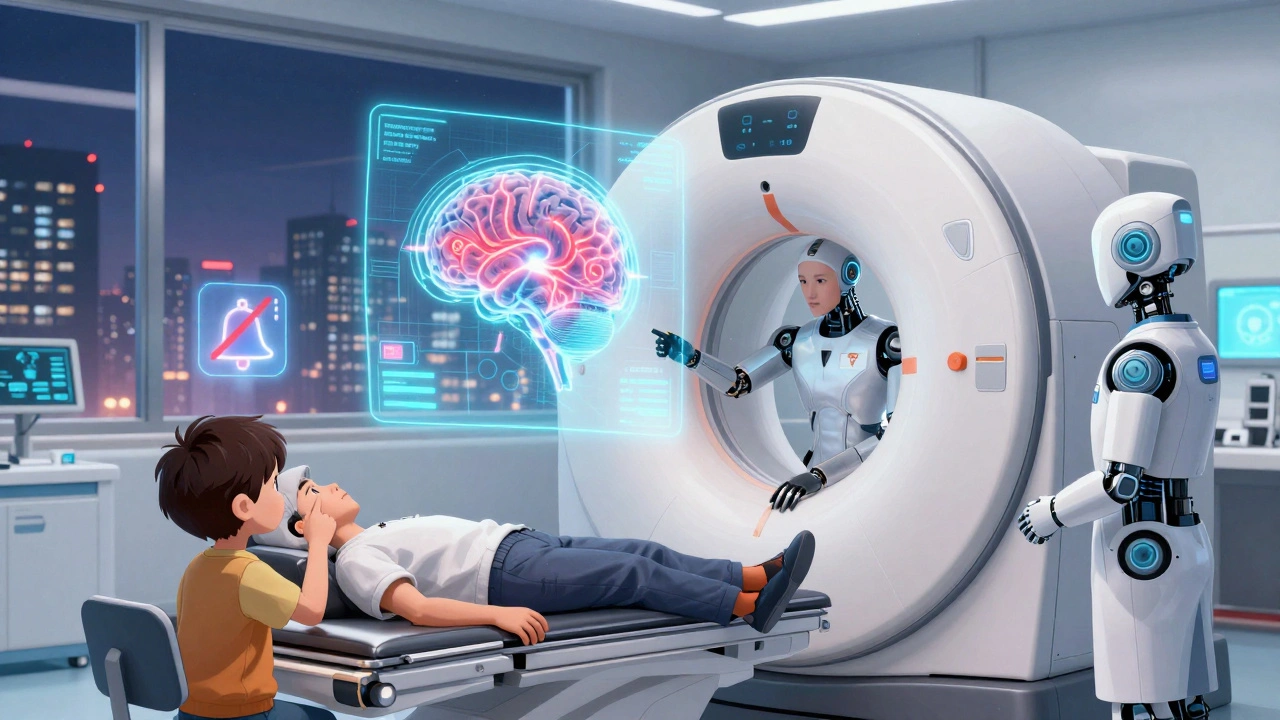
There’s no single test for tinnitus. Diagnosis starts with your doctor checking for obvious causes: earwax, infection, or recent medication changes. If those aren’t the issue, you’ll be referred to an ENT specialist. The gold standard is a full hearing test-pure-tone audiometry. Around 80% of people with tinnitus show hearing loss on this test, even if they didn’t realize it. For pulsatile tinnitus, imaging is key. MRI is preferred. CT angiography is used if the MRI is unclear. To measure how much tinnitus is affecting your life, doctors often use the Tinnitus Handicap Inventory (THI). It’s a 25-question survey that scores impact from 0-100:- 0-16: Slight
- 18-36: Mild
- 38-56: Moderate
- 58-76: Severe
- 78-100: Catastrophic
Most people fall in the mild to moderate range. But even a “mild” score can wreck your sleep or concentration.
How Do You Manage Tinnitus?
There’s no magic pill. But there are proven ways to make it less disruptive. The goal isn’t to make the sound disappear-it’s to make your brain stop noticing it.1. Treat the Root Cause
If your tinnitus is from earwax, get it removed. If it’s from an infection, treat it. If a medication is the culprit, talk to your doctor about alternatives. In many cases, fixing the cause makes the ringing go away.2. Use Hearing Aids
If you have hearing loss, hearing aids are one of the most effective tools. They don’t just make sounds louder-they flood your brain with real sounds. This reduces the brain’s need to create phantom noise. Studies show 60% of people with hearing loss and tinnitus get significant relief from hearing aids. Many modern devices also include built-in sound therapy.3. Try Sound Therapy
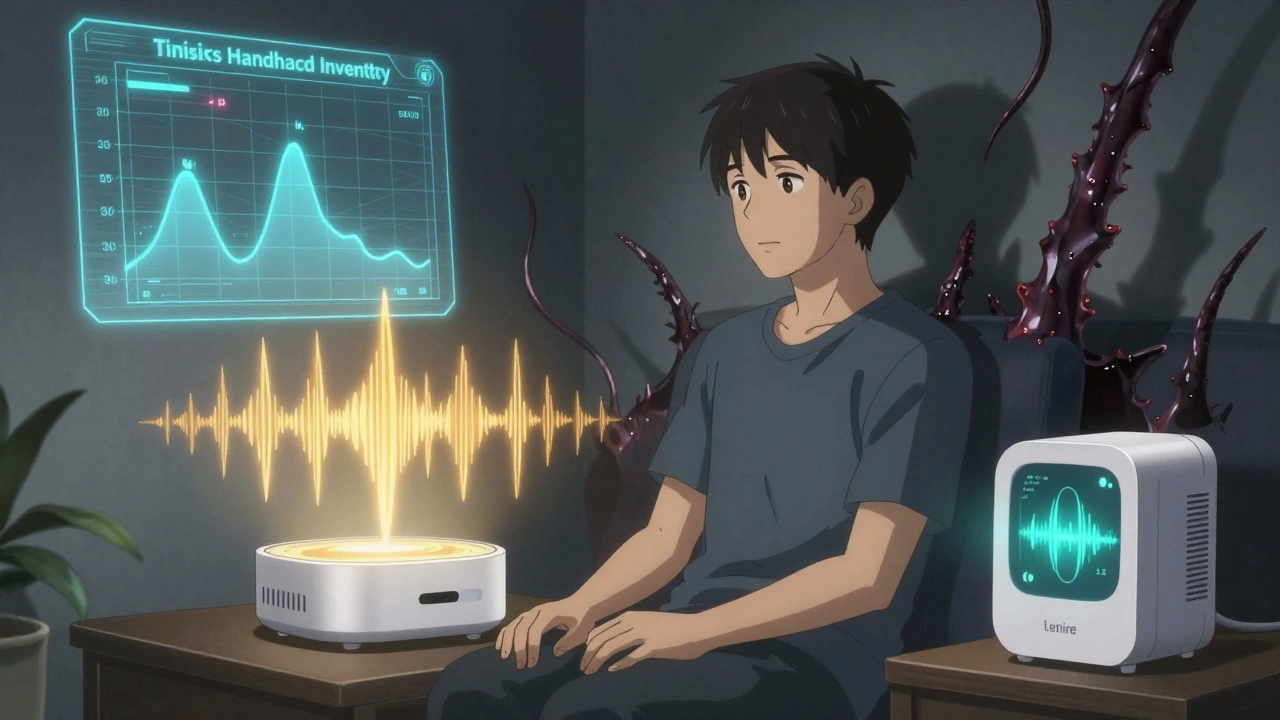
Sound therapy doesn’t silence tinnitus-it distracts from it. White noise machines, fans, or apps that play rain, ocean waves, or gentle static can help. About 40-50% of people find relief this way. Reddit’s tinnitus community (over 65,000 members) says sound masking is the #1 thing that helps day-to-day. Try a free app like myNoise or SoundCure. Use it at night, during work, or when you’re quiet.4. Cognitive Behavioral Therapy (CBT)
CBT isn’t about changing your thoughts-it’s about changing your reaction to them. In 8-12 weekly sessions, you learn to stop fearing the sound. You reframe it from “This is ruining my life” to “This is just noise, and I can live with it.” Studies show CBT reduces distress in 50-60% of people. It’s covered by many health plans and works better than pills.5. Emerging Treatments
New tech is making waves. The Lenire device, approved by the FDA in 2022, uses bimodal stimulation: sound through headphones and gentle tongue pulses. In a 2020 trial, 80% of users saw lasting improvement for at least a year. The Oasis device, approved in 2023, uses personalized sound therapy and showed 65% effectiveness. Transcranial magnetic stimulation (TMS) is another option. It uses magnetic pulses to calm overactive brain areas. It’s not a cure, but it helps 30-40% of people in trials.What Doesn’t Work?
Many products promise a cure. They don’t deliver.- Herbal supplements like ginkgo biloba or zinc have no strong evidence for tinnitus relief.
- Ear candling is dangerous and useless.
- “Tinnitus cure” devices sold online are often scams. Stick to FDA-cleared tools.
Also, avoid silence. People who try to “block out” tinnitus by sitting in quiet rooms often make it worse. Your brain becomes hyper-aware. Background noise helps.
How Does Tinnitus Affect Daily Life?
It’s not just about the noise. A 2022 survey of 12,000 people found:- 68% had trouble sleeping
- 52% struggled to concentrate at work
- 37% avoided social events
- 45% said it moderately impacted their daily life
That’s not just annoyance-it’s disability. But here’s the hopeful part: 80% of new tinnitus cases improve on their own within 6-12 months. Your brain adapts. The sound doesn’t vanish, but it fades into the background. The key is not to fight it. Let your brain rewire.
What Can You Do Today?
If you’re hearing ringing:- Don’t panic. It’s common, and often temporary.
- See your doctor. Rule out earwax, infection, or medication side effects.
- Get a hearing test. Even if you think your hearing is fine.
- Start using background sound. Turn on a fan, play soft music, or use a white noise app.
- Reduce stress. Try walking, breathing exercises, or talking to someone.
- Avoid loud noise. Wear earplugs if you’re near construction, music, or power tools.
Don’t wait for it to get worse. Early action makes a big difference.
Is There Hope for the Future?
Yes. Researchers are working on objective biomarkers-ways to measure tinnitus in the brain without asking the patient. There are 12 clinical trials underway right now looking at GABA modulation, neuroinflammation, and brain stimulation. The global tinnitus market is growing fast-projected to hit $3.8 billion by 2028. That means more investment, more innovation, and better tools coming soon. The biggest breakthrough? We now know tinnitus isn’t just an ear problem. It’s a brain problem. And the brain can change. With the right tools and time, most people learn to live with it-without letting it control their life.Can tinnitus go away on its own?
Yes, in about 80% of new cases, tinnitus improves significantly within 6 to 12 months without treatment. This is due to neural adaptation-your brain gradually learns to ignore the sound. But if it lasts longer than a year, it’s more likely to become chronic, and active management becomes important.
Is tinnitus a sign of hearing loss?
In about 80% of cases, yes. Tinnitus often appears alongside damage to the inner ear’s hair cells, which also causes hearing loss. Even if you don’t notice difficulty hearing, a hearing test may reveal subtle loss. Treating hearing loss with hearing aids often reduces tinnitus too.
Can stress make tinnitus worse?
Absolutely. Stress doesn’t cause tinnitus, but it amplifies it. When you’re anxious, your brain becomes hyper-alert to threats-including phantom sounds. Managing stress through exercise, sleep, or therapy can make tinnitus feel much quieter, even if the sound hasn’t changed.
Are there any foods or drinks that trigger tinnitus?
There’s no strong evidence that specific foods cause tinnitus. But some people report worsening symptoms after caffeine, alcohol, or high-salt diets. These can affect blood pressure or fluid balance, which may influence pulsatile tinnitus. If you notice a pattern, try cutting back to see if it helps.
What’s the difference between tinnitus and hyperacusis?
Tinnitus is hearing a sound that isn’t there. Hyperacusis is when normal sounds-like dishes clinking or a car horn-feel painfully loud. They often occur together, but they’re different. Hyperacusis involves oversensitivity to volume; tinnitus is about phantom noise. Both can be managed with sound therapy and counseling.
Should I use earplugs all the time to block out tinnitus?
No. Wearing earplugs constantly makes your brain more sensitive to silence, which can make tinnitus seem louder. Use earplugs only in very loud environments-like concerts or construction sites. At home or in quiet places, introduce gentle background sound instead.
Can children get tinnitus?
Yes. While more common in adults, children can develop tinnitus from ear infections, noise exposure, or genetic factors. It’s often underdiagnosed because kids may not know how to describe it. If your child complains of “weird noises” in their ears, mention it to their doctor.
Is tinnitus linked to depression or anxiety?
It’s a two-way link. Tinnitus can lead to anxiety and depression because of the constant noise and sleep loss. At the same time, people with anxiety disorders are more likely to notice and be distressed by tinnitus. Treating one often helps the other. CBT is effective for both.

Martyn Stuart
Just wanted to say this post is one of the clearest, most compassionate summaries of tinnitus I’ve ever read-seriously, thank you. I’ve had it for 7 years, and the bit about neural adaptation? That’s the key. It didn’t vanish, but after 18 months, I stopped noticing it while working. Now I only hear it when it’s dead quiet-which is why I keep a fan on 24/7. Also, hearing aids were a game-changer; I didn’t realize how much high-frequency loss I had until the test. Don’t wait. Get checked.
Yasmine Hajar
Y’ALL. I just found out my tinnitus is from my blood pressure meds. I switched to a different one and the buzzing dropped by 70% in 3 weeks. I’m not saying it’s magic, but if you’re on diuretics, SSRIs, or NSAIDs-ask your doc. You might be able to fix this without buying a $200 sound machine. Also, I started using myNoise on my phone at night and I’m actually sleeping through it now. 🙌
Karl Barrett
The neuroplasticity angle here is profoundly underappreciated. Tinnitus isn’t an auditory defect-it’s a maladaptive cortical reorganization phenomenon, wherein the auditory cortex, deprived of expected afferent input, generates endogenous activity as a form of homeostatic compensation. The brain doesn’t ‘ignore’ the signal; it reweights the salience hierarchy. CBT doesn’t suppress perception-it downregulates the limbic tagging of the signal as threatening. This is why sound therapy works: it provides competing exogenous stimuli that recalibrate the predictive coding model. The Lenire device? That’s not just sound + tongue stimulation-it’s multisensory neuromodulation designed to induce long-term potentiation in the dorsal auditory stream. We’re talking about rewiring the brain’s internal model of auditory space. This isn’t management-it’s neurorehabilitation.
Jake Deeds
Wow, I’m so impressed by how much effort went into this. I mean, really-this is the kind of content that makes me feel like I’m finally being spoken to like an adult. Not some ‘just relax’ nonsense. No ginkgo biloba snake oil. Just science. And honestly? I’m kind of mad I didn’t find this sooner. I wasted two years trying ear candles and ‘frequency healing’ apps. I even bought a $400 ‘tinnitus destroyer’ off Amazon. It was just a speaker with a fan sound. I’m crying. Not because it’s sad-because I finally feel seen. Thank you.
John Filby
Just got my hearing test back and low and behold-I’ve got mild high-frequency loss I didn’t even know about. My doctor said it’s probably from years of listening to podcasts at 80% volume while commuting 😅 So I got hearing aids with built-in masking. They’re tiny, like a pea. And yeah, the ringing’s quieter. Not gone, but… manageable. Also, I started using the myNoise app with ‘Ocean Waves’ and it’s weirdly soothing? Like, I use it to fall asleep now. Who knew noise could be cozy? 😊
Emmanuel Peter
Okay but why are we all acting like this is some new revelation? I’ve had this since I was 19. I’m 38 now. It’s been 19 years. You say ‘80% improve in 6–12 months’-what about the other 20%? The ones who are still screaming into the void? Who can’t work, can’t sleep, can’t watch TV without wanting to scream? You’re giving advice like this is a minor annoyance. It’s not. It’s a slow erosion of your soul. And now you’re telling me to ‘use background noise’ like I’m a toddler who needs a nightlight? I’ve tried everything. Every app. Every therapist. Every supplement. I’ve been to 5 ENTs. I’ve had MRIs. I’ve had my blood tested for Lyme, MS, autoimmune stuff. Nothing. So don’t tell me ‘it gets better.’ For some of us, it just gets louder.
Ashley Elliott
Emmanuel, I hear you. I’ve been where you are. And I’m not here to say ‘it’ll be okay’-because sometimes it won’t. But I will say this: you’re not broken. You’re not failing. You’re not weak. You’re just one of the 20% who didn’t get the miracle. And that doesn’t make your pain less real. I started journaling-just one sentence a day about what I could still do, even with the noise. I still can’t sleep through the night. But I can still laugh with my niece. Still read my favorite books. Still feel the sun on my face. The sound is still there. But it’s not the whole story. You’re still here. And that matters.
Chad Handy
Man, I’ve been living with this for 15 years. I used to think I was going crazy. I’d wake up at 3 a.m. and just stare at the ceiling, listening to this constant hiss like a broken radiator. I tried everything-meditation, acupuncture, biofeedback, even a hypnotherapist who told me ‘your tinnitus is a metaphor for suppressed anger.’ I cried after that session. Then I got a hearing aid. Not because I thought I was deaf-because I learned I had high-frequency loss. The device didn’t silence the noise. But it gave my brain something else to focus on. Now I hear birds outside my window. I hear my kid laughing. I hear my wife breathing. The tinnitus is still there. But it’s not the loudest thing in the room anymore. And that’s enough. For now, it’s enough.