Medication Side Effect Tolerance Calculator
Predict Which Side Effects Fade Over Time
This tool helps you understand which side effects of your medication are likely to fade with time based on scientific research.
Select Your Medication
Your Predicted Side Effects
Have you ever started a new medication and felt awful for the first few days-nausea, dizziness, fatigue-only to wake up one morning and wonder, Why don’t I feel that anymore? It’s not magic. It’s not your body getting used to feeling bad. It’s something deeper: tolerance.
Tolerance isn’t just about needing more of a drug to get the same effect. It’s also why some annoying side effects vanish while others stick around. You might stop feeling dizzy on an antidepressant after two weeks, but the sexual side effects? Those don’t go away. You take opioids for pain, and the vomiting stops after a few days, but constipation? That’s there for the long haul. This isn’t random. It’s biology.
How Your Body Adapts to Medications
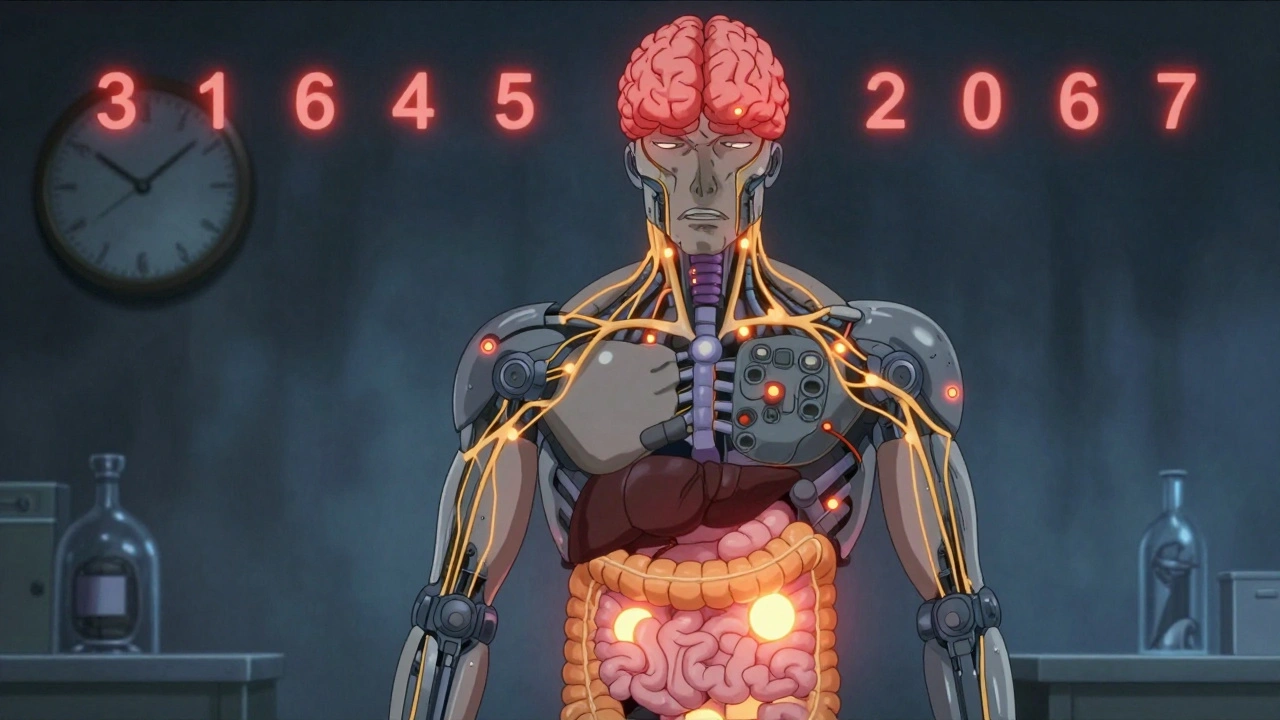
Your body doesn’t just sit there and take drugs. It fights back. When you take a medication regularly, your cells start changing to restore balance. This is called homeostasis. Think of it like turning down the volume on a loud speaker. The sound doesn’t disappear-you just stop noticing it as much.
There are three main ways this happens. First, your liver gets faster at breaking down the drug. This is called metabolic tolerance. Certain medications, like barbiturates or alcohol, trigger your liver to produce more enzymes-especially from the CYP450 family-that chop up the drug before it can do much. After a few weeks of drinking, your body processes alcohol up to 300% faster. That’s why someone who drinks daily doesn’t get drunk as easily as someone who drinks once a month.
Second, your receptors change. These are the tiny locks on your cells that drugs unlock to cause effects. Over time, your body may reduce the number of receptors, or make them less responsive. This is pharmacodynamic tolerance. For example, opioids bind to receptors in your brain to relieve pain-but they also cause nausea and drowsiness. With repeated use, those receptors in the nausea centers of your brain start to downregulate. Fewer receptors mean less signal. Less signal means less nausea. But the receptors in your gut? They don’t downregulate nearly as much. That’s why constipation stays.
Third, your cells rewire themselves at the molecular level. Alcohol, for instance, causes your brain to change the makeup of GABA and NMDA receptors. Chronic use leads to a 30-50% drop in certain GABA receptor subunits, which are responsible for sedation. But other subunits stay the same or even increase. So you lose the sleepy feeling, but the brain’s reward system still gets activated. That’s why people can drink daily without feeling drunk-but still crave it.
Why Some Side Effects Disappear, But Others Don’t
This is where things get interesting. Not all side effects fade at the same rate. Some vanish quickly. Others? They hang on like a bad roommate.
Take opioids. Within 24 to 72 hours, most people notice their nausea and drowsiness cut in half. By day 7, up to 80% of the sedative effects are gone. But constipation? That barely budges. Studies show it stays at 90% of its original intensity. Why? Because the receptors controlling gut motility don’t adapt the same way as those in the brainstem. Your body tolerates the brain effects-but not the gut effects.
Benzodiazepines, used for anxiety and sleep, show the same pattern. Sedation fades within 7-14 days. But the anti-anxiety effect? It stays strong. That’s why doctors can keep patients on low doses long-term without losing the benefit-but still warn about dependency. The brain adapts to the calming effect on sleep centers, but not to the calming effect on fear circuits.
Antidepressants like SSRIs are another classic case. About 73% of users report nausea and vomiting disappear within 2-3 weeks. But sexual side effects-delayed orgasm, low libido? Those persist for over half of users, even after months. Why? Because serotonin receptors involved in digestion adapt quickly. The ones tied to sexual response? They don’t. And there’s no known mechanism for the body to fully reset them.
Even blood pressure meds like beta-blockers follow this rule. Fatigue and dizziness drop by 65% within three months. But the drop in blood pressure? That stays. Your body doesn’t tolerate the therapeutic effect-it tolerates the side effects.
What This Means for Patients
If you’re on a new medication and feel awful at first, don’t panic. You’re not broken. You’re normal. Most side effects will fade. But don’t assume all of them will.
Here’s what to watch for:
- If nausea or dizziness disappears after 1-2 weeks, that’s typical.
- If constipation, sexual dysfunction, or weight gain doesn’t improve after 4-6 weeks, it’s unlikely to go away on its own.
- If your pain returns after a few months on opioids, it might not be tolerance-it could be disease progression. Don’t automatically assume you need more.
Many patients stop taking meds because they think the side effects will go away-and they get frustrated when they don’t. Others keep taking them because they think the side effects are temporary-and end up stuck with problems they didn’t expect.
That’s why talking to your doctor matters. Don’t wait until you’re miserable. Ask: “Which side effects usually fade, and which ones stick around?” If you’re on opioids, ask about stool softeners from day one. If you’re on an SSRI, ask about managing sexual side effects early. It’s not weakness to plan ahead-it’s smart.

Genetics and Why Tolerance Varies Between People
Not everyone develops tolerance the same way. Two people on the same dose of the same drug can have totally different experiences.
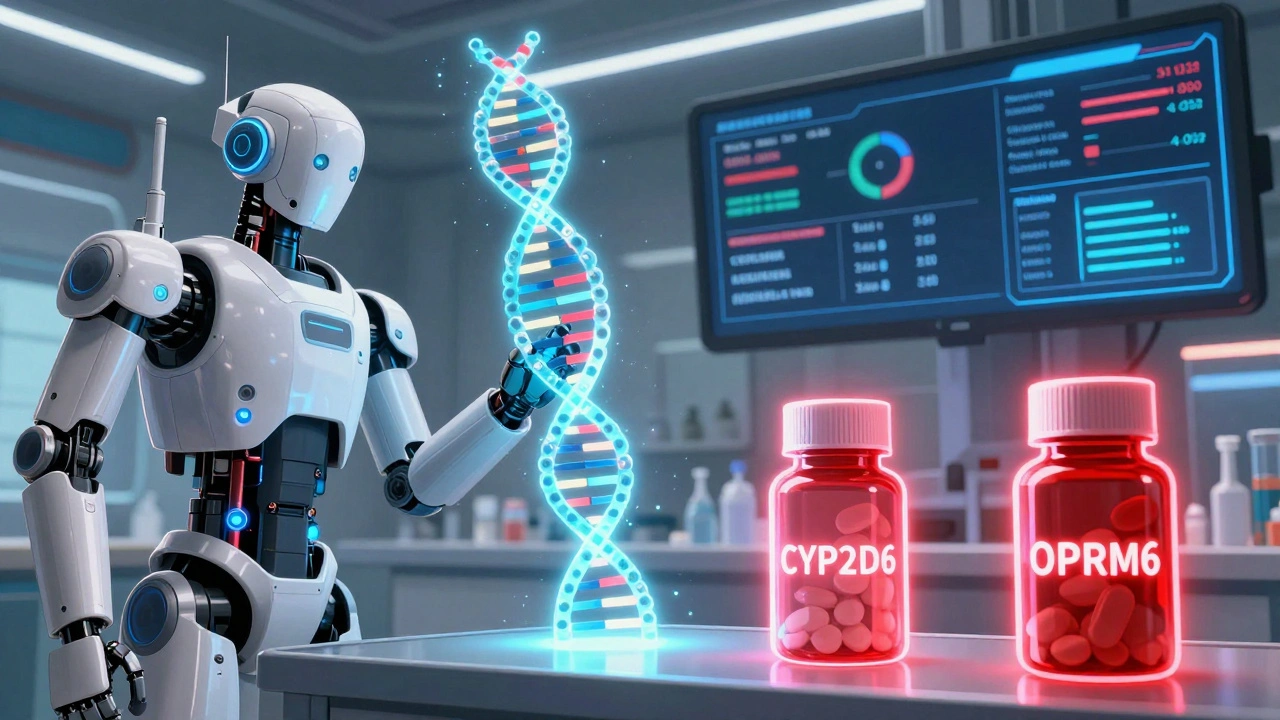
Why? Genetics. About 7-10% of Caucasians have a gene variant called CYP2D6 poor metabolizer status. That means their body breaks down codeine, tramadol, and some antidepressants way too slowly. They get more side effects-and may not get pain relief at all. Meanwhile, ultra-rapid metabolizers break down the same drugs too fast. They need higher doses just to feel anything.
Another key player is the OPRM1 gene, which controls opioid receptors. People with certain versions of this gene develop tolerance to opioid side effects faster-or slower. That’s why one person on oxycodone stops vomiting after three days, while another still feels sick after two weeks. It’s not about willpower. It’s biology.
This is why personalized medicine is growing. The NIH has invested over $127 million since 2023 to find genetic markers that predict who will develop tolerance quickly-and who won’t. In the future, a simple blood test might tell you: “You’re likely to get severe constipation on opioids. Start laxatives now.”
What Doctors Are Doing About It
Smart doctors don’t just prescribe drugs. They manage tolerance.
Pain specialists now routinely tell patients: “Nausea will fade. Constipation won’t. Take a laxative daily.” They know that 92% of pain doctors do this-but only 65% of general practitioners do. That gap is dangerous.
Some clinics now use electronic health record tools that flag patients at risk for persistent side effects. One system at Epic reduced unnecessary opioid dose increases by 34% just by predicting who was likely to develop tolerance-and who wasn’t.
There are also new drugs designed to fight tolerance itself. In 2023, the FDA approved a combo pill with naltrexone and bupropion specifically to reduce opioid-induced nausea without blocking pain relief. Early trials showed a 45% drop in nausea persistence.
Even delivery methods are changing. New formulations of oxycodone, wrapped in special polymers, release the drug slowly and reduce receptor overstimulation. In trials, these caused 60% less tolerance to respiratory depression after eight weeks.
When Tolerance Isn’t Tolerance
Here’s a big mistake people make: confusing tolerance with disease progression.
If your back pain comes back after three months on opioids, you might think, “I need more.” But what if your spine got worse? Or you gained weight? Or your sleep got worse? Those things change how your body responds to pain.
Studies show that 25-30% of patients who increase their dose are actually dealing with a new problem-not tolerance. That’s why doctors now recommend checking for other causes before upping the dose.
Also, tolerance doesn’t mean addiction. You can be tolerant without being dependent. You can be dependent without being addicted. These are different things. Tolerance is a biological response. Addiction is a behavioral one.
What You Can Do Right Now
If you’re on medication and experiencing side effects:
- Track them. Write down what you feel, when it started, and how bad it is.
- Wait 2-4 weeks before deciding it’s permanent. Most side effects fade in that window.
- If something like constipation, sexual issues, or weight gain hasn’t improved after 6 weeks, talk to your doctor. Don’t wait.
- Ask: “Is this side effect likely to go away?” If they don’t know, ask for a referral to a pharmacist.
- Don’t stop cold turkey. Some side effects fade, but stopping suddenly can cause withdrawal-even if you’re not addicted.
Tolerance isn’t a flaw. It’s a feature of how your body survives. But if you don’t understand it, you’ll either suffer unnecessarily-or miss a chance to fix something that can be fixed.
The goal isn’t to avoid side effects entirely. It’s to know which ones you can live with-and which ones you shouldn’t.
Do all side effects eventually go away with long-term medication use?
No. Some side effects fade quickly because your body adapts to them-like nausea or dizziness. Others, like constipation from opioids or sexual dysfunction from SSRIs, often persist because the receptors or systems involved don’t downregulate the same way. It’s not about how long you’ve been on the drug-it’s about which part of your body the drug affects.
Why does my anxiety medication stop making me sleepy but still help with anxiety?
This is called differential tolerance. Benzodiazepines and similar drugs act on multiple brain regions. The areas that control sleep and sedation develop tolerance quickly-receptors there become less responsive. But the areas that regulate fear and anxiety don’t adapt as much, so the anti-anxiety effect stays strong. That’s why you can stay on these drugs for months without losing their benefit, even if you no longer feel drowsy.
Can I speed up tolerance to side effects?
No. You can’t force your body to adapt faster. Taking higher doses won’t help-it might make things worse. Tolerance develops naturally over time as your cells change. The best thing you can do is stay consistent with your dose, stay hydrated, and manage symptoms like nausea or constipation with proven methods (like ginger for nausea or fiber/laxatives for constipation).
Does tolerance mean I’m becoming dependent or addicted?
Not necessarily. Tolerance is a physical change in how your body processes a drug. Dependence means your body relies on it to avoid withdrawal. Addiction is when you keep using despite harm. You can have tolerance without dependence, and dependence without addiction. Many people on long-term pain meds or antidepressants are tolerant but not addicted. The key is whether you’re using it to feel good-or to avoid feeling bad.
Is it safe to take a break from my medication to reset tolerance?
Sometimes, yes-but only under medical supervision. For some drugs like nitroglycerin or certain antidepressants, a short break (a few days to a week) can partially reverse tolerance. But for others-like opioids or benzodiazepines-stopping suddenly can cause dangerous withdrawal. Never stop or change your dose without talking to your doctor. A planned “drug holiday” can help, but it’s not a DIY solution.

Mayur Panchamia
Man, this post is straight fire-like someone cracked open my skull and pulled out the exact chaos I’ve been living with on SSRIs. Nausea? Gone in a week. Sexual side effects? Still here like a ghost haunting my love life. No magic, just biology-and thank god someone finally said it out loud.
olive ashley
So let me get this straight-your body adapts to the bad stuff but not the *really* bad stuff? Sounds like Big Pharma designed this on purpose. They don’t want you to feel better, they want you to stay dependent. Constipation? Sexual dysfunction? That’s not biology-that’s a business model.
Myles White
I’ve been on beta-blockers for five years now and this is the most accurate breakdown I’ve ever read. The dizziness vanished after about six weeks-I thought I was just getting used to it, but honestly, I didn’t even realize how much it was affecting my balance until it was gone. The blood pressure effect? Still rock solid. And yeah, the fatigue? Cut by about two-thirds, but not gone. It’s wild how selective this adaptation is. Your brain gets lazy with the side effects but stays sharp on the therapeutic ones. That’s not luck, that’s evolution on a pill.
Ibrahim Yakubu
Y’all in the West think this is some new discovery? In Nigeria, we’ve known this since the 90s. When your uncle takes amoxicillin and stops vomiting after three days but still can’t poop? He just says, ‘Ah, the body is wise.’ No need for CYP450 enzymes or receptor downregulation-we just call it ‘body wisdom.’ You overthink everything with your science. We just live it.
Karen Mitchell
It’s fascinating how this article casually dismisses the idea that pharmaceutical companies might be exploiting biological ignorance to maintain long-term revenue streams. The fact that constipation persists while sedation fades isn’t just biology-it’s profit-driven design. And yet, no one questions why the FDA approves drugs with known, irreversible side effects. We’re not patients-we’re test subjects with insurance cards.
Andrew Frazier
Wow. So I’m not crazy. I thought I was just weak for still needing laxatives after 3 months on oxycodone. Turns out my gut is just stubborn. Meanwhile my brain’s like, ‘Nah, I’m good, we good.’
Saketh Sai Rachapudi
Ugh this is why america is falling apart. Everyone wants a magic fix. You take a pill, your body adapts, you get mad when it doesn’t fix everything. In India we know: medicine is not a toy. If you want results, you do yoga, you eat turmeric, you sleep early. No wonder you guys need 12 different meds just to feel ‘normal’.
brenda olvera
Thank you for writing this. I was so scared when the nausea didn’t go away on my antidepressant. I thought I was broken. But now I know-it’s not me, it’s my serotonin receptors. And honestly? Knowing that made me feel less alone. We’re all just bodies trying to survive a chemical world.
Chris Park
Genetic testing for CYP2D6 status is not ‘personalized medicine’-it’s a Trojan horse for corporate surveillance. If your blood test says you’re a poor metabolizer, who owns that data? Insurance companies? Employers? The FDA? This isn’t progress-it’s pharmacological profiling disguised as science. And you’re all just nodding along like good little patients.