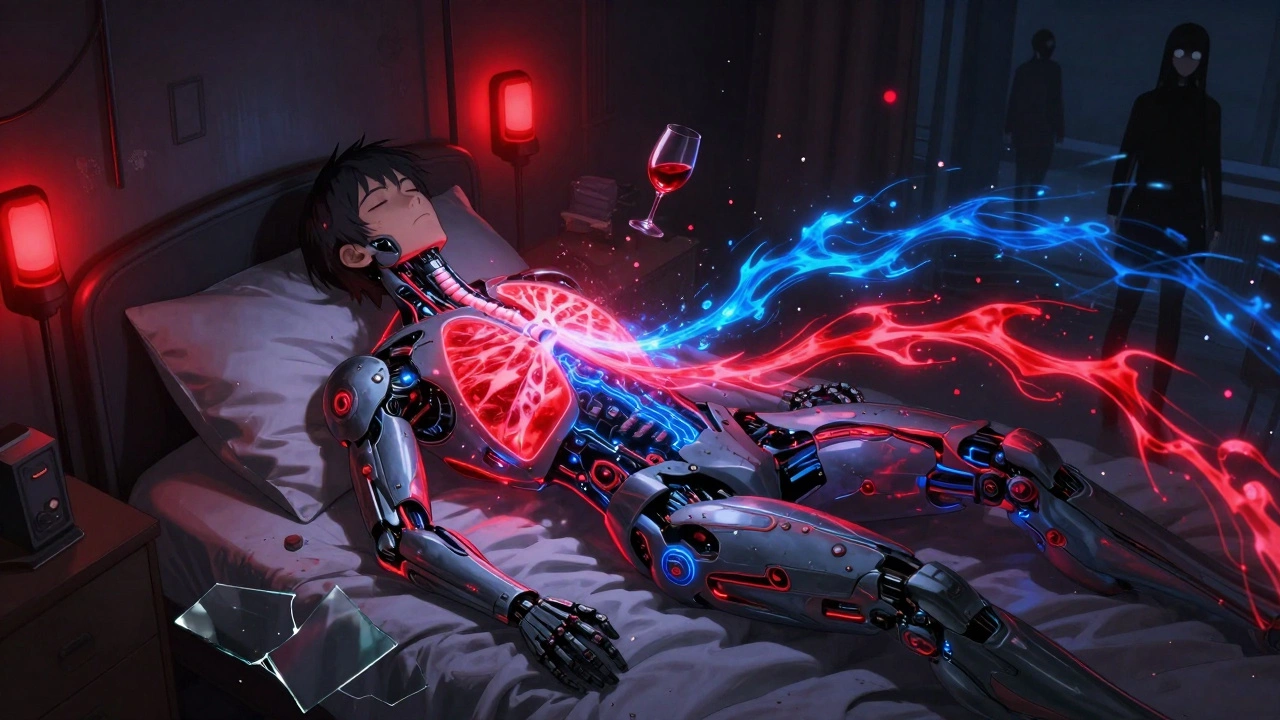
Putting a glass of wine with your night-time sleep pill might seem like a harmless way to unwind. But this common habit is far more dangerous than most people realize. In fact, mixing alcohol with prescription or over-the-counter sleep medications can slow your breathing to deadly levels, cause you to walk or drive while asleep with no memory of it, or even kill you - all from just one drink.
Why This Combination Is So Deadly
Both alcohol and sleep medications work by calming your central nervous system. When taken together, they don’t just add up - they multiply. This is called synergistic sedation. Your brain’s GABA receptors, which control relaxation and sleep, get overstimulated. The result? Extreme drowsiness, confusion, and dangerously slowed breathing. The U.S. Food and Drug Administration (FDA) has issued a Black Box Warning - the strongest possible alert - for Z-drugs like Ambien (zolpidem), Lunesta (eszopiclone), and Sonata (zaleplon). These drugs are especially risky when mixed with alcohol. Even a single drink can turn a normal dose into a life-threatening one. Studies show that just 0.02% blood alcohol (about half a beer) can extend Ambien’s effects from 2.5 hours to over 6 hours. That means you’re not just sleepy - you’re impaired for much longer than you think.Which Sleep Medications Are Most Dangerous?
Not all sleep aids are created equal when it comes to alcohol interactions.- Z-drugs (Ambien, Lunesta, Sonata): These are the most dangerous. They act fast and bind tightly to brain receptors. Combining them with alcohol increases the risk of sleep-driving, sleep-walking, and memory loss by over 15 times. One study found that 2.4% of people who mixed alcohol with Z-drugs experienced complex sleep behaviors - up from just 0.15% when taking the drug alone.
- Benzodiazepines (Ativan, Klonopin, Restoril): Older but still widely prescribed, these also dangerously amplify alcohol’s effects. They can cause severe dizziness, falls, and respiratory depression, especially in older adults.
- OTC sleep aids (ZzzQuil, Unisom): These contain diphenhydramine or doxylamine - antihistamines that cause drowsiness. When mixed with alcohol, they triple the risk of falls in people over 65. Emergency room visits for hip fractures from this combo have jumped by over 300% in recent years.
- Melatonin: This is the exception. Melatonin supplements don’t interact dangerously with alcohol. But they can still make you feel extra groggy the next day. If you’re drinking, it’s best to skip melatonin too.
Real Stories Behind the Numbers
Behind every statistic is a person who woke up somewhere they didn’t mean to be. One Reddit user, u/SleepWalker99, shared how they took half an Ambien and two glasses of wine, then woke up two miles from home - with no memory of driving. That’s not an isolated case. The FDA received over 1,800 consumer reports in 2021 about alcohol-sleep med interactions. Nearly two-thirds of those people said they had no memory of what happened. In Australia, where alcohol use is common and sleep problems are widespread, emergency departments are seeing more cases. A 2023 study from Sydney’s Royal Prince Alfred Hospital found that 1 in 5 patients admitted for accidental overdose had mixed alcohol with sleep medication. Many were middle-aged adults who thought they were being careful - just one drink, just once.Why Older Adults Are at Highest Risk
As we age, our bodies process alcohol and medications slower. Liver function declines. Muscles shrink. Fat increases. All of this means alcohol and sedatives stick around longer - and hit harder. The American Geriatrics Society warns that adults over 65 who mix even small amounts of alcohol with OTC sleep aids are four times more likely to suffer delirium. That means sudden confusion, hallucinations, and disorientation - often mistaken for dementia. Hospitalizations for falls and head injuries from this combo have skyrocketed. One Medicare analysis showed hip fractures in seniors rose from 12.7 to 51.3 cases per 100,000 people annually after alcohol was added to diphenhydramine use.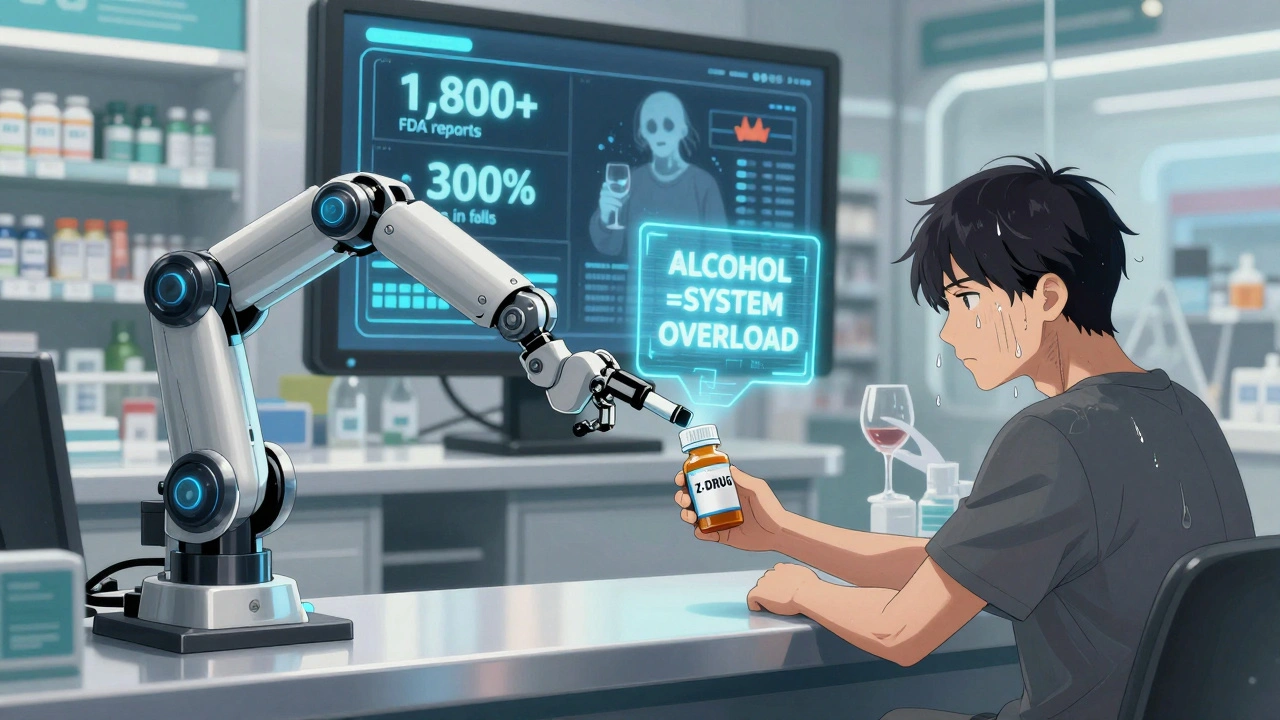
What the Experts Say
There’s no gray area here. Medical leaders are clear: never mix alcohol with sleep medication. Dr. Robert Swift from Brown University explains that the body’s CYP3A4 enzymes - which break down both alcohol and sleep drugs - get overwhelmed. Instead of clearing the drugs safely, your system gets clogged. That’s why the danger isn’t linear - it’s exponential. The American Academy of Sleep Medicine’s 2023 guidelines state bluntly: “Even one standard drink with a Z-drug significantly increases risk.” And Dr. Lorenzo Cohen from MD Anderson Cancer Center calls it “medical negligence” not to warn patients. The FDA now requires all prescription sleep medication boxes to include bold, 14-point warnings: “Do not consume alcohol while taking this medication.” But here’s the problem - most people still miss it.Why People Keep Doing It
A 2022 survey by the National Sleep Foundation found that 68% of patients prescribed sleep meds were never warned about alcohol risks. Many assume: “I only have one glass,” or “I took my pill hours ago.” But alcohol doesn’t clear quickly. A standard drink takes about 1-2 hours to metabolize - and that’s only if your liver is healthy. Pharmacists are now required to counsel patients at the counter, and 87% say they do. But patients often walk out distracted, tired, or embarrassed to ask questions. If your doctor didn’t mention it, you’re not alone. But you’re still at risk.How to Stay Safe
If you’re taking any sleep medication - prescription or OTC - follow these rules:- Zero alcohol. No exceptions. Not one sip. Not even a glass of wine with dinner.
- Wait 6 hours after alcohol before taking Z-drugs. For benzodiazepines, wait 12 hours. This isn’t guesswork - it’s based on how long these substances stay active in your system.
- Never take more than prescribed. Increasing your dose to “get to sleep faster” is a direct path to overdose.
- For seniors: avoid all OTC sleep aids. The American Geriatrics Society says diphenhydramine and doxylamine should be avoided entirely in adults over 65 - even without alcohol.
- Ask your pharmacist. When you pick up your prescription, ask: “Is it safe to drink alcohol with this?” Don’t assume they’ll tell you unless you ask.
New Hope: Safer Alternatives
There’s good news. Newer sleep medications are being developed to avoid these risks entirely. Dayvigo (lemborexant), approved by the FDA in 2023, works differently. Instead of targeting GABA receptors like Ambien, it blocks orexin - a brain chemical that keeps you awake. In clinical trials, alcohol only increased Dayvigo’s half-life by 15%, compared to 150-200% for Z-drugs. It’s not a cure-all, but it’s a step forward. The NIH is also funding research to find genetic markers that predict who’s most vulnerable to these interactions. That could one day help doctors personalize advice. For now, the safest approach is simple: skip the alcohol. Try non-drug methods instead - cool, dark rooms; consistent bedtimes; avoiding screens before bed; or cognitive behavioral therapy for insomnia (CBT-I), which the American College of Physicians now recommends as the first-line treatment.What to Do If You’ve Already Mixed Them
If you’ve accidentally combined alcohol and sleep meds and feel:- Extreme drowsiness
- Difficulty breathing
- Confusion or memory loss
- Waking up somewhere you don’t remember going
Final Reality Check
Sleep is vital. But so is safety. The idea that “a little alcohol helps me sleep” is a myth that kills. Every year, nearly 1 in 5 prescription overdose deaths in the U.S. involve alcohol mixed with sedatives. That’s not an accident. It’s preventable. You don’t need to choose between rest and safety. You just need to stop mixing the two. Your brain, your lungs, and the people who love you will thank you.Can I have one glass of wine with my Ambien if I wait a few hours?
No. Even if you wait several hours, alcohol can still be in your system and interact with Ambien. The risk of dangerous sedation, memory loss, or impaired breathing remains high. The FDA and medical experts advise complete avoidance of alcohol while taking any Z-drug like Ambien.
Is melatonin safe to take with alcohol?
Melatonin doesn’t cause dangerous sedation when mixed with alcohol like prescription sleep meds do. However, combining them can still make you feel excessively drowsy the next day - up to 35% more than alcohol alone. It’s best to avoid mixing them to ensure you’re fully alert during the day.
Why are older adults more at risk with OTC sleep aids and alcohol?
As we age, our liver processes alcohol and medications more slowly. This means both substances stay in the body longer, increasing their combined effects. Older adults are also more likely to have balance issues, making falls - which are tripled by this combo - more dangerous and often deadly.
What should I do if I or someone I know has mixed alcohol with a sleep med and passed out?
Call emergency services immediately. Do not try to wake them by shaking or pouring water on them. Lay them on their side to prevent choking, and stay with them until help arrives. This is a life-threatening situation - even if they seem to be breathing normally.
Are there any sleep aids that are safe with alcohol?
No prescription or OTC sleep medication is considered safe with alcohol. Even melatonin, while not dangerous, can increase next-day drowsiness. The only truly safe option is to avoid alcohol entirely while using any sleep aid - and focus on behavioral changes like sleep hygiene or CBT-I for long-term relief.
How common are alcohol-sleep med interactions?
Emergency department visits related to this combo increased by 27% between 2018 and 2022. In 2021, over 1,800 consumer complaints were filed with the FDA specifically about alcohol and sleep meds. These interactions now make up 18% of all prescription medication overdose deaths - up from 9% in 2015.

Lynn Steiner
OMG I DID THIS LAST WEEK 😭 I had one glass of wine with my Ambien and woke up in my kitchen at 3am holding a spatula like it was a microphone. No memory. Just... spatula. My cat was judging me. I’m never doing it again. #SleepWalkingAndShame
Paul Keller
While the statistical data presented in this article is compelling and aligns with current clinical literature on CNS depressant synergism, I find it regrettably underemphasized that the pharmacokinetic interaction between ethanol and zolpidem is mediated primarily through CYP3A4 inhibition and GABA-A receptor potentiation. The exponential rather than additive risk profile is not merely a cautionary note-it is a pharmacological imperative. The FDA’s black box warning is not hyperbole; it is a direct consequence of peer-reviewed toxicology studies demonstrating respiratory depression thresholds lowered by up to 68% in polypharmacy scenarios. This is not a lifestyle choice-it is a medical contraindication of the highest order.
Elizabeth Grace
Y’all. I used to do this every Friday night. ‘Just one glass to help me chill’-yeah, right. Woke up in the shower once. With my shoes on. My dog was licking my face like I’d been gone for a week. I thought I was having a nightmare. Turned out I’d walked to the store, bought gummy bears, and tried to pay with my credit card... in the parking lot. I cried for an hour. Then I threw out my wine glasses. And my Ambien. And I started CBT-I. Best decision I ever made. You’re not weak for needing sleep. You’re just being lied to by society about ‘wine = relaxation.’
Joel Deang
so i read this and i was like… wait i take zzzquil with my beer every night 😬 and i thought it was fine cuz melatonin is safe?? but wait no i’m using diphenhydramine?? oh no oh no oh no. i’m 42 and i fell last month and cracked my rib. was it the wine?? i’m so scared. gonna call my pharmacist tmrw. thx for the wake up call 🙏
Roger Leiton
Okay but can we talk about how insane it is that we’re still letting OTC sleep aids with antihistamines be sold like candy? 🤯 I mean, you can buy Unisom next to the gum and batteries. And no one tells you it’s basically sedating your brain with a sledgehammer. And then you add alcohol? It’s like handing out loaded guns at a PTA meeting. The FDA needs to reclassify these as prescription-only. And why isn’t there a warning label on the bottle like ‘DO NOT MIX WITH ALCOHOL OR COMMON SENSE’? 😅
Steve World Shopping
Pathetic. This is what happens when Western societies outsource biological regulation to pharmacological crutches. The real issue is not the drug-alcohol synergy-it’s the cultural decay that normalizes chemical sedation as a substitute for discipline, circadian alignment, and psychological resilience. You want sleep? Stop staring at screens. Stop consuming sugar. Stop treating your nervous system like a broken appliance you can fix with a pill and a pint. This isn’t medicine-it’s symptomatic management of a civilization in collapse.
Rebecca M.
So let me get this straight… I can’t have a glass of wine with my Ambien, but I can have 3 glasses of wine and then pass out on the couch like a sack of potatoes? 🤔 The real danger isn’t the combo-it’s the fact that we’re supposed to feel guilty for wanting to relax, but not for drinking ourselves into a coma? Classic. I’ll just keep my wine and my pills. And my denial. 😘
Alicia Marks
You’re not alone. I did this too. Then I started journaling before bed. No screens. 10 minutes of breathing. And guess what? I sleep better. No pills. No wine. Just me, my blanket, and peace. You got this. 💪
Shannara Jenkins
My mom took ZzzQuil with a glass of wine every night for 8 years. She fell, broke her hip, spent 6 months in rehab. She doesn’t remember any of it. Now she won’t even touch alcohol. She says, ‘I didn’t know it could steal my life like that.’ I showed her this article. She cried. I cried. We’re both done with the ‘just one’ lie. If you’re reading this and you’re still doing it… please, just stop. For your future self. For the people who love you. You don’t need it. You’re already enough.