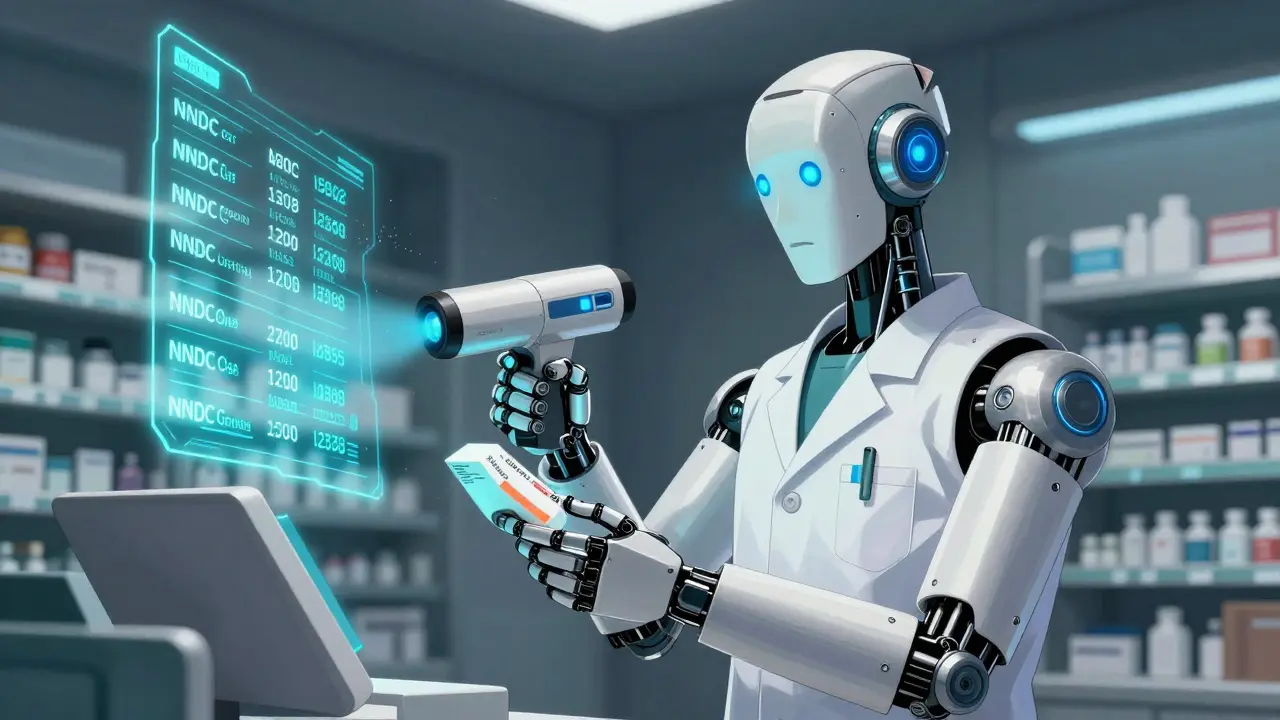
You pick up your prescription at the pharmacy. The box looks right. The pill color matches what you remember. But is it real? Counterfeit drugs are a growing threat, with incidents rising by 18% annually between 2018 and 2022. For patients, pharmacists, and healthcare providers, knowing how to check if a medication is legitimate isn't just good practice-it's a matter of life and death.
The U.S. Food and Drug Administration (FDA) maintains several powerful databases designed to track medications from manufacturing to your hands. These tools help identify fake drugs, verify supply chain partners, and ensure that every pill meets strict safety standards. If you work in healthcare or simply want to understand how your medicine is protected, this guide breaks down exactly how to use these systems.
Understanding the Core FDA Verification Systems
To spot counterfeits, you first need to know where the truth lives. The FDA doesn't rely on a single database but rather an interconnected ecosystem established largely under the Drug Supply Chain Security Act (DSCSA), which was enacted in 2013 to create an electronic, interoperable system for tracing prescription drugs. This framework mandates that manufacturers, distributors, and pharmacies keep detailed records and verify products throughout the supply chain.
The backbone of this system is the National Drug Code (NDC) Directory. This is the FDA's official identifier for drugs, using a unique three-segment numbering system to label each product. Think of the NDC as the social security number for a specific medication package. It consists of 10 or 11 digits divided into three parts: the labeler code (identifying the manufacturer), the product code (identifying the specific drug and strength), and the package code (identifying the package size).
Another critical tool is the Electronic Drug Registration and Listing System (eDRLS). This system serves as the primary submission portal for drug establishment registration and product listing data. Since 2009, companies must register their facilities and list their products electronically here. This ensures the FDA knows exactly who is making your medicine and whether they are authorized to do so.
| Database Name | Primary Function | Who Uses It? |
|---|---|---|
| National Drug Code (NDC) Directory | Identifies specific drug products via unique codes | Pharmacists, Patients, Insurers |
| eDRLS | Registers manufacturers and lists approved drugs | Manufacturers, Regulators |
| Drug Establishments Current Registration Site | Shows currently active, compliant facilities | Distributors, Compliance Officers |
| Orange Book | Evaluates therapeutic equivalence of generic drugs | Prescribers, Pharmacists |
How to Verify a Medication Using the NDC Directory
The NDC Directory is updated daily and contains information on active and certified finished and unfinished drugs. Here is how you can use it to double-check a medication:
- Locate the NDC: Find the barcode or printed number on the drug packaging. It will look like a sequence of numbers separated by hyphens (e.g., 12345-678-90).
- Access the Directory: Visit the FDA’s NDC Directory website. You can search by the full NDC, the labeler name, or the trade name of the drug.
- Check the Status: Look for the "Active" status. If a drug is listed as inactive or not found, exercise extreme caution. A missing entry doesn't always mean the drug is fake, but it means it's not currently registered with the FDA.
- Verify Details: Compare the dosage form, route of administration, and marketing category listed in the directory with what is on your package.
If the details don't match-for example, the directory says the drug is a tablet, but yours is a capsule-stop taking it and consult your pharmacist immediately. In 2022, the FDA proposed revising the NDC format to a standardized 12-digit structure to improve accuracy, a change expected to be fully implemented by 2026.
Spotting Red Flags: Signs of Counterfeit Drugs
Even with robust databases, physical inspection remains vital. Counterfeiters are getting smarter, often using high-quality packaging to mimic legitimate brands. Here are concrete signs that should raise alarms:
- Packaging Imperfections: Look for spelling errors, blurry printing, or poor-quality seals. Legitimate pharmaceutical companies invest heavily in quality control; sloppy packaging is a major red flag.
- Pill Appearance: Check the color, shape, and imprint of the pill. If the imprint is faint, missing, or different from previous prescriptions, verify it using the DailyMed database, which provides accurate images and descriptions of approved drugs.
- Price Discrepancies: If a medication is significantly cheaper than usual, especially online, question its source. Counterfeit drugs often undercut market prices to attract buyers.
- Lack of Traceability: Under the DSCSA, wholesale distributors and dispensers must be able to trace products back to the manufacturer. If a seller cannot provide transaction history or verification data, walk away.
Dr. Douglas Throckmorton, Deputy Center Director for Regulatory Programs at the FDA, has stated that complete and accurate registration data is essential for patient safety. He emphasizes that these databases allow the agency to conduct inspections, manage recalls, and secure the supply chain against threats.
The Role of the Drug Supply Chain Security Act (DSCSA)
The DSCSA is the legal engine driving modern drug verification. By November 27, 2023, all trading partners in the supply chain were required to implement systems to quarantine and investigate suspect products. This means that if a pharmacy receives a drug that fails verification, they must isolate it within 24 hours and notify the FDA if it cannot be cleared.
For consumers, this translates to greater protection. Pharmacies now have the tools and legal obligation to scan product identifiers before dispensing. According to industry surveys, 76% of retail pharmacy chains had implemented DSCSA-compliant verification systems by 2022. Companies with fully implemented systems reported 78% fewer counterfeit drug incidents compared to those with partial implementation.
However, challenges remain. The FDA acknowledged in a 2021 report that only 67% of surveyed entities had fully compatible verification systems as of late 2020. Data standardization issues still cause verification failures, with inconsistent product identifier data accounting for 38% of these errors in 2021.
International Comparisons: How the U.S. Stacks Up
The U.S. approach differs from other global models. The European Union uses the Falsified Medicines Directive (FMD), which requires unique identifiers and anti-tampering devices on every individual package. In contrast, the U.S. DSCSA focuses on electronic interoperability among supply chain stakeholders, moving toward unit-level serialization but relying heavily on business-to-business verification.
India uses the Drug Authentication and Verification Application (DAVA), which allows users to verify drugs via SMS. China mandates QR codes on all pharmaceutical packaging for its National Drug Traceability System. While the U.S. system is less consumer-facing in terms of direct scanning apps, its integration with the NDC Directory and eDRLS creates a comprehensive backend verification network that supports large-scale distribution.

Practical Steps for Healthcare Professionals
If you are a pharmacist or healthcare provider, your role is critical in the final line of defense. Here is how to maximize the use of FDA resources:
- Integrate Verification Software: Ensure your pharmacy management system connects directly to manufacturer verification systems. Real-time connectivity reduces human error and speeds up the verification process.
- Train Staff on Suspect Products: Establish clear protocols for handling suspect drugs. Staff should know how to quarantine items, document findings, and report them to the FDA within the mandated timeframe.
- Use the Orange Book: When substituting generics, use the Orange Book (Approved Drug Products with Therapeutic Equivalence Evaluations) to confirm that the generic is therapeutically equivalent to the brand-name drug. This helps avoid ineffective substitutions that might mimic counterfeits.
- Stay Updated on NDC Changes: As the FDA transitions to the 12-digit NDC format, update your scanning and lookup tools to prevent false negatives during searches.
Future Trends: AI and Blockchain in Drug Safety
The fight against counterfeits is evolving with technology. Industry analysts predict a 23% annual growth in AI-powered verification tools through 2027. Companies like IBM and Google are developing machine learning solutions to detect anomalies in supply chain data, identifying patterns that suggest diversion or falsification.
Blockchain technology is also gaining traction. Pilot programs conducted jointly by the FDA and the Pharmaceutical Research and Manufacturers of America (PhRMA) showed that blockchain-based tracking achieved 99.2% accuracy in identifying counterfeit products, compared to 87% with current systems. While widespread adoption is still emerging, these technologies promise to make the supply chain more transparent and secure.
Despite these advancements, international coordination remains a hurdle. Only 35% of foreign manufacturers fully comply with DSCSA requirements, according to 2022 FDA import data. This gap represents a significant vulnerability that regulators continue to address through enhanced inspections and partnerships.
Can I use the FDA NDC Directory to check any over-the-counter drug?
Yes, the NDC Directory includes both prescription and over-the-counter (OTC) drugs that are registered with the FDA. You can search for any OTC medication by its NDC to verify its legitimacy and active ingredients. However, some supplements and cosmetics may not be listed in the same way, as they fall under different regulatory categories.
What should I do if my medication fails verification?
If your pharmacist or distributor flags a medication as suspect, do not take it. The product should be quarantined immediately. Your healthcare provider will contact the manufacturer or the FDA to investigate. In many cases, the issue may be a data entry error, but it is crucial to rule out counterfeiting before resuming treatment.
Is the FDA database free to access for consumers?
Yes, most FDA databases, including the NDC Directory and the Orange Book, are freely accessible to the public via the FDA website. There are no fees for searching or verifying drug information. These resources are designed to support transparency and patient safety.
How often is the NDC Directory updated?
The NDC Directory is updated daily. This frequent update cycle ensures that new approvals, discontinuations, and changes in labeling are reflected quickly. Daily updates help maintain the accuracy of the data used by pharmacies, insurers, and patients.
Does the FDA verify every single pill individually?
Currently, the FDA does not verify every individual pill for consumers. The system relies on supply chain stakeholders (manufacturers, distributors, pharmacies) to verify products at the package level using electronic identifiers. However, the transition to unit-level serialization aims to bring verification closer to the individual package, enhancing precision.
