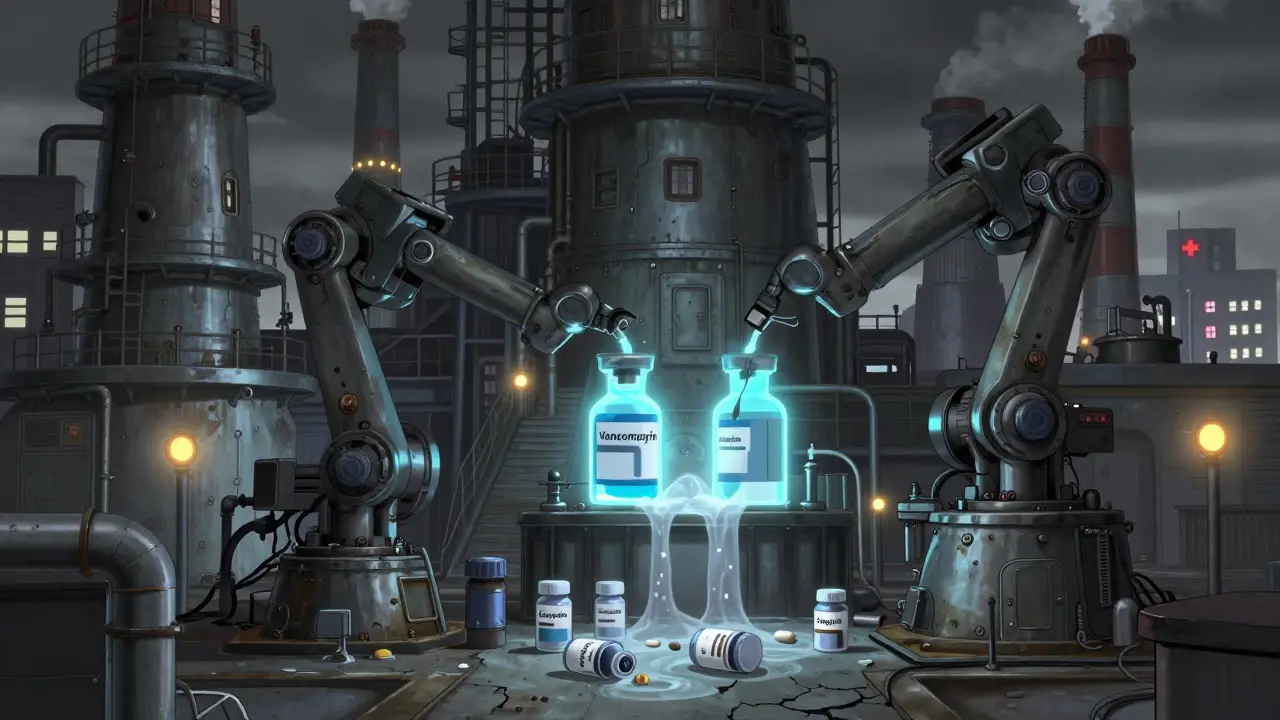
By early 2026, more than 270 generic drugs remain in short supply across the United States. That’s not a temporary glitch. It’s a systemic breakdown. These aren’t obscure medications either - they’re the pills and injections millions rely on every day: antibiotics like vancomycin, cancer drugs like cisplatin, pain relievers, IV fluids, and even basic electrolytes. When these drugs vanish from shelves, it’s not just an inconvenience. It’s a threat to patient safety.
Why Do Generic Drugs Keep Running Out?
It’s not one problem. It’s a chain reaction. Generic drugs make up 90% of all prescriptions filled in the U.S., but they earn less than 10% of the industry’s profits. Manufacturers often make just 5-10% gross profit on these drugs, compared to 30-40% on brand-name versions. That thin margin means there’s little room to invest in better equipment, backup systems, or quality control.
Many of these drugs are made in just one or two factories. About 70% of generic drugs have only one or two FDA-approved manufacturers, according to 2023 FDA data. If one facility shuts down for a quality issue - say, contamination or a failed inspection - there’s no backup. That’s what happened with vancomycin powder in 2024. One plant closed for months, and hospitals across the country scrambled for alternatives.
Then there’s the supply chain. Over 80% of the active ingredients in U.S. drugs come from China and India. A single flood, political shift, or export ban overseas can ripple through the system. In 2023, a raw material shortage in India delayed production of dozens of injectables for months. Even small delays add up because manufacturers operate with almost no extra stock. They make just enough to meet demand - no buffer, no safety net.
Why Are Injectables the Worst Off?
Sterile injectables - drugs given by IV or injection - make up about 60% of all drug shortages. Why? Because making them is hard. These drugs must be produced in ultra-clean rooms, with equipment sterilized to exacting standards. One speck of dust, one missed cleaning step, and the whole batch is ruined. That’s expensive. It requires specialized labs, trained staff, and constant monitoring.
And there’s little financial incentive to do it right. A bag of saline or a vial of antibiotics might sell for under $10. The cost to produce it? Maybe $8. That leaves almost nothing for maintenance, upgrades, or staffing. So when a plant’s autoclave breaks or a filter fails, the company can’t afford to fix it fast. They wait. And patients wait longer.
Who Gets Hurt the Most?
It’s not just hospitals. It’s the people in them.
One 2024 survey found that 89% of U.S. hospitals faced critical shortages that delayed treatments. Cancer centers were hit hardest. Sixty-seven percent reported changing chemotherapy plans because cisplatin or doxorubicin wasn’t available. Some patients got less effective drugs. Others had to wait weeks for treatment. A few didn’t get anything at all.
Pharmacists are drowning. One hospital pharmacist in Texas said they’ve been out of vancomycin for eight months. They’ve had to switch to alternatives that cost three times more and aren’t as effective. That means higher risk of infection, longer hospital stays, and more side effects.
At community pharmacies, 78% reported shortages forcing patients to abandon prescriptions. Some can’t afford the substitute. Others can’t get it because it’s also on backorder. One Reddit user wrote: “My dad needs insulin for his diabetes. We’ve been told it’s not available - not because we can’t pay, but because no one’s making enough.”
Why Can’t We Just Make More?
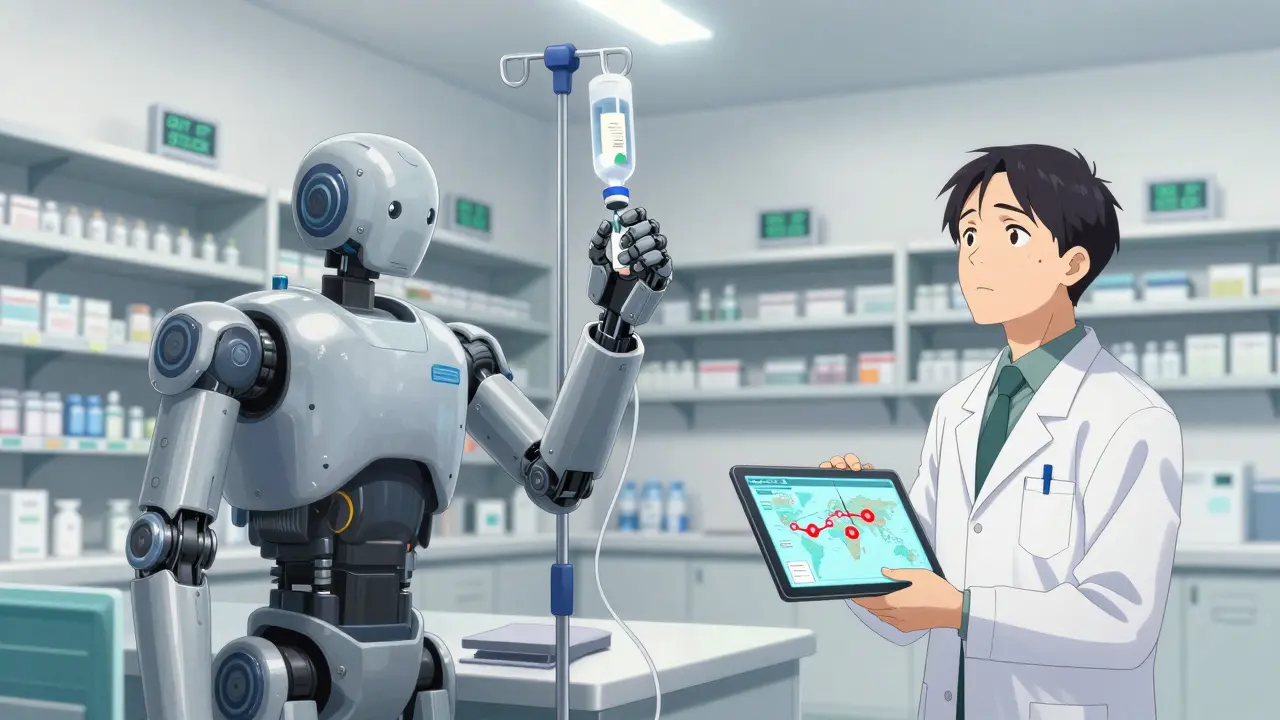
The number of U.S. facilities making generic drugs has dropped by 22% since 2015. From 1,842 registered factories to just 1,437. Why? Because it’s not profitable. Companies have consolidated. The top 10 manufacturers now control 60% of the market. That means fewer players, fewer factories, and more risk.
Even when companies want to expand, they face regulatory delays. FDA inspections for quality violations jumped 35% between 2020 and 2024. Many plants get shut down for minor issues - like dirty floors or uncalibrated machines - and can’t reopen for months. The FDA says 62% of shortages are caused by manufacturing and quality problems. That’s not bad luck. That’s a broken system.
What Happens When a Drug Disappears?
It’s not just about running out. It’s about the ripple effect.
When a generic drug vanishes, pharmacists spend 15-20 hours a week tracking down alternatives. They update electronic records, reprogram automated dispensers, call other hospitals, and train staff on new protocols. That’s time taken away from patient care.
And it’s expensive. Hospitals spent an estimated $213 million in 2024 just managing shortages - paying more for substitute drugs, hiring extra staff, and handling paperwork. That money comes out of budgets for nurses, equipment, or community health programs.
Price spikes are another problem. When a generic drug is scarce, its price can jump by 14.6% on average. Sometimes, the substitute drug costs three times more. A drug that used to cost $5 a dose might now cost $15 - and even then, it’s hard to get.
Is There Any Progress?
Yes - but it’s fragile.
In 2020, the government created the Essential Medicines List to prioritize critical drugs. Between 2020 and 2023, shortages of those drugs dropped by 32%. That shows policy can work.
The FDA now has a Drug Shortage Task Force pushing for four fixes: moving manufacturing to more countries, paying companies to keep reliable supply, using newer production tech like continuous manufacturing, and building better early-warning systems.
But experts warn these are band-aids. Dr. Valerie Malta from the University of Utah says: “The market doesn’t reward quality. It rewards the lowest price.” Until that changes, shortages will keep coming.
The Congressional Budget Office predicts shortages will hit 350 by the end of 2026 - unless Congress acts. Proposed tariffs on drug imports from China and India could make things worse. If those pass, sterile injectables like chemotherapy drugs and saline bags could become even harder to find.
What Can Be Done?
Real change needs policy, not just good intentions.
One idea: pay manufacturers a fair price for essential generic drugs - not the lowest bid. If a hospital pays $1 for a drug that costs $0.80 to make, that’s not sustainable. But if they pay $1.50, the company can afford quality control, backups, and maintenance.
Another: require manufacturers to keep at least 60 days of stock for critical drugs. Right now, they run lean to save money. That’s risky. A buffer could prevent most shortages.
And finally: bring manufacturing back to the U.S. or allied countries. It’s expensive, but it’s safer. Relying on distant factories for life-saving drugs is like building a house on sand.
Until then, patients, doctors, and pharmacists will keep living with uncertainty. And every time a drug disappears, someone’s health is on the line.

pradnya paramita
Generic drug shortages are a classic case of market failure in pharmaceutical economics. The current pricing model, driven by Medicaid rebate formulas and PBM negotiations, creates a race to the bottom where quality and redundancy are sacrificed for marginal cost savings. The FDA’s approval process, while rigorous, doesn’t incentivize redundancy-manufacturers aren’t penalized for single-point failures. What’s needed is a tiered pricing structure where essential injectables receive cost-plus reimbursement, not just lowest-bid procurement. This would enable capital investment in continuous manufacturing, which reduces batch failure rates by up to 40% according to a 2023 JAMA study. Without structural economic reform, we’re just rearranging deck chairs on the Titanic.
Caleb Sutton
The real reason these drugs vanish? The government pays pennies and then acts shocked when the product breaks. This isn’t a shortage-it’s a deliberate starvation of the supply chain to fund bigger corporate profits elsewhere. They want cheap pills but won’t pay for the infrastructure to make them safely. Wake up.
Jamillah Rodriguez
So basically, we’re all just one bad monsoon away from running out of antibiotics? 😔
Susheel Sharma
The systemic rot here is not merely economic-it’s epistemological. The entire paradigm of pharmaceutical production has been outsourced to a geopolitical periphery with zero regulatory alignment. The FDA’s inspection regime is a post-hoc audit mechanism, not a predictive safeguard. The 62% figure cited is not an anomaly-it’s the logical outcome of commodifying life-saving compounds. The solution? Nationalize production of critical injectables. Or better yet, adopt a public utility model akin to water or electricity. Anything less is moral negligence dressed as fiscal prudence.
Amit Jain
Simple truth: if you pay too little for something important, it breaks. Make the price fair, and factories will fix themselves. No magic needed.
Joy Johnston
Thank you for this comprehensive breakdown. As a hospital pharmacist, I can confirm the daily chaos: we spend more time sourcing drugs than counseling patients. The $213 million spent managing shortages could fund 1,200 new pharmacy tech positions. We need policy that recognizes the hidden labor cost of scarcity.
Janice Williams
This is all just socialist scaremongering. The market knows best. If a drug is in short supply, that means demand exceeds supply-raise the price. Let entrepreneurs respond. Why should taxpayers subsidize lazy manufacturers who can’t compete? This isn’t a crisis-it’s a market signal.
Rachel Kipps
My aunt had to wait 6 weeks for her chemo because cisplatin was out. She’s fine now, but it was terrifying. I didn’t realize how fragile this system is until I saw it up close. Thank you for writing this. It’s hard to believe something so basic is so broken.
Keith Harris
Oh please. The real villain is the FDA’s overreach. They shut down plants for dirty floors while letting Chinese factories ship contaminated batches for years. If you want drugs, stop micromanaging and start deregulating. Let the free market work-companies will innovate if they’re not being strangled by bureaucracy. This whole narrative is a distraction from the real problem: government interference.
Mandy Vodak-Marotta
Okay so imagine this: you’re a factory owner in India. You make a vial of saline for 80 cents. You sell it for $1. The hospital buys it, the insurance company pays 70 cents, and you’re left with 10 cents profit after taxes, shipping, and compliance. Now imagine your autoclave breaks. You don’t have $50k to replace it because your margins are thinner than a dollar bill. So you wait. And while you wait, your entire country’s ICU is on backup. And nobody’s mad at the $150M CEO who just bought a yacht. We’re not just broken-we’re upside down.
Roshan Gudhe
There’s a deeper question here: what do we value as a society? If we believe health is a human right, then we must stop treating life-saving drugs like commodities. The moment we reduce medicine to a line item on a spreadsheet, we lose our humanity. The factories aren’t failing because of poor management-they’re failing because we’ve convinced ourselves that a life-saving drug should cost less than a latte. We built this system to maximize profit, not preserve life. And now we’re surprised when it collapses under its own logic.
Harriot Rockey
This is why I’ve started keeping a small stockpile of essential meds at home-just in case. Not because I’m paranoid, but because I’ve seen what happens when the system fails. I hope we fix this soon. But until then, I’m grateful for the pharmacists who are holding it all together with duct tape and hope. 🙏