
When you pick up a generic pill at the pharmacy, you expect it to work just like the brand-name version. But how does the FDA know it actually does-especially after millions of people start taking it? The truth is, approval doesn’t mean the job is done. In fact, the real test begins once the drug hits the market. That’s where post-market surveillance comes in.
Why Generic Drugs Need Ongoing Monitoring
Generic drugs make up about 90% of all prescriptions filled in the U.S. That’s over 4 billion prescriptions a year. Most of these drugs were approved under the Hatch-Waxman Act of 1984, which lets manufacturers skip expensive clinical trials. Instead, they only need to prove bioequivalence: that their version delivers the same amount of active ingredient at the same rate as the original. But bioequivalence doesn’t guarantee identical behavior in every patient. A pill might be chemically the same, but differences in fillers, coatings, or how it breaks down in the gut can affect how it works-especially for complex drugs like inhalers, topical creams, or extended-release tablets. These are the ones that slip through the cracks during approval. That’s why the FDA doesn’t stop at signing off. It watches.The Systems That Watch Generic Drugs After Approval
The FDA doesn’t rely on guesswork. It uses three main systems to track what happens after a generic drug is sold:- FDA Adverse Event Reporting System (FAERS): This is the largest database of drug safety reports. Doctors, pharmacists, patients, and manufacturers can submit reports when someone has a bad reaction, a side effect that wasn’t listed, or if the drug seems to stop working. In 2023 alone, FAERS received over 1 million reports, with nearly 30% involving generic drugs.
- MedWatch: This is the FDA’s official portal for reporting problems with medical products. It’s not just for professionals-anyone can file a report online. A patient who feels dizzy after switching to a new generic version of their blood pressure pill can log it here. These reports are flagged, analyzed, and sometimes trigger deeper investigations.
- The Sentinel Initiative: Launched in 2008, Sentinel uses real-world data from over 200 million Americans. It pulls from insurance claims, electronic health records, and hospital databases to spot patterns. If a specific generic version suddenly shows more kidney-related hospital visits than others, Sentinel picks it up before any single report would have.
How the FDA Finds Hidden Problems
Most people think safety issues show up right after approval. But often, they don’t. That’s why the FDA does proactive screening. They don’t wait for reports. They mine data. For example, in 2022, OGD flagged a generic version of a blood thinner after noticing a 40% increase in reports of unexplained bruising compared to the brand-name version. The issue wasn’t the active ingredient-it was a coating that dissolved too slowly in some patients, delaying absorption. The FDA didn’t pull the drug. Instead, it updated the labeling to warn prescribers about timing and dosing. Another tool is unannounced inspections. The FDA sends inspectors to manufacturing plants without warning. They check if the generic drug is still being made the same way it was during approval. A change in the supplier of an inactive ingredient? A new machine that alters tablet hardness? These might seem small, but they can change how the drug behaves in the body.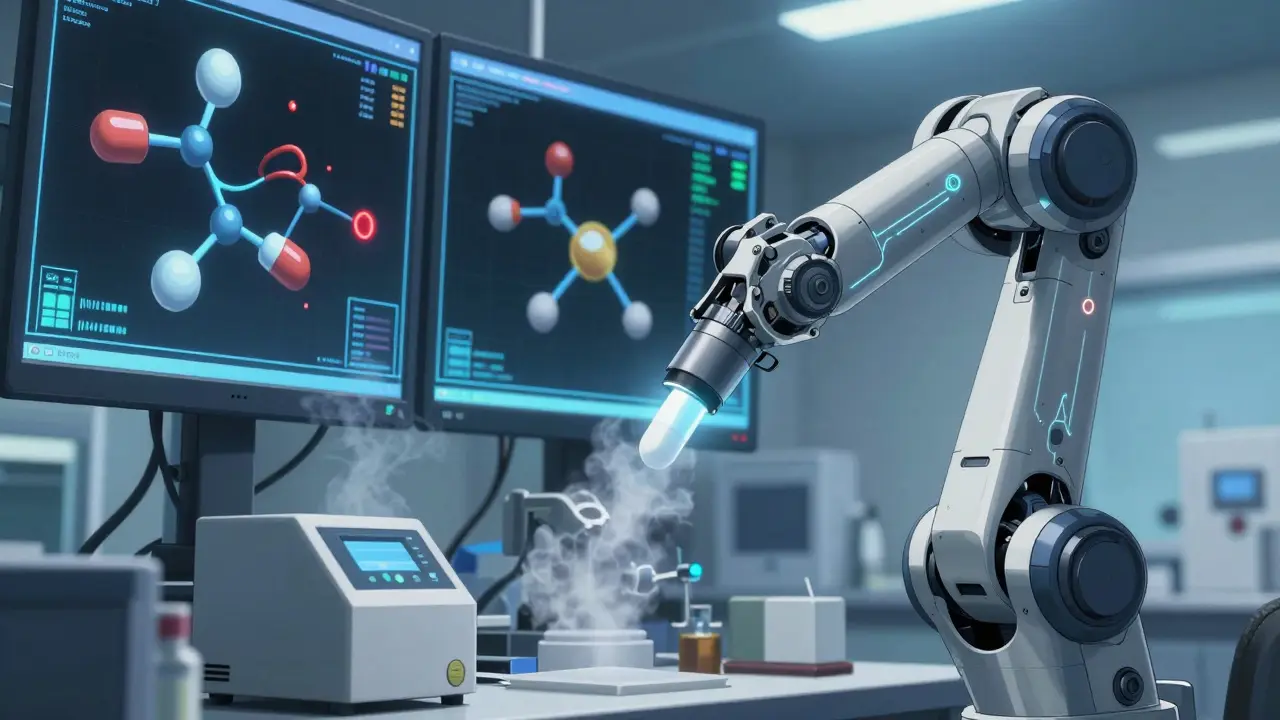
The Challenge of Complex Generics
Not all generics are created equal. Simple pills-like metformin or lisinopril-are easy to copy. But complex generics? Those are harder. Inhalers, topical creams, injectables, and extended-release tablets rely on more than just chemistry. Their delivery systems matter. A generic inhaler might have the same drug, but if the propellant or nozzle design is slightly off, it could deliver less medicine to the lungs. A topical cream might look identical, but if the base absorbs differently, the dose can vary. That’s why the FDA created the Center for Research on Complex Generics in 2020, partnering with universities to study these issues. A 2021 report from the National Academies found that for complex generics, bioequivalence alone isn’t enough. Real-world outcomes matter more.When Reports Don’t Tell the Whole Story
Here’s a tricky part: not every report means the drug is faulty. Take the nocebo effect. If a patient switches from a brand-name drug to a generic and starts feeling worse, they might blame the generic-even if the drug is identical. A 2019 JAMA study found that 15% of adverse event reports for generics were tied to perceived differences in effectiveness, not actual pharmacology. Patients might report side effects because they believe generics are inferior. Doctors, too, sometimes assume a problem is the drug when it’s actually the patient’s condition changing. That’s why the FDA doesn’t act on single reports. It looks for patterns. If 10 people report the same issue, that’s noise. If 1,000 do, especially across multiple manufacturers, that’s a signal.What Happens When a Problem Is Found
The FDA doesn’t rush to pull drugs. It has a ladder of responses:- Label updates: Add new warnings or usage notes. This happens in 60% of cases.
- Dear Healthcare Provider letters: These go out to doctors and pharmacists to alert them about emerging risks.
- Manufacturing inspections: If the issue is tied to a specific plant, inspectors are sent in.
- Voluntary recalls: Rare. Only if there’s clear evidence of harm.
- Regulatory action: If a manufacturer repeatedly fails to meet standards, the FDA can block future approvals.
The Future: AI and Real-Time Monitoring
The FDA is now investing in AI and machine learning to speed things up. Right now, it takes months to spot a trend. With AI, the goal is to cut that to weeks-or even days. In 2023, the FDA allocated $5.2 million to research AI tools that compare real-world outcomes between brand-name drugs and generics. One project is training algorithms to detect subtle shifts in hospitalization rates tied to specific generic batches. Another is using natural language processing to scan patient forums and social media for unreported concerns. Experts predict that by 2027, AI could reduce the time to detect safety signals for complex generics by 60-70%. That’s not just faster-it’s life-saving.What You Can Do
You don’t have to wait for the FDA to notice a problem. If you switch to a generic and feel different-worse side effects, less effectiveness, unusual reactions-report it. Use MedWatch. Tell your doctor. Your report might be the one that triggers the investigation. The FDA doesn’t have eyes everywhere. But with millions of reports, they can see patterns. And those patterns keep everyone safer.Do generic drugs have the same side effects as brand-name drugs?
Generic drugs contain the same active ingredient and are required to be bioequivalent to the brand-name version. That means they should cause the same side effects. But differences in inactive ingredients-like fillers or coatings-can affect how the drug is absorbed, which may lead to slightly different reactions in some people. If you notice new or worsening side effects after switching to a generic, report it.
Can a generic drug be recalled after approval?
Yes. While rare, recalls do happen. Most are voluntary and initiated by the manufacturer after the FDA identifies a safety issue. Common reasons include contamination, inconsistent potency, or manufacturing flaws that affect how the drug works. The FDA doesn’t recall drugs itself-it works with companies to do so.
How does the FDA know which generic manufacturer made a problematic drug?
Every drug package has a National Drug Code (NDC), which identifies the manufacturer, strength, and formulation. When a report is filed, the NDC is recorded. The FDA cross-references this with production records to trace the issue back to the exact plant and batch.
Are complex generics more dangerous than simple ones?
Not necessarily more dangerous, but harder to monitor. Simple generics (like tablets) are easier to match exactly. Complex ones-like inhalers, creams, or extended-release pills-depend on delivery systems. Small changes in formulation can affect how the drug is absorbed, which may lead to inconsistent results. That’s why the FDA treats them differently and is investing in better tools to track them.
Why doesn’t the FDA require full clinical trials for generics?
The Hatch-Waxman Act was designed to lower drug costs and increase access. Requiring full trials for every generic would delay availability and make drugs unaffordable. Instead, manufacturers prove bioequivalence-meaning the drug behaves the same way in the body. The FDA accepts this because over 15,000 generics have been approved since 1984, and the vast majority perform safely. Post-market surveillance fills the gap where clinical trials fall short.

Linda Franchock
So let me get this straight-we trust a pill made in a factory in India with a different filler to save us $100, but if it makes me feel like a zombie, it’s *my* fault for believing in the nocebo effect? 🤔
Also, why is the FDA’s ‘proactive screening’ always one step behind a bunch of Reddit threads and Facebook groups who figured it out first?
Jonathan Ruth
The FDA spends millions watching generics but lets Chinese factories pump out melatonin with lead dust and calls it a day. This is performative oversight. Real safety means border inspections not databases. Stop pretending this system works.
Liam Earney
I’ve been on generic lisinopril for eight years... and honestly? I swear the 2021 batch made me feel like I was underwater. My doctor said it was 'just stress.' But then I switched back to brand-suddenly, I could breathe again. I filed a MedWatch report. Nothing happened. Now I pay $18 out of pocket just to not feel like I’m drowning in my own skin. The system is designed to ignore the individual. It’s not broken-it’s intentional.
John Haberstroh
You know what’s wild? The FDA’s whole system is built on the idea that ‘bioequivalence = same effect.’ But the body isn’t a lab beaker. It’s a messy, emotional, sleep-deprived, coffee-addicted, stress-bomb of a biological machine. A pill that works for a 32-year-old athlete might turn a 70-year-old with kidney issues into a human ghost. The data misses the humanity. We’re treating biology like a spreadsheet.
Philip Blankenship
Honestly? I’m impressed. I thought generics were just cheap knockoffs. But learning about Sentinel and how they use real hospital data to catch patterns? That’s actually kind of brilliant. It’s like having a national health radar. I used to think the FDA was just bureaucracy... now I’m like, okay, maybe they’re not totally clueless.
Haley DeWitt
I switched to a generic seizure med last year and had two mini-seizures in one week. My neurologist said it was 'probably coincidence.' I cried. I filed a MedWatch report. Two weeks later, my pharmacy got a notice to switch me back. I didn’t even know that was a thing. Thank you, FDA. 🙏
PRITAM BIJAPUR
In India, we call this 'pharmaceutical karma.' We trust generics because we have to. But the real miracle isn’t the science-it’s the fact that millions take these pills daily, without knowing the batch number, without access to MedWatch, without even knowing what 'bioequivalence' means... and still, most survive. Maybe the system isn’t perfect-but human resilience? That’s the real surveillance system.
Steph Carr
So let me get this straight-my generic thyroid med works fine until I switch pharmacies, then suddenly I’m exhausted and crying in the shower? And the FDA says ‘check the NDC’? Honey, I don’t even know what an NDC is. I just know my therapist asked if I’d been ‘on something new.’
Also, why is no one talking about how the packaging changes? The pills look different. The pill bottle smells different. I feel like I’m being gaslit by Big Pharma.
Adam Short
America lets China make our medicine and then acts shocked when it doesn’t work. We outsource our health to factories with zero oversight and call it ‘free market.’ This isn’t surveillance-it’s negligence with a fancy acronym. Fix the supply chain or stop pretending you care.
Dennis Santarinala
I love that the FDA uses AI now. I used to think AI was just for robots and self-driving cars. But now? It’s watching my pills. That’s kinda beautiful. Like, imagine an algorithm noticing that 300 people in Ohio suddenly started having heart palpitations after switching to a generic beta-blocker... and then it alerts a doctor in Cleveland before anyone even calls in. That’s not just science. That’s care.
James Lloyd
The most underrated part of this entire system? The unannounced inspections. Most people think the FDA just sits at a desk reviewing paperwork. But they show up at factories without warning-sometimes in the middle of the night-with swabs, microscopes, and inspectors who’ve spent 20 years learning how a tablet’s hardness affects dissolution. That’s not bureaucracy. That’s craftsmanship. And it’s happening right now, in a warehouse in Gujarat or New Jersey, while you sleep.
Sam Pearlman
I used to be a skeptic. Then I worked in a pharmacy. Saw the same patient come in three times for the same generic. First time: ‘It’s not working.’ Second: ‘I feel weird.’ Third: ‘I think it’s the pills.’ We switched them back to brand. They cried. Said they hadn’t slept well in months. The FDA doesn’t have a ‘feelings’ database. But we do. And we’re the ones on the frontlines.
Tony Shuman
You know what’s funny? The FDA spends $5 million on AI to catch subtle differences in generic drugs... but won’t require them to use the same color as the brand-name version. Why? Because ‘it’s not scientifically relevant.’ But ask any patient-they’ll tell you: if the pill looks wrong, it feels wrong. Psychology isn’t noise. It’s data. And the FDA ignores it because it doesn’t fit the model.