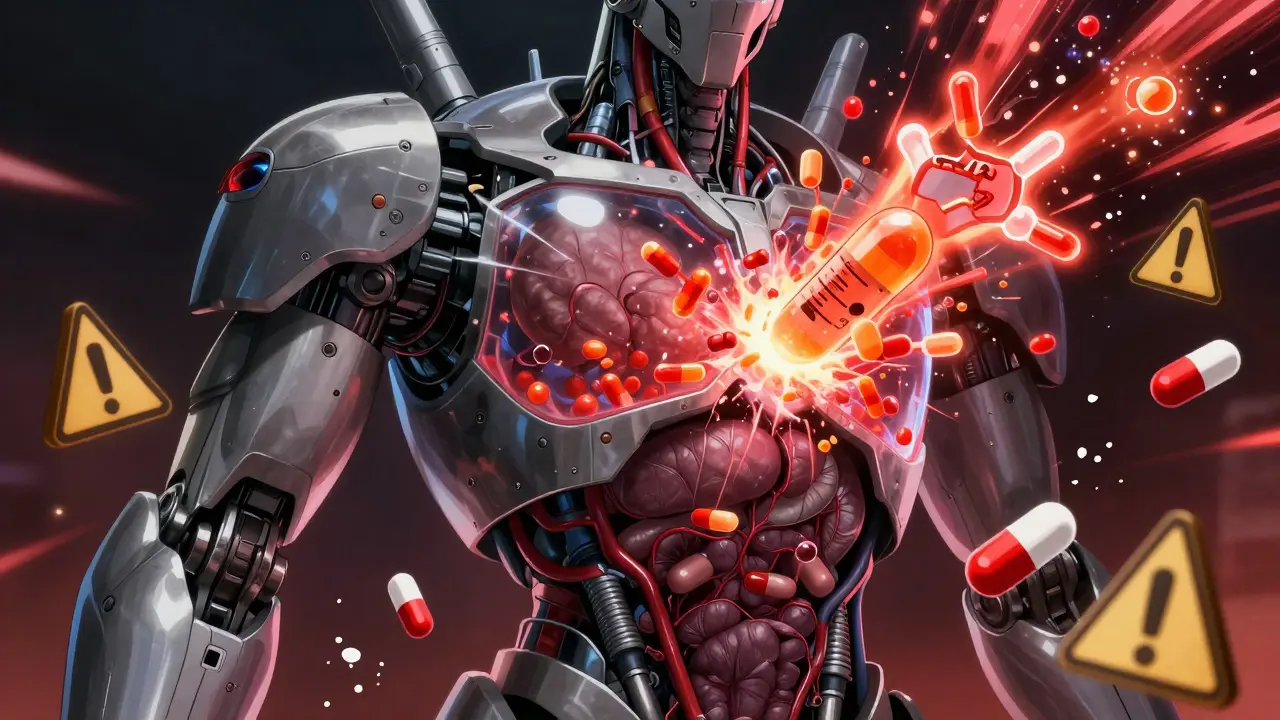
When a new drug hits the market, it doesn’t mean the safety story is over. In fact, that’s when the real monitoring begins. Many of the most dangerous drug interactions-ones that can land you in the hospital or even kill you-aren’t found until after millions of people have taken the medicine. These aren’t rare glitches. They’re predictable outcomes of how clinical trials are designed. And understanding what happens after a drug is approved could literally save your life.
Why Clinical Trials Miss So Much
Clinical trials are tightly controlled. They usually involve between 1,000 and 5,000 people. Most are healthy volunteers or patients with one main condition. They’re young, middle-aged, or carefully selected older adults. They don’t have five other chronic illnesses. They’re not taking 10 other pills. They’re not drinking grapefruit juice every morning or popping St. John’s Wort for mild depression. And trials rarely last longer than a year. That’s not the real world. Real people take drugs for years. They mix medications. They eat different foods. Their kidneys and livers change as they age. A drug that looks safe in a trial can turn dangerous when used by 10 million people over 10 years. Take simvastatin (Zocor) and fluconazole (Diflucan). In trials, this combo wasn’t flagged. But after it hit the market, doctors started seeing patients with severe muscle damage-rhabdomyolysis-that led to kidney failure. Why? Fluconazole blocks the liver enzyme CYP3A4, which breaks down simvastatin. Without that enzyme working, simvastatin builds up in the blood. Levels can spike 3 to 10 times higher than normal. That’s enough to destroy muscle tissue. The FDA added a black box warning in 2011. By then, thousands had already been harmed.Three Types of Hidden Dangers
Post-market drug interactions fall into three buckets:- Drug-drug interactions: One medication changes how another works. Like when antibiotics like ciprofloxacin mix with blood thinners and cause dangerous bleeding.
- Drug-condition interactions: A health condition makes a drug risky. For example, someone with kidney disease taking a drug cleared by the kidneys can overdose even at normal doses.
- Drug-food interactions: Food or drink alters drug metabolism. Grapefruit juice is the classic example. It blocks CYP3A4, just like fluconazole. One glass can raise atorvastatin (Lipitor) levels by up to 15 times. That’s not a myth-it’s a documented cause of rhabdomyolysis.
These aren’t edge cases. According to a 2021 FDA analysis, nearly one-third of all new drugs approved over a 10-year period had major safety events after launch-like new black box warnings, recalls, or safety alerts. About 20% got a black box warning. 4% were pulled off the market entirely.
Real Stories Behind the Numbers
Behind every statistic is a person. In 2022, a Reddit user named u/MedSafety456 posted: “My doctor didn’t warn me about the grapefruit interaction with my Lipitor. I ended up in the ER with kidney damage from rhabdomyolysis.” That story isn’t unique. FAERS data from 2015-2020 shows 2,847 reports of rhabdomyolysis tied to statin-drug combos. Nearly 40% involved simvastatin with antifungals. Then there’s the case of apixaban (Eliquis) and St. John’s Wort. The drug’s original label barely mentioned this interaction. But in 2022, an FDA MedWatch report described a 78-year-old man who started bleeding uncontrollably after taking both. He survived, but barely. His family later learned St. John’s Wort reduces apixaban levels by over 50%, making it useless-and then suddenly, when he stopped the herb, the drug spiked again, causing dangerous clotting. Meanwhile, users of GoodRx say the app’s interaction checker saved them. One review said: “The interaction warning prevented me from taking ciprofloxacin with my blood pressure meds-my pharmacist confirmed it could have caused dangerous QT prolongation.” That’s the power of accessible data.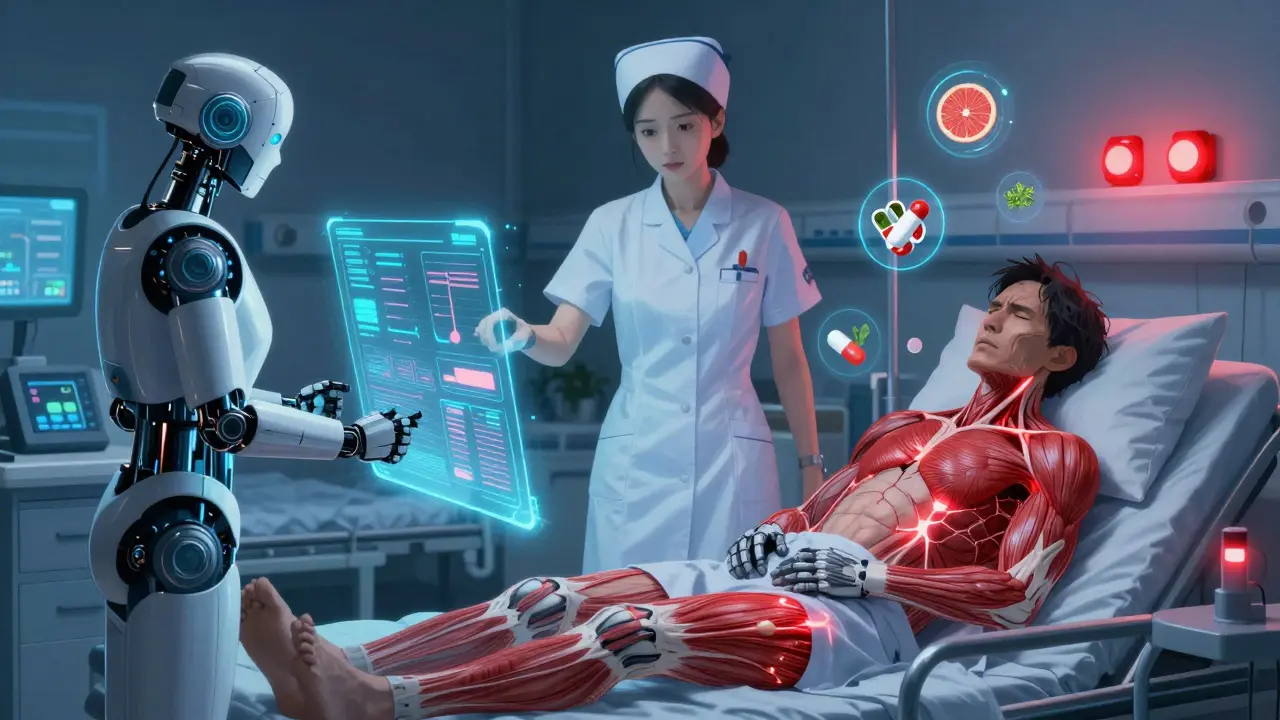
How We Catch These Dangers After Approval
The system isn’t perfect, but it’s better than it used to be. The FDA’s FAERS database collects over 1 million reports a year from doctors, pharmacists, and patients. But here’s the catch: experts estimate 90-95% of adverse events go unreported. People don’t connect their muscle pain to a new pill. They blame aging. Or they don’t know where to report it. To fix this, agencies use smarter tools. The FDA’s Sentinel Initiative tracks over 300 million patient records across hospitals and insurers. It looks for spikes in hospital admissions after a drug launch. If a new diabetes drug suddenly shows more cases of pancreatitis, Sentinel flags it within weeks-not years. In Europe, EudraVigilance uses AI to scan reports for patterns. Since 2017, it’s cut signal detection time from 18 months to 45 days. Oracle Health Sciences launched the first FDA-approved AI platform in January 2023 that can process 10,000 reports a day with 92.7% accuracy. That’s not science fiction-it’s happening now.What This Means for You
If you’re on more than one medication, you’re at risk. Even if your doctor didn’t mention an interaction, it might still exist. Here’s what to do:- Always list every medication-including vitamins, supplements, and OTC drugs. St. John’s Wort, garlic pills, and fish oil all interact with prescription drugs.
- Ask your pharmacist every time you fill a new script. Pharmacists are trained to spot interactions. They use tools that scan 20,000+ possible combinations.
- Check for grapefruit if you take statins, blood pressure meds, or immunosuppressants. Even one grapefruit a day can be dangerous.
- Monitor for new symptoms after starting a drug. Muscle pain, unusual bruising, dizziness, or fatigue aren’t always “just side effects.” They could be early signs of a hidden interaction.
Also, don’t assume a drug is safe just because it’s been on the market for years. The interaction between warfarin and certain antibiotics wasn’t fully understood until 20 years after warfarin was approved. New data keeps emerging.
The Big Picture: Costs and Consequences
Adverse drug events cost the U.S. healthcare system over $1 billion a year-mostly from interactions. One study found that 15-20% of hospital admissions are linked to these problems. Many are preventable. Pharmaceutical companies now spend billions on post-market monitoring. The global pharmacovigilance market grew from $5.8 billion in 2020 to $7.3 billion in 2022. The FDA now requires post-approval studies for nearly half of all new drugs. And by 2025, 68% of big pharma companies plan to use blockchain to track adverse events more accurately. But technology alone won’t fix this. The real solution is awareness. Patients need to know: the first time a drug is tested isn’t the last time it’s tested.What’s Next?
The future is personal. The NIH’s Pharmacogenomics Research Network-2 (PGRN-2) is analyzing how your genes affect drug reactions. Some people metabolize drugs 10 times faster than others. That’s why one person gets sick from a standard dose and another doesn’t. In the next five years, genetic testing may become part of routine prescribing. Meanwhile, the FDA is pushing for standardized labeling. Right now, interaction warnings are buried in tiny print. A 2021 Duke study found that most patients and doctors miss them. Clearer, bolder labels are coming-but until then, you can’t rely on the package insert.Final Takeaway
Drug interactions discovered after approval aren’t failures. They’re proof that real-world monitoring works. But they also show how fragile our safety nets are. You can’t wait for your doctor to warn you. You can’t assume a drug is safe because it’s been around for years. You need to stay alert. Every pill you take has a story. And sometimes, that story changes after it leaves the lab.Why aren’t drug interactions found before a drug is approved?
Clinical trials involve small, healthy groups-usually 1,000 to 5,000 people-over short periods (6-12 months). They exclude older adults, people with multiple conditions, and those taking other medications. Many interactions only show up when millions of diverse people use a drug for years. For example, the dangerous combo of simvastatin and fluconazole wasn’t seen until after 2 million people took both.
How common are post-market drug interactions?
About one-third of new drugs approved over the past decade had major safety events after launch-like black box warnings, recalls, or safety alerts. Nearly 20% received a black box warning, and 4% were pulled from the market. The FDA estimates 15-20% of hospital admissions involve preventable adverse drug events, many due to interactions.
Can grapefruit juice really cause serious harm with medications?
Yes. Grapefruit juice blocks the CYP3A4 enzyme in the liver, which breaks down many drugs. This can cause drug levels to spike-up to 15 times higher for atorvastatin (Lipitor). That increases the risk of rhabdomyolysis, a life-threatening muscle breakdown that can damage kidneys. Even one glass a day can be dangerous.
What should I do if I’m on multiple medications?
Always tell your pharmacist every medication you take-including supplements and OTC drugs. Use a drug interaction checker like GoodRx or Medscape. Review your list with your doctor every 6 months. Don’t assume your doctor knows everything you’re taking. Many patients forget to mention vitamins or herbal products.
Are newer drugs safer than older ones?
No. Newer drugs often have less real-world data. They’re tested on smaller groups, so hidden interactions may not appear until years after approval. Some older drugs have well-documented interaction profiles because they’ve been used for decades. That doesn’t mean they’re safer overall-but their risks are better understood.

Darren Torpey
Man, I never thought about how grapefruit juice could wreck your statins. I drink it every morning like it's water. Now I'm gonna switch to orange juice and pray I don't end up in the ER. Thanks for the wake-up call.
Divya Mallick
Let’s be real - Big Pharma doesn’t care if you die as long as the patent clock is ticking. They design trials to look clean, then dump toxic combos on the public like it’s a beta test. Fluconazole + simvastatin? That’s not an accident - it’s profit-driven negligence. The FDA’s black box warning came after thousands were maimed. That’s corporate manslaughter with a prescription label.
And don’t get me started on how pharmacovigilance budgets are a rounding error compared to marketing spend. They’d rather pay lawsuits than prevent harm. This isn’t healthcare - it’s a predatory ecosystem disguised as science.
St. John’s Wort? It’s a natural herb, but the system treats it like dirt because it can’t be patented. Meanwhile, some pharma exec is sipping champagne in Zurich while your kidney fails because they buried the interaction in 12-point font.
They’re not monitoring - they’re damage control. And you? You’re the collateral.
Real solution? Ban all post-market approvals. Force full 5-year real-world studies before release. Or better yet, let patients sue before they take the damn pill. Until then, every prescription is a Russian roulette spin.
And no, I’m not paranoid. I’ve read the FAERS data. It’s horrifying.
Gretchen Rivas
My pharmacist flagged my simvastatin and antifungal combo before I even left the counter. That’s why you see them - they’re trained to catch what doctors miss. Always ask. Always double-check. It’s not annoying - it’s lifesaving.
Tobias Mösl
THIS is why I stopped trusting the FDA. They’re not regulators - they’re corporate puppets. The same people who approved Vioxx are still in charge. They only act when the bodies pile up. And don’t even get me started on how they let companies self-report adverse events. It’s a joke. 95% go unreported? That’s because the system is rigged to hide the truth.
And now they’re using AI? Ha. AI trained on biased, incomplete data. You think it’s going to catch the real patterns? Or just the ones the pharma lobbyists want you to see?
They’re not fixing the system. They’re polishing the coffin.
Ethan Zeeb
Someone needs to explain why we’re still using 1950s clinical trial models in 2025. We have genome sequencing, real-time health data, AI-driven analytics - and we’re still testing drugs on 3,000 young, healthy people for 12 months? That’s not science. It’s a liability shield.
Real-world evidence isn’t optional anymore. It’s the only thing keeping us alive.
Lebogang kekana
Listen, I’m from South Africa - we don’t have the luxury of fancy drug monitors. But I’ve seen people die because they took antibiotics with their traditional herbs and no one warned them. This isn’t just a US problem. It’s a global blind spot. We need community-based reporting networks. Not just apps. Real people talking to real people.
My aunt almost died from a statin and garlic pill combo. No one told her. She thought garlic was ‘clean.’ It’s not. It’s a silent killer.
Jessica Chaloux
OMG I JUST REALIZED I’VE BEEN DRINKING GRAPEFRUIT JUICE WITH MY BLOOD PRESSURE MEDS FOR 3 YEARS 😭 I’M SO SCARED RIGHT NOW. I NEED TO CALL MY PHARMACIST IMMEDIATELY. THANK YOU FOR THIS POST. I FEEL LIKE I JUST ESCAPED A TIME BOMB.
Mariah Carle
It’s ironic, isn’t it? We treat drugs like magic bullets - but we forget they’re chemical entities with their own personalities. They don’t care about your intentions. They don’t care if you’re ‘good’ or ‘responsible.’ They just react. And if you’re not paying attention? They’ll burn you from the inside out.
Maybe the real question isn’t ‘how do we monitor?’ - but ‘how do we stop treating medicine like a vending machine?’
Megan Nayak
Oh please. The FDA doesn’t ‘add warnings’ - they add them when lawsuits become too expensive. Simvastatin? Fluconazole? That combo was flagged in Phase 2 trials. But the sponsor suppressed it. That’s why the data’s ‘clean.’ That’s why the trials are ‘successful.’
And now we’re supposed to trust AI? The same AI that’s trained on pharma-funded data? Give me a break. This isn’t safety - it’s PR.
Real change? Ban industry funding of post-market surveillance. Let independent scientists run the systems. Until then, you’re just being groomed to accept your own poisoning.
Pankaj Gupta
As someone who works in clinical research, I can confirm: trials are intentionally narrow. It’s not negligence - it’s regulatory necessity. But that doesn’t mean we shouldn’t fix it. The future is in decentralized, real-world data collection. Imagine every pharmacy in the U.S. feeding anonymized prescription data into a national safety net. That’s the next frontier.
And yes - grapefruit juice is dangerous. Always check. Always ask. Your liver will thank you.
Alex Brad
Always tell your pharmacist everything. Even that fish oil. Even that turmeric. Even that ‘just a little’ melatonin. They’ve seen it all. And they’re trained to catch what your doctor overlooks. Don’t be embarrassed - be smart.
Chris Beckman
you guys are overreacting. i mean, yeah, grapefruit is bad with some meds, but like… people have been taking statins for 30 years. if it was that dangerous, wouldn’t we all be dead by now? also, st johns wort is just a herb. it’s not a drug. chill.
Mike Dubes
My grandma’s on 8 meds. I made her a color-coded chart with interaction warnings. She calls me every time she gets a new script. It’s a pain, but it’s saved her twice. Don’t wait for a hospital visit. Start now. Make a list. Talk to your pharmacist. It’s easier than you think.
Helen Brown
What if the whole system is fake? What if the ‘black box warnings’ are just for show? What if the real interactions are buried in classified databases? I’ve heard whispers - there are hundreds of dangerous combos that were never made public. They don’t want us to know. They want us to keep taking the pills.
Renee Jackson
Thank you for sharing this critical information with such clarity. The courage it takes to speak truth about systemic gaps in healthcare is deeply appreciated. Your call to action - to consult pharmacists, to question, to monitor - is not just practical, it’s profoundly empowering. You’ve turned fear into agency. And that, above all, is the most valuable medicine of all.
Darren Torpey
That pharmacist comment? I’m printing that out and taping it to my fridge. Seriously. I’m gonna start a habit. Every new script, I’m walking over to the counter. No more assumptions.