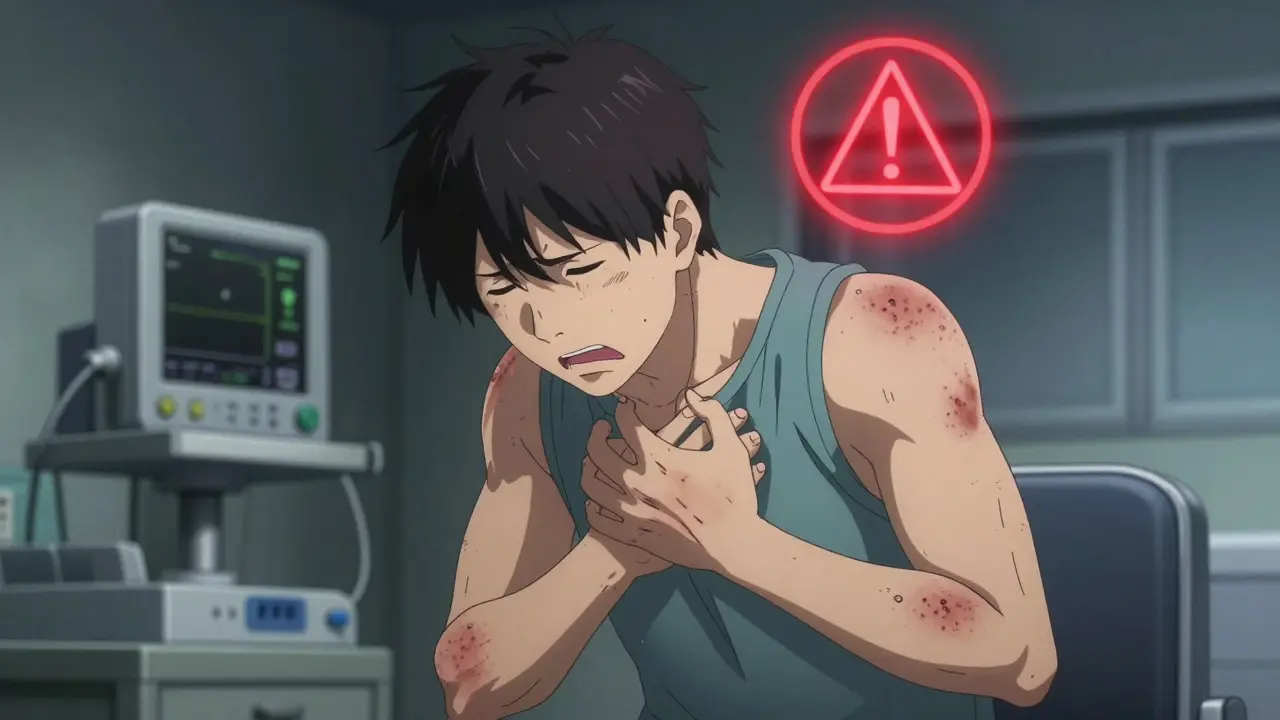
It’s easy to assume that if you’re taking a medication as prescribed, everything’s fine. But that’s not always true. Some side effects are annoying but harmless-like a dry mouth or a little drowsiness. Others? They can be life-threatening. The key is knowing which is which. And knowing when to act.
Every year in the U.S., over 100,000 people die from serious medication reactions. Many of these deaths could have been prevented if someone had called their doctor sooner. You don’t need to be a doctor to spot the warning signs. You just need to know what to look for.
What Counts as a Red Flag?
Not every weird feeling means something’s wrong. Nausea after antibiotics? Common. Diarrhea after amoxicillin? Happens to a quarter of people. Dry mouth from antihistamines? Normal. These are side effects-annoying, maybe, but not dangerous.
But red flags? Those are different. They’re your body screaming for help. Here’s what you should never ignore:
- Difficulty breathing-even if it’s just a little tightness in your chest. This isn’t just "feeling winded." If you’re struggling to get air in, it’s an emergency.
- Hives-red, raised, itchy welts that appear suddenly. If they show up within minutes or hours of taking a pill, that’s a major red flag.
- Swelling of your face, lips, tongue, or throat-this can happen fast. If your lips feel thick, or your tongue feels too big for your mouth, don’t wait. Call 911.
- Wheezing or a tight feeling in your throat-like someone’s squeezing your windpipe. This often goes hand-in-hand with breathing trouble.
- Fainting or feeling like you’re about to pass out-especially if you haven’t stood up too fast or skipped a meal. This could mean your blood pressure has crashed.
- Blisters on your skin or inside your mouth-this isn’t a regular rash. Blisters, peeling skin, or sores in your eyes, nose, or mouth could mean Stevens-Johnson Syndrome or toxic epidermal necrolysis. These are rare but deadly. Mortality rates? Between 5% and 35%. If you see this, go to the ER immediately.
- Severe nosebleeds-not just a little drip. If you’re bleeding for more than 15 minutes, or if it’s happening often while you’re on blood thinners like warfarin or apixaban, call your doctor today.
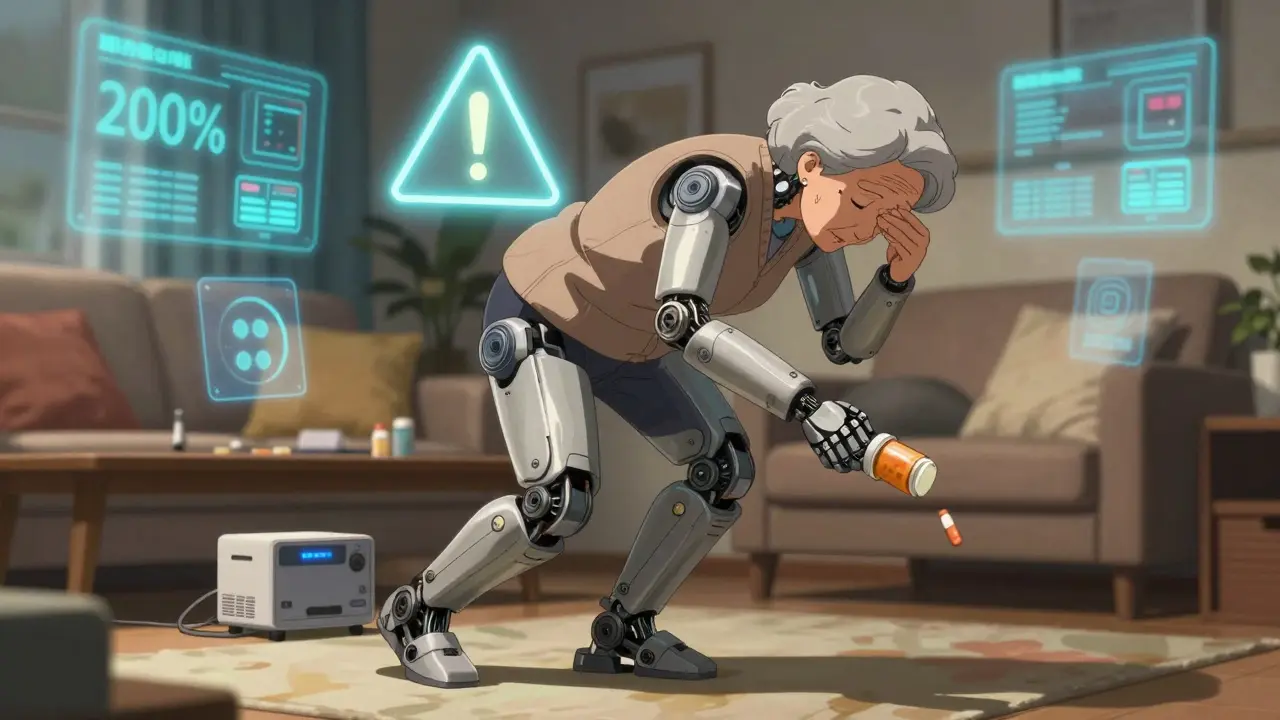
- Dizziness that makes you fall-especially if you’re over 65. Dizziness increases fall risk by 200%. One fall can lead to a broken hip, hospitalization, or worse.
- Symptoms that get worse over time-even if they started mild. A headache that started as a 3/10 and is now an 8/10? A rash that spread from your arm to your chest? That’s not normal progression.
These aren’t "maybe" situations. They’re clear signals: stop what you’re doing and get help now.
What to Do When You See a Red Flag
Don’t wait. Don’t text your doctor. Don’t wait until morning. If you’re having trouble breathing, swelling, or blisters-call 911 or your local emergency number. These reactions can kill in minutes.
For other red flags-like severe dizziness, nosebleeds, or worsening symptoms-call your doctor right away. Don’t wait for your next appointment. Many practices have a 24/7 nurse line. Use it.
And here’s the biggest mistake people make: stopping their medication on their own. If you feel weird, you might think, "I’ll just quit the pill." But for chronic conditions-like high blood pressure, diabetes, or depression-stopping without guidance can be just as dangerous as the side effect. In fact, 50% of treatment failures for long-term illnesses come from patients quitting meds too soon.
The rule? Keep taking your medication unless you have signs of anaphylaxis or blistering skin reactions. Call your doctor first. They’ll tell you if you need to stop, adjust, or switch.
Minor Side Effects? Keep Taking It
Let’s be clear: most side effects aren’t emergencies. You can live with them. And you should keep taking the medicine.
- Nausea? Try taking the pill with food.
- Constipation from opioids? Drink more water, move around, ask about stool softeners.
- Drowsiness from antihistamines? Switch to a non-drowsy version-there are plenty.
- Rash? It might be harmless. But if it spreads or itches, call your doctor. Don’t assume.
Harvard Health says if a side effect bothers you for more than 48 hours, or if it’s stopping you from doing daily things-like working, sleeping, or walking the dog-then it’s time to talk to your provider. You shouldn’t have to suffer just because "it’s normal."
Track Your Symptoms
When you call your doctor, don’t say, "I feel weird." Give them details. The more specific you are, the faster they can help.
Keep a simple log:
- What symptom? (e.g., "tingling in fingers," "heart racing")
- When did it start? (e.g., "30 minutes after taking my morning pill")
- How long did it last? (e.g., "2 hours, then faded")
- How bad was it? (Rate it 1-10)
- Did anything make it better or worse? (e.g., "ate food, felt better," "stood up, got dizzy")
A 2022 Lancet study found that patients who kept this kind of diary improved diagnostic accuracy by 65%. That means your doctor gets the right answer faster-and you get the right treatment sooner.
Why Reporting Matters
You’re not just helping yourself when you report a side effect. You’re helping everyone else too.
The FDA’s MedWatch program gets about 1.3 million reports every year. About 15-20% of those come from patients like you. These reports led to 200-300 label changes and 15-20 drug recalls in 2023 alone.
Some side effects only show up in thousands or millions of people. Clinical trials test drugs on a few thousand. But real-world use? That’s millions. Your report could be the one that catches a rare, deadly reaction before it kills someone else.
Reporting is easy. Go to fda.gov/medwatch (or call 1-800-332-1088). Fill out the form. You don’t need to be a doctor. Just tell them what happened.

What’s Changing in 2025
The FDA is making side effect information easier to understand. Starting January 1, 2025, all new medication guides must use plain language. No more medical jargon. Just clear warnings: "This can cause severe skin reactions. Stop taking it and get help if you see blisters."
Pharmacies are already handing out these guides. If you don’t get one with your prescription, ask for it. Read it. Keep it. It’s your safety manual.
And systems like the FDA’s Sentinel Initiative are now monitoring over 300 million patient records in real time. They caught a diabetes drug increasing heart failure risk within six months-something that used to take years. That’s because patients spoke up.
Final Rule: When in Doubt, Call
You don’t need to be an expert. You don’t need to Google every symptom. If something feels off, if it’s new, if it’s getting worse, if it’s scaring you-call your doctor.
It’s better to call and find out it’s nothing than to wait and find out it’s everything.
Medication saves lives. But only if it’s used safely. And safety starts with you.
What should I do if I think I’m having an allergic reaction to my medication?
If you have trouble breathing, swelling in your face or throat, hives, or feel like you’re going to pass out, call 911 or your local emergency number immediately. These are signs of anaphylaxis-a life-threatening reaction. Do not wait. Do not drive yourself. Use an epinephrine auto-injector if you have one. Then call for help.
Should I stop taking my medication if I get a rash?
Not necessarily. A mild, itchy rash that appears a few days after starting a new medication is common-especially with antibiotics. But if the rash spreads quickly, turns into blisters, or is accompanied by fever or mouth sores, stop the medication and call your doctor right away. Those could be signs of Stevens-Johnson Syndrome, which needs urgent treatment.
I’ve been dizzy since I started my blood pressure pill. Should I be worried?
Dizziness in the first week is common as your body adjusts. But if it lasts longer than 72 hours, gets worse, or causes you to stumble or fall, call your doctor. Dizziness increases fall risk by 200% in older adults. Your dose may need adjusting-or you may need a different medication.
Can I report a side effect even if I’m not sure it’s related to my medication?
Yes. The FDA encourages anyone to report side effects-even if you’re unsure. You don’t need proof. Just describe what happened, when, and what you were taking. Your report could help identify a pattern that others missed. Over 1.3 million reports are filed each year, and many lead to important safety updates.
I’m on a blood thinner and had a nosebleed that wouldn’t stop. What should I do?
If the bleeding lasts more than 15 minutes, or if you’re bleeding frequently and heavily, call your doctor immediately. This could mean your blood is too thin. Your provider may check your INR level (for warfarin) or adjust your dose. Don’t wait until your next appointment-this is urgent.
I feel fine, but my medication’s label says it can cause liver damage. Should I stop taking it?
No. Most people never develop liver damage from these medications. The label is there to inform you, not scare you. But do get periodic blood tests as your doctor recommends. If you notice yellowing skin, dark urine, or constant nausea, call your provider. Otherwise, keep taking it as prescribed.
I’ve been taking my medication for years and just started having side effects. Why now?
Your body changes over time. Liver and kidney function slow down with age. Other medications you’ve started can interact. Even your diet or supplements can affect how your body processes drugs. What was safe for 10 years isn’t always safe now. Talk to your doctor-don’t assume it’s "just aging."
Is it safe to keep taking my medicine if I have mild nausea?
Yes. Mild nausea is one of the most common side effects and usually fades after a few days. Try taking the pill with food or at bedtime. If it lasts longer than 48 hours or prevents you from eating, call your doctor. But don’t stop the medicine unless they tell you to.

Jeff Card
My grandma started a new blood pressure med last month and got dizzy as hell. Thought it was just old age-turns out her dose was way too high. Called her doc, they cut it in half, and now she’s back to gardening. Don’t ignore dizziness. It’s not "just part of getting older."
Darren Torpey
Bro this post is like a superhero manual for your body. 🦸♂️ I used to think "side effects" meant "eh, I’ll tough it out." Then I got hives from amoxicillin and nearly died. Now I carry my epipen like it’s my phone. If your body screams, you don’t ask for permission-you call 911. Period.
Milad Jawabra
STOP. RIGHT. NOW. If you think you can "just wait and see" with swelling or breathing issues-you’re playing Russian roulette with your life. I lost my cousin because he waited "until morning." He didn’t make it to noon. Don’t be that guy. If your lips feel like balloons, CALL. EMERGENCY. NOT. YOUR. DOCTOR. IN. THE. MORNING.
Jessica Chaloux
I’ve been on antidepressants for 8 years. Last month I got this weird tingling in my fingers… I cried for 3 hours because I thought I was dying. 😭 Then I called my nurse line and they said "probably harmless." I felt so stupid. But also… grateful? Idk. I just needed someone to say it’s not all in my head.
marjorie arsenault
For anyone scared to call their doctor because they "don’t want to bother them"-here’s the truth: your doctor wants to hear from you. They’d rather you call 10 times than not call once. I work in a clinic. We get calls like this every day. We don’t mind. We’re here to help. Seriously. Pick up the phone.
Matt Alexander
Simple rule: if it’s new, bad, and getting worse-call. Doesn’t matter if it’s 2am. Your phone call might save your life. I used to think doctors were too busy. Then I saw a guy come in with blisters from a common antibiotic. He was in the ER before lunch. They saved him. Don’t wait. Just call.
Deborah Dennis
I can’t believe people still don’t know this. Seriously? You need a 2,000-word post to tell you not to ignore hives? I mean… come on. We’re talking about medicine here. Not rocket science. You’re not a child. Stop Googling symptoms. Call your doctor. Or don’t. I’m not your mom.
Ethan Zeeb
My mom took her blood thinner for 6 years. Never had an issue. Then one day she had a nosebleed that wouldn’t stop. She didn’t call. Thought it was "just dry air." Next thing you know, she’s in the hospital with a hematoma. She’s fine now. But I’ll never let someone I love ignore a red flag again. If it’s bleeding-call. Always.
Lebogang kekana
Bro, this is life or death. Not a game. I saw a man collapse in the pharmacy because he ignored swelling after a new pill. They rushed him to the ER. He was dead before they got him inside. His wife said he "didn’t want to make a fuss." I cried for three days. Don’t be that guy. Your silence doesn’t protect anyone. It kills.
Mariah Carle
It’s funny how we’re taught to trust science… but then panic when our body speaks. We’ve been conditioned to believe pain is weakness, discomfort is failure. But your body isn’t broken-it’s trying to tell you something. Maybe the real red flag isn’t the side effect… it’s that we’ve forgotten how to listen.