
When a doctor writes a prescription, they’re not just choosing a medicine-they’re making a decision that affects trust, cost, and outcomes. And when it comes to generic drugs, many doctors still have doubts. Even though generics make up over 90% of prescriptions filled in the U.S., only about one-third of physicians consistently prescribe them as first-line treatment. Why? It’s not about cost. It’s about perception.
What Doctors Actually Believe About Generic Drugs
A lot of doctors think generics are just as good. But a surprising number don’t. In one 2017 study of 134 physicians in Greece, more than a quarter said they believed generic drugs were less effective than brand-name versions. Another study found 27.3% of doctors questioned whether generics were truly therapeutically equivalent. These aren’t fringe opinions-they’re common enough to impact patient care.
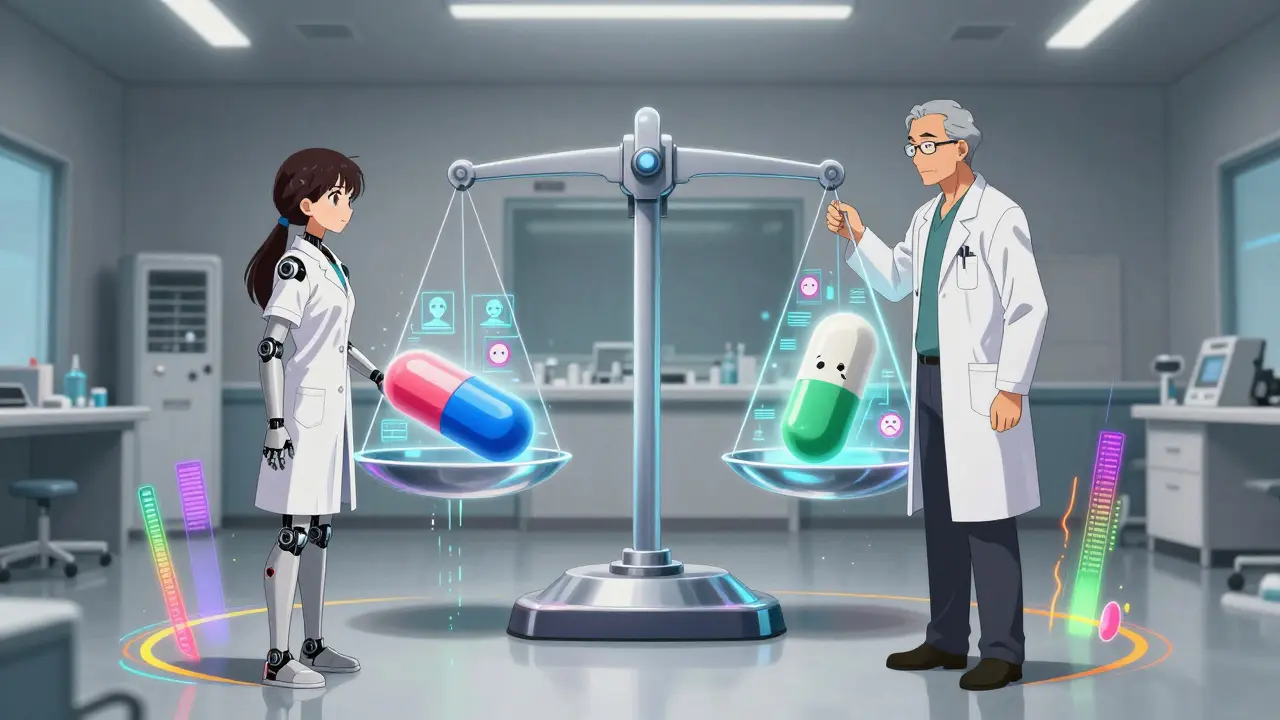
Some of these beliefs are rooted in real experiences. A number of doctors report cases where switching a patient from a brand-name drug to a generic led to unexpected side effects or loss of symptom control. Levothyroxine and warfarin are two drugs that come up often in these stories. Because they have a narrow therapeutic index-meaning the difference between an effective dose and a harmful one is small-even tiny variations in absorption can matter. While bioequivalence standards say generics must perform within 80-125% of the brand, some doctors say that range is too wide to be safe for certain patients.
Who’s Most Skeptical? The Data Tells a Clear Story
Not all doctors feel the same way. The most skeptical group? Male physicians, specialists, and those with over 10 years of experience. In the same Greek study, these doctors were significantly more likely to reject positive statements about generics than their female or younger colleagues. That’s surprising, because you’d expect more experience to mean more confidence in the science. Instead, it seems long-standing habits and early training play a bigger role.
Younger doctors, especially those who trained after 2010, are more open to generics. But even they aren’t fully convinced. One survey found that 83.4% of medical practitioners believe doctors need more education on generics. That’s not just a problem for older physicians-it’s a systemic issue. If medical schools aren’t teaching the science clearly, no amount of experience will fix it.
The Knowledge Gap: What Doctors Don’t Know
Here’s one of the most startling facts: only 43.7% of primary care physicians correctly understood the FDA’s bioequivalence standards-even though 78.4% claimed they were familiar with them. That’s not just a gap. It’s a misunderstanding that can lead to wrong decisions.
Some doctors think generics need to be stronger to work as well. Others believe different manufacturers make generics that vary too much in quality. The truth? All generics must meet the same strict standards. But if you don’t know that, you’re more likely to stick with what’s familiar.
And it’s not just about science. Time is a huge factor. In one study, 74.3% of doctors said they simply didn’t have enough time during appointments to explain why a generic was safe. So they default to the brand name. It’s easier. It avoids the conversation. But it also costs patients more-and the system more.
Why Patients Listen to Doctors (And What Happens When They Don’t)
Patients don’t decide on generics based on price tags or pharmacy labels. They decide based on what their doctor says. Research shows 68.4% of patients get their information about generics from their provider. That means a doctor’s hesitation becomes a patient’s fear.
And when patients lose trust? It doesn’t stop at medication. A CDC study found that 41.7% of patients who were told a generic was "just as good" but still had bad reactions stopped trusting their doctor’s advice entirely. Some stopped taking all their meds. Others avoided follow-ups. That’s not just a prescribing issue-it’s a breakdown in the patient-provider relationship.
What’s Working? Real Solutions from Real Clinics
Change is possible. In Greece, a simple 90-minute educational workshop for doctors led to a 22.5% increase in generic prescribing over six months. The biggest jump? Among doctors with 5-10 years of experience. They were more open to learning than veterans, but more respected than newcomers.
What made the difference? Not lectures. Not brochures. Real data. Case studies. Peer stories. Doctors who had switched their own prescribing habits and saw results. One doctor in the program started tracking outcomes for patients switched to generic levothyroxine. Within three months, he had data showing no difference in TSH levels. He shared that with his colleagues. That’s how attitudes shift.
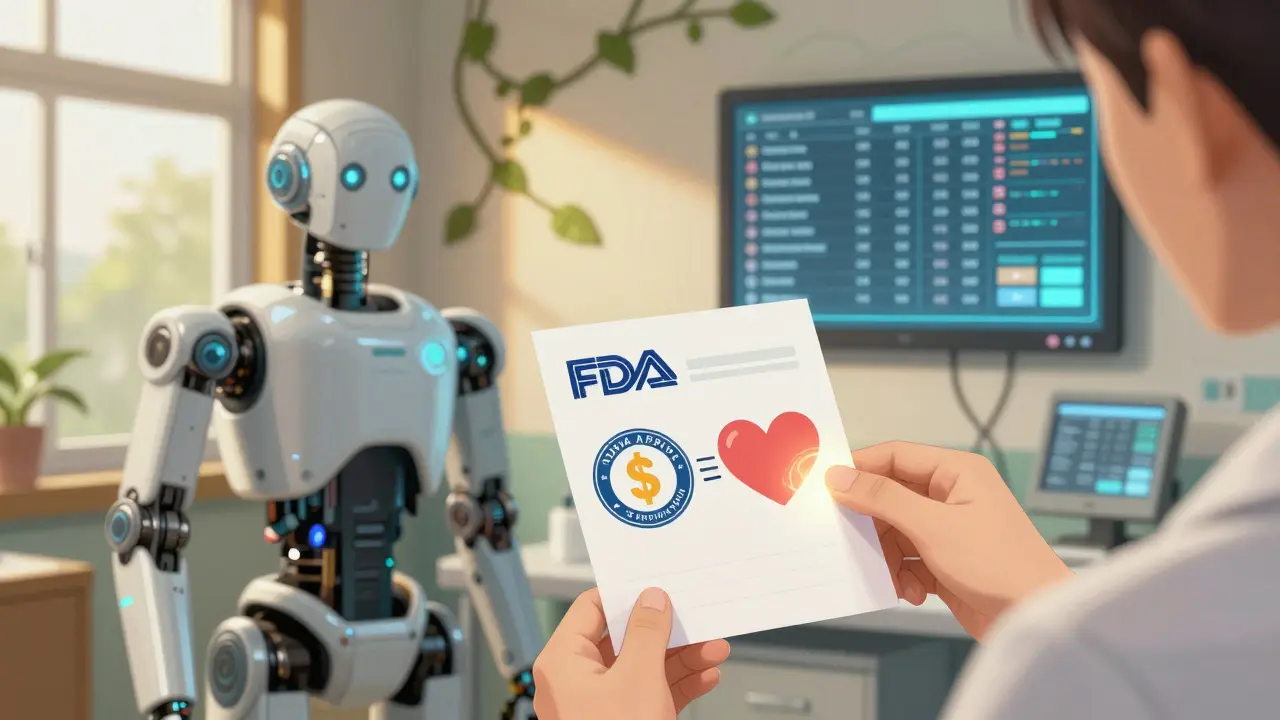
Another success story came from rural clinics in the U.S. where providers teamed up with pharmacists to create simple handouts: "Why This Generic Works Just as Well." They didn’t use jargon. They used pictures. They showed side-by-side FDA approval documents. They talked about cost savings-$200 a year per patient. Patient trust went up. Refill rates improved.
The Bigger Picture: Cost, Regulation, and the Future
Generics save the U.S. healthcare system an estimated $313 billion a year. Yet they make up only 22.7% of total drug spending because so many prescriptions are still for brand names. Why? Because doctors still prescribe them.
Regulations vary. The European Medicines Agency requires generics to be within 90-111% of brand performance. The FDA allows 80-125%. That’s a wider range. Some experts think that’s why European doctors are more confident in generics. In Germany, generic acceptance is 18.4% higher than in the U.S.
But change is coming. The FDA’s 2023 GDUFA III rules now require more post-market data on generics. Early results from Johns Hopkins show that when doctors see real-world effectiveness data-like how many patients stayed stable after switching-their prescribing habits shift. In that pilot, generic use for new generics jumped 28.6%.
The American Medical Association’s 2024 push for simpler generic names-like replacing "levothyroxine sodium" with "Synthroid Equivalent"-is another step. Doctors hate long chemical names. If they can say it easily, they’re more likely to say it out loud to patients.
What Needs to Change
Three things are clear:
- Medical schools need to teach bioequivalence properly. Right now, only 38.7% of U.S. medical schools include it in their curriculum.
- Doctors need easy access to real-world data-not just regulatory standards. A dashboard showing outcomes from thousands of patients on generics would help more than any textbook.
- Communication tools matter. A one-page handout for patients, written in plain language, can turn a skeptical doctor into a confident advocate.
It’s not about forcing doctors to switch. It’s about giving them the facts, the time, and the tools to make the right choice. Because when they do, patients get better care. And the system saves billions.
Where Do We Go From Here?
By 2030, modeling predicts 78.4% of doctors will see generics as therapeutically equivalent-up from 64.7% today. That’s progress. But for drugs like warfarin, thyroid meds, and seizure drugs, brand loyalty may stick around until 2035.
The real win won’t come from new laws or price cuts. It’ll come from doctors who’ve seen the data, heard the stories, and decided to trust the science. And then tell their patients: "This works. I’ve seen it. You’ll be fine."
Why do some doctors still prefer brand-name drugs over generics?
Some doctors prefer brand-name drugs because of personal experience, lack of exposure to real-world outcome data, or outdated beliefs about quality. A significant number still believe generics are less effective, especially for conditions like thyroid disease or epilepsy. Others worry about variability between manufacturers or recall issues. Many haven’t seen solid evidence showing generics perform the same in real patients, so they stick with what’s familiar.
Are generic drugs really as effective as brand-name drugs?
Yes, by FDA standards, generic drugs must deliver the same active ingredient, strength, dosage form, and route of administration as the brand-name version, and they must be bioequivalent-meaning they work the same way in the body. Studies show that for the vast majority of drugs, there’s no clinically meaningful difference in effectiveness or safety. The FDA requires generics to be within 80-125% of the brand’s performance, and most fall well within that range.
Do generic drugs have more side effects?
No, generic drugs don’t inherently cause more side effects. But some patients report differences after switching, usually because inactive ingredients (like fillers or dyes) vary between brands. These can cause mild reactions in sensitive individuals. For drugs with a narrow therapeutic index-like warfarin or levothyroxine-even small changes in absorption can feel like side effects. That’s why some doctors are cautious. But these aren’t caused by the active ingredient being weaker-they’re about formulation differences, not quality.
Why don’t doctors prescribe generics more often if they’re cheaper?
Cost savings don’t always motivate doctors. Many don’t pay for the drugs themselves-they’re not directly affected by the price difference. Time is a bigger barrier: explaining generics takes extra minutes in a packed schedule. Also, if a doctor isn’t confident in the evidence, they’ll avoid the risk of a patient returning with complaints. Without clear data, education, or support tools, prescribing generics feels like an extra burden, not a benefit.
Can patient education improve doctor attitudes toward generics?
Yes-but indirectly. When patients are better informed, they ask smarter questions. That pushes doctors to learn more. But the real change happens when doctors themselves see data: outcomes from patients on generics, peer experiences, or real-world studies. Educational workshops that include case-based learning and peer testimony have been shown to shift prescribing habits more than pamphlets or online modules. Trust comes from evidence, not just information.
What’s being done to fix doctor skepticism about generics?
Several initiatives are underway. The FDA now requires more post-market data on generics, and pilot programs share that data directly with prescribers. Medical schools are slowly adding bioequivalence training. The AMA is pushing for simpler generic names to reduce confusion. Some health systems are using peer educators-doctors who switched to high generic prescribing-to train others. These efforts are working, but slowly. Change takes time, especially when it involves deeply held beliefs.

Jamie Hooper
bro i swear my doc switched me to some generic thyroid med and i felt like a zombie for 3 weeks. like, i couldn’t even get outta bed. he said "it’s the same thing" but uh no it aint. my body knew. now i pay extra just to not feel like i’m slowly turning into a corpse. 🥲
Husain Atther
It is indeed a complex issue, rooted in both empirical experience and systemic educational gaps. While bioequivalence standards are rigorously defined, the clinical variability in patient response-particularly with narrow therapeutic index medications-cannot be entirely dismissed. The disparity between regulatory benchmarks and real-world outcomes warrants further longitudinal study and transparent data sharing between prescribers and pharmacovigilance systems.
Helen Leite
THE PHARMA COMPANIES ARE LYING TO US!!! 🤯 I read somewhere that generics have secret chemicals that make you sleepy on purpose so you keep buying more!! My cousin’s neighbor’s dog got sick after taking generic heart meds and now it’s on a special diet!! 💊😭 WE NEED TO BURN THE FDA!!
Izzy Hadala
While anecdotal reports of adverse effects following generic substitution are concerning, they must be contextualized within the broader epidemiological evidence. The FDA’s bioequivalence criteria, though permitting a 20% variance, are statistically validated across thousands of subjects. The perception of inferiority may stem from confirmation bias rather than pharmacological disparity. Further research into patient-reported outcomes and pharmacokinetic variability in subpopulations is warranted.
Shelby Marcel
my dr just gave me a generic and i was like wait is this the same? he just shrugged. i looked it up and it’s literally the same chemical but i still felt weird. like my brain was fuzzy. now i ask every time. why do they make us guess? 😑
blackbelt security
Doctors need better tools-not more lectures. A simple dashboard showing real patient outcomes: TSH levels, INR stability, seizure frequency-before and after switching. Show them the data. Let them see their own patients doing fine on generics. That’s how you change minds. Not guilt. Not pressure. Proof.
Tommy Sandri
It is noteworthy that cultural attitudes toward pharmaceuticals vary significantly across jurisdictions. In nations with centralized healthcare systems and standardized formularies, such as Germany, physician confidence in generics is markedly higher. This suggests that institutional trust, rather than individual clinical experience, plays a decisive role in prescribing behavior. Policy reform should consider structural factors alongside educational initiatives.
asa MNG
u guys are clueless 😤 i work in a pharmacy and i’ve seen it with my own eyes-generics are made in china in a basement with rats running over the pills!! they don’t even test them!! my aunt took one and her hair fell out!! 🐀💊 and the FDA? they’re paid off by big pharma!! i bet u didn’t know that 73% of generics have no active ingredient!! 🤡 i posted the receipts on twitter!! #genericfraud #saveourlives