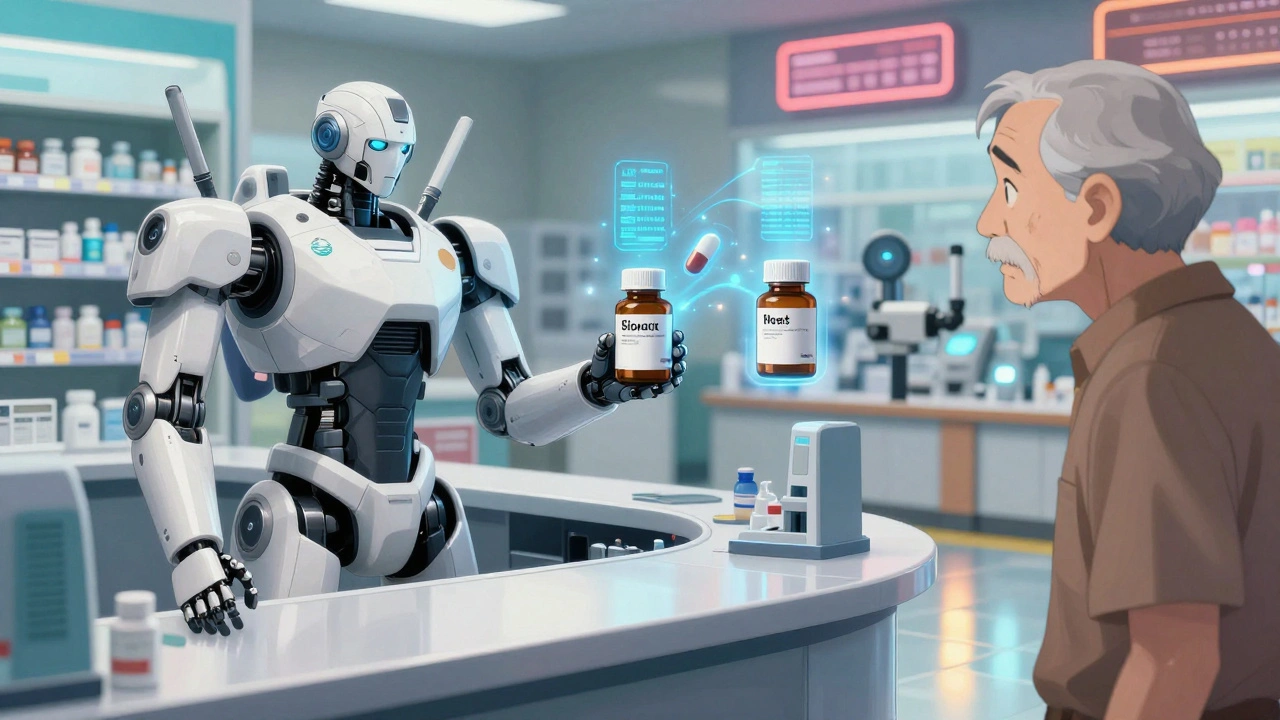
When a pharmacist hands you a pill bottle with a different name than what your doctor wrote, it’s not a mistake. It’s generic substitution - a routine part of pharmacy practice meant to save money without sacrificing effectiveness. But behind the counter, pharmacists aren’t just filling prescriptions. They’re managing patient fears, physician skepticism, and confusing rules - all in a matter of minutes.
Why Generic Substitution Exists
Generic drugs aren’t cheap knockoffs. They’re exact copies of brand-name medicines, approved by the FDA under the same strict standards. The Hatch-Waxman Act of 1984 created the legal framework for this, requiring generics to prove they deliver the same active ingredient, in the same dose, the same way, with the same effect. The FDA says the average difference in how the body absorbs a generic versus a brand-name drug is just 3.5%. That’s within a range considered clinically harmless. The goal? Cut costs. Generic substitution saves patients about 21% on their medication bills on average. For chronic conditions like high blood pressure or diabetes, that adds up to hundreds of dollars a year. Pharmacies benefit too - lower costs mean higher volume and better margins. But none of that matters if patients refuse to take the pills.Patient Resistance Is the Biggest Hurdle
Most pharmacists say the hardest part isn’t the law or the science. It’s the person standing in front of them. Patients often believe that if a drug is cheaper, it must be weaker. Some think generics are made in foreign factories with lower quality control. Others notice the pill looks different - smaller, a different color, or shaped oddly - and assume it’s not the same medicine. One study found that one-third of patients had negative experiences after switching to a generic, leading to skipped doses or confusion. It’s worse for older adults and people with chronic illnesses. A patient taking five or six pills a day for heart disease, diabetes, and depression doesn’t want to risk mixing up their routine. When the shape or color changes, they panic. Some call their doctor in a panic, demanding the original brand. Others just stop taking the drug. And here’s the catch: 64% of patients say their doctor never told them substitution could happen. So when the pharmacist says, “This is the generic version,” it feels like a surprise - not a benefit.Pharmacists Are Forced to Be Educators
That’s where pharmacists step in. They’re not supposed to be teachers. But no one else is. In a typical 5-minute interaction, a pharmacist has to explain:- Why the pill looks different
- That the active ingredient is identical
- That the FDA requires bioequivalence
- That the cost difference is real and meaningful
- That they have the right to refuse the switch
Clinical Worries: When Substitution Gets Risky
Not all drugs are created equal when it comes to substitution. Pharmacists are especially cautious with drugs that have a narrow therapeutic index (NTI). These are medications where even a tiny change in blood levels can cause harm. Examples include:- Warfarin (blood thinner)
- Levothyroxine (thyroid hormone)
- Anti-seizure drugs like phenytoin or carbamazepine
Doctors Don’t Always Support It
You’d think doctors, who care about cost and outcomes, would back generic substitution. But they don’t always. While 87% of physicians agree generics are economically smart, only 70% believe they’re clinically appropriate. Some still think brand-name drugs are more reliable. Others write prescriptions with “Dispense as Written” or “Do Not Substitute” - even when it’s not medically necessary. Why? A few reasons:- They were taught brand-name drugs first
- They’ve seen a patient react poorly after a switch
- They don’t know the FDA’s bioequivalence standards
- They’re afraid of liability
It’s Not Just Pills - It’s Biologics Now
The landscape is changing. Newer drugs - like insulin, rheumatoid arthritis treatments, and cancer therapies - are biologics. These aren’t simple chemicals. They’re complex proteins made from living cells. Generics for biologics are called “biosimilars.” They’re not exact copies. Small differences in manufacturing can affect how they work. The FDA requires extra testing to prove they’re “highly similar” - but not identical. Pharmacists are now caught in the middle. Patients ask: “Is this the same as my Humira?” The answer isn’t yes or no. It’s “almost, but not exactly.” And the rules? Still evolving. Some states allow automatic substitution of biosimilars. Others require the prescriber to approve each switch. Pharmacists have to track which ones are interchangeable - and which aren’t - without clear guidance.What Works: Real Strategies That Help
Some pharmacies have cracked the code. Here’s what they do differently:- Pre-printed handouts: A simple one-pager explaining generics, with pictures of pill shapes and a note: “Same medicine. Different look. Same results.”
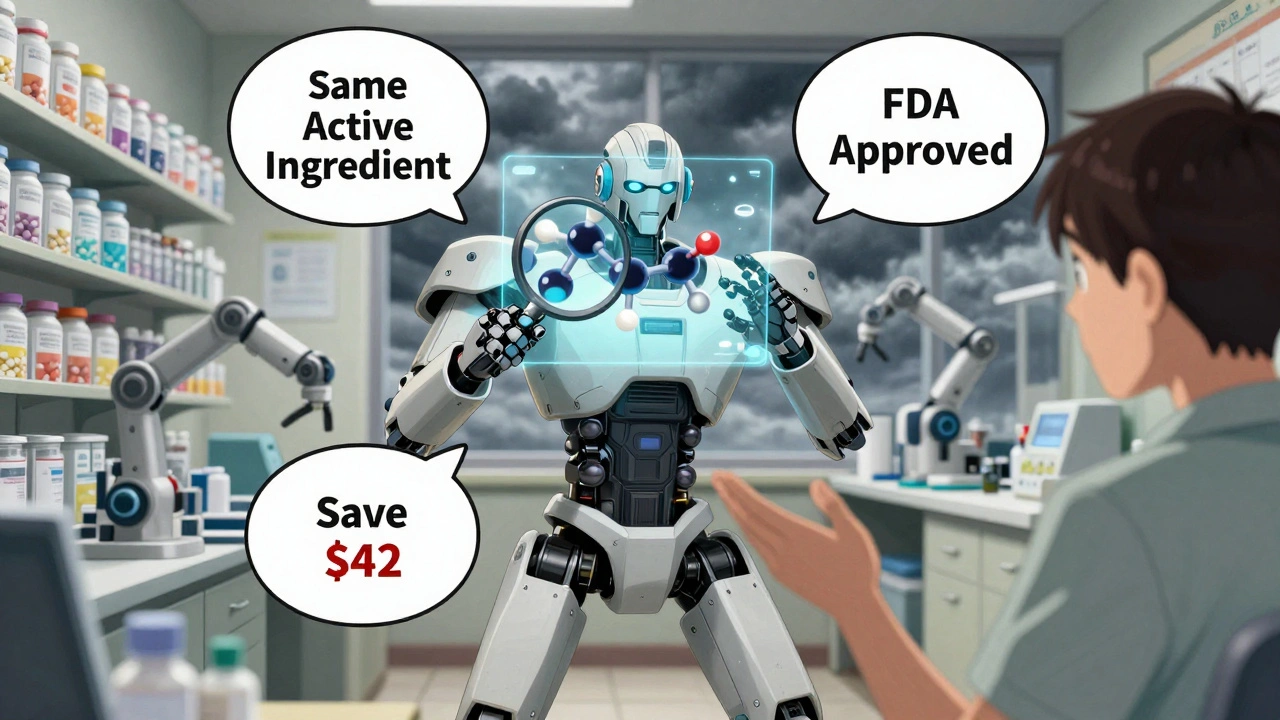
- Scripted conversations: “I know this looks different, but it’s the same active ingredient. The FDA made sure of it. You’re saving $42 this month.”
- Follow-up calls: For chronic disease patients, a 2-day call after switching: “How’s the new pill working?”
- Doctor partnerships: Some pharmacists send letters to prescribers: “Your patient John was switched to generic metformin. No issues. He’s saving $60/month.”
The Bottom Line
Generic substitution isn’t broken. It’s underused - and misunderstood. Pharmacists know the science. They know the savings. They know the system works. But they’re stuck between patients who don’t trust it, doctors who don’t promote it, and laws that don’t always protect them. The real problem isn’t the generic drug. It’s the lack of clear, consistent communication at every level. Until patients hear from their doctors that generics are safe. Until pharmacists get time to explain them. Until insurers stop making substitution a surprise - not a choice - we’ll keep seeing the same frustrations behind the counter.It’s not about brand loyalty. It’s about trust. And trust takes more than a pill bottle. It takes a conversation.
Are generic drugs really as effective as brand-name drugs?
Yes. The FDA requires generic drugs to have the same active ingredient, strength, dosage form, and route of administration as the brand-name version. They must also prove they’re bioequivalent - meaning they deliver the same amount of medicine into the bloodstream at the same rate. Studies show the average difference in absorption is just 3.5%, which is considered clinically insignificant for most medications.
Why do generic pills look different from brand-name ones?
Generic manufacturers can’t copy the exact appearance of brand-name pills because of trademark laws. So they change the color, shape, or markings. But the active ingredient - the part that treats your condition - is identical. The differences are only in inactive ingredients like dyes or fillers, which don’t affect how the drug works.
Can pharmacists substitute any generic drug without asking the doctor?
It depends on the drug and your state’s laws. For most medications, yes - pharmacists can substitute unless the prescription says “Dispense as Written” or “Do Not Substitute.” But for drugs with a narrow therapeutic index - like warfarin, levothyroxine, or anti-seizure medications - many states require pharmacist consultation with the prescriber before switching. Always check your local pharmacy laws.
Why do some patients refuse generic substitution?
Many patients believe cheaper means lower quality. Others distrust foreign manufacturing or fear changes in pill appearance will affect how the drug works. Past negative experiences - even if unrelated to the generic - can create lasting mistrust. Lack of education from doctors also plays a big role. Patients often feel blindsided when they get a different pill and assume it’s a mistake or a cost-cutting measure.
What should I do if I’m worried about switching to a generic?
Talk to your pharmacist first. Ask if the generic is approved by the FDA and whether it’s appropriate for your condition. If you’re still unsure, call your doctor. You have the right to refuse a substitution. You can also ask for a brand-name drug - though you may pay more. Don’t stop taking your medication out of fear. Most generics work just as well, and many patients save hundreds a year without any issues.
Are biosimilars the same as generic drugs?
No. Biosimilars are for complex biologic drugs - like insulin or rheumatoid arthritis treatments - made from living cells. Unlike traditional generics, which are exact chemical copies, biosimilars are highly similar but not identical. They require more testing to prove safety and effectiveness. Pharmacists need special training to handle biosimilar substitutions, and some states require prescriber approval before switching.
Can I ask my pharmacist to keep me on the brand-name drug?
Yes. You always have the right to refuse a generic substitution. Just tell the pharmacist you’d prefer the brand-name version. You may need to pay more out of pocket, but your safety and comfort come first. If cost is an issue, ask if the pharmacy offers a discount program or if the manufacturer has a patient assistance plan.

patrick sui
Generic substitution isn't just about cost-it's about systemic efficiency. The FDA's bioequivalence thresholds (3.5% absorption variance) are statistically sound, but patient perception is a pharmacokinetic variable we ignore at our peril. The real issue? Lack of coordinated messaging. If your prescriber doesn't frame it as a therapeutic equivalence, the pharmacist becomes the de facto educator-without training, time, or authority. We need standardized patient handouts, EHR flags for NTI drugs, and mandatory counseling protocols. It's not magic. It's logistics.
Declan O Reilly
man i used to think generics were just cheap copies til i started taking them for my blood pressure. same pill, same effect, saved me like 60 bucks a month. the only thing different? the color. and now i feel kinda silly for ever doubting it. maybe we just need to stop treating pills like sacred objects and start treating them like tools. also, why do we still call them 'generics'? sounds like a bad sci-fi movie. 'here's your generic life-saver, sir.' lol
Conor Forde
OH MY GOD. THEY'RE MAKING US TAKE PILL-SHAPED LIES. I'M SICK OF THIS CORPORATE GREED MASQUERADING AS 'SAVINGS.' My uncle died because they switched his warfarin without telling him. The pharmacy said 'it's the same!'-but the pill was BLUE. BLUE, for god's sake. My uncle had been on WHITE for 17 years. That’s not science. That’s negligence dressed up in a white coat. And don’t even get me started on 'biosimilars.' You think insulin made in a lab by a robot is the same as the one made by humans? HA. You’re not a doctor. You’re a sales rep with a clipboard.
Linda Migdal
Let’s be real-America’s healthcare system is broken, but generics aren’t the problem. They’re the only thing keeping seniors alive. If you’re too privileged to understand that $50/month savings means choosing between insulin and groceries, then maybe you shouldn’t be commenting. The FDA doesn’t approve junk. And if your doctor’s too lazy to explain it, that’s on them-not the pharmacist. Stop crying about pill colors and start caring about outcomes.
Tommy Walton
Bro. The pill looks different. So what? It’s not a personality. It’s a molecule. 🤷♂️ You think your antidepressant has a soul? Nah. It’s just chemistry. Save your drama for TikTok. Generics = smart. Brand = capitalism’s placebo. 💸💊
James Steele
One must interrogate the epistemological foundations of pharmaceutical equivalence. The FDA’s bioequivalence paradigm is predicated on population-level pharmacokinetics, yet individual pharmacodynamic variance-particularly in geriatric polypharmacy-is systematically underrepresented in clinical trials. The 3.5% absorption variance? A statistical abstraction. For a patient on levothyroxine with subclinical hypothyroidism, that delta may be the difference between euthyroidism and myxedema coma. We are not data points. We are embodied beings navigating a commodified healthcare apparatus. The real villain? The neoliberal imperative to reduce all human health to cost-per-dose.
Shannon Gabrielle
Oh wow. A whole article about how pharmacists are too busy to talk to people? Shocking. Next you'll tell me nurses are tired of explaining why you can't get a Xanax refill at 2am. The real story? Patients don't trust the system. And why? Because doctors write 'dispense as written' on every script like it's a religious decree. Then they blame the pharmacist when the patient stops taking it. Meanwhile, the insurance company forces the switch. So who's the villain? The guy handing out the pill? Or the guy who wrote the script and then ghosted the patient? 🤔
ANN JACOBS
As someone who has spent over two decades in the healthcare field, I feel compelled to share a deeply thoughtful perspective on this matter. Generic substitution, while economically advantageous, must be approached with the utmost sensitivity, particularly for vulnerable populations such as the elderly, those with cognitive impairments, and individuals managing multiple chronic conditions. The psychological impact of a change in pill appearance cannot be underestimated-it triggers anxiety, erodes trust, and in some cases, leads to non-adherence. I have personally witnessed patients who, after switching to a generic, began to doubt the efficacy of every medication they had ever taken. This is not merely a pharmacological issue-it is a human one. Pharmacies must implement structured, compassionate counseling protocols, ideally with follow-up calls within 48 hours. Furthermore, prescribers must be educated to initiate these conversations, not leave them to overburdened pharmacists. The goal is not cost reduction at the expense of dignity-it is equitable, dignified, and informed care. Let us not forget: medicine is not a transaction. It is a covenant.
Nnaemeka Kingsley
in nigeria we don't even have brand name drugs most times. what we get is what's available. if it works, you take it. if it don't, you go to another pharmacy. no one cares about color or shape. what matters is: does it stop the pain? does it lower the fever? if yes, then it's good. why make it complicated? just tell the person: same medicine, cheaper. they'll get it.
Sean McCarthy
Pharmacists aren't educators. They're order-fillers. The system is designed to maximize throughput, not patient understanding. The '2-minute explanation' is a myth. In a 12-hour shift with 150 scripts, you're lucky if you get 10 seconds per patient. And when you do try to explain? They roll their eyes. Why? Because they've been lied to by their doctors for years. 'Brand-name only' prescriptions aren't medical-they're ego. And the FDA? They're not protecting you. They're protecting Big Pharma's patents. The real solution? Ban 'dispense as written' unless there's a documented clinical reason. Let generics be the default. Let the patient opt out. Not the other way around.