
Every time you pick up a prescription, the little paper label on the bottle holds life-or-death information. But most people glance at it just long enough to see their name and the dose - and miss the real danger: drug interactions. These happen when two or more medications, supplements, or even foods change how a drug works in your body. The result? Too much of a drug, too little, or a dangerous side effect like internal bleeding, heart rhythm problems, or organ damage. In the U.S. alone, about 2 million adverse drug events happen every year because of these hidden conflicts - and 100,000 of them land people in the hospital. The good news? You don’t need to be a doctor to stop them. You just need to know what to look for on your prescription label.
What’s Actually on Your Prescription Label?
Your prescription label isn’t just a reminder to take your pill. It’s a legal document, required by the FDA, with specific sections designed to warn you about risks. The two most important parts for avoiding interactions are the Drug Interactions section and the Warnings and Precautions section.The Drug Interactions section (usually labeled as Section 7) lists every known medication, supplement, or food that could interfere with your drug. It doesn’t just say “avoid this.” It tells you how to avoid it. Look for phrases like:
- “Avoid concomitant use of [Drug X] with [Drug Y]” - this means don’t take them together at all.
- “Reduce dosage of [Drug X] when used with [Drug Y]” - you might need less of one drug if you’re taking both.
- “Monitor for [symptom, e.g., dizziness, bleeding]” - you need to watch for signs that something’s wrong.
The Warnings and Precautions section (Section 5) is where the FDA requires manufacturers to highlight the most serious risks - the ones that could kill you if ignored. This is where you’ll find the biggest red flags: interactions that cause liver failure, sudden drops in blood pressure, or dangerous bleeding. These aren’t buried in fine print. They’re called out clearly. If your label says “Do not use if taking [Drug Z],” that’s not a suggestion. It’s a rule.
Don’t Forget Over-the-Counter Medicines and Supplements
Many people think only prescription drugs cause interactions. That’s a dangerous myth. Over-the-counter painkillers like ibuprofen, cold medicines with pseudoephedrine, and even herbal supplements can trigger serious reactions.Take warfarin, a blood thinner. It’s fine on its own - until you add ginkgo biloba, garlic supplements, or even high doses of vitamin E. These aren’t listed on your warfarin label because they’re not prescription drugs. But they’re still dangerous. A 2023 Harvard study found that 32% of serious drug interactions involve supplements - yet only 17% of prescription labels even mention them.
Check the Warnings section on every OTC bottle. It’s required by law to list interactions. If you’re taking aspirin for heart health and also use a cold medicine with ibuprofen, you’re doubling your risk of stomach bleeding. That’s not a guess - it’s documented fact. And if you’re taking statins for cholesterol, mixing them with grapefruit juice can spike your drug levels to toxic levels. The label won’t say “grapefruit juice.” It’ll say “avoid grapefruit and grapefruit juice.” Read it like a warning sign on a cliff.
Use the Label Like a Checklist - Not a Postcard
Reading your label once isn’t enough. You need to make it part of your routine. Here’s how:- Make a full list of everything you take. Not just prescriptions. Include every vitamin, herb, sleep aid, and pain reliever - even if you only take it once a week. Write down the reason you take each one (e.g., “atorvastatin for cholesterol,” “melatonin for sleep”). This helps you spot duplicates or similar names (like Klonopin and clonidine - two totally different drugs that sound alike).
- Bring the list to every doctor and pharmacist visit. A 2023 study of 10,000 pharmacy consultations found that 22% of potential interactions were caught only because the patient brought all their meds in. Pharmacists don’t read your mind. They read your bottles.
- Check the label every time you refill. Manufacturers update labels. A drug that was safe with alcohol last year might now carry a warning. Don’t assume it’s the same.
- Use the “Check the Label” method for kids. The CDC found that 67% of dosing errors in children happen because parents misread the label. Always use the measuring device that came with the medicine. Never use a kitchen spoon. Read the dose, measure it, give it.
Why Apps Aren’t Enough - But They Can Help
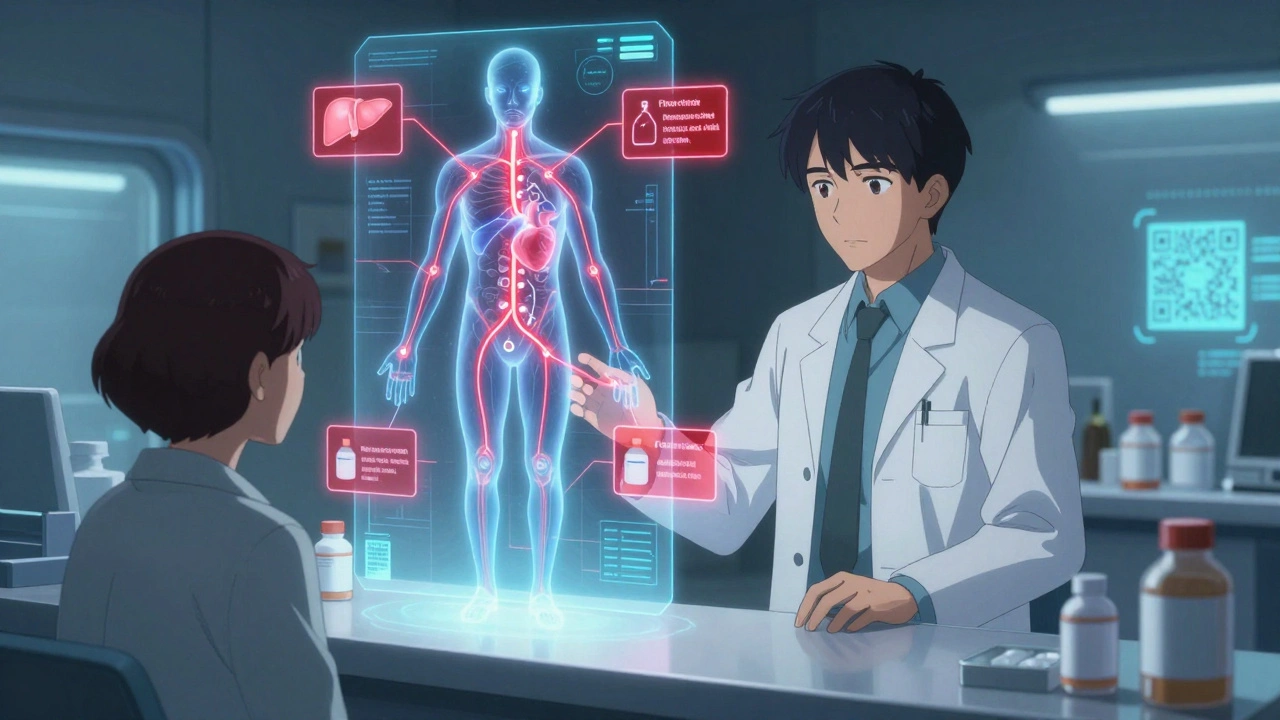
You might think, “I’ll just use Drugs.com or WebMD to check interactions.” That’s smart - but don’t stop there.Apps like Drugs.com check over 1.2 million queries a month and are 89% accurate. But they only cover 92% of prescription drugs. Prescription labels? They cover 100%. Why? Because the FDA requires manufacturers to report every known interaction. Apps rely on crowdsourced data or incomplete databases. They miss new warnings until they’re updated - which can take weeks.
Think of apps as a second opinion. Use them to double-check what’s on your label. But never replace the label with an app. The label is the official source. The app is a helper.
What If You Can’t Understand the Label?
Let’s be honest - prescription labels are written for doctors, not patients. Words like “concomitant use,” “CYP3A4 inhibition,” or “serotonin syndrome” are confusing. That’s by design. But you don’t have to guess.Ask your pharmacist. Right there, at the counter. Say: “I don’t understand this part. Can you explain what this warning means for me?” Pharmacists are trained to translate medical jargon into plain language. In fact, 83% of people who used the “Ask a Pharmacist” feature on Drugs.com said they finally understood their warnings after talking to a real person.
If you’re over 65 or have trouble reading small print, ask for a large-print label. Many pharmacies offer this for free. If you’re not fluent in English, ask for a translator. The law requires it. Don’t be shy. Misunderstanding a label can kill you.
What’s Changing Soon - And What You Should Do Now
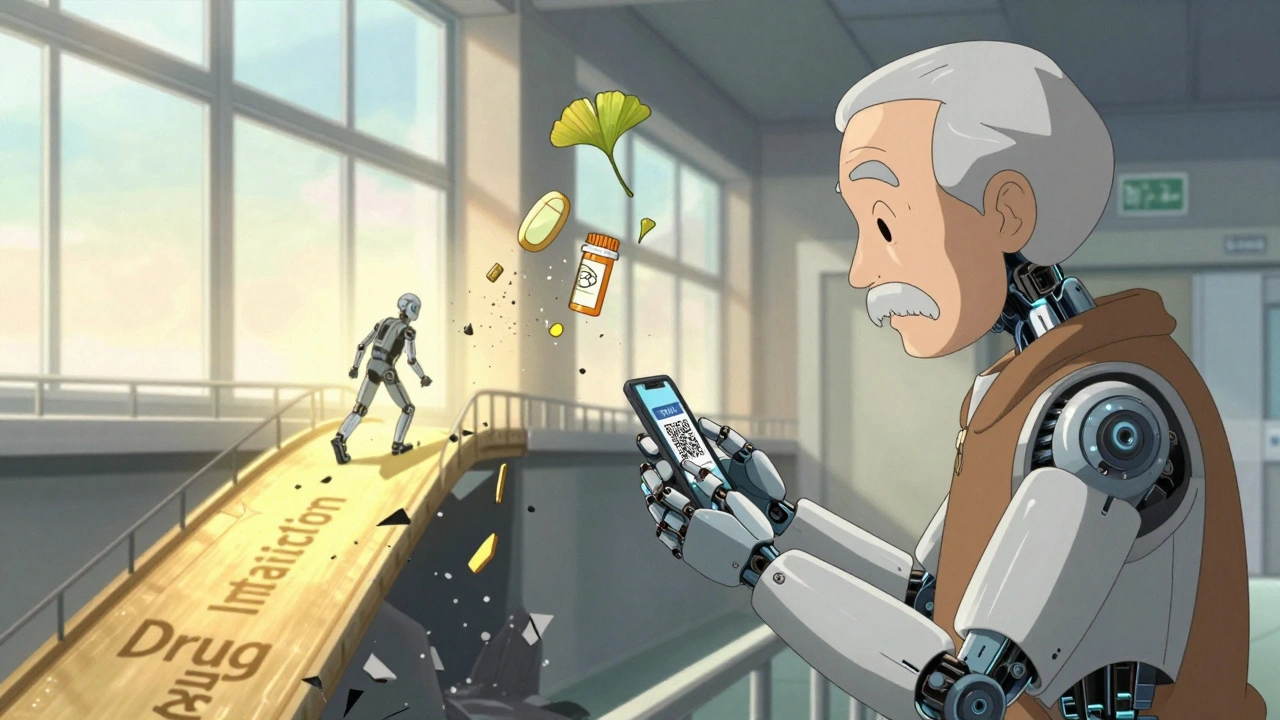
The FDA just updated its labeling rules in June 2024. Starting in 2025, new labels will have to make the most critical interactions stand out - in bold, with clear “bottom line” instructions. For example: “DO NOT TAKE WITH [DRUG] - RISK OF SEVERE BLEEDING.”Some pharmacies are even testing QR codes on bottles. Scan it with your phone, and you’ll get a video explanation of the interaction, in plain language. These pilots start in early 2025 across 150 pharmacies nationwide.
But you don’t have to wait. Start now. Grab your next prescription. Don’t just take it. Read it. Ask about it. Write down what you learn. Share it with your family. The system is improving - but right now, you’re the only one who can protect yourself.
Real Consequences - Real Stories
On Reddit’s r/Pharmacy, people share horror stories: a woman who took tramadol and an antidepressant together because she didn’t read the label - and ended up in the ER with seizures. A man who took ibuprofen with his blood thinner and had a brain bleed. A senior who mixed St. John’s Wort with his cholesterol drug and got liver damage.These aren’t rare. They’re predictable. And they’re preventable.
The CDC says 45 million American adults struggle to read health information at even a basic level. That’s not about intelligence. It’s about design. Labels are too dense, too small, too technical. But you can still beat the system - by being the one who reads it, questions it, and acts on it.
What should I do if I see a warning I don’t understand on my prescription label?
Don’t guess. Don’t ignore it. Call your pharmacist or doctor and ask for a plain-language explanation. Say: “I need to know what this means for me.” Pharmacists are trained to translate medical terms into everyday language. Many pharmacies also offer free translation services if you’re not fluent in English. It’s your right to understand your medication.
Can I trust drug interaction apps like Drugs.com instead of the label?
No - apps are useful for double-checking, but they’re not a replacement. Prescription labels are legally required to list every known interaction, with exact instructions. Apps may miss new warnings, lack context about your specific health conditions, or only cover 92% of prescription drugs. Always use the label as your primary source. Use apps as a backup tool.
Why don’t prescription labels mention herbal supplements like ginkgo or turmeric?
They often don’t - because supplements aren’t regulated like drugs. Manufacturers only have to list interactions with other prescription medications. But supplements like ginkgo, garlic, and St. John’s Wort can cause serious reactions with blood thinners, antidepressants, and heart medications. The FDA doesn’t require supplement labeling, so you must proactively tell your doctor or pharmacist what you’re taking - even if it’s “natural.”
Is it safe to take my medication with food or alcohol?
It depends. Some drugs work better with food. Others become dangerous. For example, statins like atorvastatin can’t be taken with grapefruit juice - it causes toxic levels in your blood. Alcohol can increase drowsiness with painkillers or anxiety meds. Always check the label for specific warnings. If it doesn’t say anything, ask your pharmacist. Never assume it’s safe.
What if I’m taking five or more medications? Is it too hard to track interactions?
It’s harder - but not impossible. The CDC found that people on five or more drugs are 68% more likely to have an interaction they didn’t notice. The solution? Keep a written or digital list of everything you take - including doses and times. Bring it to every appointment. Ask your pharmacist for a medication review. Many pharmacies offer this for free. It takes 10 minutes, but it can save your life.

nikki yamashita
Just read my label after my last refill and caught that my blood pressure med says no grapefruit juice-had no idea! Thanks for the reminder to actually read these things, not just glance and toss 'em in the pillbox. 🙌
wendy b
So you're telling me the FDA actually expects us to read this stuff? Like, with our eyes? And understand words like 'concomitant'? 😅 I mean, I'm not a doctor, but I did stay at a Holiday Inn Express last Tuesday. Also, 'CYP3A4 inhibition'? That sounds like a rejected Star Wars villain. 🤓
Adam Everitt
It's not merely about reading labels-it's about confronting the epistemological void between pharmaceutical intent and human comprehension. We are drowning in data, yet starved of wisdom. The label is a monument to bureaucratic caution, yet we treat it like a receipt from a gas station. We have lost the art of attentive care. The system is not broken-it is merely indifferent. And so are we.
Stacy Foster
They don't tell you this, but Big Pharma writes the labels to scare you into buying MORE drugs. That 'warning' about grapefruit? Totally made up to sell you a $300 alternative. And those QR codes? GPS trackers. They're watching you. I saw a guy scan his bottle and his phone buzzed 3 seconds later. Coincidence? I think not. 🕵️♀️
Reshma Sinha
From a clinical pharmacology standpoint, polypharmacy risk stratification is significantly amplified in geriatric populations due to diminished hepatic metabolism and renal clearance. Proactive medication reconciliation via structured pharmacist-led reviews reduces ADE incidence by 42% (per JAMA 2023 meta-analysis). Always document OTCs and herbals-these are non-trivial pharmacokinetic modifiers.
Lawrence Armstrong
My pharmacist actually sat down with me last week and walked me through every single thing I take. She even drew a little chart. 🤯 I didn't know I was mixing two things that could cause serotonin syndrome. She said 'most people just nod and walk out'... so I'm telling you now: ASK. Don't be shy. You got this. 💪
sandeep sanigarapu
Reading labels is not hard. It is just not done. People think medicine is magic. It is not. It is chemistry. And chemistry has rules. If you do not know the rules, ask. Ask again. Ask until you understand. Your life depends on it. Simple.
Ashley Skipp
Why do people still take supplements? Like seriously. If it was that good it would be a drug. And if it was a drug they'd tell you not to take it with your other meds. But nooo lets just swallow some powdered dirt and call it wellness. I mean really
Nathan Fatal
There's a deeper issue here: the medical system has outsourced responsibility to the patient without providing the tools to succeed. We're told to 'read the label' but the label is written in legalese by people who never had to take a pill in their life. The solution isn't just vigilance-it's systemic reform. We need plain-language mandates, mandatory pharmacist consultations, and standardized visual warnings. This isn't about personal responsibility-it's about justice.
Robert Webb
I’ve been taking statins for ten years, and I never knew grapefruit juice could cause toxicity until I read this. I’ve been drinking it every morning. I called my pharmacist right after-I felt like an idiot, but also incredibly relieved. I now have a printed checklist taped to my fridge. I even showed my teenage daughter how to read labels on her allergy meds. It’s not just about us-it’s about passing this knowledge on. If we can make it a habit, maybe the next generation won’t have to learn the hard way.
Rob Purvis
Can we talk about how the FDA requires labels to list interactions with other drugs... but not with alcohol? That’s wild. I take tramadol, and the label says nothing about alcohol-but my pharmacist told me it’s a death combo. Why isn’t that on the label? Why do we trust the label when it’s clearly incomplete? I’m not saying don’t read it-I’m saying: read it, then ask, then double-check, then triple-check. And then ask again. Because someone’s life is on the line-and it might be yours.