
Starting a new medication can feel overwhelming. You might be told to take it once a day, but what does that really mean? Will it help you feel better, or just make you feel worse? What if it mixes badly with your other pills? These aren’t just worries-they’re critical questions that can stop serious mistakes before they happen.
What’s the exact name of this medicine, and why are you giving it to me?
Always ask for both the brand name and the generic name. Many people mix up medications because they sound similar. For example, hydrochlorothiazide and hydroxyzine are two completely different drugs-one treats high blood pressure, the other is an antihistamine. A 2020 report from the Institute for Safe Medication Practices found that 23% of medication errors come from name confusion. Don’t assume your doctor spelled it right on the prescription. Ask them to say it slowly and write it down.
Then ask: “What condition is this meant to treat?” Some meds are used for more than one thing. A drug prescribed for depression might also be used for nerve pain or migraines. Knowing the specific reason helps you understand what results to expect-and whether the treatment makes sense for you.
How and when exactly should I take this?
“Take one pill daily” doesn’t cut it. You need specifics. Ask:
- Should I take it with food or on an empty stomach?
- Is there a best time of day-morning, night, or with meals?
- What’s the exact dose? (Not just “one tablet,” but “25 mg” or “10 mL”)
- How long should I keep taking it? Is this a short-term fix or something I’ll be on for months or years?
A 2021 study by the Agency for Healthcare Research and Quality found that 34% of patients misunderstand dosage instructions. Some people think “twice daily” means morning and evening, while others take both pills at once. That kind of mistake can lead to dangerous side effects-or no effect at all.
How will I know if this medicine is working?
This is one of the most overlooked questions. Many people stop taking their meds because they don’t feel any different right away. But not all drugs work instantly.
Ask: “When should I start noticing a change?” For antidepressants, it can take 4-6 weeks. For blood pressure meds, you might not feel anything at all-but your numbers should improve. For antibiotics, you should feel better in a few days. If you don’t know what to look for, you might quit too early, thinking it didn’t work.
Research from the Journal of General Internal Medicine in 2022 showed that 68% of patients stop their meds early because they didn’t know what “working” looked like. That’s why clear expectations matter. Write down what signs to watch for: less pain, better sleep, lower readings, fewer panic attacks.
What side effects should I expect-and which ones mean I should call you right away?
All meds have side effects. But not all are equal. Some are mild and fade after a few days. Others are dangerous.
Ask: “Which side effects are normal at first, and which ones mean I need to get help immediately?” For example, nausea from a new painkiller might go away in a week. But if you start having trouble breathing, swelling in your throat, or a rash that spreads, that’s an emergency.
Also ask: “How long do the common side effects usually last?” Many people quit antidepressants because they feel dizzy or tired at first-not realizing those symptoms often improve within 10-14 days. A 2023 BMJ review found that nearly 28% of hospital admissions for older adults are caused by unexpected drug reactions. Most of those could’ve been avoided with better upfront advice.
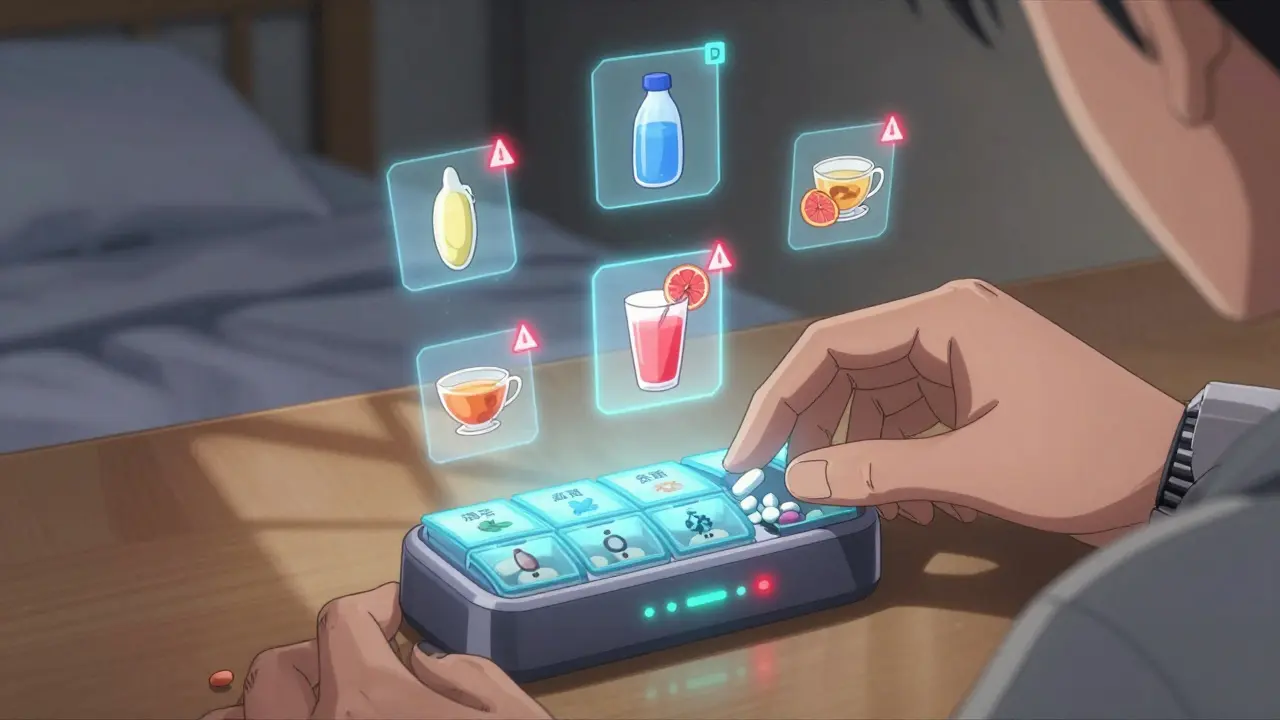
Will this interact with anything else I’m taking?
Don’t just list your prescription drugs. Bring everything. That includes:
- Vitamins and supplements (like fish oil, magnesium, St. John’s wort)
- Over-the-counter meds (ibuprofen, antacids, sleep aids)
- Herbal teas or remedies
- Alcohol and even grapefruit juice
MedlinePlus says 40% of adults take five or more medications regularly. That increases the chance of harmful interactions by 85%, according to FDA data. For example, blood thinners like warfarin can become dangerously strong if you start taking garlic supplements. Antidepressants can cause serious reactions when mixed with certain painkillers or cold medicines.
Bring a written list-or better yet, take a photo of all your pill bottles. A 2022 study by the American Pharmacists Association showed that patients who brought a full list reduced interaction risks by 63%.
Why this drug and not another option?
There’s rarely just one choice. Ask: “Are there other medications that could work just as well?” Maybe a cheaper generic exists. Maybe a different drug has fewer side effects for people your age. Or maybe there’s a non-drug option-like physical therapy for back pain, or CBT for anxiety.
Also ask: “Has my genetic makeup been considered?” Pharmacogenetic testing (like the Genecept Assay) can tell if your body processes certain drugs slowly or quickly. This isn’t sci-fi-it’s used in over 300,000 cases a year. If your doctor hasn’t mentioned it, ask if it’s right for you. It could mean avoiding a drug that’s likely to cause bad side effects before you even start it.
When will we check if this is still the right choice?
Starting a med isn’t the end of the conversation-it’s the beginning. Ask: “When should I come back to review this?” and “What’s the plan if it doesn’t work?”
A 2022 American Medical Association study found that 47% of patients never schedule a follow-up appointment after starting a new prescription. That’s dangerous. Some meds need blood tests. Others require dose adjustments. Some stop working over time.
Get a specific date or trigger: “Come back in six weeks,” or “Call if your pain hasn’t dropped by 30% in 10 days.” If your doctor says “just call if something’s wrong,” that’s not enough. You need a clear next step.
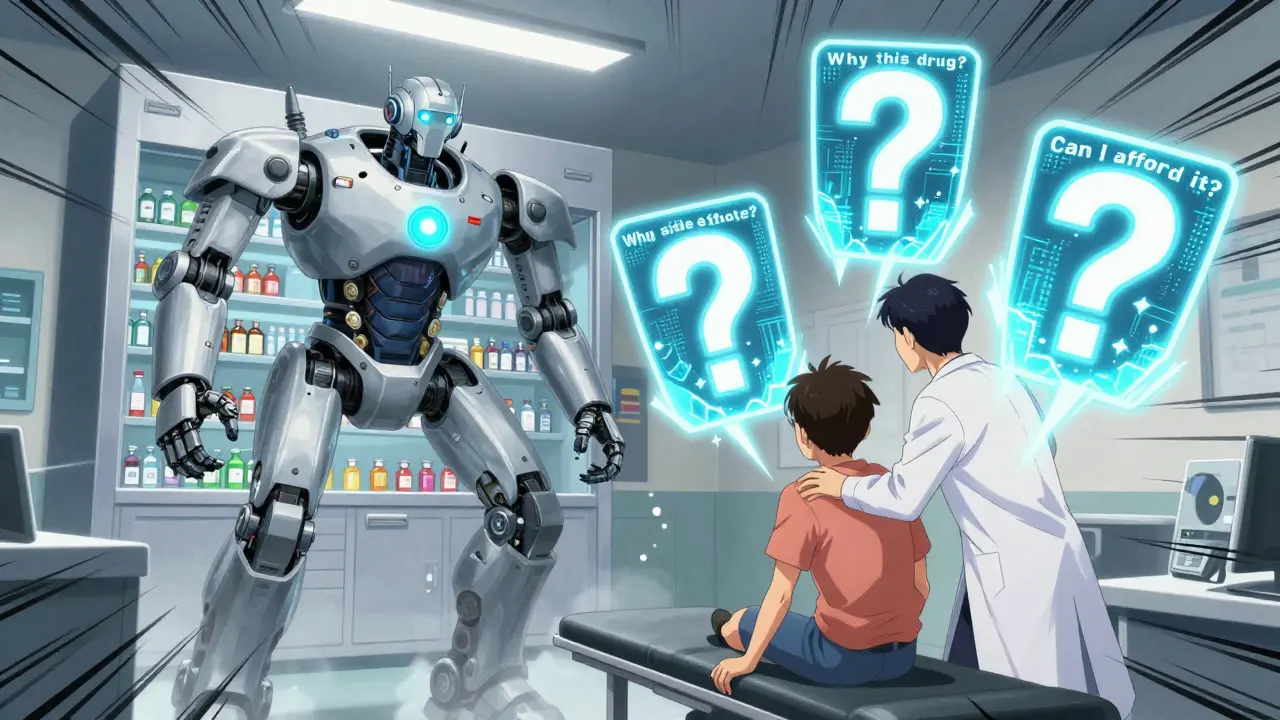
What’s the cost-and are there cheaper alternatives?
Cost isn’t just about the price tag. It’s about whether you can afford to take it every day. A 2023 Commonwealth Fund study found that 25% of patients skip doses because they can’t pay. That’s not laziness-it’s survival.
Ask: “Is there a generic version?” “Can I get a 90-day supply to save money?” “Are there patient assistance programs?” Many drug companies offer free or discounted meds to those who qualify. Your pharmacist can help with this too.
72% of health plans now require doctors to discuss cost alternatives before prescribing, according to KFF’s 2023 survey. Don’t be shy. If you can’t afford it, it doesn’t matter how good it is.
How do I keep track of all this?
Even the best advice fades fast. A 2023 study in the Journal of Patient Education and Counseling found that people forget half of what their doctor says within an hour.
Write it down. Use your phone. Ask for printed info. Use a pill organizer. Apps like Hero Health help track doses and send reminders. If you’re older or managing multiple meds, visual aids like the MedlinePlus Medication Question Cards-with icons for “take with food,” “avoid alcohol,” “call doctor”-can make a huge difference.
Bring a friend or family member if you can. Two sets of ears are better than one.
What if I still feel unsure?
You don’t have to decide right away. Ask: “Can I take a day to think about this and call you back?” or “Can I speak with the pharmacist before I fill this?” Pharmacists are medication experts-and they’re often more available than your doctor.
Don’t feel guilty for asking questions. In fact, patients who ask at least five of these standard questions have 32% fewer adverse drug events, according to a 2023 UCLA study of 10,000 patients.
Healthcare isn’t a one-way lecture. It’s a partnership. The more you know, the safer you are. And the more you speak up, the more your doctor will listen.
What if my doctor gets annoyed when I ask too many questions?
A good doctor welcomes questions-it’s part of their job. If your doctor seems rushed or dismissive, it’s not you-it’s the system. Most primary care visits last just 15-18 minutes. But that doesn’t mean you shouldn’t speak up. Try saying, “I really want to get this right. Can we take two minutes to go over the most important points?” If they still brush you off, consider finding a provider who listens. Your health is worth it.
Can I stop taking a medication if I don’t like the side effects?
Never stop a prescription drug suddenly without talking to your doctor. Some meds, like antidepressants or blood pressure pills, can cause dangerous withdrawal symptoms if stopped cold turkey. Instead, call your doctor and say, “I’m having these side effects-can we adjust the dose or switch to something else?” Most side effects are manageable with small changes, and your doctor can help you find a solution.
Do I really need to tell my doctor about vitamins and supplements?
Yes. Many people think supplements are “natural” so they’re safe. But that’s not true. St. John’s wort can make birth control fail. Vitamin K can cancel out blood thinners. Even high-dose vitamin C can interfere with some cancer treatments. Your doctor needs the full picture to keep you safe. Bring a list-even if you think it’s “not important.”
What if I miss a dose?
It depends on the medication. For antibiotics, missing a dose can let bacteria survive and become resistant. For blood pressure meds, skipping one day might not cause immediate harm, but it raises your risk over time. Always ask your doctor or pharmacist ahead of time: “What should I do if I forget?” Some say take it as soon as you remember. Others say skip it and wait for the next dose. Don’t guess-get the rule before you need it.
Are there tools or apps that can help me remember what to ask?
Yes. The Agency for Healthcare Research and Quality (AHRQ) offers a free printable checklist called “Questions Are the Answer.” You can also download apps like MyTherapy or Medisafe that let you input your meds and generate custom questions before your appointment. Some pharmacies even offer pre-visit question forms online. Use them. They’re designed to help you get the most out of your time with your doctor.
If you’re starting a new medication, treat it like a big decision-because it is. The right questions don’t just protect you from side effects. They help you get better faster, avoid hospital visits, and take control of your health. Don’t wait until something goes wrong. Ask before you start.

kelly tracy
This article is pure performative medicine. Everyone knows you're supposed to ask questions. The real problem is doctors don't have time to answer them. You think a 12-minute visit with a doctor scrolling through EHR while typing on a keyboard is going to accommodate a 10-point checklist? That's not patient empowerment-that's victim-blaming disguised as advice.
srishti Jain
Doctors don't care. I asked about my blood pressure med interacting with turmeric. They said 'just stop the turmeric.' No explanation. No alternatives. Just shut up and take the pill. This whole system is broken.
Cheyenne Sims
The structural incompetence of modern healthcare is not mitigated by asking more questions. The issue lies in systemic underfunding, administrative bloat, and the commodification of care. Patient advocacy is a Band-Aid on a hemorrhaging artery. Until reimbursement models prioritize time over volume, this checklist is merely a rhetorical exercise in futility.
Joseph Corry
It's fascinating how we've reduced the existential weight of pharmaceutical intervention to a bullet-pointed transaction. We treat medication like a software update-download, install, reboot. But drugs don't just alter biochemistry; they alter identity. The question isn't 'what does this do?' but 'who will I become when I take it?' And no checklist can prepare you for that.
Colin L
I had this happen with my antidepressant. I didn't know it was supposed to take six weeks. I thought I was broken because I still cried every morning. My partner had to drag me back to the doctor. And then I found out my pharmacist had warned me about the delay, but my doctor never mentioned it. I've been carrying that guilt for three years. I wish I'd brought a list like this. I really do. But I was too scared to seem like I was challenging them. And now I'm stuck on this med because I'm afraid of what happens if I stop. I just... I just wish someone had told me.
Hayley Ash
Wow you really think your doctor is going to sit there and explain pharmacogenetics during your 8 minute visit? Next you'll be asking them to brew you a cup of tea while they review your 17 prescriptions. Good luck with that. Meanwhile I'm still taking my blood pressure med because I don't have time to argue about whether my vitamin D is making my kidneys cry
Shae Chapman
This is everything 💔 I printed this out and took it to my appointment last week. My doctor actually paused and said 'I wish more patients came in with this.' I cried in the parking lot. Thank you for writing this. I’m sharing it with everyone I know. 🙏❤️
Nadia Spira
The entire premise is a neoliberal fantasy. Patient autonomy is a marketing slogan designed to absolve providers of accountability. You think asking about generics will fix a system where 60% of prescriptions are written by algorithms trained on pharmaceutical kickback data? The real question is: why are we still treating pharmacology like a black box when we have the tools to decode it? Because profit > prevention. End of story.
henry mateo
my doc just said ‘take one’ and i took two by accident. i didn’t even know it was 25mg not 50. i felt like a total idiot. this list would’ve saved me. i’m gonna print it out and tape it to my fridge.
Kunal Karakoti
Medication is not merely a chemical intervention-it is a metaphysical negotiation between the self and the body’s equilibrium. To ask ‘when will I know it’s working?’ is to confront the epistemological limits of subjective experience against clinical metrics. The silence of the body after ingestion is not absence-it is presence in another form. Perhaps the most profound question is not what the drug does, but what it reveals about our willingness to surrender control to systems we do not understand.
Kelly Gerrard
As a patient advocate and former clinical coordinator, I applaud this comprehensive framework. However, I must emphasize that without institutional support, structured documentation protocols, and mandatory pharmacist consultation windows, this remains an idealistic aspiration. The onus cannot be placed solely on the patient. Systemic reform is non-negotiable. Thank you for raising awareness, but let us now demand policy change.