988 Lifeline: When You Need Help, Someone Is There
When you call 988 Lifeline, a free, 24/7 suicide prevention and mental health crisis hotline in the United States. Also known as the Suicide & Crisis Lifeline, it connects people in emotional distress with trained counselors who listen without judgment. It’s not just a number—it’s a lifeline for someone feeling alone, overwhelmed, or trapped. Whether you’re struggling with depression, anxiety, grief, or just need to talk, 988 is there, no questions asked.
The 988 Lifeline, a national network of local crisis centers. Also known as the Suicide & Crisis Lifeline, it works by routing calls to the nearest crisis center based on your area code. That means you’re not talking to a robot or a call center overseas—you’re speaking with someone local who understands your community, your culture, and your situation. It’s free, confidential, and available in over 150 languages. Texting and chat options are also live, so you don’t have to call if you’re not ready to speak out loud.
People call 988 for all kinds of reasons. Some are having thoughts of ending their life. Others are dealing with a breakup, job loss, addiction, or the death of someone close. A veteran might be struggling with PTSD. A teenager might feel like no one gets them. A parent might be drowning in stress. None of these situations make you weak—they make you human. And 988 doesn’t try to fix everything in one call. It just gives you a safe space to breathe, to be heard, and to figure out your next step.
It’s not just for the person in crisis. If you’re worried about a friend, family member, or coworker, you can call 988 too. Counselors can help you understand what’s going on, how to approach the conversation, and where to find long-term help. You don’t have to wait until someone is in immediate danger to act. Early support saves lives.
Behind the scenes, 988 works with local mental health providers, hospitals, and community programs to make sure people get connected to ongoing care. It’s not a one-and-done call—it’s the first step in a longer journey. And that’s okay. Recovery isn’t linear. Healing takes time. But you don’t have to do it alone.
What you’ll find in the posts below isn’t just information—it’s real stories, real tools, and real help. From how IVIG therapy can affect mood to how heparin sodium might influence cognitive function, these articles show how physical health and mental health are deeply linked. You’ll see how atomoxetine helps college students manage ADHD, how Abilify compares to other antipsychotics, and how tinnitus can lead to anxiety and sleep loss. These aren’t random topics. They’re all connected to the same truth: mental health doesn’t exist in a vacuum. It’s shaped by medications, chronic illness, financial stress, and daily struggles. And when things get too heavy, 988 is there—not to replace treatment, but to help you reach it.
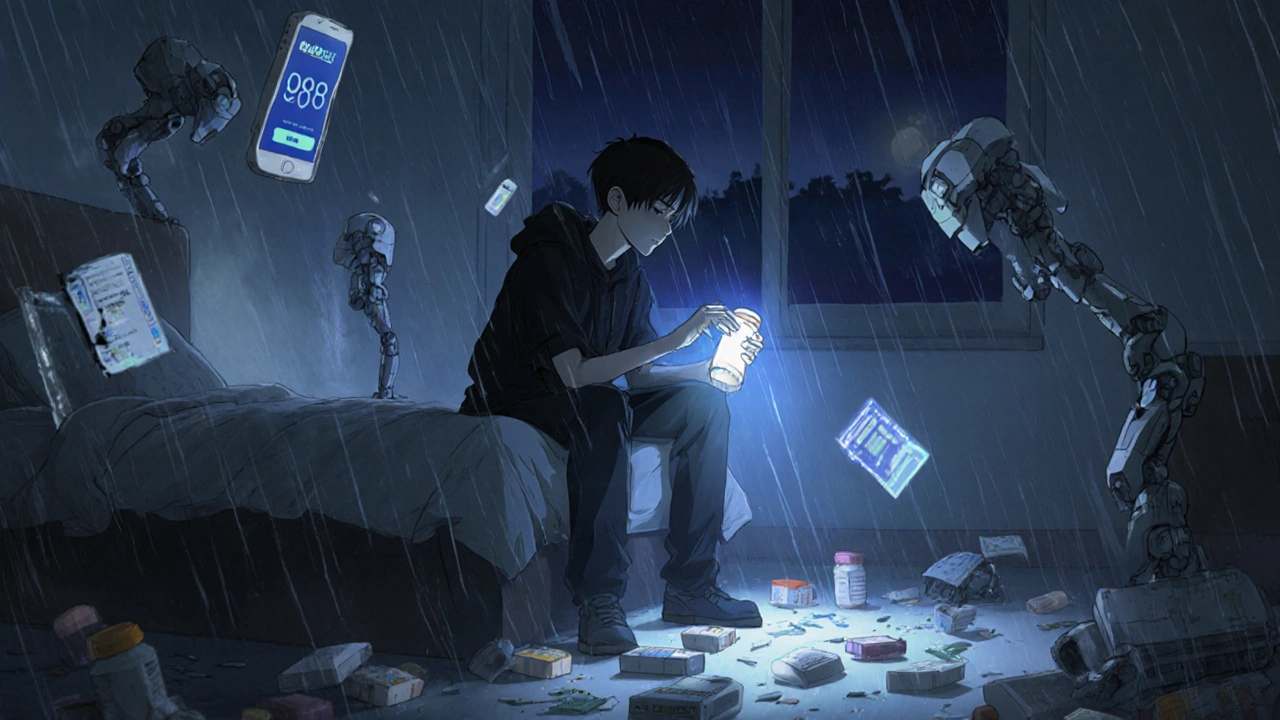
Intentional Overdose: Mental Health Support and Crisis Resources You Can Trust
Intentional overdose is a leading method of suicide, especially among teens and middle-aged adults. Learn how crisis resources like 988 and Crisis Text Line are saving lives-and why funding cuts could reverse progress.