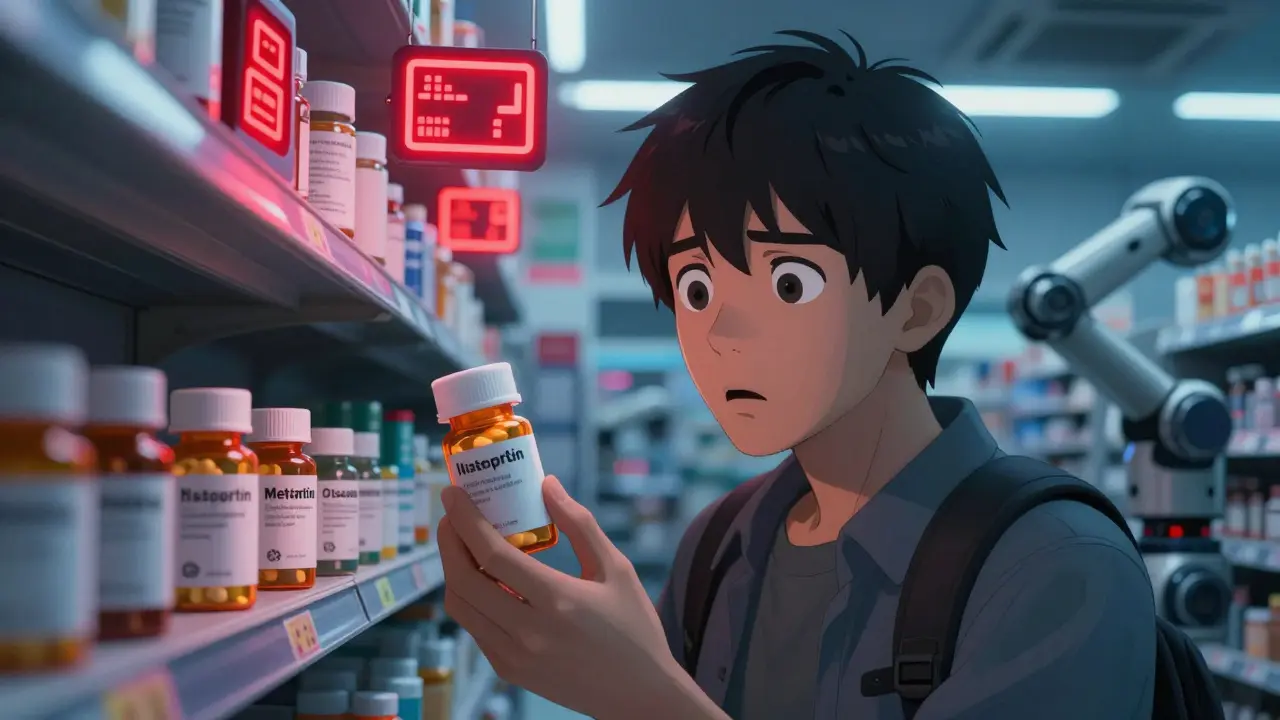
Imagine opening your prescription bottle and seeing a pill you’ve never taken before. The label says metformin, but you were prescribed lisinopril for high blood pressure. The color’s wrong. The shape’s different. Your stomach drops. This isn’t rare. About 1 in 5 medication errors happens at the pharmacy counter, and many of them go unnoticed until someone actually takes the pill.
If you’ve received the wrong medication, your first instinct might be to shrug it off or toss it. Don’t. The next few minutes could prevent serious harm-or even save your life.
Stop Taking It Immediately
That’s step one. No exceptions. Even if you feel fine, don’t assume it’s harmless. Some medications look identical but act completely differently. Taking the wrong blood pressure drug could send your heart into dangerous rhythm. Mixing up insulin and thyroid pills? That’s an emergency. The American Society of Health-System Pharmacists says medication errors cause over 1.5 million injuries in the U.S. every year. Many of those happen because people kept taking the wrong pill, thinking, “It’s probably just a different brand.”
Put the bottle down. Don’t swallow another pill. Don’t give it to someone else. Don’t flush it yet. You’ll need it as evidence.
Call Your Doctor Right Away
Your doctor is your next call-not the pharmacy, not Google, not a friend. They need to know what you took, when, and how much. Even if you only took one wrong pill, they might want to check your vital signs or run blood tests. Some drugs cause delayed reactions. A wrong antibiotic might not hurt you today, but it could trigger a dangerous allergic reaction tomorrow.
Your doctor might:
- Prescribe the correct medication right away
- Ask you to come in for an exam
- Send you straight to the ER if there’s risk of toxicity
- Adjust your treatment plan to undo any damage
Don’t wait for symptoms. If you’re unsure, call anyway. Most doctors have after-hours lines. If you can’t reach them, go to urgent care. Better safe than sorry.
Contact the Pharmacy-Speak to the Manager
Now call the pharmacy where you picked up the prescription. Don’t talk to the technician who handed you the bottle. Ask for the head pharmacist or manager. They’re trained to handle errors and have the authority to fix things.
Be clear: “I received the wrong medication. Here’s what I was supposed to get. Here’s what I got.” Don’t apologize. Don’t say, “I might be wrong.” You’re not. You’re the patient. You’re the one who noticed.
Ask them to document the error in writing. Request an incident report number. If they refuse, say, “I’m going to file a report with the state board.” That usually gets their attention.
And here’s the key: do not return the wrong medication. Keep it. Keep the bottle, the original receipt, the prescription label, and the plastic bag it came in. If you need to go to court later, this is your proof.
Document Everything
Write down what happened. Not just the date. The exact time you noticed. What you were doing. How you realized it was wrong. Did you compare the pill to the label? Did you look it up online? Did you feel dizzy or nauseous afterward?
Take photos. Snap clear pictures of:
- The wrong pill (in the bottle)
- The pharmacy label
- The original prescription slip from your doctor
- The receipt
Video is even better. A short clip showing the bottle, the label, and you reading the name of the medication aloud adds weight if this becomes a legal issue. According to case data from law firms handling pharmacy errors, 92% of successful claims include photographic evidence.
Keep a log. Write down every doctor’s visit, every test, every expense related to the mistake. Medical bills, Uber rides to the clinic, missed work hours-save every receipt.
Report It to the Authorities
Pharmacies don’t fix problems unless they’re forced to. Reporting isn’t just about justice-it’s about preventing this from happening to someone else.
In Australia, you can report a dispensing error to the Therapeutic Goods Administration (TGA) through their online reporting system. You can also contact your state’s pharmacy board. In the U.S., you’d file with the FDA’s MedWatch program or your state’s board of pharmacy. The Institute for Safe Medication Practices (ISMP) also accepts anonymous reports-and they’ve collected over 100,000 error reports since 1991.
Don’t worry about “getting someone in trouble.” This isn’t about blame. It’s about fixing broken systems. Only about 15% of medication errors are ever reported. That means 85% of mistakes go unrecorded. Your report could push a pharmacy to install barcode scanners, train staff better, or hire more pharmacists.
Legal Rights and When to Call a Lawyer
If you were harmed-physically, emotionally, financially-you may have a case. Pharmacy errors are legally considered medical negligence. You don’t need to prove the pharmacist was careless. You only need to prove the error happened, you were harmed, and the harm was caused by the error.
Settlements for these cases range from $50,000 to over $500,000. In extreme cases-like a child taking the wrong ADHD medication and having a seizure, or an elderly person suffering a stroke from a wrong blood thinner-juries have awarded over $10 million.
But here’s the catch: you have to act fast. In most places, you have 1 to 3 years to file a claim, starting from when you discovered the error. In some states, it’s as short as one year.
Do not give a recorded statement to the pharmacy’s insurance company. Do not sign anything they give you. Do not accept a “goodwill” gift of free prescriptions in exchange for silence. Those releases often bar you from suing later.
If you’re unsure, consult a lawyer who specializes in medical errors. Many offer free consultations. They’ll tell you if you have a case-and if you don’t, they’ll still help you understand your rights.
Why This Happens-and How to Prevent It
It’s not just “human error.” It’s systemic. Pharmacists are overworked. In Australia, some community pharmacies fill over 200 prescriptions per shift. One mistake, one misread script, one misplaced bottle-and someone gets the wrong drug.
Common causes:
- Similar-looking or sounding drug names (e.g., hydralazine vs. hydroxyzine)
- Handwritten prescriptions that are hard to read
- High-alert medications like insulin, blood thinners, or chemotherapy drugs
- Lack of double-check systems
Barcodes reduce errors by 85%. But only 62% of U.S. pharmacies use them. In Australia, adoption is growing, but not universal.
Here’s how to protect yourself:
- Always check your pills before leaving the pharmacy. Compare the pill to the description on the label.
- Ask: “Is this what my doctor prescribed?”
- Use one pharmacy for all your prescriptions. They’ll catch interactions and duplicates.
- Keep a list of all your medications and doses in your phone or wallet.
- If you’re on high-risk meds (blood thinners, diabetes drugs, seizure meds), ask for a printed warning sheet.
What Happens If You Don’t Act
Ignoring a wrong medication can be deadly. A 2022 study in the Journal of the American Medical Association found that patients who received a medication error had a 28% higher risk of dying within five years. For people on heart or blood pressure meds, the risk jumped to 42%.
Even if you don’t feel sick, the wrong drug can:
- Interact dangerously with your other meds
- Mask symptoms of your real condition
- Trigger a hidden allergy
- Damage your liver or kidneys
And the financial toll? Preventable medication errors cost the U.S. healthcare system over $21 billion a year. You don’t want to be part of that number.
Final Reminder
You are your own best advocate. No pharmacist, no doctor, no insurance rep knows your body like you do. If something feels off-trust it. You didn’t make a mistake. The system did. And now it’s your turn to fix it-for yourself and for everyone who comes after you.
What should I do if I realize I took the wrong medication?
Stop taking it immediately. Call your doctor or go to urgent care. Do not wait for symptoms. Keep the medication, bottle, receipt, and prescription label as evidence. If you feel unwell, call emergency services.
Can I get compensation if I was harmed by a pharmacy error?
Yes. If you suffered physical harm, emotional distress, or financial loss due to a pharmacy error, you may be eligible for compensation. Settlements typically range from $50,000 to $500,000, depending on injury severity. Consult a medical malpractice lawyer to evaluate your case.
Should I return the wrong medication to the pharmacy?
No. Do not return it. Keep the medication, packaging, receipt, and prescription label. These are critical pieces of evidence if you need to file a complaint or legal claim. The pharmacy may ask for it back-politely refuse until you’ve spoken to a lawyer.
How common are pharmacy dispensing errors?
About 15-20% of all medication errors occur at the pharmacy level. In the U.S., 1.5 million people are affected each year. In Australia, while exact numbers aren’t tracked publicly, reports to the TGA show a steady rise in dispensing mistakes, especially during peak prescription periods.
How can I prevent receiving the wrong medication in the future?
Always check your pills before leaving the pharmacy. Compare the pill’s color, shape, and imprint to the label. Ask the pharmacist to confirm the prescription. Use one pharmacy for all your medications. Keep a written or digital list of all your prescriptions and dosages. For high-risk drugs, ask for a printed warning sheet.
Do I need to report a pharmacy error even if I wasn’t hurt?
Yes. Even if you caught it before taking the pill, report it. Most errors go unreported, which means pharmacies never fix the root causes. Reporting helps protect others. In Australia, you can report to the Therapeutic Goods Administration (TGA). In the U.S., use the FDA’s MedWatch program.

Alex Danner
Just had this happen last month. Got metformin instead of lisinopril. I didn’t even notice until I took it with breakfast and felt like my heart was trying to escape my chest. Called my doc right away-they had me come in, ran an EKG, and confirmed I was lucky. Kept the bottle, took pics, filed a report with the state board. Pharmacy apologized, gave me a gift card, and swore it was a one-off. I don’t believe them. They still don’t have barcode scanners. Don’t let them off easy.
Also, never return the wrong meds. Ever. That’s your evidence. They’ll say you swapped it. They’ve done it before.
Elen Pihlap
OMG I thought I was going to die I took it I didn’t know I was so scared I cried I called my mom and she screamed at the pharmacy and now they won’t talk to me I hate them I hate pharmacies I hate everything
Sai Ganesh
In India, we often rely on local chemists who don’t have proper training. I’ve seen prescriptions written in shorthand, and the pharmacist guesses the drug based on the condition. I once got amlodipine instead of atorvastatin-same color, same size. I only realized because I remembered the imprint. My advice: always ask for the generic name on the label, not just the brand. And if you’re unsure, take a photo of the pill and send it to your doctor’s WhatsApp. Many here do this now. It saves lives.
Also, never accept a free refill as compensation. That’s a trap. They’re silencing you.
Paul Mason
Look, I’m a pharmacist’s son. I’ve seen this stuff up close. Most errors happen because the tech is rushed, the system’s outdated, and the pharmacist is doing 10 jobs at once. But here’s the thing-people don’t check. They grab the bottle, nod, and walk out. You think you’re saving time? You’re risking your life.
And yeah, the pharmacy will act shocked when you report it. That’s because they’re not used to people actually caring. Do it anyway. You’re not being annoying-you’re the reason they start using barcode scanners next year.
Katrina Morris
i just found out my mom got the wrong pills last week and she didnt say anything because she was scared to bother anyone
she’s 72 and on 5 meds and i just cried reading this
we called her dr and they said to bring the bottle in and theyre checking everything now
thank you for writing this i think i needed to read it before it was too late
Anthony Capunong
Why are we even letting foreigners run our pharmacies? In America we used to have trained professionals. Now it’s just kids from India and the Philippines who don’t even speak proper English. I saw a guy at CVS hand out insulin to someone who asked for Tylenol. And no one did anything. This is why our healthcare is broken. We need American pharmacists. Period.
Kamlesh Chauhan
bro this is wild i got the wrong meds once and i just threw them out and got a new script
why are you making this so complicated
its just a pill
youre acting like someone stole your car
just go back to the pharmacy and say hey this aint right and move on
why are you taking photos and calling lawyers
youre the problem not the pharmacy
Jonathan Larson
The systemic failure here is not individual negligence-it is institutional abandonment. Pharmacists are not merely dispensers of pills; they are the final, critical checkpoint in a chain of care that includes prescribers, insurers, manufacturers, and regulators. When we reduce their role to a transactional speed drill, we abandon the Hippocratic imperative to do no harm.
Barcodes are not a luxury. Double-checks are not a burden. Training is not an expense-it is the cost of human dignity. To treat medication safety as an afterthought is to treat life as disposable.
Reporting an error is not an act of hostility. It is an act of solidarity-with the next patient, the next family, the next generation. The pharmacy may not thank you. The system may not change tomorrow. But you have refused to be complicit. And that, in itself, is a quiet revolution.