Food-Drug Interactions: What You Need to Know Before You Eat or Take Medicine
When you take a pill, it doesn’t just work in isolation. Food-drug interactions, the way what you eat or drink changes how your medicine works in your body. Also known as dietary interactions, these can turn a safe treatment into a risk—like turning a blood pressure pill into a useless one, or making a sleep aid dangerously strong. This isn’t theory. It’s daily reality for millions. A glass of grapefruit juice can wreck the effect of your cholesterol med. A high-salt meal can make your hypertension drug half as effective. Even something as simple as a fiber supplement can block your thyroid or lithium pill from being absorbed.
Some of these interactions are hidden in plain sight. Sodium intake, how much salt you consume daily. Also known as dietary sodium, it directly weakens the power of many blood pressure medications. Cutting salt isn’t just good advice—it’s often the difference between needing one pill or two. Then there’s alcohol and sleep aids, the deadly combo that multiplies sedation and shuts down breathing. Also known as central nervous system depressant interactions, this mix doesn’t just make you sleepy—it can kill you. And don’t assume natural means safe. Fiber supplements, like psyllium or Metamucil used for constipation. Also known as bulk-forming laxatives, they’re great for digestion but can trap your meds in your gut and stop them from working. If you take metformin, lithium, or even antibiotics, timing matters. Take fiber two hours before or after your pill—or risk a treatment failure.
These aren’t rare edge cases. They’re everyday problems. The same person taking pioglitazone for diabetes might also be using OTC painkillers that raise heart failure risk. Someone managing bipolar disorder with mood stabilizers might be sipping alcohol at night, unaware it’s triggering mood swings. Even something as small as a daily multivitamin can interfere with thyroid meds or antibiotics. The system isn’t broken—it’s just not taught well. Doctors don’t always ask. Patients don’t always know to tell. And pharmacies can’t catch every mix unless they have full records.
What you’ll find below is a real-world guide to the most common and dangerous food-drug interactions. No fluff. No jargon. Just what works, what doesn’t, and what could save your life. From how salt ruins blood pressure meds to why you should never mix alcohol with Ambien, from fiber timing rules to the hidden acetaminophen in allergy pills—you’ll see exactly how your daily habits connect to your prescriptions. These aren’t hypothetical risks. They’re documented, preventable, and happening right now. Know the rules. Protect yourself.
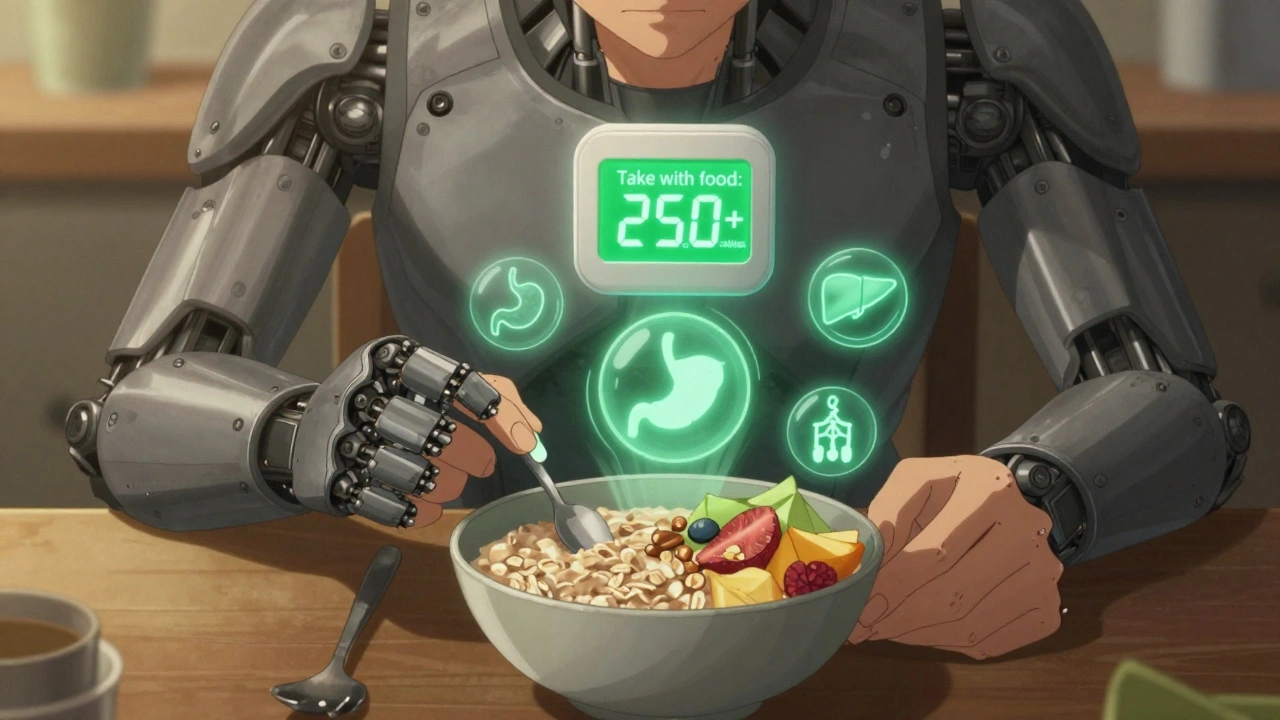
Taking Medication with Food: When and Why It Reduces Side Effects
Taking medication with food can reduce side effects, boost effectiveness, or cause dangerous interactions. Learn which drugs need food, which must be taken empty, and how grapefruit, calcium, and even coffee can change how your medicine works.