Reduce Side Effects: How to Minimize Medication Risks and Stay Safe
When you take a medication, you’re not just getting the active ingredient that treats your condition—you’re also exposing your body to a mix of chemicals that can cause unwanted reactions. reduce side effects, the practice of lowering unwanted reactions from medications without sacrificing their benefits. Also known as minimizing drug reactions, it’s not about avoiding meds altogether—it’s about making them work better for you. Many people assume side effects are just part of the deal, but that’s not always true. Some fade over time thanks to medication tolerance, the body’s natural adjustment to a drug through metabolic or cellular changes. Others stick around because of hidden interactions, wrong dosing, or even the inactive ingredients in your pill.
Take active ingredients, the components in a drug that actually treat your condition. They’re what you want—but they’re not the whole story. The rest? inactive ingredients, fillers, dyes, and binders that help the pill hold together or dissolve. These don’t treat anything, but they can trigger allergies, stomach upset, or even interfere with absorption. A pill with the same active ingredient as your old one might still cause new problems if the filler changed. And then there’s drug interactions, when one medication changes how another works in your body. Mixing alcohol with sleep pills, salt with blood pressure meds, or even fiber supplements with lithium can turn a safe treatment into a dangerous one. You don’t need to be a scientist to spot these risks—you just need to know what to look for.
Some side effects, like drowsiness from antihistamines or swelling from pioglitazone, are well-known and documented. Others, like mood changes from heparin or ringing in the ears from certain antibiotics, surprise people because they’re not listed as common. That’s why tracking what happens after you start a new drug matters. Did your blood pressure spike after starting a decongestant? Did your tinnitus get worse after a new antibiotic? Writing it down—even just a note on your phone—helps you and your provider connect the dots. And when you know what to watch for, you can act before things get serious. Whether you’re managing diabetic neuropathy, bipolar disorder, or just a simple cold, the goal isn’t to suffer through side effects. It’s to find the balance where the medicine helps more than it hurts.
Below, you’ll find real stories and science-backed advice from people who’ve been there—from how to read OTC labels to avoid accidental overdoses, to why your pharmacist might hesitate to swap your brand drug for a generic, and what to do when a side effect just won’t go away. These aren’t theoretical tips. They’re the kind of info that keeps you out of the ER and in control of your health.
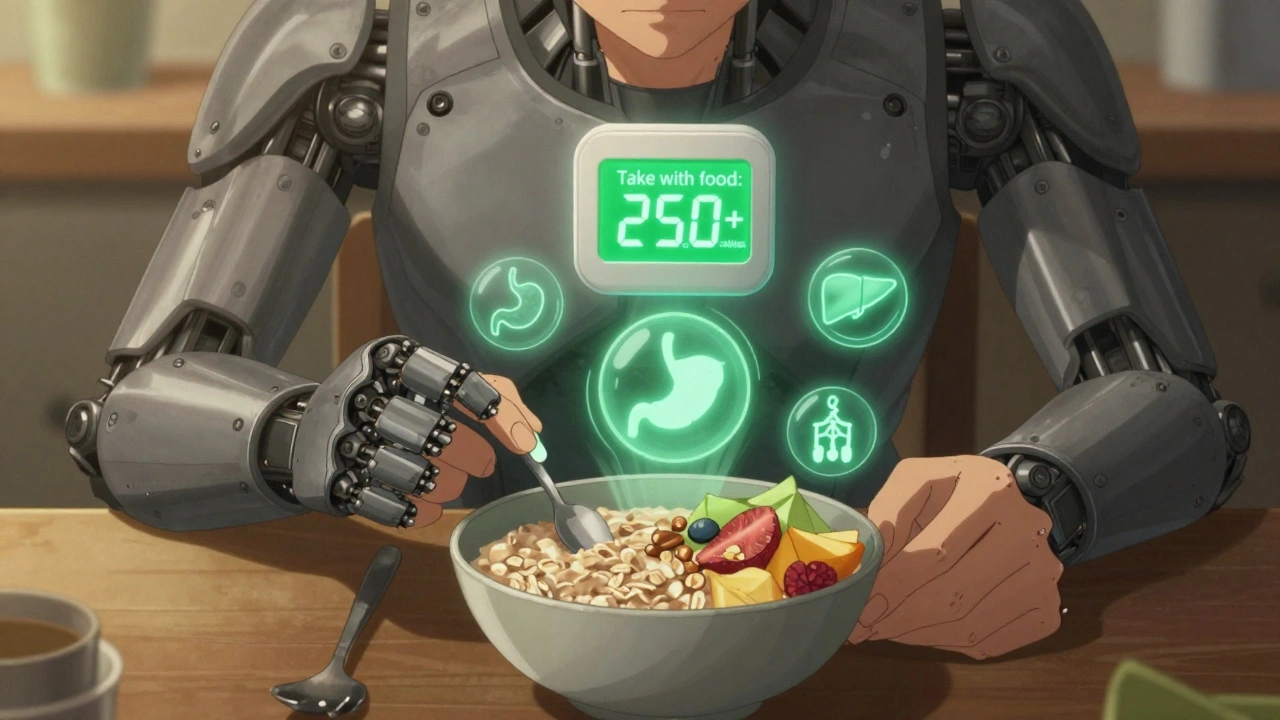
Taking Medication with Food: When and Why It Reduces Side Effects
Taking medication with food can reduce side effects, boost effectiveness, or cause dangerous interactions. Learn which drugs need food, which must be taken empty, and how grapefruit, calcium, and even coffee can change how your medicine works.