Drug Absorption: How Your Body Takes in Medication and Why It Matters
When you swallow a pill, it doesn’t just disappear and start working. Drug absorption, the process by which medications enter your bloodstream from the site of administration. Also known as medication uptake, it’s the make-or-break step that decides if your drug will help, hurt, or do nothing at all. A pill might be perfectly formulated, but if your stomach is full, your gut is inflamed, or you took it with grapefruit juice, absorption can drop by half—or worse. This isn’t theory. It’s why some people feel nothing from their blood pressure meds while others get dizzy from the same dose.
What you don’t see on the label—inactive ingredients, the fillers, coatings, and binders that hold pills together—can make or break absorption. A coating designed to protect your stomach from NSAIDs might also delay when the active ingredients, the chemicals that actually treat your condition get released. And if you’re taking fiber supplements, antacids, or even coffee with your meds, you’re changing how fast or slow those active ingredients move through your system. That’s why timing matters: taking metformin with food reduces side effects but can slow absorption. Taking lithium with high salt? Your body holds onto it longer, raising toxicity risk.
Even your body’s own changes affect absorption. As you age, stomach acid drops, gut motility slows, and liver enzymes shift—meaning the same dose that worked at 30 might barely register at 65. And if you’ve built up metabolic tolerance, when your body starts breaking down drugs faster over time, absorption might stay the same, but your system clears the drug before it can do its job. That’s why some side effects fade—your body adapts. But if the drug isn’t being absorbed properly to begin with, no amount of tolerance will fix the root problem.
Drug absorption isn’t just about pills. It’s why nasal sprays like esketamine work fast, why patches deliver steady doses, and why some meds can’t be crushed or chewed. It’s the hidden science behind why your pharmacist asks if you take your meds with food, why your doctor switches you from a tablet to a liquid, and why two people on the same drug have totally different results. The posts below dig into real cases—how salt messes with blood pressure meds, why generic drugs sometimes feel different, how fiber interferes with lithium, and what happens when inactive ingredients trigger reactions. You’ll see the facts behind the confusion. No fluff. Just what you need to know so your meds actually work.

Fasted vs Fed State Testing: Why Both Conditions Matter for Health and Drug Effectiveness
Fasted and fed state testing reveals how food impacts drug absorption and exercise performance. Understanding both conditions helps you take medication correctly and train smarter for better results.
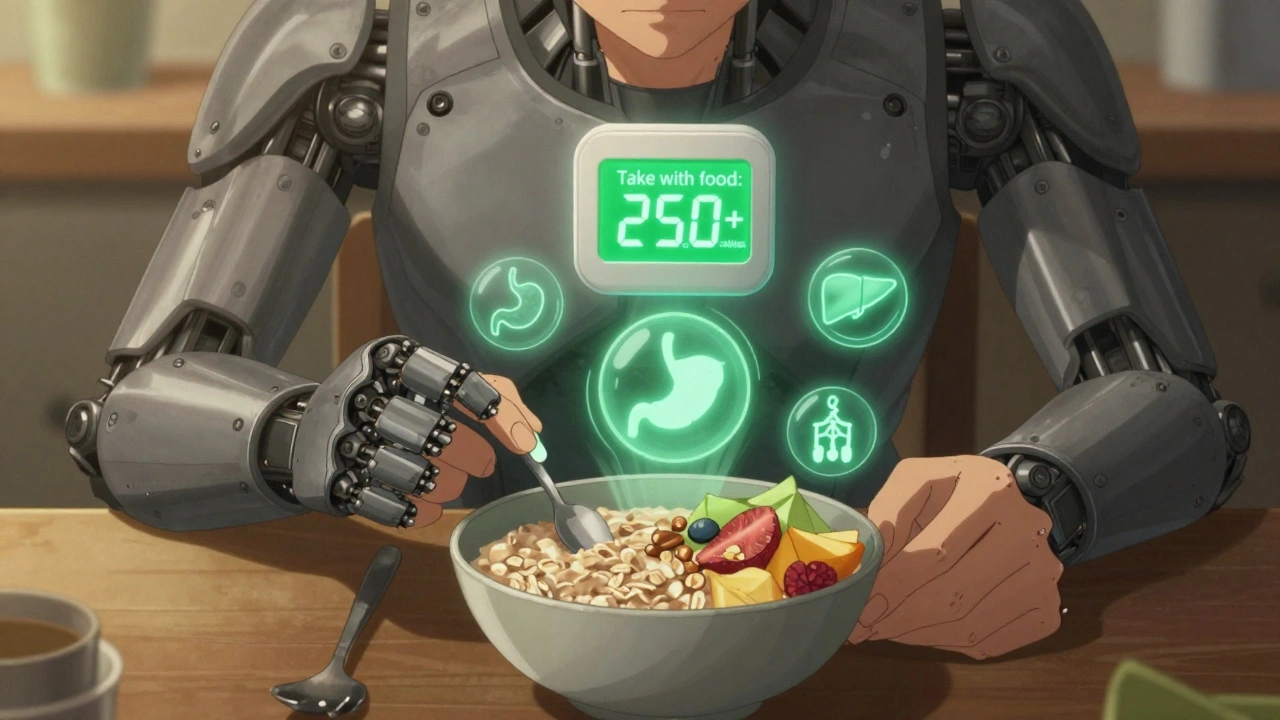
Taking Medication with Food: When and Why It Reduces Side Effects
Taking medication with food can reduce side effects, boost effectiveness, or cause dangerous interactions. Learn which drugs need food, which must be taken empty, and how grapefruit, calcium, and even coffee can change how your medicine works.